Skip to Content
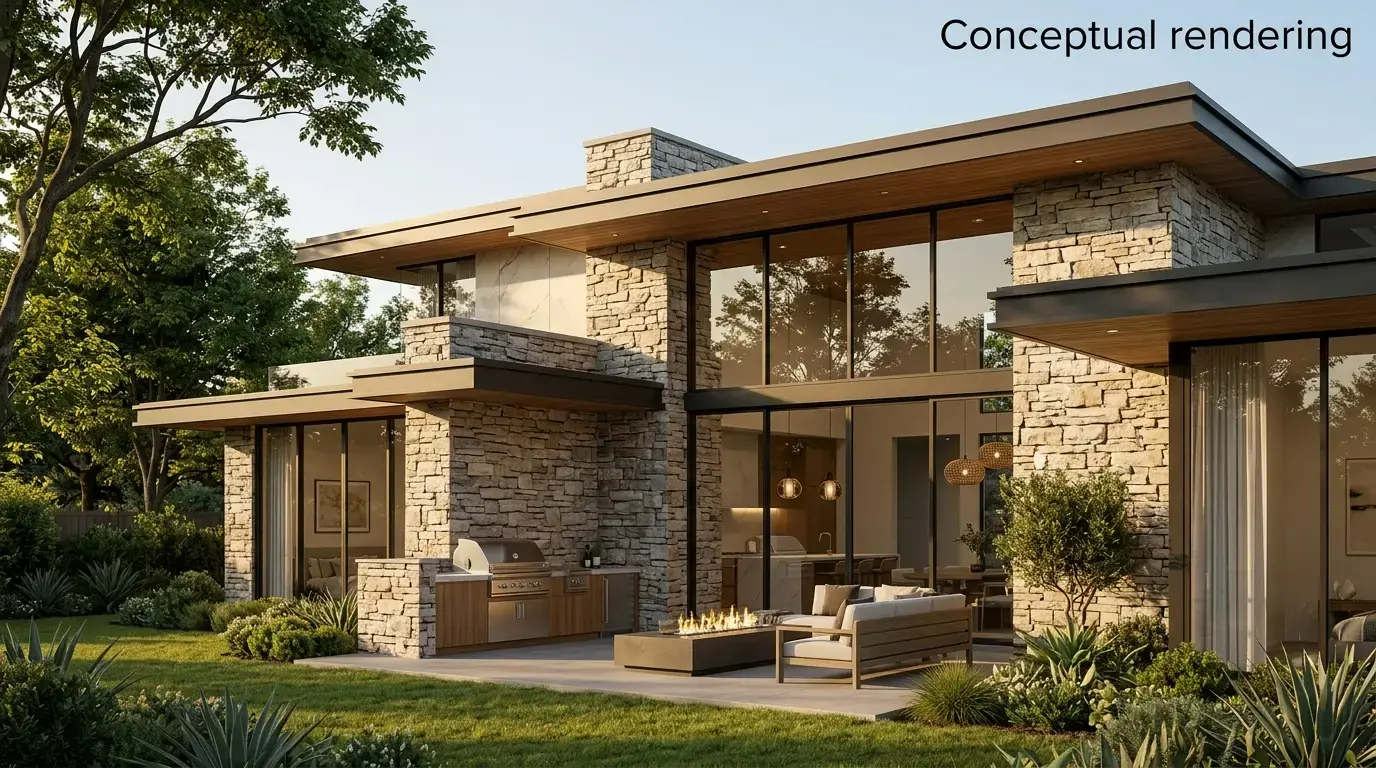
Conceptual rendering of a light stacked stone facade on a modern home, with stone columns framing floor-to-ceiling windows, an outdoor kitchen with grill, and a patio fire table at golden hour. Conceptual rendering

Stone Facade On House Ideas & Inspiration

A stone facade is a decorative layer of stone attached to the outer walls of a home to add texture, color, and depth to its architecture, and in most modern homes it serves as an exterior finish rather than a load-bearing wall. It can cover an entire front elevation or appear in smaller areas, such as a lower wall wainscot, an entry surround, porch columns, or a chimney. 

When planning a stone facade on a house, where the stone goes and which color and texture suit the home's style are two of the main decisions that shape the final look. Because natural stone varies from piece to piece and performance depends on the specific stone and its exposure, viewing material in person and planning for routine care can help the facade keep its appearance over time. Our team supplies natural stone slabs and tile, and you can explore natural stone for exteriors or start with our full range of tile, stone, and slabs as you gather ideas.

Where Does a Stone Facade Look Best on a House?


Stone on the front of a home often looks most balanced where it follows the lines of the house and draws the eye toward key features. Lower wall wainscoting is a popular approach, with stone running along the base of the front elevation to visually ground the house. 

Entry surrounds, porch columns, and piers can frame the front door and create a focal point. Chimneys and gable ends carry stone upward and can emphasize a tall roofline, while garage fronts and bump-out walls can add depth to wide, flat elevations. A full front wall of stone creates a bolder look, while one or two accent areas keep the stone more restrained. 

Our exterior stone guide walks through facades, entrances, and columns in more detail, and these exterior natural stone articles and project stories show more placement ideas from finished stone exteriors.

Matching Stone Color and Texture to Your Home's Style


  When selecting stone for the front of your home, it helps to choose a stone whose color and surface texture work with the roof, trim, windows, and landscape around it. Warm tones such as tan, cream, and soft gold can complement traditional and farmhouse-style homes, while gray, charcoal, and cooler neutrals can support a more modern look. 

Surface texture also shapes the result, and stone color can look different in direct sun than in shade. Tying the stone to an existing color, such as the roof shingles or window frames, helps a stone exterior feel connected to the architecture rather than added on. Because natural stone varies from piece to piece, viewing full slabs in person can give a fuller sense of color range than a small sample. 

You can browse our slab inventory to see what is currently available. If sustainability is part of your planning, this overview of how environmental and health labels apply to natural stone explains what those product claims mean.
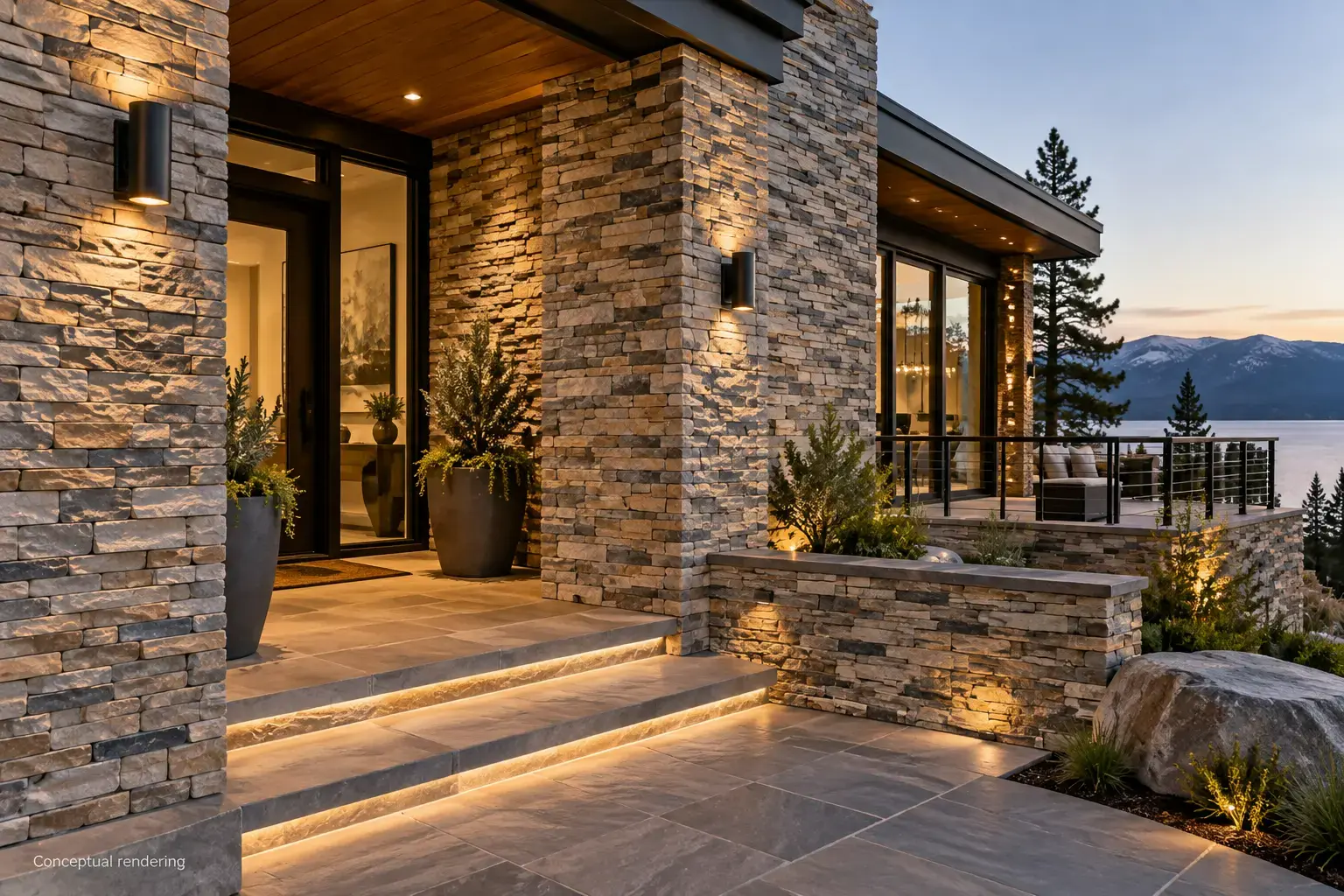
Conceptual rendering of a stacked stone facade in warm beige and gray tones on a modern home entry, with wall sconces, lit steps, and a lake and mountain view at dusk.

Simple Habits That Keep a Stone Front Looking Fresh

Stone chosen for exterior use is suited to ongoing weather exposure, but performance depends on the specific stone, and routine care helps it keep its appearance over time. The habits below are a general starting point, and the Natural Stone Institute's stone care guidance for homeowners offers more detail for specific situations.

Our latest content:

Your Dynamic Snippet will be displayed here... This message is displayed because you did not provide both a filter and a template to use.

Conclusion

Planning a stone exterior usually starts with three decisions: where the stone will go, which color and texture suit the architecture, and how it will be cared for once it is on the wall. We supply natural stone slabs and tile, while your contractor or mason handles the installation. When you are ready to see material in person, you can schedule a design consultation with our team, or request a slab quote if a slab in our inventory fits your plans.

Visit us now!

Reno | Minden | Fernley | Sacramento

Frequently Asked Questions

Stone is commonly placed along the lower portion of the front wall as a wainscot, around the front entry, on porch columns and piers, and on chimneys. Some homes carry stone across the full front, while others keep it to one or two accent areas.

In many cases, stone can be added to the exterior of a home after it is built, but the wall structure, the weight of the chosen stone, and moisture protection behind it need to be evaluated first. Your contractor or mason can assess the walls and recommend the right approach.

Start with the roof, window frames, and trim, and choose a stone that shares or complements one of those colors. Warm tones can suit traditional styles, and cooler grays can support modern designs, but viewing full-size material in daylight can help you see how it may look on the facade.

It depends on the stone. Porous stones may benefit from periodic sealing with a breathable, penetrating sealer, while denser stones may need little more than routine cleaning. Your fabricator or installer can recommend whether sealing makes sense for your stone and climate.

A gentle rinse with a garden hose, a soft-bristle brush, and a pH-neutral cleaner made for natural stone is typically enough for routine cleaning. Avoid acidic cleaners, bleach, abrasive products, and high-pressure washing, since these can affect the surface or the joints around the stone.