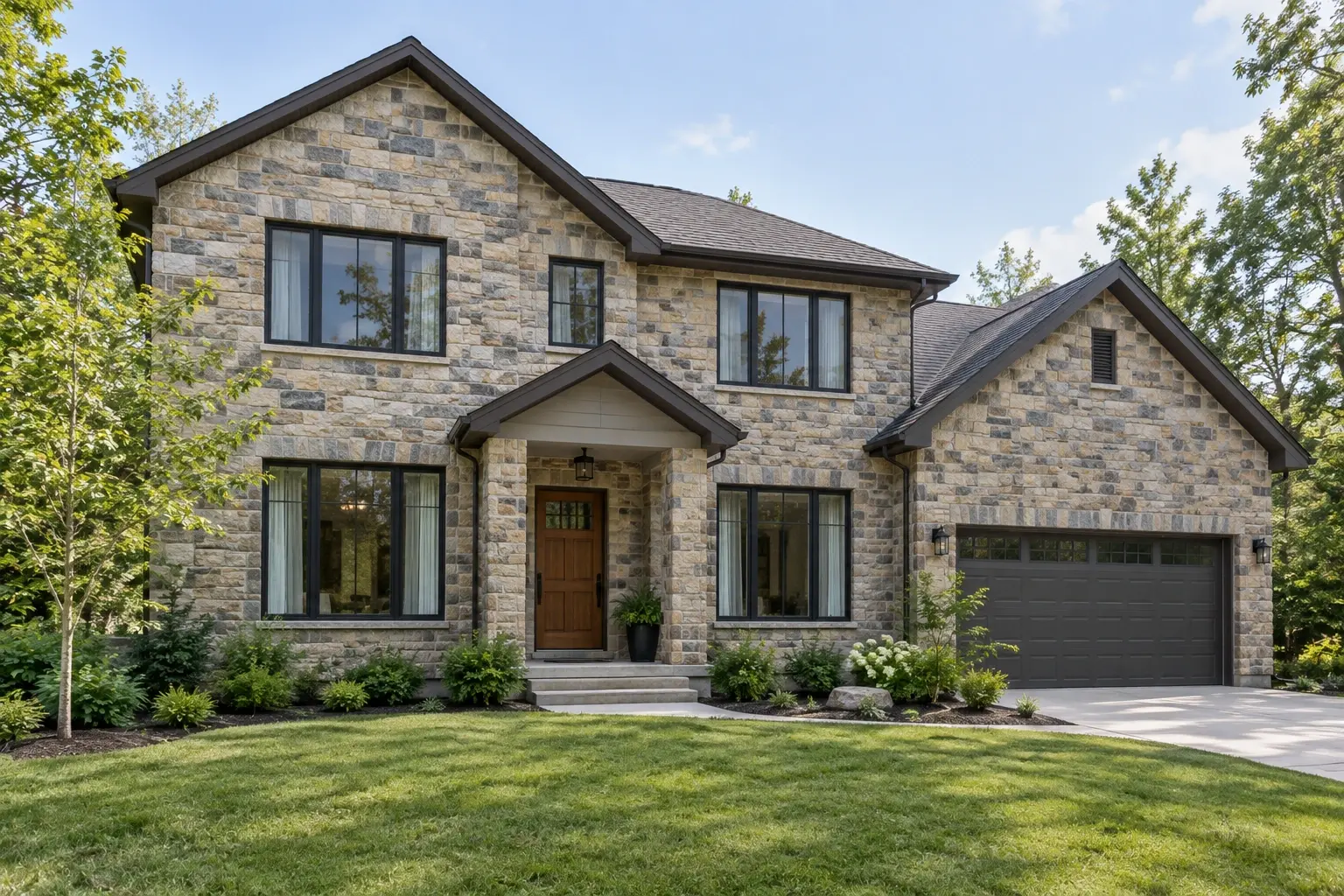
A stone facade for a house exterior is a non-structural layer of natural stone veneer attached to outer walls, covering the entire exterior (a full facade) or specific areas such as the lower walls, front entry, columns, gables, or chimney (a partial facade). Natural thin stone veneer, at 15 pounds per square foot or less, is the practical choice for most homes, while full-bed stone suits new construction. Granite, quartzite, limestone, and sandstone are common facade stones.
What Is a Stone Facade on a House?
On a residential home, a stone facade is almost always a veneer. The stone doesn't support the house. It covers and protects the wall behind it, which is typically sheathed wood framing, concrete block, or poured concrete.
Residential stone facades come in two main forms. Natural thin stone veneer is real quarried stone sawn to roughly 3/4 inch to 1 1/2 inches thick, light enough to adhere to a prepared wall. Full-bed stone is thicker, often 3 to 5 inches, and usually needs a brick ledge or footing to support its weight.
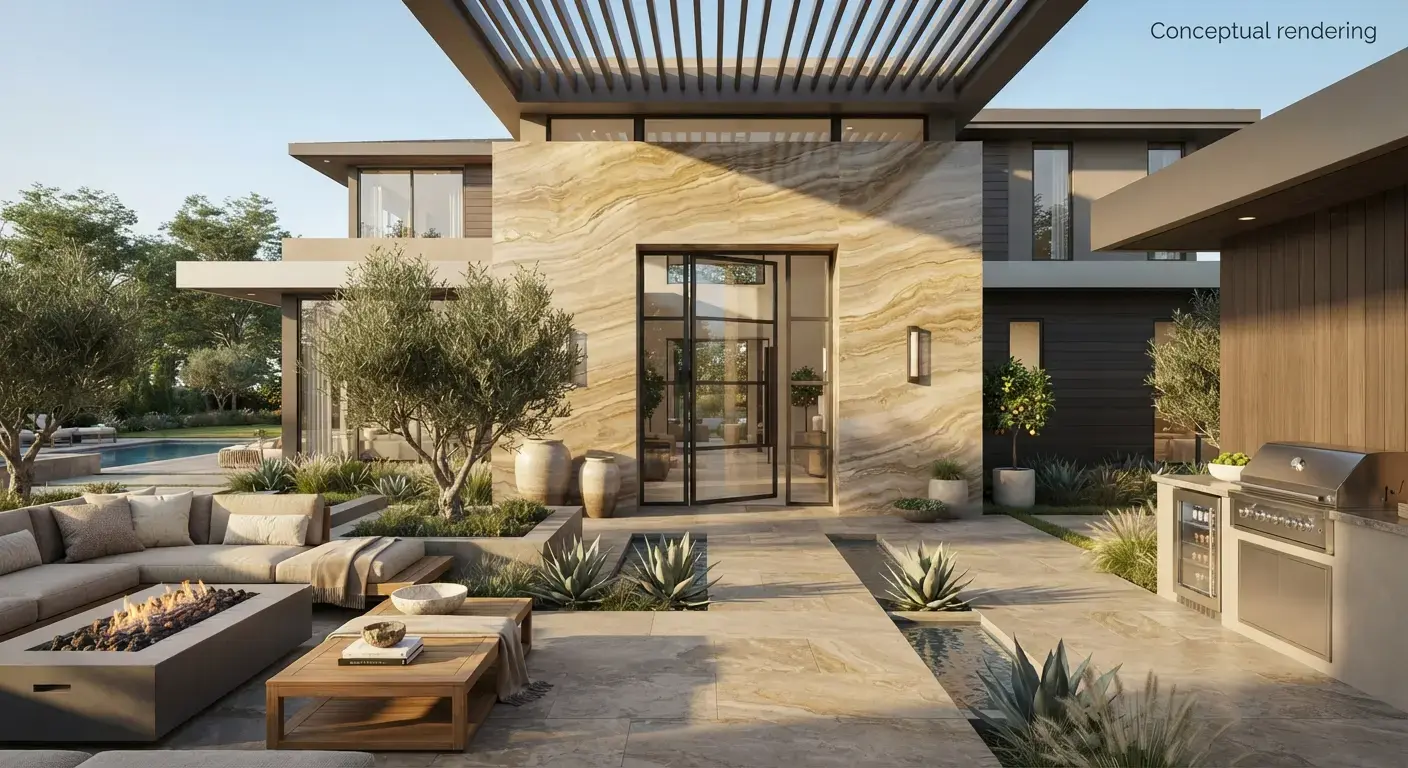 Conceptual rendering
Full Stone Facade vs. Partial Stone Facade
A full stone facade covers the exterior walls from just above grade to the roofline, while a partial facade places stone on specific zones and pairs it with siding, stucco, or brick elsewhere.
Full Stone Facade
A full facade suits French country, English cottage, Tuscan, mountain lodge, and other traditional designs where stone is the defining material. Because every wall is covered, the stone's color and pattern set the tone for the entire home, so choose a blend you like from every angle. Thin veneer is often the practical route for full coverage on an existing home, since it usually avoids new footings.
Partial Stone Facade
A partial facade concentrates stone in a few selected areas. Common placements include:
- Wainscot or skirt: stone along the lower 3 to 4 feet of the walls, the zone that takes the most splashback and wear.
- Front entry and porch: stone around the door or on porch columns.
- Gables and bump-outs: stone on a front gable or projecting section to add depth to a flat front.
- Chimneys: a stone chimney anchors the roofline and can tie into stone on the walls below.
Partial facades are common on craftsman, farmhouse, ranch, and contemporary homes. It helps to end the stone at a logical point, such as an inside corner, a window line, or a trim band, so it reads as intentional rather than applied. Because accent areas need less material, it can be worth checking our overstock sale before ordering.
Which Stone Types Work Best for a House Facade?
The best stones for a house facade are dense and absorb little water, so they handle sun, rain, and freeze-thaw cycles without flaking. These are the types we see most often on residential exteriors:
- Granite: very hard and dense, with low water absorption. It handles hard winters and keeps its color in strong sun.
- Quartzite: harder than granite in many cases, with light creams, silvers, and whites that suit modern exteriors.
- Limestone: a softer stone with a more uniform look, usually in creams, buffs, and grays. Denser limestones do well outside, though they benefit from good drainage details.
- Sandstone: warm tans, golds, and rusts with a natural, weathered texture that fits rustic and Southwestern homes.
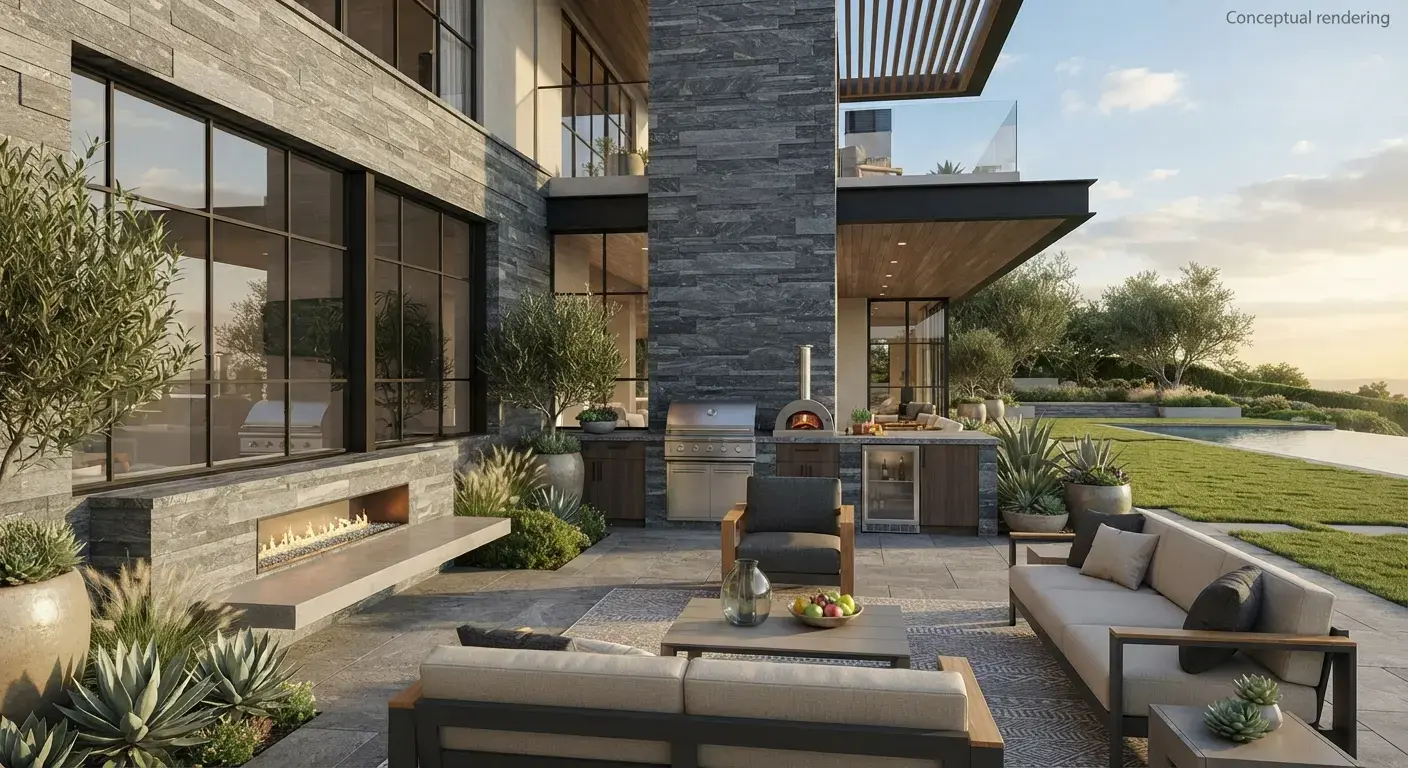
- Slate and ledgestone: slate splits into thin, layered pieces that are often cut as ledgestone, a stacked, linear profile also made from quartzite, sandstone, and limestone. Both create strong shadow lines on contemporary and mountain-modern homes.
In freezing climates, a stone's absorption rate and freeze-thaw resistance matter as much as its color. Many homeowners also coordinate the facade with pavers and exterior stone on nearby walkways and patios.
Thin Veneer or Full-Bed Stone?
For most residential facades, and especially for remodels, natural thin veneer is the more practical choice. Thin veneer weighs 15 pounds per square foot or less, the building code limit for adhered veneer. That means it can go over wood sheathing with a weather-resistive barrier and metal lath, or often directly onto clean, unsealed masonry or concrete, without a new foundation ledge.
Full-bed stone makes the most sense in new construction where footings can be planned from the start, or when you want the deeper mortar joints of traditional masonry. Your builder can confirm what your wall and local code allow. Contractors sourcing facade stone can apply for a trade account for trade pricing and job-site delivery.
How Do You Choose Stone That Fits Your Home's Architecture?
Start with the roof and window colors, since those are the hardest and most expensive to change. Then choose a stone blend that shares at least one undertone with them. Warm roofs and cream trim lean toward tan, gold, and rust blends. Charcoal roofs and black windows suit gray, silver, and blue-gray stone. Bring photos of your home to a free design consultation to compare blends side by side.
Shape matters as much as color. Irregular fieldstone feels rustic, squared stone in coursed patterns reads formal, and long ledgestone feels modern. Mortar color and joint style change the look again, so review stone and mortar together.
What Should You Plan Before Adding Stone to Your Exterior?
Settle these details early:
- View stone in daylight. Exterior stone looks different under showroom lighting than in afternoon sun, so compare it near natural light.
- Plan transitions. Decide where stone stops and siding begins, and how trim, windows, and sills meet the stone.
- Account for moisture. Proper flashing, a drainage plane behind the stone, weep screeds or weep holes at the base, and clearance above soil and paving keep water out of the wall. These are details to confirm with your contractor.
- Order enough material. Buy the full quantity at once, from the same lot when possible, so color stays consistent. Order corner pieces separately, plus a waste allowance.
Bringing Stone to Your Home's Exterior
A stone facade, whether it wraps the entire house or frames only the entry and lower walls, adds natural texture and a weather-resistant outer layer to a home. Choosing the right stone type, format, and color comes down to your architecture, your climate, and how the stone meets the rest of the exterior.
Our team can help you compare exterior stone options, talk through full and partial layouts, and put together a material quote for your contractor. You can see our exterior stone selection in person at any of our showrooms in Sacramento, Reno, Minden, and Fernley.
Frequently Asked Questions
A full stone facade covers the exterior walls of the house from just above grade to the roofline. A partial stone facade places stone on selected areas, such as the lower walls, front entry, columns, gables, or chimney, and uses siding, stucco, or brick on the remaining walls.
Yes. Natural thin stone veneer weighs 15 pounds per square foot or less, so it can go over wood sheathing with a weather-resistive barrier and metal lath, or often directly onto clean, unsealed masonry or concrete, usually without new footings. Your contractor can confirm that your wall is suitable before work begins.
Granite and quartzite are among the best choices because they are dense, hard, and absorb very little water, which helps them handle freeze-thaw cycles. Denser limestones, sandstone, and slate also perform well on exteriors when paired with good drainage details.
A stone wainscot on a house exterior typically runs about 3 to 4 feet high. Ending it at a window sill line, trim band, or other natural break helps the stone look intentional and proportional to the rest of the facade.
Natural stone facades need relatively little upkeep. Periodic rinsing, checking mortar joints for cracks, and keeping gutters and sprinklers from soaking the wall are usually enough. Some porous stones may benefit from a breathable sealer, depending on the stone and your climate.
Contact or Visit us Today!
Note: Some images on this page may be conceptual renderings created to illustrate design possibilities and may not depict actual installations.