At a Glance
- Choose the wall first, then the stone.
- Side light suits split face, and straight-on light suits honed.
- Place lights within about 12 inches of the wall to show texture.
- Use quartzite behind a sink or cooktop, and check moisture guidance near a tub or shower.
- Use one ledger wall per sightline.
In This Post
- Which Ledger Stone Fits Your Wall?
- Why Does the Location Decide the Ledger Stone Design?
- Is Split Face or Honed Ledger Stone Better?
- How Should You Light a Stacked Stone Wall?
- Does Viewing Distance Change Which Ledger Stone to Pick?
- Which Ledger Stone Works Best in Each Room?
- How Much of a Wall Should Ledger Stone Cover?
- What Should You Bring to a Design Consultation?
- Conclusion
- Frequently Asked Questions
The right ledger stone design depends on where the panels go. Ledger stone, also called stacked stone, is natural stone cut into narrow strips and set into wall panels, most often used on fireplaces, accent walls, and backsplashes.
Three things about the wall decide which panel works: the direction of the light, how far away people see it, and what it is exposed to, such as heat, splashes, or steam. Choose the wall first, and the stone choice gets much simpler.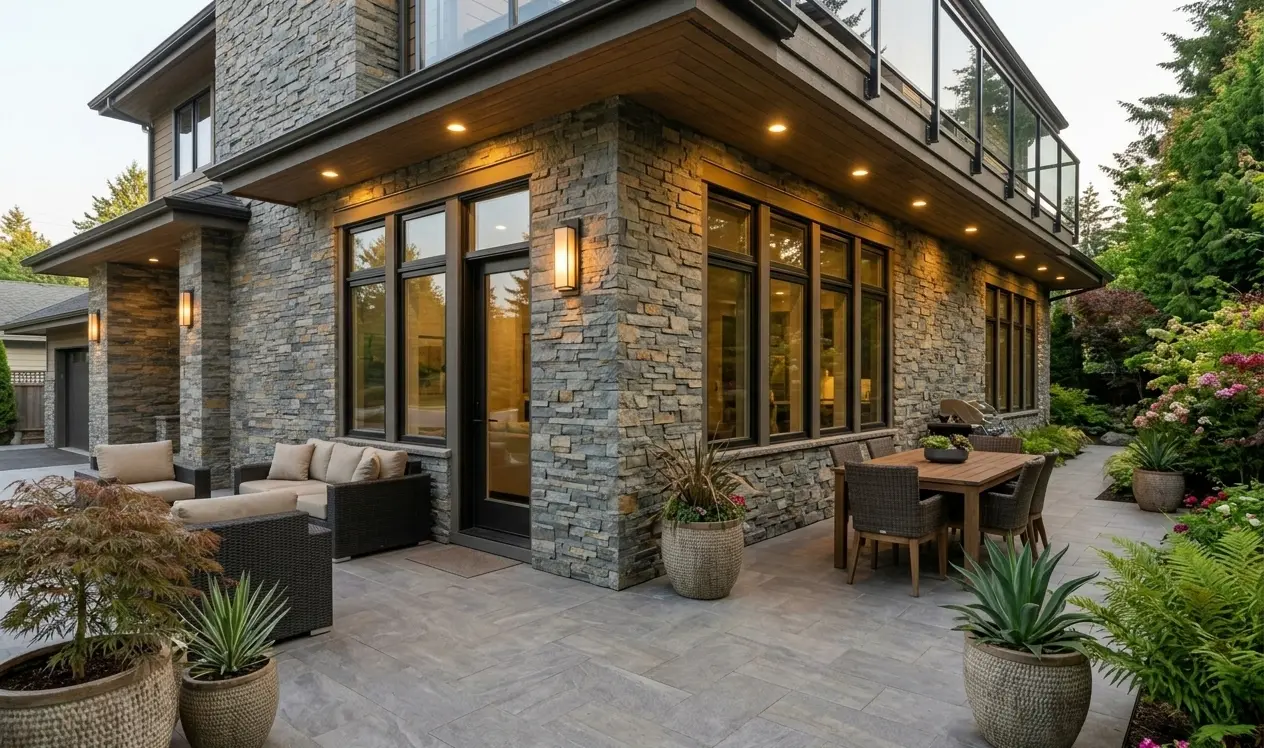
Which Ledger Stone Fits Your Wall?
Match the finish to the light and the stone to the exposure. When light crosses the wall from the side, from a window on the adjoining wall or downlights set close to the stone, split face is the better finish. When light lands straight on, from recessed lights set back or lamps across the room, honed is the better finish.
For exposure, quartzite is a practical pick behind a sink or cooktop, since it is generally less sensitive to acids than marble or travertine, though spills should still be cleaned promptly. Near a tub or shower, check the panel manufacturer’s moisture guidance before choosing any stone.
Why Does the Location Decide the Ledger Stone Design?
Light direction, viewing distance, and exposure are hard to change once a room is built. A ledger stone design that suits all three looks intentional, while one that fights even one of them looks like an afterthought.
Picture a fireplace on a north wall with a window on the adjoining west wall. On clear evenings, low sun from that window crosses the fireplace wall at a sharp angle and brings out the shadows in a split face panel. The same stone on the wall facing the window takes that light head-on, and much of the shadow detail fades.
That is why we recommend against choosing a panel from a photo alone. A photo shows the stone under the photographer’s light, not yours, so browse our tile and stone selection with your own wall in mind.
Is Split Face or Honed Ledger Stone Better?
Split face ledger stone is the better choice on walls lit from the side, and honed ledger stone is the better choice on walls lit evenly from the front. Split face stone is broken along its natural grain, which exposes a rough surface with more depth.
Honed stone is ground flat to a smooth, matte surface. The stacked pattern stays visible, but the flatter faces read calmer, which suits a wall lit by recessed lights set back from it or a bedroom lit mostly by lamps.
Split face | Honed | |
Surface | Broken along the natural grain, rough with visible depth | Ground flat to a smooth, matte face |
Best light | Raking light from the side or close above | Even, straight-on light |
Good spots | Fireplaces with close downlights, hallways with sconces, walls beside windows | Bedrooms, media walls, walls lit from across the room |
From a distance | Strong texture and shadow | Calmer look, led by color |
Not every stone comes in both finishes, and some collections mix the two within a single panel. Our interior ledger stone guide covers both finishes and lists which stones come in split face.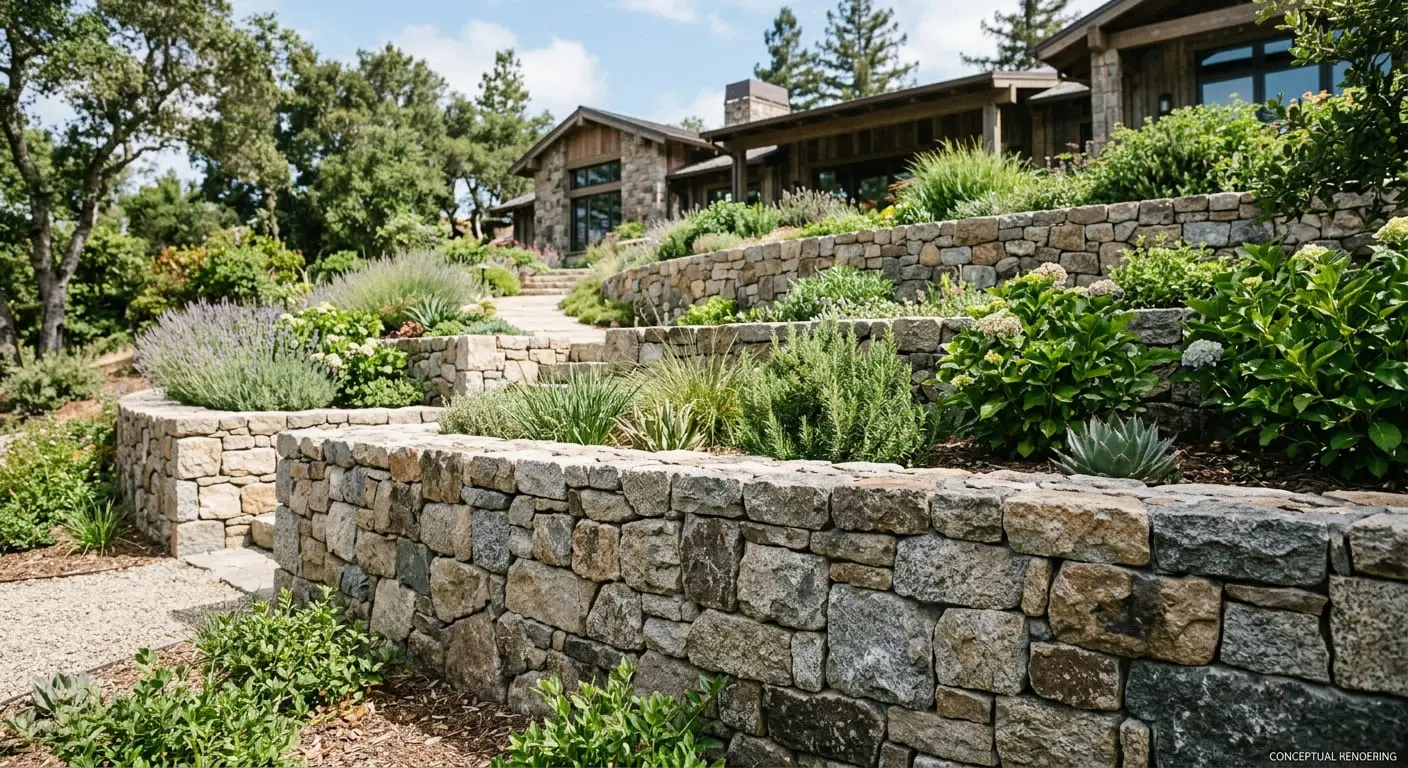
How Should You Light a Stacked Stone Wall?
To show off texture, set fixtures within about 12 inches of the stone. According to Architect Magazine’s guide to wall grazing and wall washing, a fixture no farther than about a foot from the wall brings out its texture. A fixture set at least 12 inches back washes the wall evenly and gives the texture a flat appearance.
That is why one split face quartzite panel can look like hand-stacked rock on one wall and almost flat on the next. The stone is the same, but the fixture distance is not.
Color changes the plan too. The same article notes that dark colors are difficult to illuminate and that lit walls work best with a light-colored, matte finish, so a charcoal or black slate ledger wall needs light placed close to it. Warm white or gold quartzite gives the texture more to work with.
For designers and contractors, settle fixture positions before the stone order, not after the wall is finished. Whether a light sits inside or outside that 12-inch range decides whether a split face panel shows its depth.
Does Viewing Distance Change Which Ledger Stone to Pick?
Yes. Close-up walls suit fine texture, and far-off walls need contrast. Natural ledger panels are most commonly 6 by 24 inches, built from narrow strips of different depths.
Up close, in a narrow hallway or behind a vanity, individual chips, pits, and strip edges are easy to see, so a finely textured stone like travertine adds detail at arm’s length. Travertine also has a long indoor history, and Britannica notes its frequent use on walls and interior decoration in public buildings.
From across a large open room, those details blend, and broader contrasts in color and depth carry the look. A tall fireplace wall seen across an open plan benefits from deeper split face relief or a stone with built-in contrast, such as the Silver Grey quartzite with Warm Ivory veining on our ledger stone fireplace page.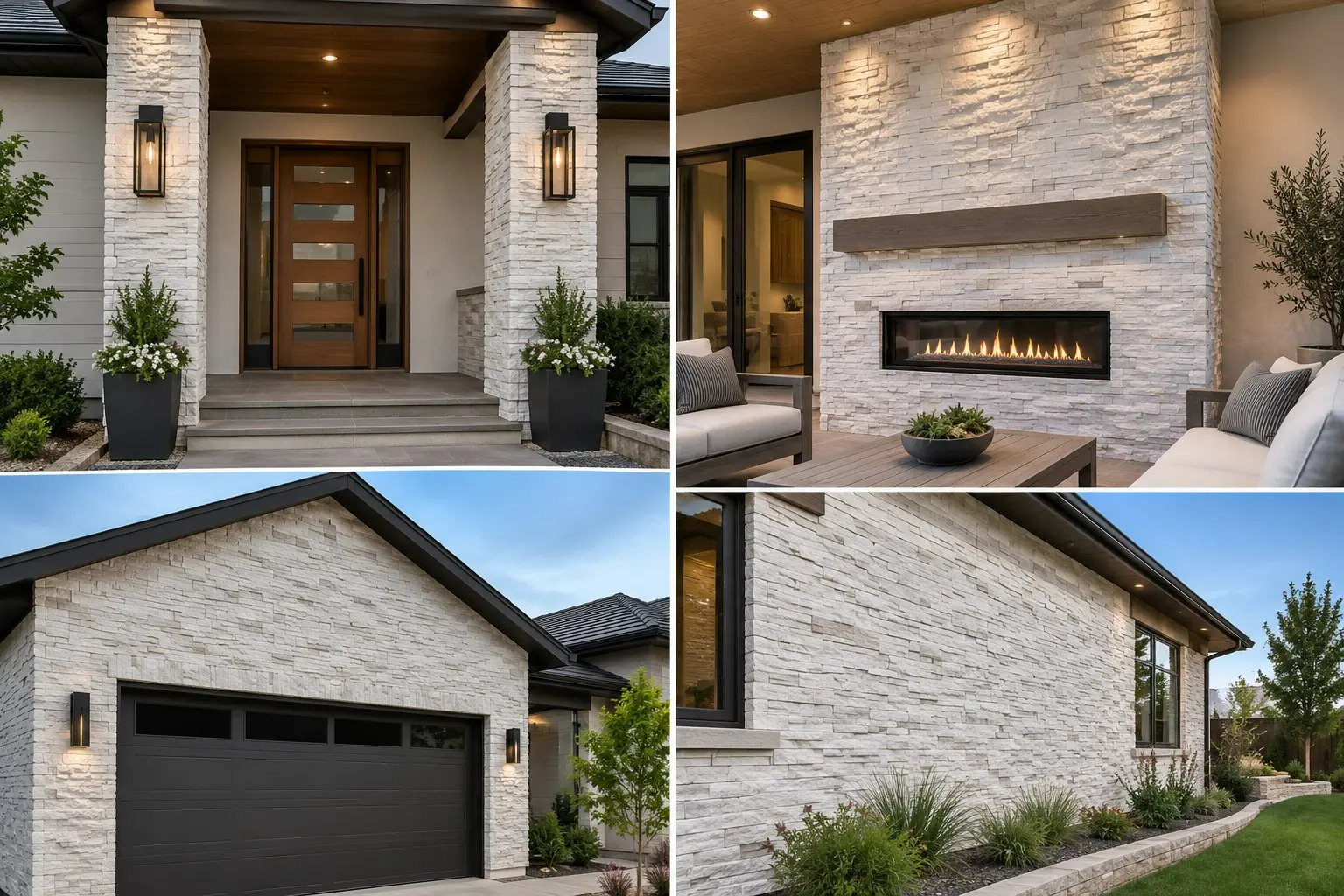
Which Ledger Stone Works Best in Each Room?
Rated for indoor use is not the same as right for every indoor wall. The location sets the standard the stone has to meet.
Fireplaces and Media Walls
Quartzite, marble, and travertine ledger stone are all good fits for fireplace surrounds. The stone is built for lasting use, but each application should be evaluated individually, and both the fireplace manufacturer’s clearances and the panel manufacturer’s guidance apply.
On a media wall, plan the TV mount and cable runs before choosing a finish. Split face panels have a more uneven surface, which leaves less flat area to work around.
Kitchen Backsplashes and Wet Bars
Quartzite is a practical ledger stone for a backsplash. Geology.com describes quartzite as a network of interlocking quartz grains with a hardness of about 7 on the Mohs scale.
Marble and travertine are calcareous stones that can etch when citrus or vinegar splashes on them, while quartzite generally is not acid sensitive. Spills should still be wiped up promptly, and the small ledges between strips collect grease near a cooktop, so plan on regular cleaning with a pH-neutral stone cleaner.
Bathrooms
A ledger stone feature wall behind a freestanding tub or vanity sees humidity rather than direct spray, which makes it a forgiving spot. Inside a shower is a different location entirely, so check the panel manufacturer’s moisture guidance and the installation guidance published by the Tile Council of North America before approving a ledger design there.
Outdoor Walls and Patios
Quartzite and travertine are good fits for exterior ledger stone on patios, entries, and facades. We recommend keeping marble ledger indoors, away from weather and the freeze-thaw cycles of a Northern Nevada winter.
Our ledger stone accent wall page covers outdoor placements in detail, including matching corner pieces that let the stacked rows wrap porch columns.
How Much of a Wall Should Ledger Stone Cover?
Cover a full plane that ends at a natural boundary, and limit it to one ledger wall per sightline. When a fireplace wall and a kitchen backsplash are both visible from the same seat, two textured surfaces compete, and neither reads as the focal point.
A ledger section that ends at the ceiling, a door casing, or the end of a cabinet run looks planned, while one that stops in the middle of open drywall tends to look unfinished. On a fireplace, running the stone floor to ceiling usually reads stronger than stopping at the mantel.
Flat surfaces next to the stone are part of the design too. A slab hearth, mantel ledge, or bench top gives the eye a smooth break from the stacked texture, and our live slab inventory shows what is currently in stock. Once measurements are ready, you can request a quote on the slab pieces.
Long, uninterrupted walls also show more natural variation than small surrounds. Natural ledger panels are cut from quarried dimension stone, a category the U.S. Geological Survey reports on in its own statistics, and each block carries its own tone and veining. On a long wall, view several panels side by side before committing to a color, ideally at our showrooms in Reno, Sacramento, Minden, or Fernley.
What Should You Bring to a Design Consultation?
Bring phone photos of the wall at the times the room is actually used, such as midmorning and after dark with the lights on. Add the distance from the main seating area to the wall, and note anything nearby that adds heat, water, or grease.
Designers and contractors get the most from the visit with the lighting plan and wall dimensions in hand, including how far each fixture sits from the wall. You can book a free design consultation with the Nova Tile and Stone team to narrow the options to a short list of panels.
Conclusion
Before looking at a single panel, sit where you spend the most time in the room, turn on the lights you actually use, and watch where the light lands on the wall. Note whether it crosses the stone from the side or hits it straight on.
Then take one phone photo from that seat at the hour you use the room most. If the light crosses from the side, start with split face; if it lands straight on, start with honed; behind a sink or cooktop, shortlist quartzite; and near a tub or shower, check moisture guidance first.
Note: Some images on this page may be conceptual renderings created to illustrate design possibilities and may not depict actual installations.
Frequently Asked Questions
Often, yes. Light from a window on an adjoining wall crosses the stone at a sharp angle and brings out the shadows between strips. A wall facing the window gets flatter, head-on light that shows less texture.
Split face suits a fireplace lit by close downlights or a side window, because light crossing the surface shows its relief. Honed suits a fireplace lit evenly from across the room, where deep texture would show less.
To bring out texture, keep fixtures within about 12 inches of the wall, a technique called wall grazing. Fixtures set farther back wash the wall with even light and make the stone look flatter.
Marble ledger works well on interior walls, but it can etch when citrus or vinegar splashes on it. Behind a prep sink or cooktop, quartzite is generally the more practical ledger stone, though spills should still be wiped up promptly.
Cover a full plane that ends at a natural boundary, such as the ceiling, a door casing, or the end of a cabinet run. Limit it to one ledger wall per sightline so it stays the focal point.