Skip to Content
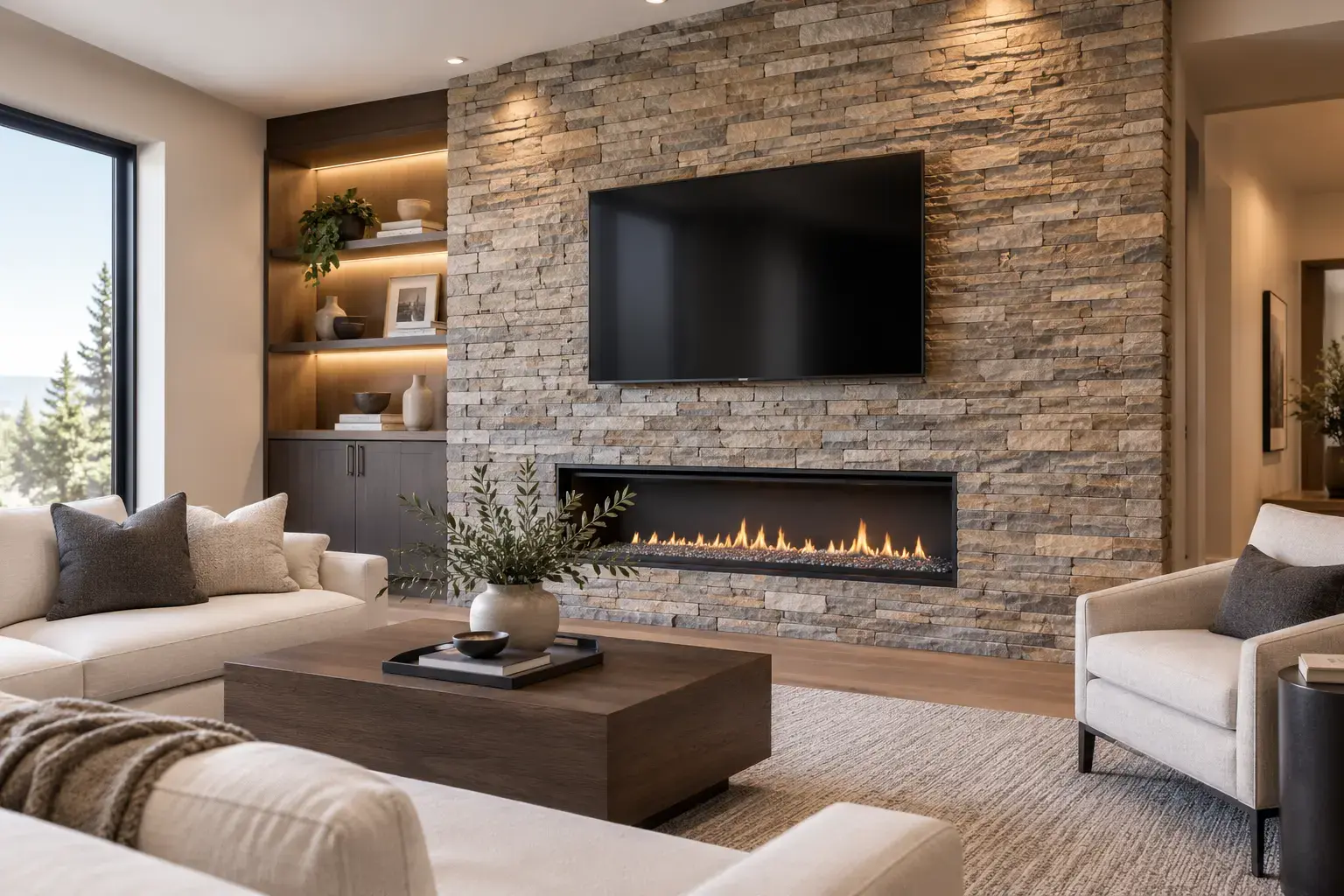
Conceptual rendering of interior ledger stone accent wall in a modern living room. Conceptual rendering

Interior Ledger Stone

Interior ledger stone is a wall cladding made of thin, narrow strips of stone stacked in horizontal rows to create a layered, textured surface on indoor walls. It is commonly used for accent walls, fireplace surrounds, kitchen backsplashes, and columns.


Natural interior ledger stone is typically sold as interlocking panels, most commonly 6 by 24 inches and about 3/8 inch to 1 inch thick, with individual quarried stone pieces bonded into each panel. Manufactured ledger stone is a separate product; according to the ASTM C1670 standard, it is cast from cement, aggregates, and coloring pigments to resemble natural stone.

Natural vs. Manufactured Ledger Stone


Natural panels typically show organic differences in color, texture, and depth from piece to piece, giving each finished wall its own character. Manufactured ledger stone tends to weigh less and offer a more uniform appearance. Nova Tile and Stone offers a range of materials for different design preferences, making it possible to compare natural variation with more consistent options. For a closer look at available materials and local showroom options, shop local and explore Nova Tile and Stone offerings.


Interior Ledger Stone: Pros and Cons


Pros

Because the strips vary in thickness, the wall can take on a three-dimensional profile with visible depth. Panels are assembled with staggered joints, so seams tend to be less noticeable once the wall is complete. Pre-assembled panels can also cover a wall more efficiently than individual stones set one at a time.

Cons

Ledger panels typically weigh more than ceramic or porcelain wall tile, so the wall must be able to carry the extra load. Confirm the wall's condition and the manufacturer's requirements with a qualified installer before purchasing.

How to Choose Ledger Stone Color and Stone Type


Color shapes the mood of a room. White and other light stones can make a wall feel open and refined, while dark gray or black stone can create a bold, dramatic focal point. Scale matters as well: a full wall can make the stone the dominant surface, while a fireplace or media wall keeps the texture to one area. Room size and design balance can guide that choice.


Stone type also affects care. Marble, travertine, and limestone are calcareous stones that can etch when exposed to acids, while quartzite and slate are generally not acid sensitive.

  • Quartzite

Quartzite is a metamorphic rock formed when quartz-rich sandstone is altered by heat and pressure. Ledger panels in this stone come in tones such as warm white, gold, gray, copper, and rust. Quartzite is generally harder than marble and is known for good scratch resistance.

  • Marble

Marble forms from limestone that has been transformed by heat and pressure. Its ledger panels typically range from bright white to cool gray.


  • Travertine

Travertine typically comes in beige, cream, and light brown, and its naturally pitted surface adds texture to each strip.


  • Slate

Slate is a fine-grained metamorphic stone formed from shale or siltstone. It offers dark gray to black tones, and its tendency to split into thin sheets can give its panels a stratified look.


  • Limestone and Sandstone

Limestone, a sedimentary stone made mostly of calcium carbonate, tends toward off-white and creamy beige. Sandstone, a sedimentary stone commonly made up of quartz grains, adds warmer browns, mochas, and grays.

Ledger Stone Finishes and Corner Pieces


Split Face

Split-face stone is broken along its natural grain rather than cut smooth, exposing its rough interior. This finish can give the wall dramatic depth and a rugged, dimensional character. It is available on quartzite, marble, slate, sandstone, and limestone panels.


Honed

Honed stone is ground flat to a smooth, matte surface. The stacked pattern remains, but the flatter faces can create a softer, more refined appearance. Some collections offer the same stone in both split-face and honed versions, and others mix the two finishes within a single panel.


Corner Pieces

Corner pieces are commonly sold as sets of two interlocking pieces that wrap outside corners, and they are typically offered to match the color and finish of the flat panels. They help the stacked pattern continue around columns, island ends, bar fronts, and fireplace returns. On exterior stone columns or a stone facade exterior, wrapping outside corners helps hide the thin veneer edge so the stone reads more like solid masonry.

Where to Use Ledger Stone Indoors


Accent Walls

An interior ledger stone wall behind a bed, sofa, or media console can add texture to a living area or bedroom without introducing a busy pattern. Leaving open space around the wall and keeping nearby decor simple can help the stone stand out.

​

Fireplace Surrounds

Fireplaces are among the most common uses for interior ledger stone, with the horizontal rows framing the firebox and mantel.

​

Kitchen Backsplashes

As a backsplash, ledger stone can bring natural texture to the wall between countertops and cabinets. Near food prep areas where citrus juice or vinegar may splash, quartzite or slate can be a practical choice because both are generally less sensitive to acids.

​

Bathroom Walls

In bathrooms, interior ledger stone can serve as a feature wall, vanity backsplash, or half-wall partition. For areas close to showers or tubs, confirm the panel manufacturer's guidance on moisture exposure before choosing a location.

How to Clean and Care for Ledger Stone


Interior ledger stone typically needs little routine maintenance. Dust settles on the small ledges, so a soft brush, microfiber duster, or vacuum brush attachment can work well. For deeper cleaning, use a pH-neutral stone cleaner or a mild detergent with warm water, and avoid bleach and acidic products such as vinegar or lemon. Skip abrasive pads too, since abrasives can scratch the surface.

​

Surface stains can often be removed with a cleaner made for natural stone, while deeper stains may require a poultice treatment. A penetrating sealer is commonly recommended to help protect ledger panels from staining, particularly in kitchens and bathrooms. Sealing makes stone more stain resistant but not stain proof, and it does not prevent acid etching. Follow the sealer manufacturer's directions for reapplication.

Frequently Asked Questions

Yes. Ledger stone, stacked stone, and ledgestone are commonly used as interchangeable names for this type of wall cladding, and some suppliers also call ledger panels stone veneer.

Many natural ledger panels are cut with tight joints and are designed to be installed without grout. Check the instructions for your specific product.

Published specifications for natural panels commonly fall between about 6 and 13 pounds per square foot, depending on the stone and thickness.

Yes. Other formats include 8 by 18, 8 by 24, and 4.5 by 16 inches.

Some are. Certain collections mount the stone pieces on a mesh backing, while others glue the pieces directly to one another to form a solid panel.

Social Media


Explore Natural Ledger Stone at Nova Tile and Stone


Seeing interior ledger stone in person can give a clearer sense of its color and texture than photos do. Visit a Nova Tile and Stone showroom to compare stone colors and finishes, and talk through your project with our team during a free design consultation. Since Nova Tile and Stone also carries tile and flooring, you can coordinate surrounding surfaces in the same visit.