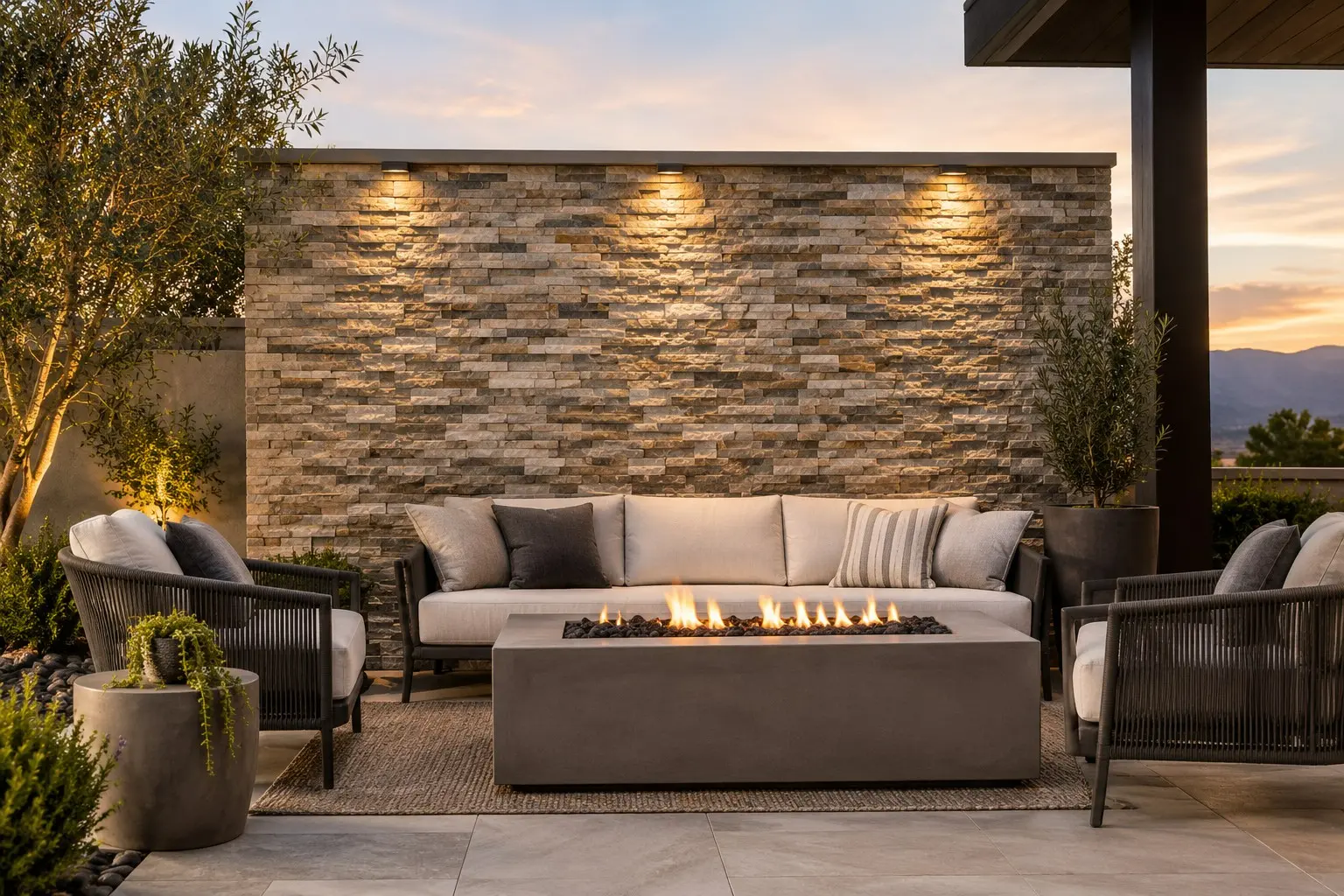
Ledger stone is a natural stone cladding made of thin, narrow strips stacked in horizontal rows, creating a layered surface with visible depth and shadow. When applied to one focal surface outdoors, such as a patio wall, front entry, porch column, or section of a facade, a ledger stone accent wall adds natural texture without covering the entire exterior. Our team helps homeowners, designers, and contractors compare stone colors and textures for the home and its setting.
Where Should a Ledger Stone Accent Wall Go Outside?
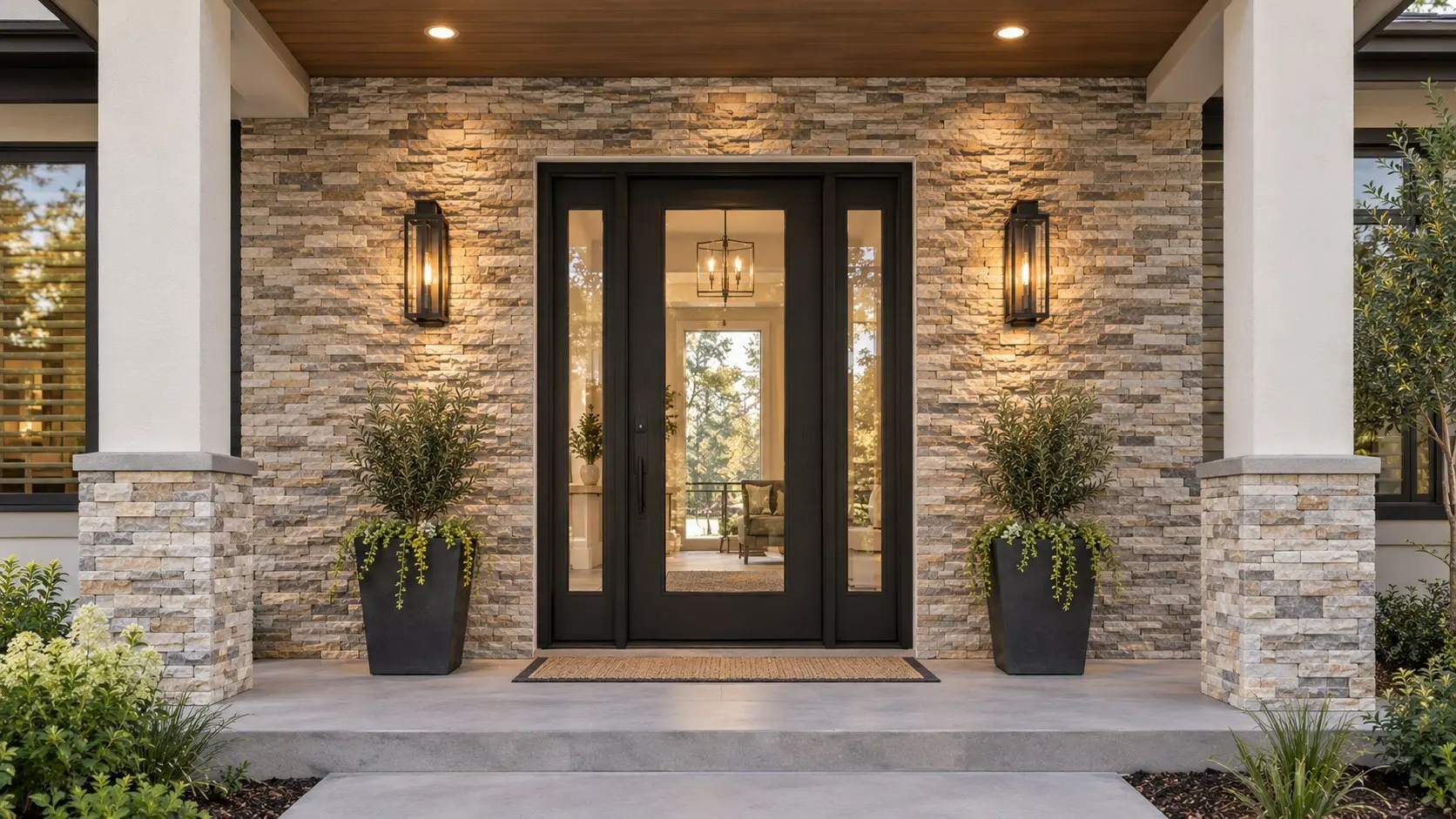
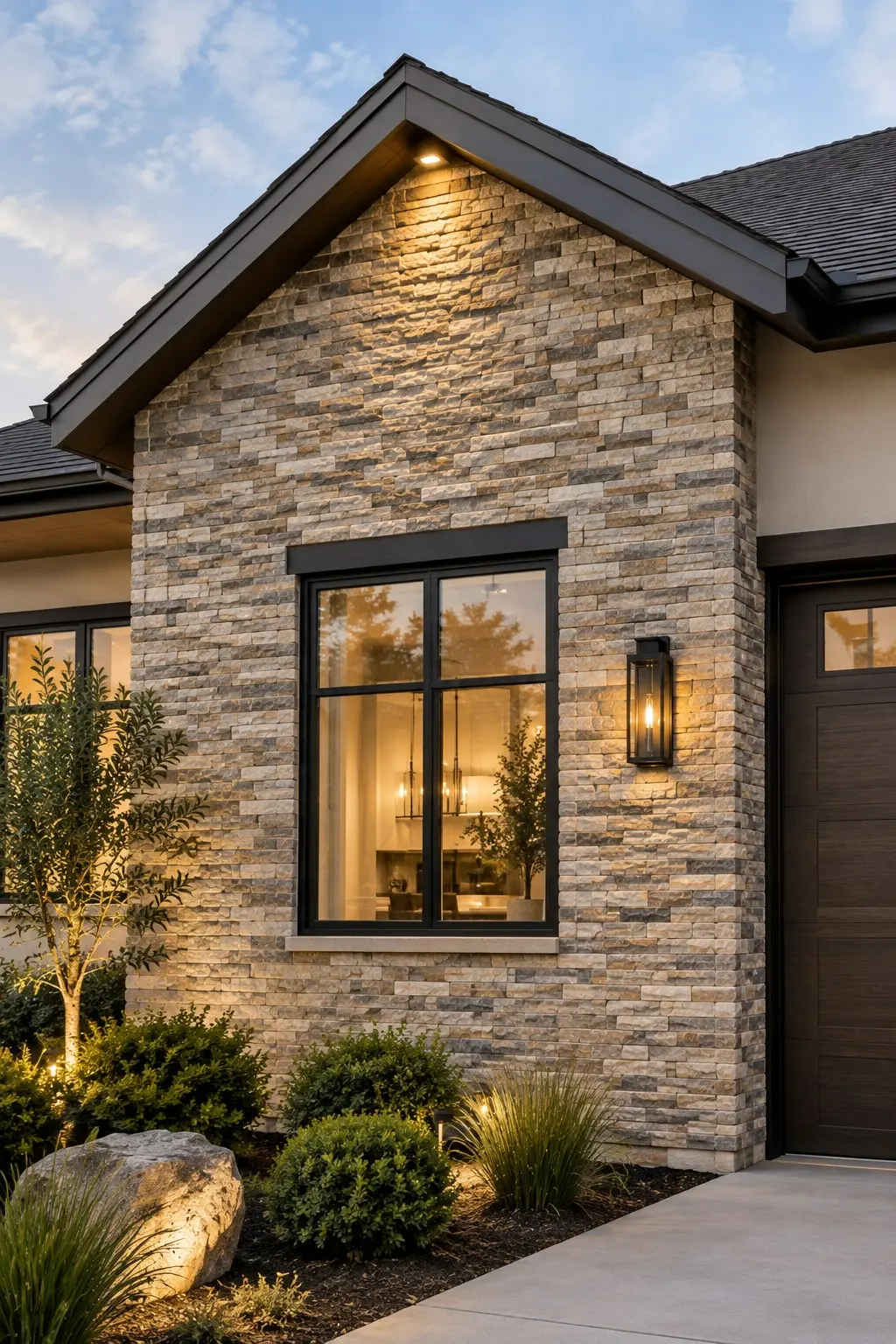
A ledger stone accent wall tends to work best where people look first. On a patio, that may be the wall behind a seating area or a freestanding privacy wall. At an entryway, stone around the front door or on porch columns can frame the approach to the house. On a facade, many homeowners choose one section, such as a gable end, the front of a garage, or the lower portion of a wall, so the stone reads as an intentional accent instead of a full covering. For an accent wall, natural ledger panels are commonly sold in a 6 by 24 inch format, and some collections offer other sizes, such as 8 by 24 inches. For columns and wall ends, matching L-shaped corner pieces are typically offered in the same color and finish as the flat panels, which lets the stacked rows wrap the corner and keeps the thin panel edge out of sight.
When choosing the wall's color, lighter tones can brighten a shaded entry, while charcoal stone can create strong contrast, and quartzite ledger often comes in warm white, gold, and gray tones. You can explore our exterior stone selection alongside our tile and stone collections to see how the wall will relate to nearby surfaces.
What Are the Pros and Cons of a Stacked Stone Accent Wall Outdoors?
Can a Ledger stone Accent Wall Handle Sun, Rain, and Freezing Weather?
An outdoor ledger stone accent wall faces sun, rain, and temperature swings. Each stone absorbs water and weathers in its own way, so exterior suitability should be confirmed for the specific product. In Reno, Minden, and Fernley, cold winter nights can bring repeated freeze and thaw cycles, which may stress an accent wall built from stone that holds a lot of water, while in Sacramento, summer heat and strong sun are usually the bigger concern.
Many stones on a stacked stone accent wall keep their color well in sunlight, but some may gradually shift in tone after years outdoors. Rain is usually manageable on a vertical surface, but water should not pool at the base of the wall, since trapped moisture may cause staining or white mineral deposits called efflorescence.
Installation of a ledger stone accent wall is typically handled by the homeowner's own contractor or mason, who confirms that the wall can carry the added weight and that flashing and drainage details suit the site. Our guide to natural stone exterior applications covers more of the basics.
How Do You Clean a Stone Veneer Accent Wall Outdoors?
A stone veneer accent wall outdoors needs regular attention because dust, leaves, and pollen collect on the small ledges between rows. For deeper reading, the ASTM guide for cleaning exterior dimension stone outlines cleaning materials and procedures for stone exteriors, and the Natural Stone Institute consumer resources cover everyday care and stain removal.
- Brush the ledges with a soft-bristle brush every few months to clear dust, cobwebs, and plant debris.
- Rinse the wall with a garden hose at low pressure, since high-pressure washing may wear the stone surface or loosen joint material.
- Use a pH-neutral cleaner made for natural stone when dirt builds up, and avoid acidic products, bleach, abrasive cleaners, and other harsh chemicals, which may damage some stones or the joint material.
- Ask about a penetrating sealer for walls near sprinklers, pools, or planters, keeping in mind that sealer can help reduce staining but does not make stone stain proof.
- Aim sprinklers away from the stone, because repeated wetting and standing water can leave mineral spots.
- Treat moss or algae early with a stone-safe cleaner, particularly on shaded walls that stay damp.
Conclusion
A ledger stone accent wall can give a patio, entryway, or facade a natural focal point with depth that shifts as light moves across it. The best results usually come from choosing a stone color that suits the home, confirming the product is appropriate for your climate, and keeping up with simple seasonal care.
Seeing stone in person often makes these decisions easier, so you are welcome to book a free design consultation with our team in Reno, Sacramento, Minden, or Fernley. Once your contractor has measurements for any wall caps or bench tops, you can request a slab quote for those coordinating surfaces.
Frequently Asked Questions
Yes, in most cases. Matching L-shaped corner pieces are typically available for natural ledger panels, which lets the stacked rows continue around columns and outside corners without exposing the panel edge.
It depends on the project. It can add natural depth and one-of-a-kind character to a focused area, but it does add weight, the ledges collect debris, and color varies by batch.
Many natural ledger stones are used on exteriors in cold climates, but absorption varies from stone to stone, so confirm that the product is suited to exterior use and freeze and thaw exposure.
Avoid acidic products, bleach, abrasive cleaners, and high-pressure washing, since these may damage the surface. A soft brush, a low-pressure rinse, and a pH-neutral stone cleaner are usually enough.
Our showrooms in Reno, Sacramento, Minden, and Fernley let you see stone options in person, and our team can help you narrow down choices for a ledger stone accent wall. Selection can vary by location, so contacting the showroom before your visit helps.