Kitchen, Bathroom, and Living Room Design Flexibility
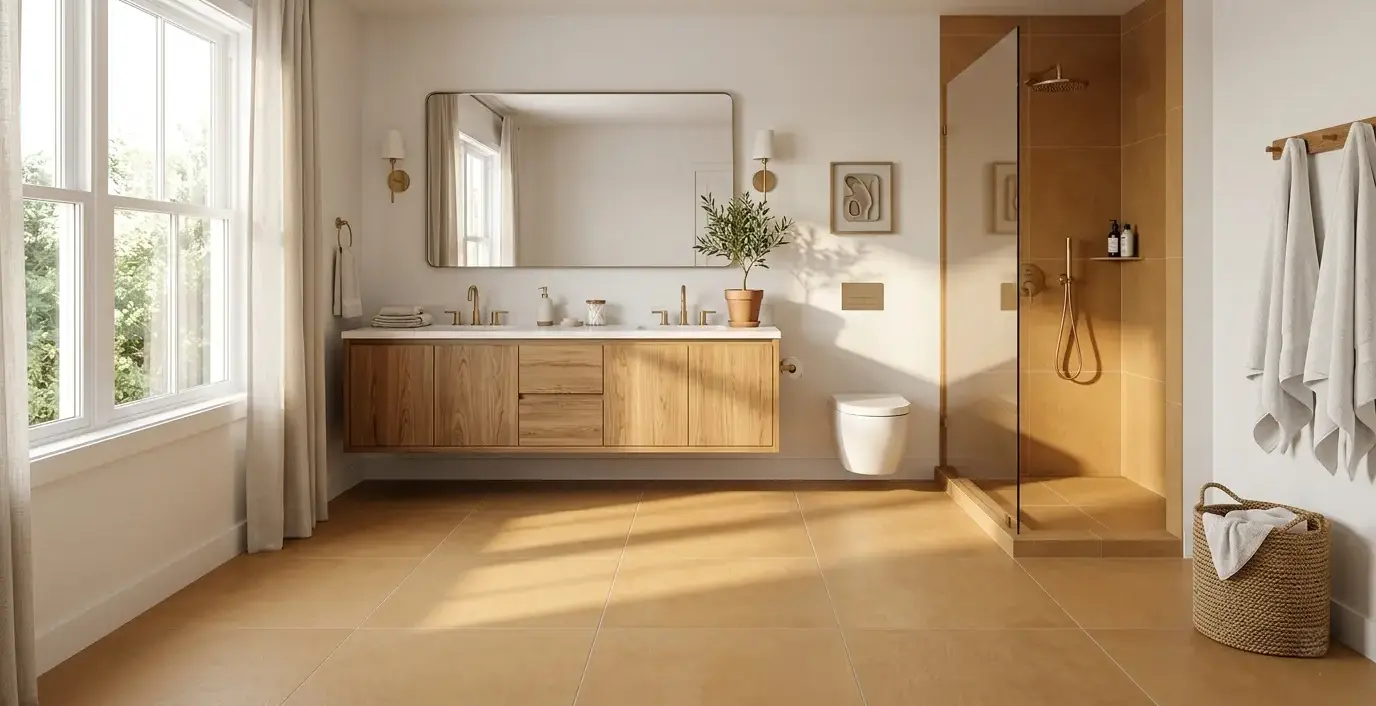
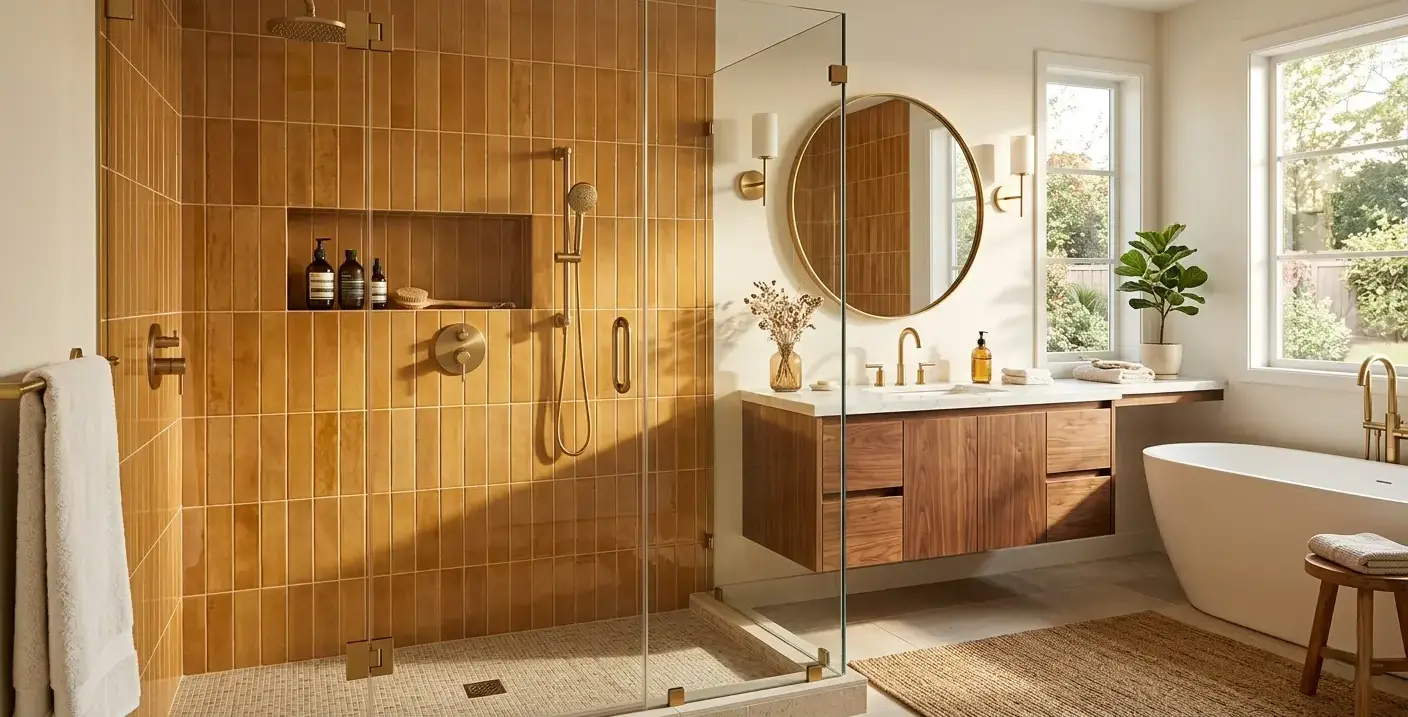
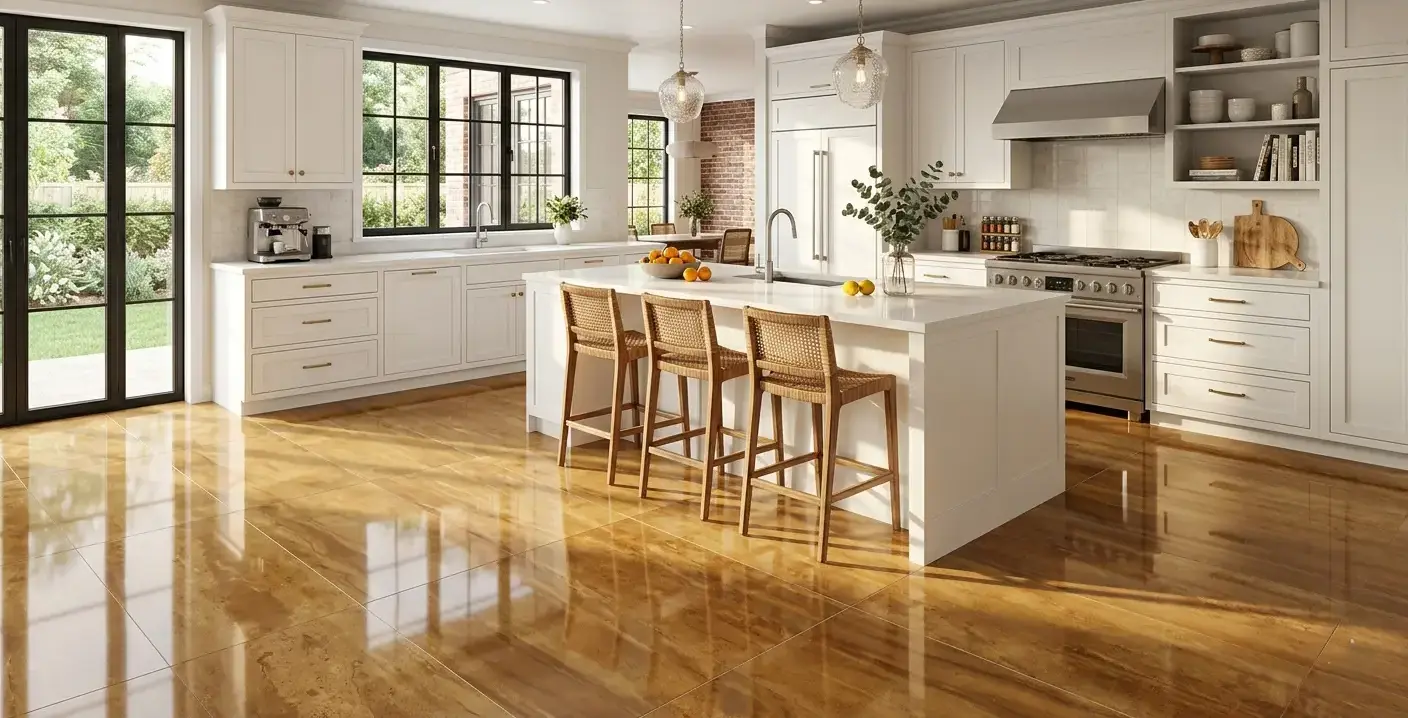
Amber porcelain tile pairs naturally with warm brass hardware, natural oak cabinetry, and soft white walls. The tonal range shifts from pale honey through deep amber. That depth reads like natural stone without requiring stone's upkeep.
Four layout orientations suit different design goals. A stacked grid creates clean geometric order that echoes modern kitchen cabinetry lines. Offset or brick-style arrangements give bathrooms a relaxed, handcrafted feel within a standard porcelain format.
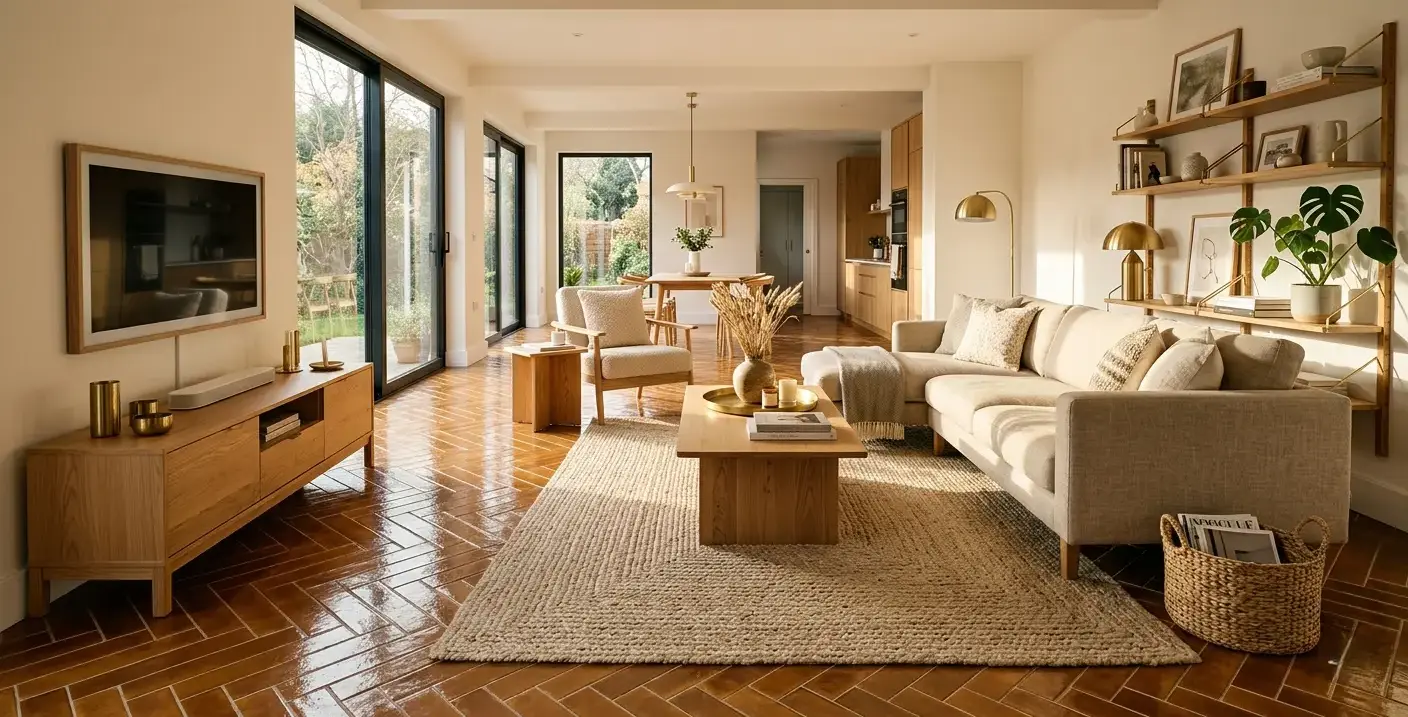
Vertical stacking in a shower column or accent wall draws the eye upward, visually extending ceiling height. Herringbone is the statement option, turning a living room floor or entry hall into a focal point using the same tile found elsewhere in the space.
Zellige-influenced tonal glazes produce surface variation that mimics hand-applied ceramics, so no two installations look identical. That variation adds perceived depth without pattern fatigue across large wall or floor runs. Format and finish options are available through the amber tile shop for quick reference on stocking sizes.
Practical Benefits of Stone-Look Surfaces
- Impervious absorption ( ≤ 0.5%): Near-zero water absorption protects the tile body in humid kitchens and bathrooms. Sealing grout lines periodically preserves the finished look over time.
- PEI IV abrasion rating: Covers all residential floors and light commercial traffic zones. A kitchen, a busy hallway, and a retail fitting room all share the same specification.
- DCOF
≥
0.42 on applicable finishes: Meets the residential wet-area threshold per ANSI A326.3. Matte and textured variants typically exceed this figure; polished and lapato finishes should be confirmed against the finish-specific spec sheet.
- Chemical resistance: Passes standard chemical testing under normal conditions. Everyday household cleaners do not etch or stain the glaze.
- Frost-rated availability: The frost-rated format suits covered patios, outdoor kitchens, and cold-climate exteriors. Interior versions are available in the same color range and finish options.
- Rectified and non-rectified formats: Rectified tiles support 1/16" grout joints for a near-continuous surface plane. Non-rectified tiles show natural size variation; joints of 3/32" to 1/8" are recommended to accommodate that variance.
- Finish variety: Matte and textured options provide higher DCOF for wet-area confidence. Polished and lapato finishes redirect light in kitchens and living rooms where luminosity is a design goal.
Zellige-look tonal variation affects how a surface responds to long-term cleaning. Reading porcelain care tips before finalizing a finish helps set accurate expectations for routine maintenance.