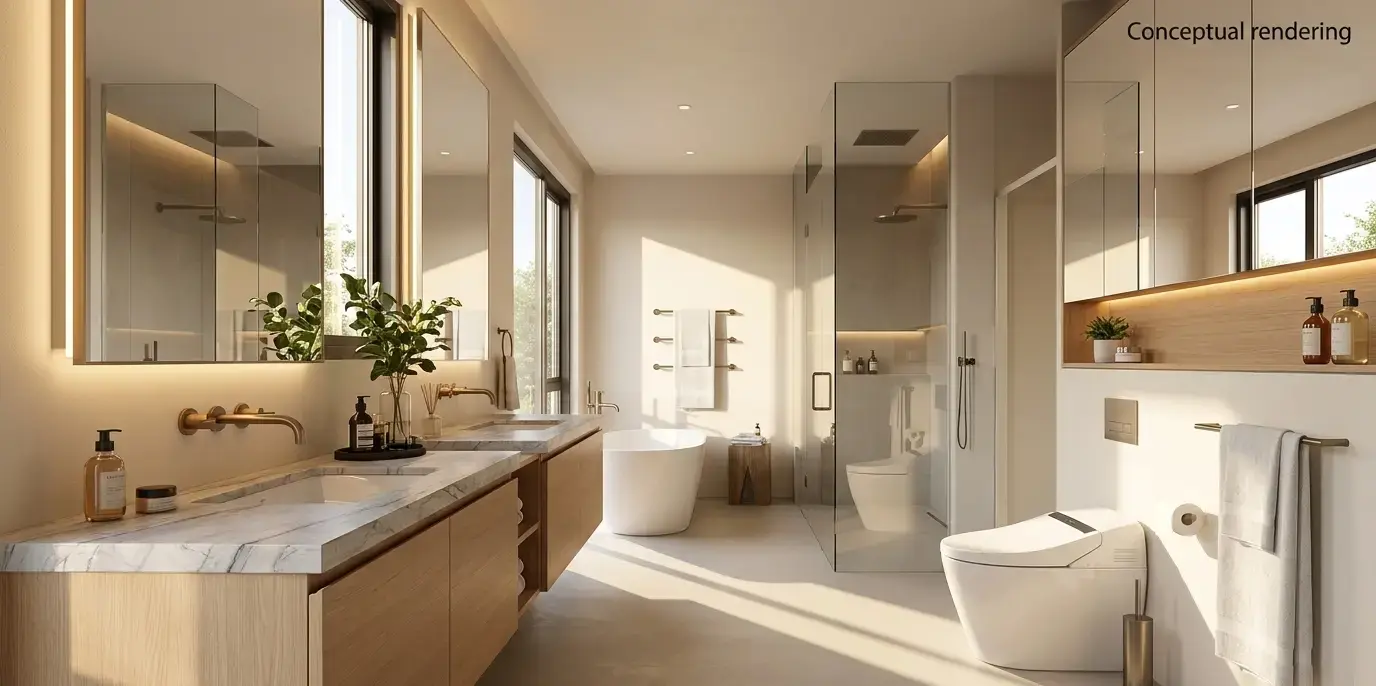
Allure quartzite is a natural stone option for bathroom countertops and vanity surfaces. This quartzite variety features a warm cream and beige base with crystalline white veining, along with subtle gray and blue tones that add depth and movement to each slab. Available in polished, honed, leathered, and specialty finishes, it complements spa-inspired bathrooms and transitional designs. Whether updating a single vanity or planning a full renovation, this stone combines visual appeal with dependable long-term performance.
Visit Nova Tile and Stone at one of four showroom locations in Reno, Minden, Sacramento, and Fernley, where a team of premium stone design experts can help you view Allure quartzite in person and provide a complimentary design consultation to guide your selection.
Stone Specs and Material Profile
Allure quartzite is a metamorphic natural stone formed when quartz-rich sandstone undergoes extreme geological heat and pressure over millions of years. Quarried primarily in Brazil, it registers 7 on the Mohs hardness scale, placing it harder than marble (which typically ranges from 3 to 4) and comparable to granite in scratch and abrasion resistance. Standard slab thickness is 3 cm, sufficient for bathroom vanity overhangs and undermount sink cutouts without requiring additional structural support.
The stone carries a naturally low absorption rate, and when properly sealed, it performs confidently in high-humidity bathroom environments. It resists etching from cosmetics and personal care products far more effectively than marble, and delivers organic veining depth that engineered quartz cannot replicate. Compared to granite, Allure quartzite produces a more fluid, movement-rich surface character more consistent with the look of high-end marble.
Finish and Layout Options for Bathroom Vanities
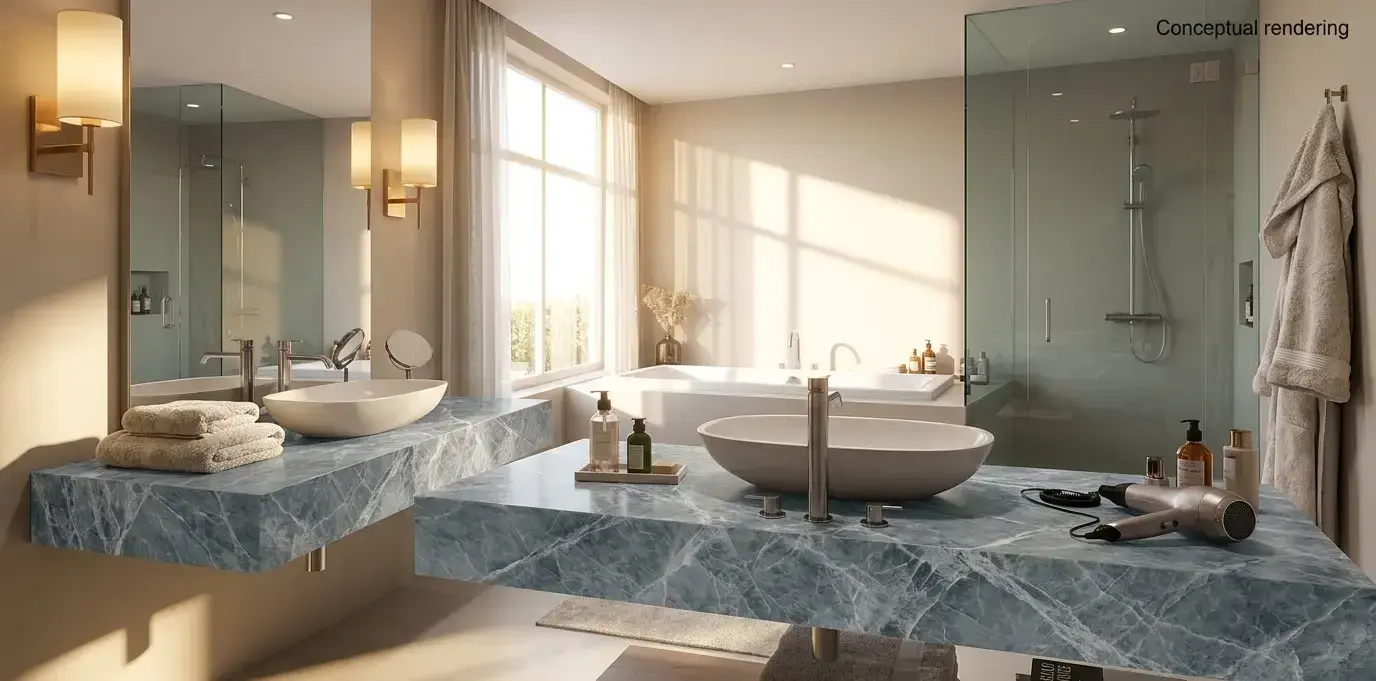
Polished Allure quartzite creates a reflective, upscale surface that brings crystalline white veining into sharp relief against the cream background. Honed finish softens that sheen for a matte, spa-like appearance that pairs naturally with warm wood cabinetry and matte metal fixtures. Leathered finish adds a subtle texture with a low-sheen surface that conceals fingerprints and water spots while lending an organic, tactile quality to the vanity. For a more distinctive application, the specialty finish offers a unique surface character suited to design-forward spaces where texture and individuality take center stage.
For larger primary bathrooms, extending the slab from the vanity top onto a feature wall or shower niche surround adds visual continuity throughout the space. Bookmatching two slabs creates symmetrical veining with a deliberate, architectural quality. On standard single vanities, a straight horizontal layout lets the cream and beige tones serve as a calm, elevated backdrop without competing with surrounding tile or mirrors.
For a broader look at how quartzite performs across vanity designs, explore the quartzite bathroom slab for countertop collection.
Performance Advantages of Allure Quartzite for Bathroom Countertops
- Mohs 7 hardness resists scratches from grooming tools and routine surface contact
- Low natural absorption rate supports moisture resistance in humid bathroom conditions
- Etch-resistant surface handles mild soaps, cosmetics, and pH-neutral cleaning products
- UV-stable stone retains its color in bathrooms with direct natural light exposure
- Non-repeating slab pattern makes each vanity installation a one-of-a-kind surface
- 3 cm standard thickness supports undermount and vessel sink configurations
- Polished and honed finishes provide flexibility across bathroom design styles
For a detailed look at how quartzite holds up against marble, granite, and engineered alternatives, this quartzite countertop guide covers material properties, maintenance requirements, and selection criteria every homeowner should review.
Frequently Asked Questions
Yes. Its Mohs 7 hardness rating, low absorption rate, and strong etch resistance make it well suited for vanity surfaces, particularly when properly sealed before use.
Polished, honed, leathered, and specialty. Polished is reflective and formal; honed is matte and understated, making it a natural fit for spa-inspired bathroom designs. Leathered adds subtle texture with a low-sheen surface that conceals everyday marks, while the specialty finish suits design-forward spaces where a more distinctive surface character is desired.
Every 12 to 18 months for most vanity applications. Use a simple water drop test to confirm when the sealant needs refreshing.
It is significantly harder and more resistant to etching than marble, making it a more forgiving surface in bathrooms where cosmetics and soaps are part of daily use.
The primary tones are cream and beige with intricate crystalline white veining. Subtle gray and blue secondary tones add depth and make it versatile across both warm and cool bathroom color schemes.
Ready to see Allure Quartzite in person? Visit one of four showroom locations or book your free design consultation today to view Allure Quartzite slabs for bathroom countertops and browse options that fit your renovation perfectly.
Note: Some images on this page may be conceptual renderings created to illustrate design possibilities and may not depict actual installations.