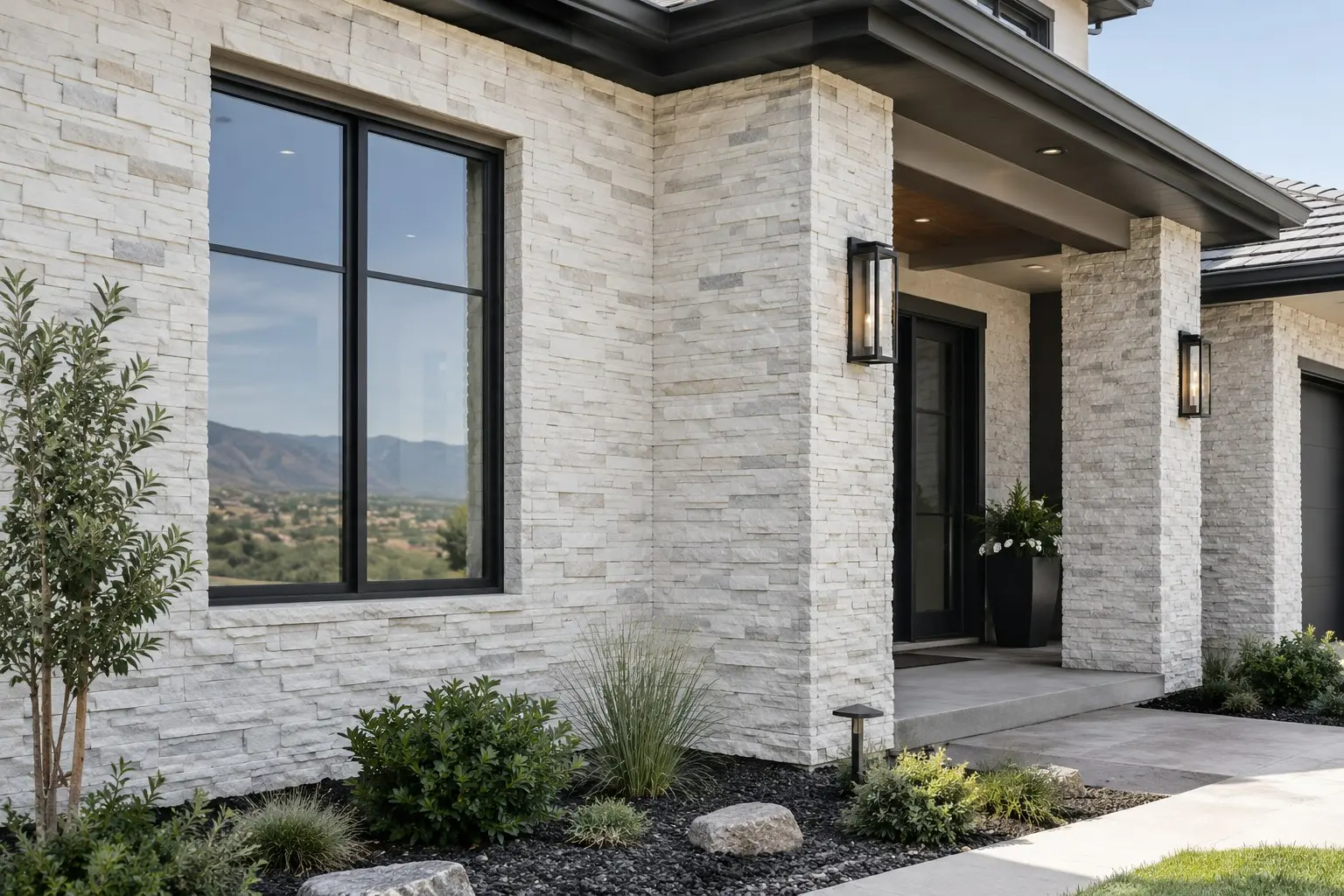
Ledger stone is a natural stone veneer made from thin, narrow strips of stone, typically stacked into panels that give a wall layered depth and fine shadow lines. In light tones, white ledger stone is used on exterior facades, entry walls, columns, and courtyard walls to brighten shaded areas and create contrast with darker siding and trim. Its pale surface reflects daylight well, but it also shows soil splash, rust, and runoff more readily, so choosing an outdoor-rated product, planning for drainage, and keeping up simple care help it hold its bright look.
Our team can help you compare options from our ledger stone collection, and you can browse our stone and slab collections for coordinating outdoor materials.
How Do You Pick a White Ledger Stone That Suits Your Exterior?
Start with undertone, because white in natural stone covers a wide range. Some pieces read as a crisp, cool white, others lean toward ivory or cream, and many carry soft gray streaks that add movement. Light shifts that tone through the day, so a wall in steady shade tends to look cooler, while one catching late afternoon sun can take on a warmer glow.
Placement and surroundings shape the result too. White stone tends to look sharpest beside dark window frames, charcoal siding, or black metal railings. A ledger stone accent wall framing a front door draws the eye to the entry, while a band along the lower facade grounds the house.
Our current ledger panels are natural quartzite with a split-face texture, in a standard 6 by 24 inch size and about 1 to 1.5 inches thick. Shade can vary between batches, so ordering the full quantity at once helps keep the color consistent, and our team can confirm which light-toned panels are available and how each is rated for outdoor exposure. For sustainability questions, this guide to environmental product labels for natural stone explains the common environmental and health labels you may see.
What Should You Know Before Putting White Stone on an Outdoor Wall?
Natural stone suited to exterior use can stand up to sun, rain, and seasonal temperature swings for many years, but white tones make everyday staining easier to spot. Rain can splash soil onto the lowest courses, iron-rich fertilizer or nearby metal fixtures can leave rust-colored marks, and runoff from a roof edge can streak the face. On shaded, damp walls, mildew or algae can appear as green or dark patches.
The stone generally handles rain well, but standing water at the base of a wall or constant sprinkler spray raises the risk of staining and, in cold climates, freeze damage. White tones generally stay stable in sunlight, but a film of dust and mineral residue can make them look dull. Some ledger panels are rated for outdoor use only in climates without freezing, so checking the rating comes first.
Installation is handled by your contractor or mason, who will typically focus on drainage and full coverage of the setting material on the back of each piece so water does not collect behind the stone. For wall caps and ledges, our team can help you choose stone slabs suited to outdoor use that tie into the panels.
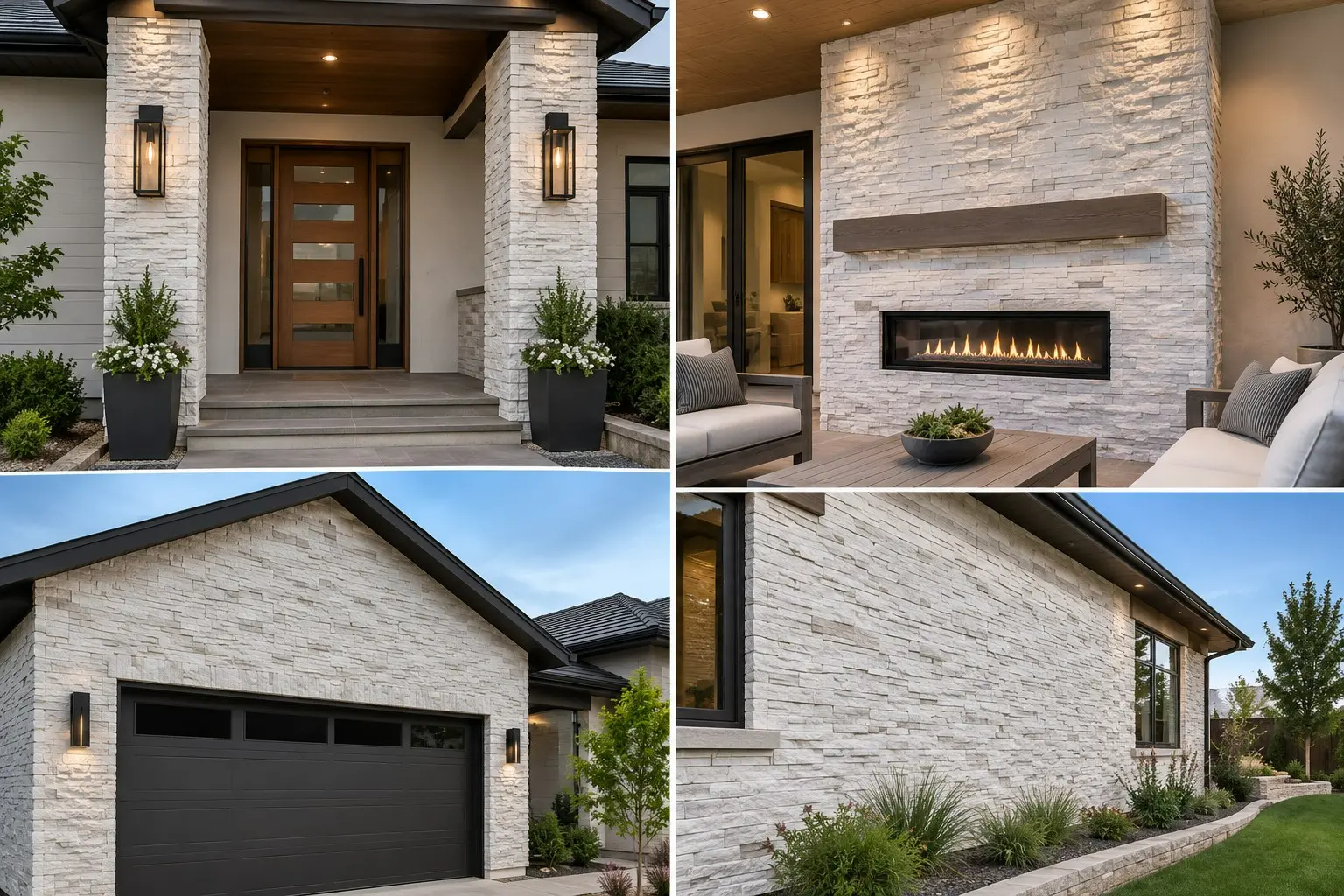
Benefits of a White Stone Exterior
- White stacked stone brightens shaded entries, courtyards, and walls that receive little direct sun.
- It creates crisp contrast with dark trim, siding, and metal accents.
- A light surface absorbs less of the sun's heat, which can help the stone stay cooler to the touch on hot days.
Drawbacks Worth Planning For
- Soil splash, rust, and runoff streaks show more readily on a light surface.
- Ledges and textured faces hold dust and pollen, so periodic rinsing helps.
- Stone panels add weight that the wall structure must be prepared to carry.
How Do You Keep White Ledger Stone From Looking Dingy?
- Leave a gravel strip or a few inches of clearance between soil beds and the wall to reduce mud splashing onto the lowest courses.
- Aim sprinklers away from the stone, and confirm that gutters and downspouts carry water clear of the wall.
- Rinse the wall periodically with a garden hose, and for stubborn dirt, work a soft-bristle brush and a pH-neutral cleaner made for natural stone gently into the ledges.
- Treat mildew or algae with a product labeled safe for natural stone, and test it on a small, hidden area first.
- Sweep up fertilizer granules near the wall, and address rust marks from metal fixtures early, before they set deeper.
- Avoid acidic cleaners, abrasive powders, wire brushes, and harsh chemicals, which can etch, scratch, or discolor the surface.
- Skip high-pressure washing, since a strong spray can loosen pieces and erode joints.
- Ask your contractor whether a breathable, penetrating sealer makes sense for high-exposure areas, since it helps reduce staining but does not prevent it.
- Use the Natural Stone Institute's consumer care resources for stone-specific guidance.
Conclusion
White ledger stone, sometimes written as white ledgestone, rewards careful planning. Choosing a shade that suits your home's light, placing it where brightness or contrast helps most, and keeping water and soil off the face go a long way toward preserving its look. Our team can lay out the panels we carry so you can compare undertones side by side. Book a time to visit our showroom to see the stone in person, or get a quote on coordinating slabs for your exterior plans.
Frequently Asked Questions
Compare undertones first, since white ledger stone ranges from cool, bright white to warmer ivory and cream. View samples outdoors on the wall where they will go, in morning and evening light, and order the full quantity together, since natural stone can vary between batches.
White ledger stone can hold up well outdoors, but its light color makes soil splash, rust marks, and runoff streaks more visible. Good drainage, careful sprinkler placement, and regular rinsing help keep the surface looking clean.
Use a rust remover formulated for natural stone, test it on a small, hidden area first, and follow the product directions closely. Avoid general-purpose rust removers that contain hydrofluoric acid, which is hazardous to handle and can damage stone.
Some white stones contain small amounts of iron that can oxidize with repeated moisture exposure, which may cause yellow or rust-tinted spots. Limiting standing water, using cleaners made for stone, and keeping metal and fertilizer away from the wall can help reduce the chance of discoloration.
Many ledger panels are designed to be dry-stacked with tight joints, so little mortar shows on the finished wall. Where joints are visible, white or off-white mortar tends to keep the surface looking uniform, while gray adds subtle definition between courses.
Looking for immediate assistance?
We'd love to hear from you! If you have any questions, feedback, or need assistance, please feel free to reach out to us using the contact details provided. Our team is here to help and will respond as soon as possible. Thank you for getting in touch!
(Available Mon-Fri 7:30am - 4:00pm PST)
Unlike most customer service lines, ours connects you with real people.
When you call, just press 1 for online shopping support, or 2 for local shopping support!