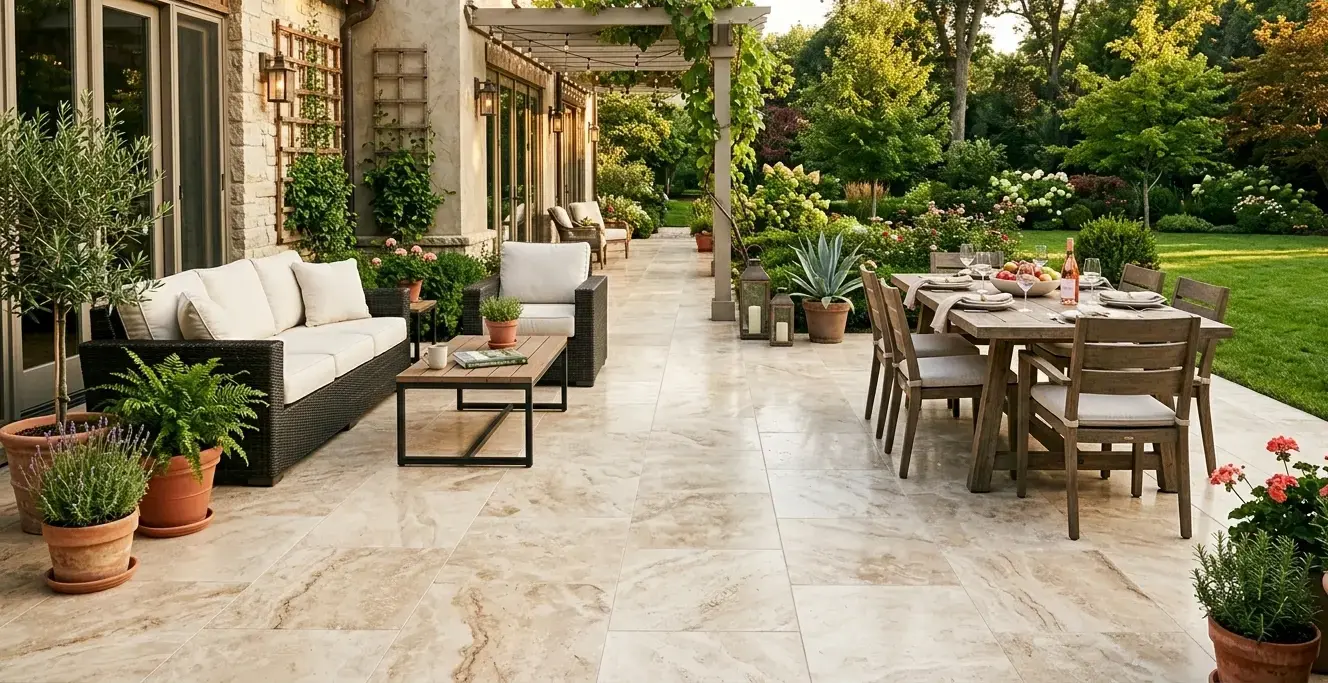
Outdoor-Rated Travertine: Specs, Hardness, and Quarry Sources
Travertine forms through calcium carbonate precipitation around mineral-rich hot springs, producing a sedimentary limestone with signature porosity and banded texture. These slabs rate 4 to 5 on the Mohs hardness scale, sitting above marble at 3 to 4 and below granite at 6 to 7 or quartzite at 7. Standard thicknesses come in 2 centimeters and 3 centimeters, with full-format cuts near 126 by 63 inches.
Water absorption measures 1 to 3 percent, higher than dense quartzite but comparable to most natural limestones. Principal quarry regions include Tivoli in Italy, Denizli in Turkey, Kashan in Iran, and Veracruz in Mexico, each contributing palettes of ivory, walnut, silver, and gold. Compared to engineered porcelain pavers or concrete alternatives, travertine delivers genuine tonal variation and a surface that ages rather than fades.
Pattern Layouts for Patio Surfaces and Pool Surrounds
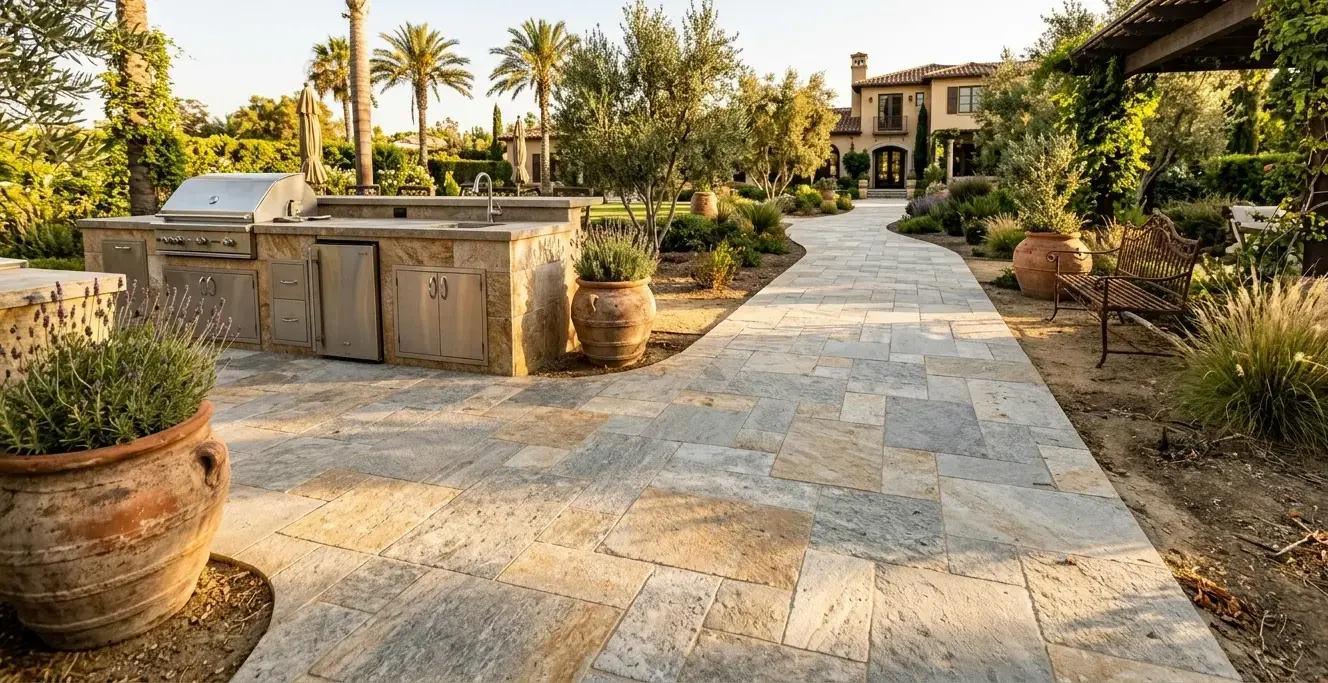
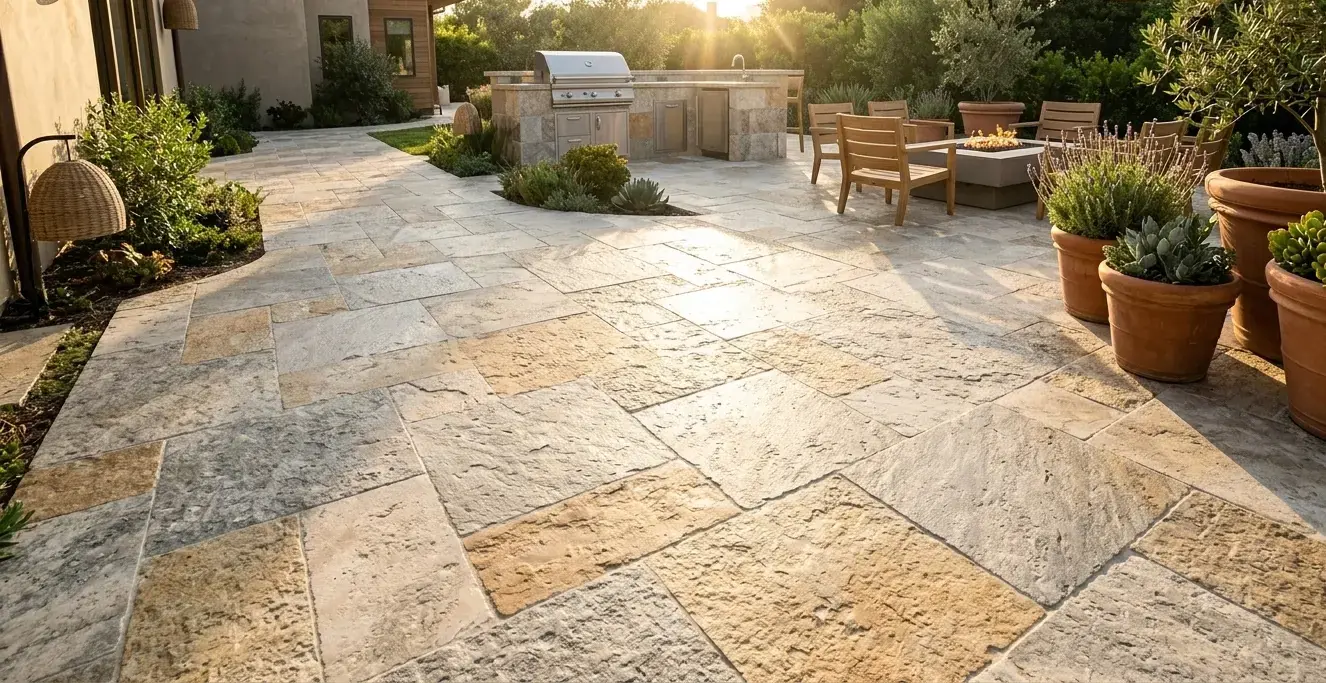
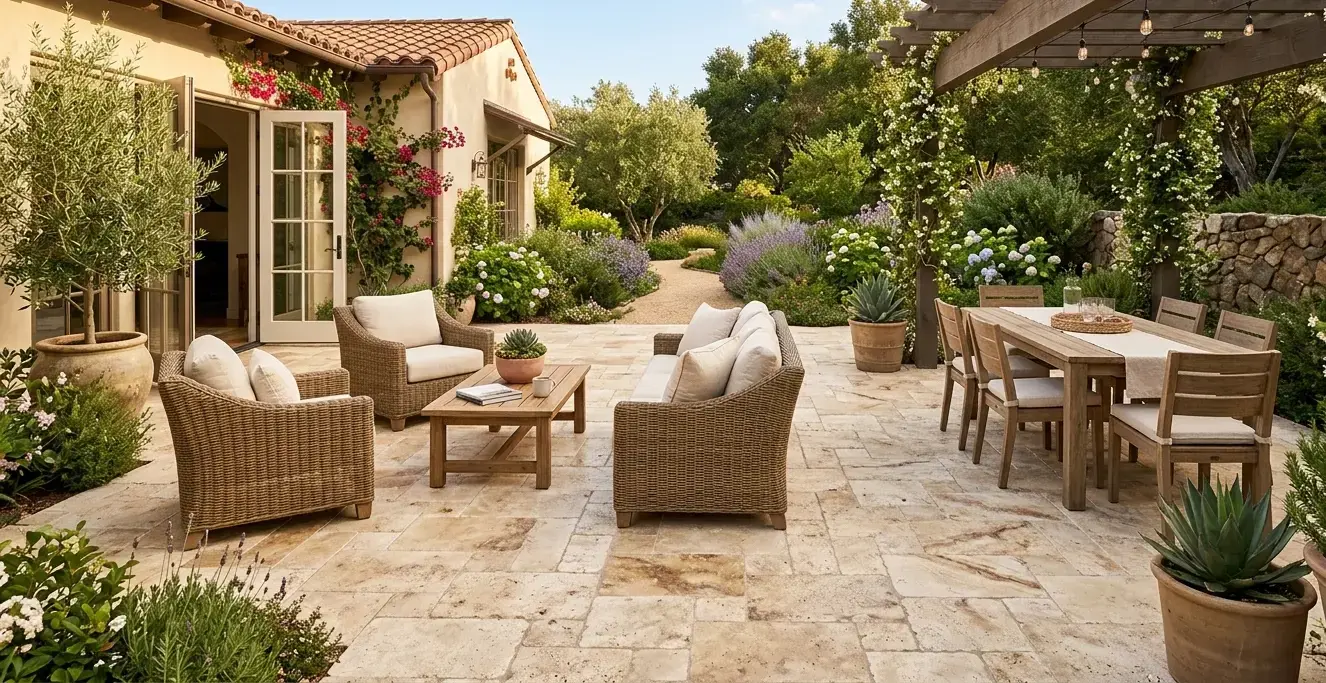
Travertine Outdoor Paving adapts to a wide range of exterior layouts, from classic French pattern with four tile sizes interlocked for old-world rhythm, to ashlar, running bond, herringbone, and straight horizontal or vertical runs for modern hardscape.
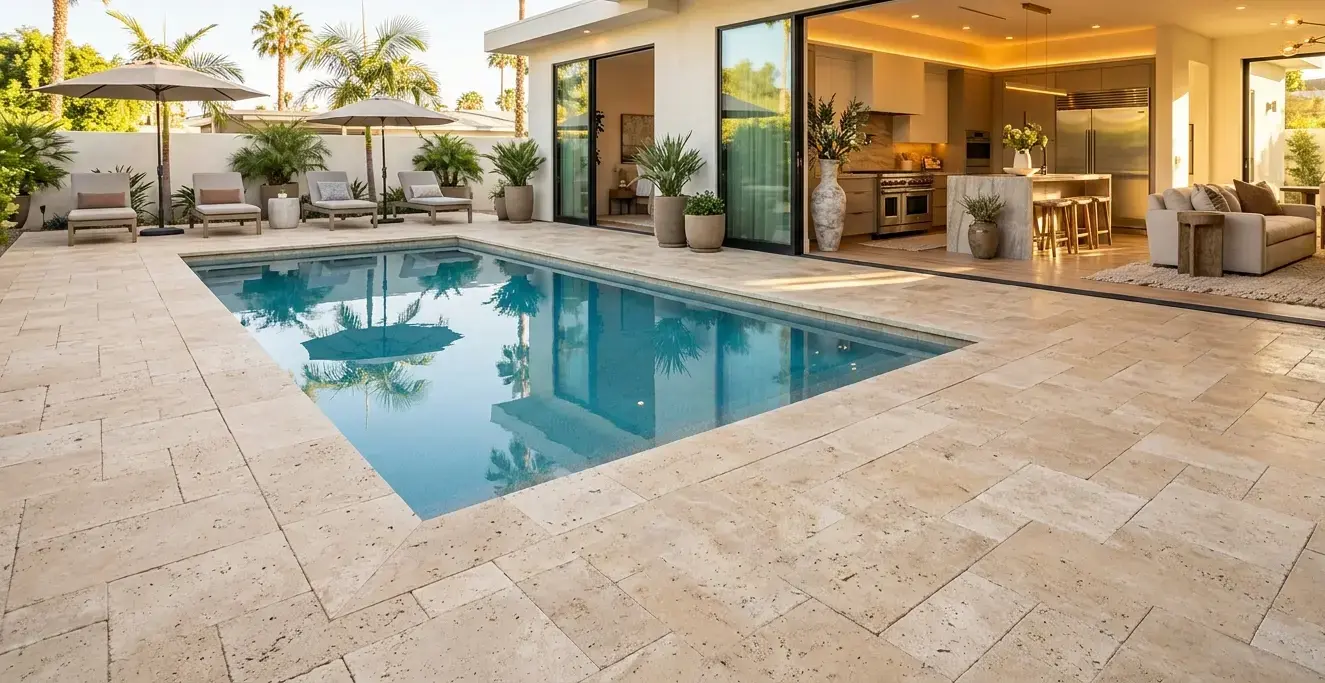
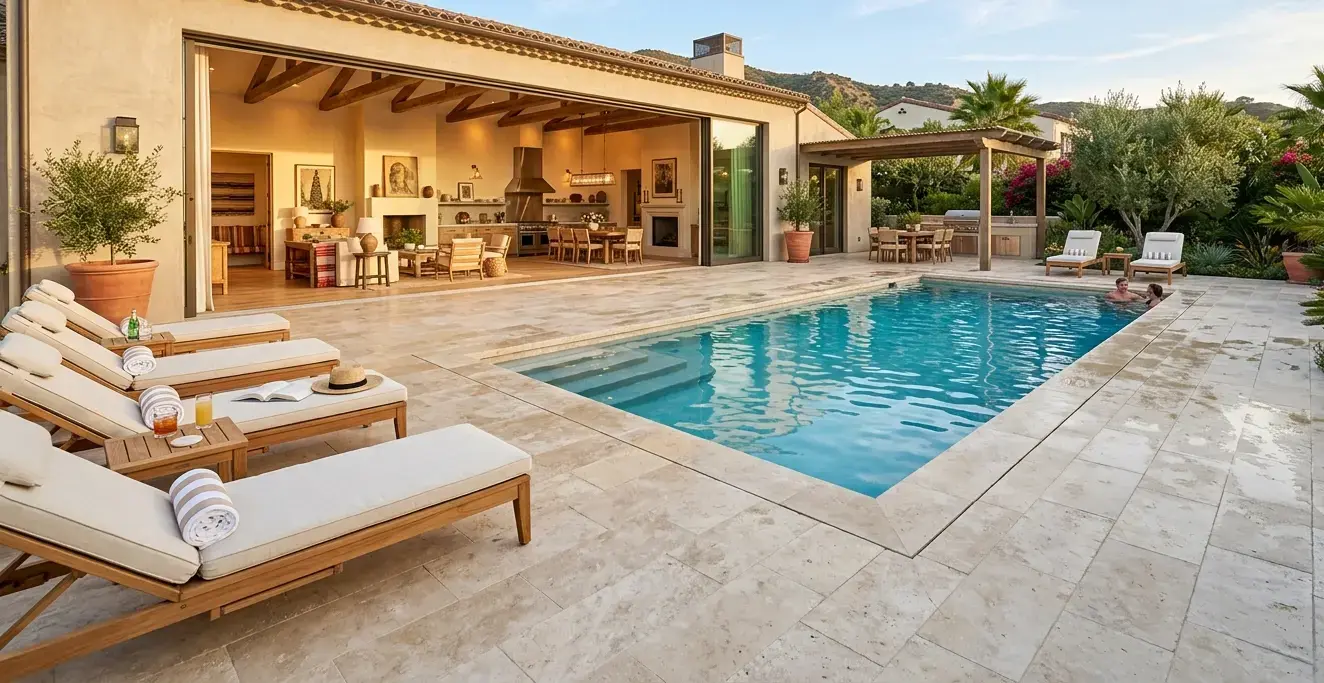
Pool decks favor tumbled or brushed slab finishes for slip resistance, while polished surfaces suit covered loggias and commercial lobbies. The same travertine stone fabricates cleanly into indoor kitchen countertops and bathroom countertops, giving homeowners a single material palette for seamless indoor-outdoor transitions, including accent walls and fireplace surrounds.
Real-World Perks of Travertine Paving Outdoors
- Stays measurably cooler underfoot than dark granite or concrete in direct summer sun
- Natural slip resistance on honed and tumbled finishes makes it pool-deck safe
- Withstands freeze-thaw cycles across Reno, Minden, Sacramento, and Fernley climates
- Each slab features unique veining, so no two patio sections look identical
- Porous structure lets water drain through rather than pool on the surface
- Pairs visually with wood decking, stucco walls, stone cladding, and metal railings
Frequently Asked Questions
Honed, tumbled, and brushed finishes offer strong slip resistance even when wet, making travertine a preferred surface for pool decks and splash zones.
A penetrating sealer applied every two to three years protects against moisture infiltration, mineral staining, and freeze-thaw damage in outdoor conditions.
When correctly sealed with proper drainage, travertine handles freeze-thaw cycles well because its natural porosity accommodates expansion better than denser stones.
Ivory, walnut, and silver perform beautifully outside. Lighter tones reflect heat and keep surfaces cooler, while walnut and gold add warmth to garden paths and patios.
Yes. Hotels, restaurants, and municipal courtyards rely on travertine paving for durability, heritage appearance, and performance under constant foot traffic.
Fresh Updates on Premium Slab Collections
Find Out What’s Fresh in Our Showrooms and Slab Inventory
Note: Images on this page are conceptual renderings created to illustrate design possibilities and may not depict actual installations.