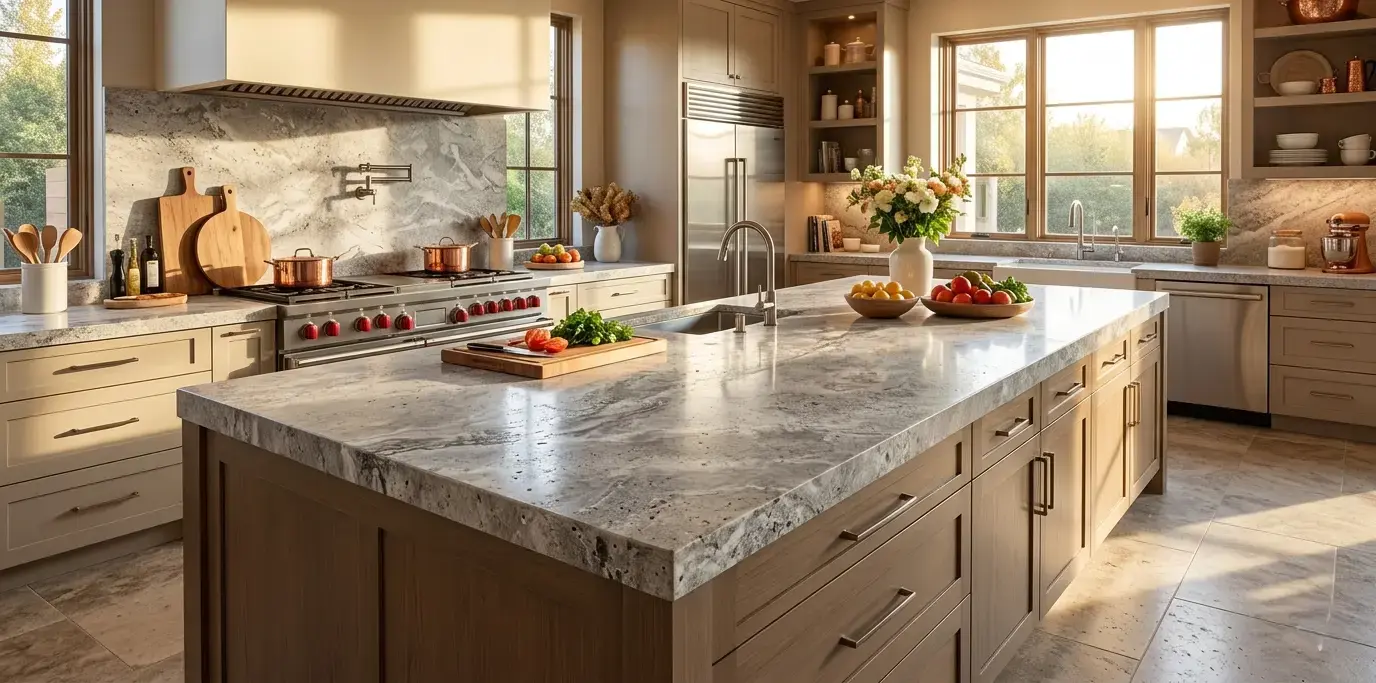
Travertine countertop slabs are premium natural stone surfaces prized for their timeless appeal and geological authenticity. Offered in polished, honed, and leathered finishes, these slabs come in a wide spectrum of rare colors suited for both kitchen and bathroom applications. Each piece reveals distinctive pitting, earthy veining, and warm tonal variation that engineered surfaces cannot replicate, making travertine a sought‑after choice for homeowners who value organic character and durability. Nova Tile and Stone provides an extensive travertine inventory across four showrooms, allowing clients to hand‑select slabs that align with their design vision. From countertops and vanities to accent walls and flooring, our expert team ensures every slab is matched to the right finish, cut, and installation requirement for lasting beauty.
Travertine Countertop Slabs: Specs, Hardness, and Quarry Origins
Travertine is sedimentary limestone formed when calcium carbonate precipitates near mineral-rich hot springs, producing the pitted texture collectors prize. Travertine countertop slabs rate 4 to 5 on the Mohs hardness scale, above marble (3 to 4) yet below granite (6 to 7) and quartzite (7). Standard thicknesses run 2 centimeters and 3 centimeters, with full cuts spanning roughly 126 by 63 inches.
Major quarry locations include Tivoli in Italy, Denizli in Turkey, Kashan in Iran, and Veracruz in Mexico. Each contributing its own palette and vein pattern. Absorption rate typically sits between 0.2 and 2 percent depending on density and filling, higher than granite yet manageable with routine sealing. Compared to engineered quartz or porcelain slabs, travertine trades factory uniformity for genuine texture and warmer tonal depth.
Layout Flexibility Across Kitchens and Baths
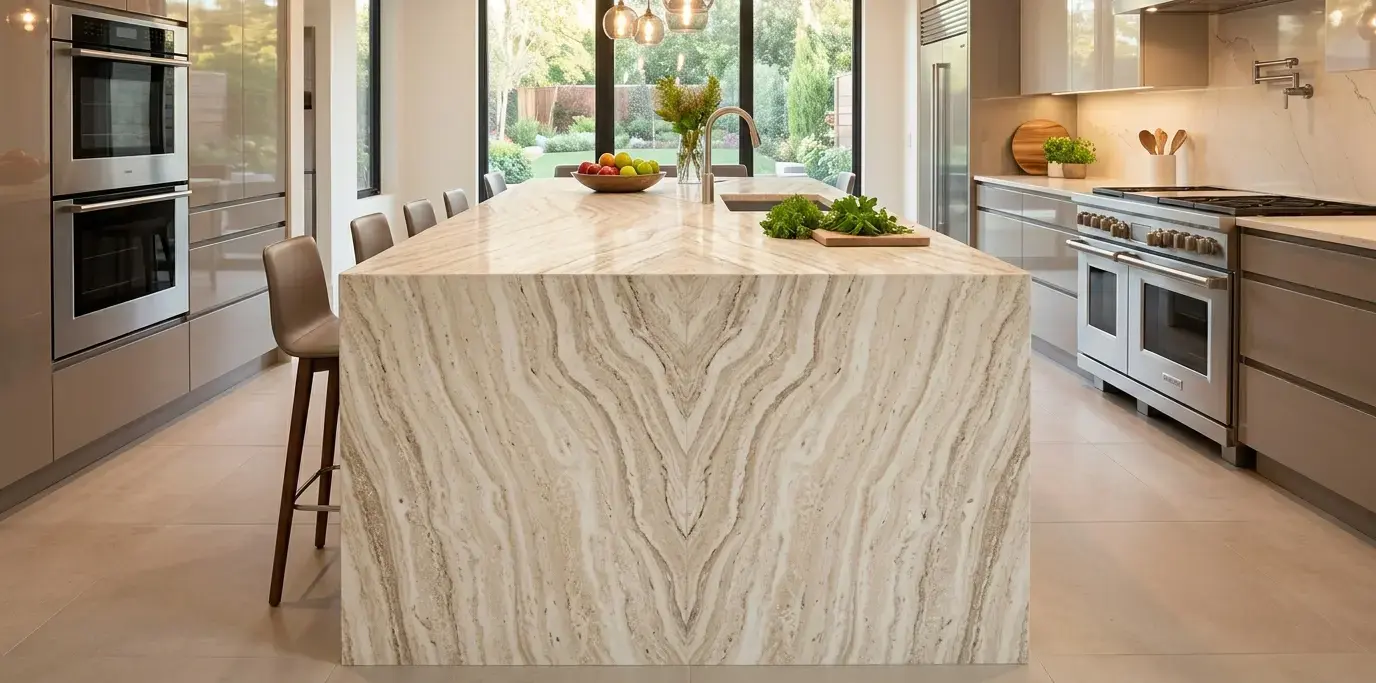
These slabs adapt to nearly any layout direction. Vein-cut formats run linear stripes along counter lengths for a clean modern look, while cross-cut slabs produce cloudier, organic movement suited to traditional rooms. Bookmatched pairs create mirrored veining across island waterfalls and full-height splash walls.
Herringbone arrangements add visual interest on smaller zones like bar tops or powder rooms. A travertine kitchen countertop anchors islands with warm character that pairs with white, wood, or charcoal cabinetry, while bathroom setups unify vanities, shower curbs, and tub decks under one stone story.
Functional Advantages Homeowners Rely On
- Three finishes (polished, honed, leathered) suit formal, modern, or rustic rooms
- Heat-resistant surface tolerates hot cookware without scorching when properly sealed
- Rare palette spans ivory, silver, gold, walnut, plus uncommon burnt orange and gray-green tones
- Each travertine countertop slab is one of a kind, with fossil traces unique to its block
- Filled and unfilled variants offer a choice between smooth practicality and raw texture
- Pairs with straight, eased, beveled, or chiseled edge profiles for a custom look
- Works for kitchen counters and a travertine bathroom countertop where moisture resistance matters
Why These Slabs Hold Their Value
Travertine countertop slabs earn their place as long-term investments because the stone improves with age rather than degrading. A graceful patina develops over years of use, deepening the character that drew buyers in. Real estate professionals flag natural stone as a resale value driver, particularly rare varieties like silver, noce walnut, and burnt orange.
The material has shaped architecture for over two millennia, with the Roman Colosseum as the definitive example, so its aesthetic never slips out of fashion. Paired with periodic resealing and pH-neutral cleaning, it integrates with evolving design tastes, as shown in these luxury bathroom ideas for marble and travertine pairings.
Standard options are 2 centimeters and 3 centimeters, with 3 centimeters being the preferred choice for kitchens due to added strength and visual weight.
Residential kitchen surfaces benefit from resealing every 12 to 18 months. Bathroom vanities need sealing less often due to lighter wear.
Filled travertine has its surface voids treated for a smoother finish. Unfilled keeps its raw, pitted texture for a more rustic, old-world look.
Yes. Travertine rates 4 to 5 on Mohs, compared to 6 to 7 for granite and 7 for quartzite. Cutting boards and trivets help preserve the surface.
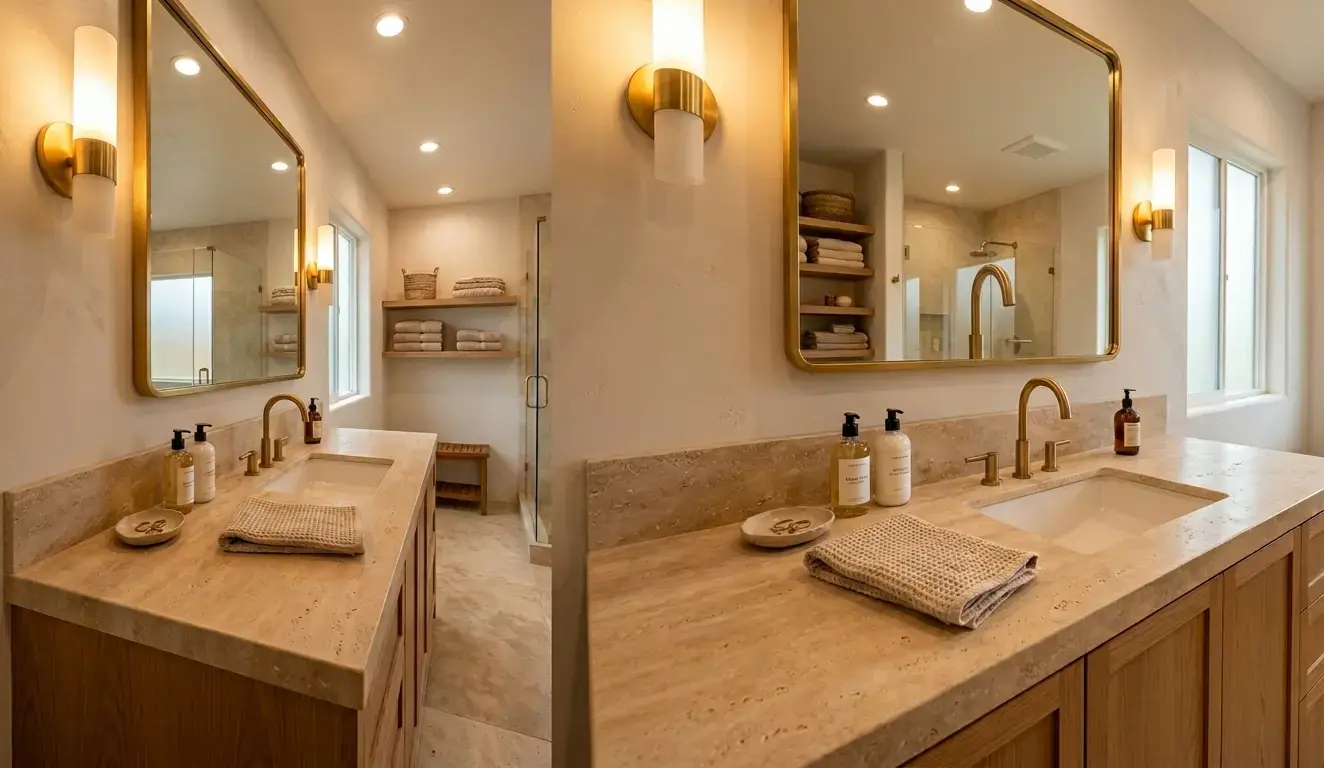
Honed finishes are the popular bathroom choice because the soft matte surface hides water spots and fingerprints while showcasing natural tonal depth.
Frequently Asked Questions
Fresh Insights from Our Blog
Book Your Free Design Consultation
Hand‑select your slab in person at any Nova Tile and Stone showroom, where each piece is carefully curated for color consistency, pattern strength, and fabrication readiness. Our expert team will guide you through the live inventory so you can see exactly what will be installed in your space. Prefer a more personalized approach? Book a free design consultation and let our specialists match the right color, finish, and cut to your project’s unique requirements.
Note: Images on this page are conceptual renderings created to illustrate design possibilities and may not depict actual installations.