Titanium Granite Outdoor Kitchen
Titanium Granite Outdoor Kitchen is a premium natural igneous stone with a deep, near-black base and visible silver, bronze, and gold mineral deposits. It rates 6 to 7 on the Mohs hardness scale, making it one of the most scratch-resistant natural surfaces available for countertop use. It is UV resistant, suitable for outdoor environments, and food-safe when properly sealed, though a cutting board is always recommended for regular food preparation. Heat resistance is strong by geological composition, but trivets should still be used to protect the stone and any sealant layer from sustained direct heat near a grill or burner. For homeowners building or upgrading an outdoor kitchen, Titanium Granite delivers the kind of surface that can hold its own through seasons of entertaining without losing the design credibility that makes an outdoor kitchen worth building in the first place.
Built for the Grill Zone: Practical Benefits of Titanium Granite Outdoor Kitchen
Titanium Granite is a strong and durable natural stone, but correct finish selection, sealing, and routine care are what keep an outdoor kitchen surface performing well season after season.
- UV resistant, but performance may vary depending on the finish and the degree of direct sun exposure over time
- Scratch resistant at Mohs 6 to 7, but cutting directly on the surface is not recommended
- Heat tolerant near grills and burners, but direct sustained contact with extremely hot cookware should still be avoided
- Food-safe when sealed, but a cutting board is always recommended for regular food preparation
- Stain resistant when sealed, but cooking oils, sauces, and acidic foods should be wiped away promptly
- Suitable for outdoor use, but outdoor conditions require more frequent resealing than interior applications
- Seamless slab format eliminates grout lines that collect grease and debris in an outdoor cooking zone
- UV stable mineral composition means the stone does not fade or bleach under direct sun the way some materials do
- Each slab is geologically unique, so viewing the actual piece in person before selecting is always recommended
Why Titanium Granite Is the Right Stone for an Outdoor Kitchen Countertop
An outdoor kitchen countertop faces conditions that an indoor surface never encounters: direct UV exposure, temperature swings between seasons, grease and cooking oils, humidity, and the constant contact that comes with active food preparation and entertaining. Most natural stones struggle with at least one of these demands. Marble etches from acidic cooking ingredients. Travertine requires frequent resealing under outdoor conditions. Limestone is too soft for heavy prep use.
Granite sits in a different performance category. Formed when molten magma cools deep underground, it develops a dense crystalline structure of quartz, feldspar, and mica that resists abrasion, handles UV exposure without fading, and tolerates the ambient heat of outdoor cooking environments better than most alternatives. The stone is stain resistant when sealed, but cooking oils, sauces, and acidic foods should be wiped away promptly rather than left on the surface. Sealing is an ongoing commitment outdoors, where weather exposure breaks down the sealant layer more quickly than in interior settings.
Compared to tiled countertop formats, which introduce grout lines that collect grease and food debris in an outdoor cooking zone, a full granite slab delivers a seamless surface with no joints to maintain. That single-span surface is far more practical in a working outdoor kitchen. Understanding the full maintenance picture before committing to a slab is worth the time, and sealing a natural stone countertop covers the key steps in detail.
Finish Options That Work in an Outdoor Kitchen Environment
The right finish for a Titanium Granite Outdoor Kitchen countertop depends on the level of activity in the space, the design direction of the outdoor kitchen, and how much ongoing surface maintenance the homeowner is prepared to commit to.
A leathered finish is often the most practical choice for an active outdoor kitchen. The textured surface conceals everyday cooking marks, water spots, and minor surface contact more effectively than polished, and the low sheen suits the informal, relaxed character that most outdoor cooking spaces call for. It is also less reflective, which reads naturally in outdoor daylight without the glare that a polished surface can produce in direct sun.
A honed finish offers a similar matte quality without the texture. It is smooth, non-reflective, and slightly more porous than polished, which means it requires more attentive sealing outdoors. For homeowners who prefer a softer aesthetic but want a flat surface, honed is a solid choice. A polished finish creates the boldest visual result, with the stone's metallic mineral deposits fully illuminated and its near-black depth at maximum intensity. It works best in covered outdoor kitchen settings where the surface is partially protected from direct weather exposure.
Nova Tile and Stone, a natural stone resource for homeowners across Northern Nevada and California, carries Titanium Granite slabs across four showroom locations in Reno, Sacramento, Minden, and Fernley where all three finishes can be seen and compared in person.
Designing the Outdoor Kitchen Around Titanium Granite
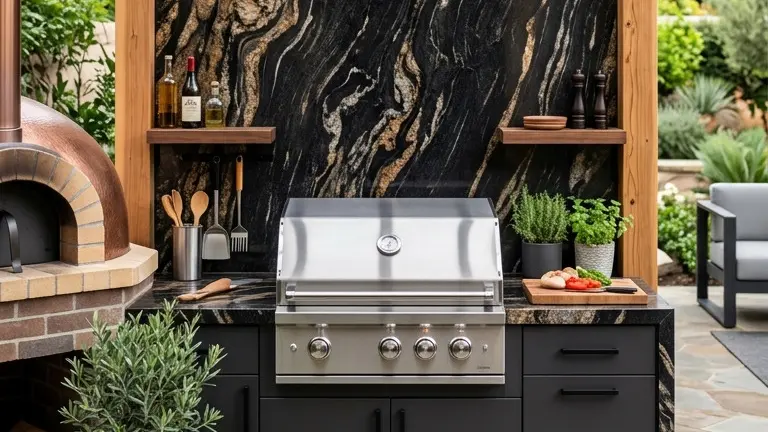
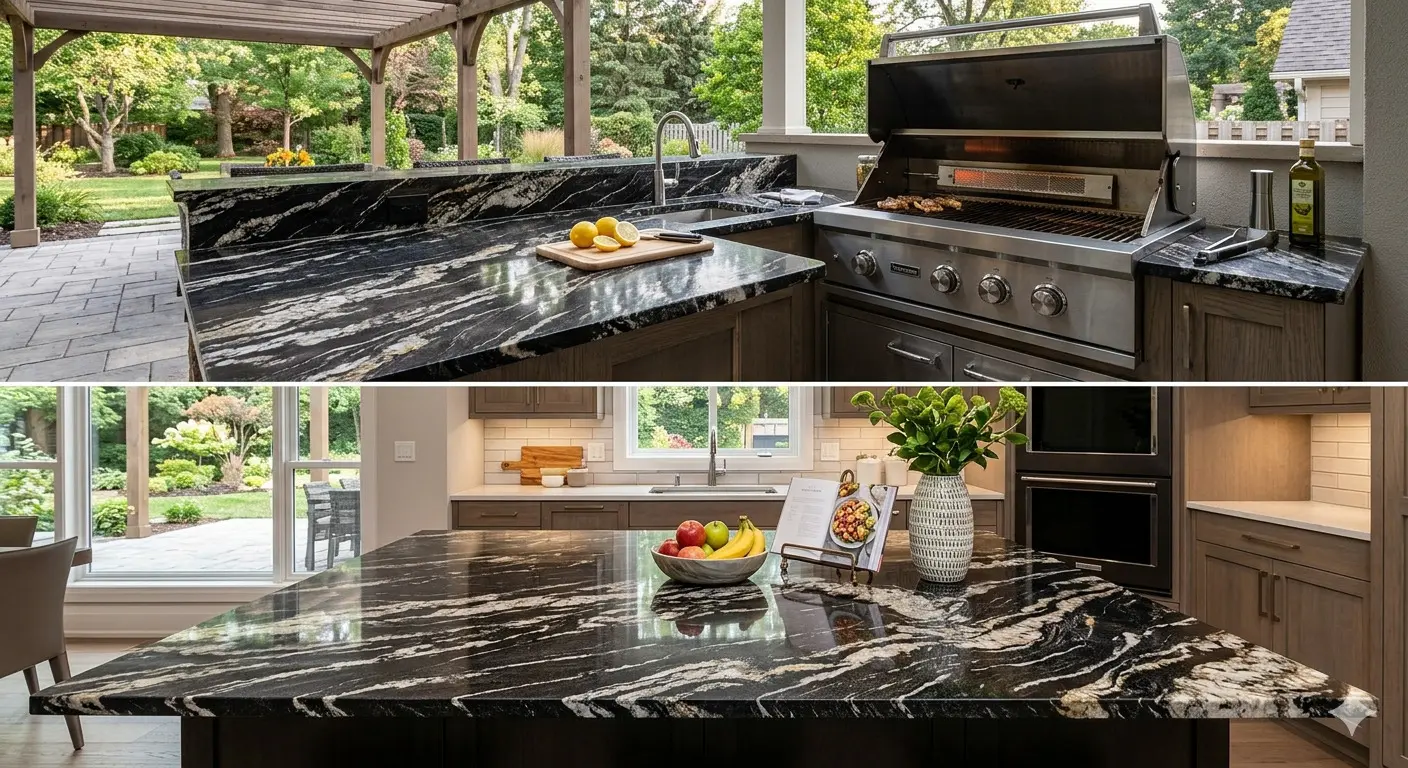
The deep palette of Titanium Granite gives an outdoor kitchen a grounded, architectural presence that lighter stones cannot deliver in the same way. It creates strong contrast against lighter cabinetry in painted or powder-coated white or grey, and it pairs naturally with stainless steel appliances where the metallic mineral deposits in the stone echo the material of the grill and refrigeration units.
Full Slab Island Configurations
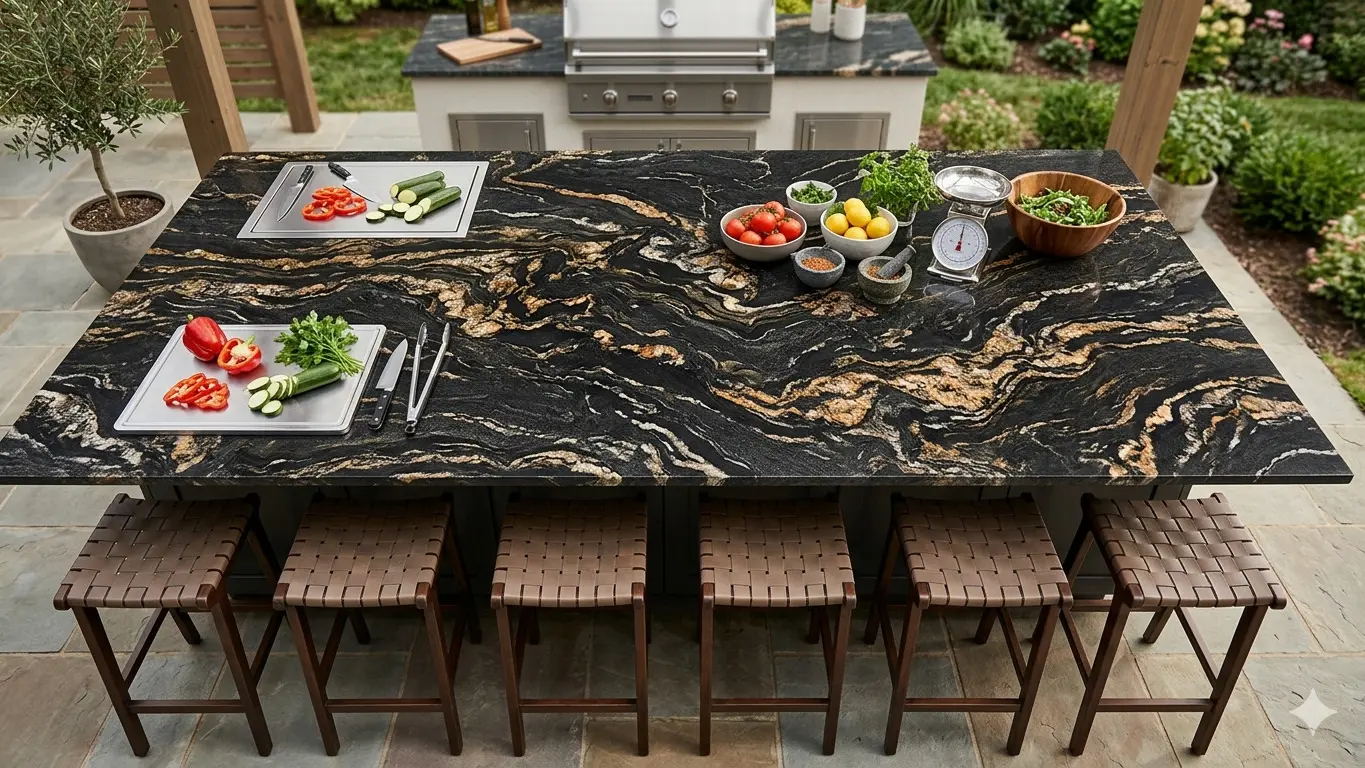
For outdoor kitchen island configurations, a full slab span across the island top is one of the most impactful ways to use this stone. The uninterrupted mineral movement across a large surface reads very differently from a tiled format, and it elevates the overall design of the outdoor space without requiring additional decorative elements.
Functional Design Definitions
Bar-top overhangs are another strong application, where the dark stone edge creates a clean visual line that defines the seating area from the cooking zone. This allows for a seamless transition between the meal preparation area and the social gathering space.
Coordinated Interior and Exterior Design
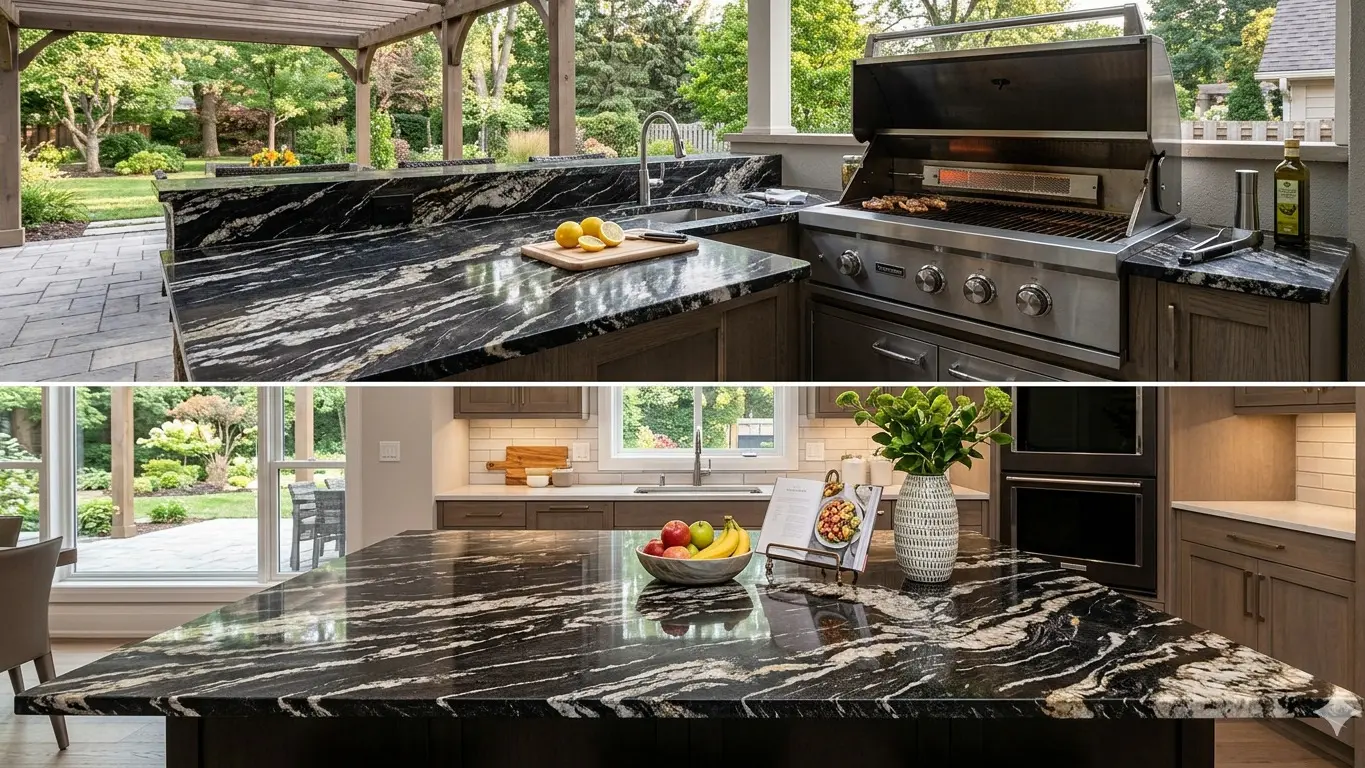
Homeowners who also want to bring Titanium Granite into interior spaces will find the stone transitions naturally. We offer additional resources to help you coordinate your surfaces across a connected home design:
- Granite Kitchen Islands: Explore how granite performs in island configurations indoors for a cohesive look.
- Black Granite Countertops: View a broader look at how dark stones perform across different finish and application combinations.
Learn More About Slabs
Frequently Asked Questions
Yes. It rates 6 to 7 on the Mohs scale, making it highly scratch resistant for active prep surfaces. It is UV resistant, heat tolerant, and food-safe when properly sealed. Outdoor applications require more frequent resealing than interior use, but the stone handles the demands of an outdoor cooking environment well with proper care.
A leathered finish is often the most practical choice for an outdoor kitchen because it conceals everyday marks, handles outdoor conditions well, and avoids the glare that polished surfaces can produce in direct sunlight. Honed is a good alternative for a smoother matte surface. Polished works best in partially covered outdoor kitchen settings.
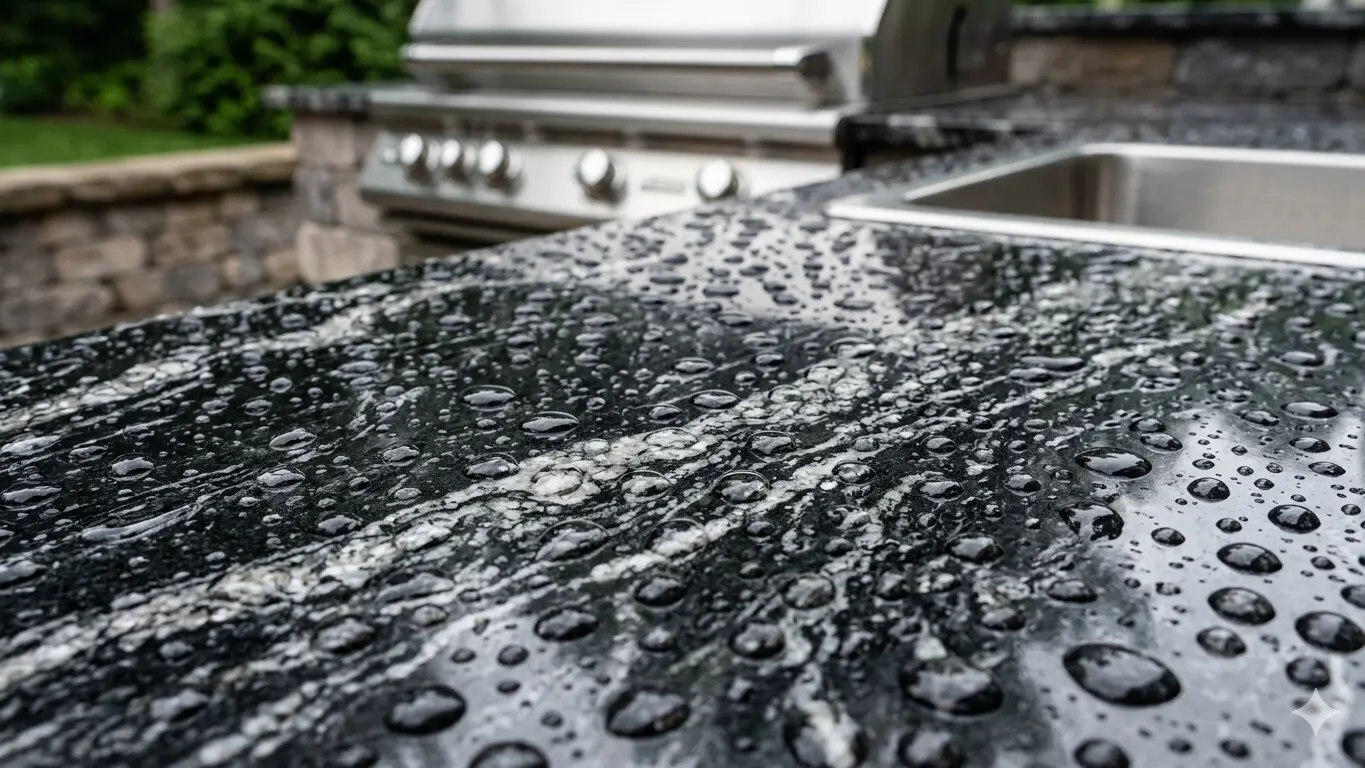
More frequently than interior applications. Annual resealing is a reliable starting point, but high-exposure outdoor kitchens may benefit from resealing every six to nine months. A water drop test will tell you when the sealant needs refreshing. If water absorbs rather than beading on the surface, it is time to reseal.
Yes. The same material performs well indoors as a modern kitchen countertop, luxury kitchen island surface, or bathroom vanity. The dark palette pairs naturally with light cabinetry, warm wood tones, and matte or metallic fixtures across a wide range of interior design styles.
A full slab eliminates grout lines across the countertop surface. In an outdoor kitchen, grout lines collect grease, food debris, and moisture from cooking activity, increasing maintenance demands over time. A slab surface is seamless, easier to clean after cooking, and delivers a far more refined visual result.