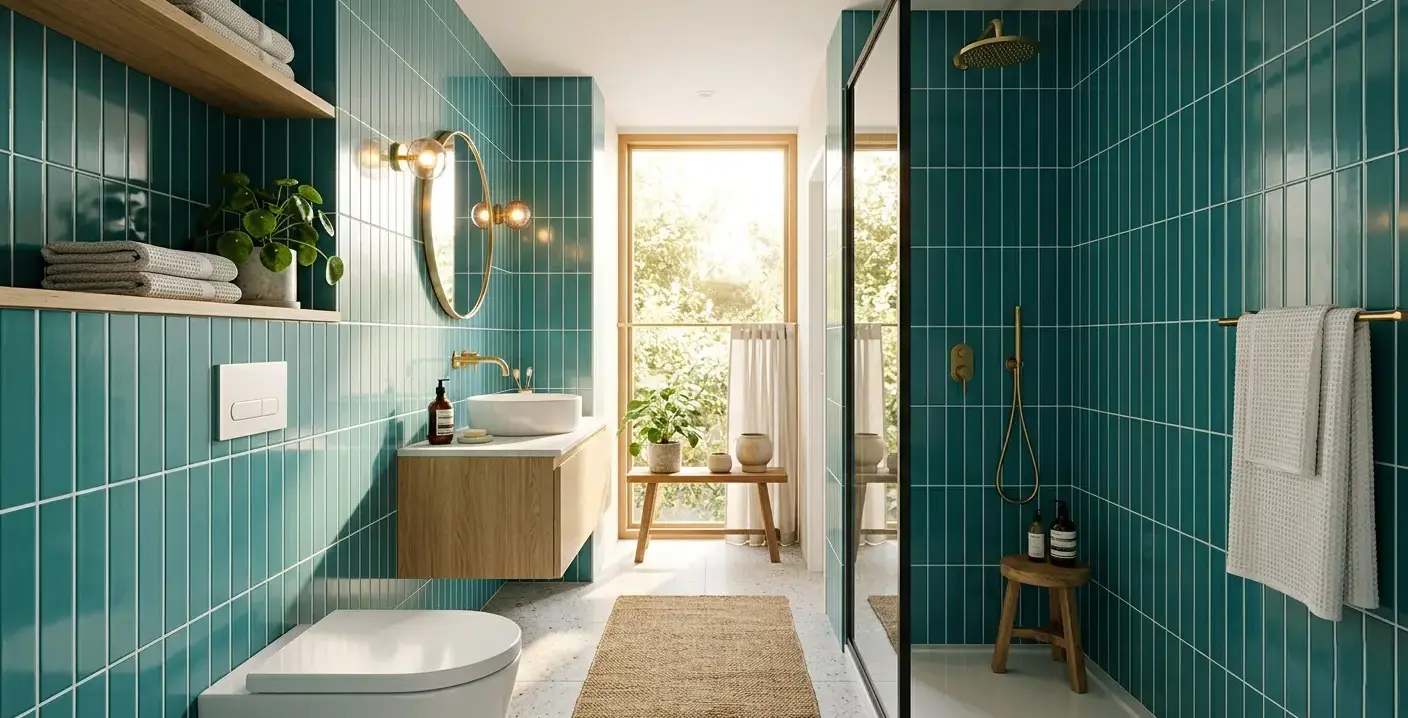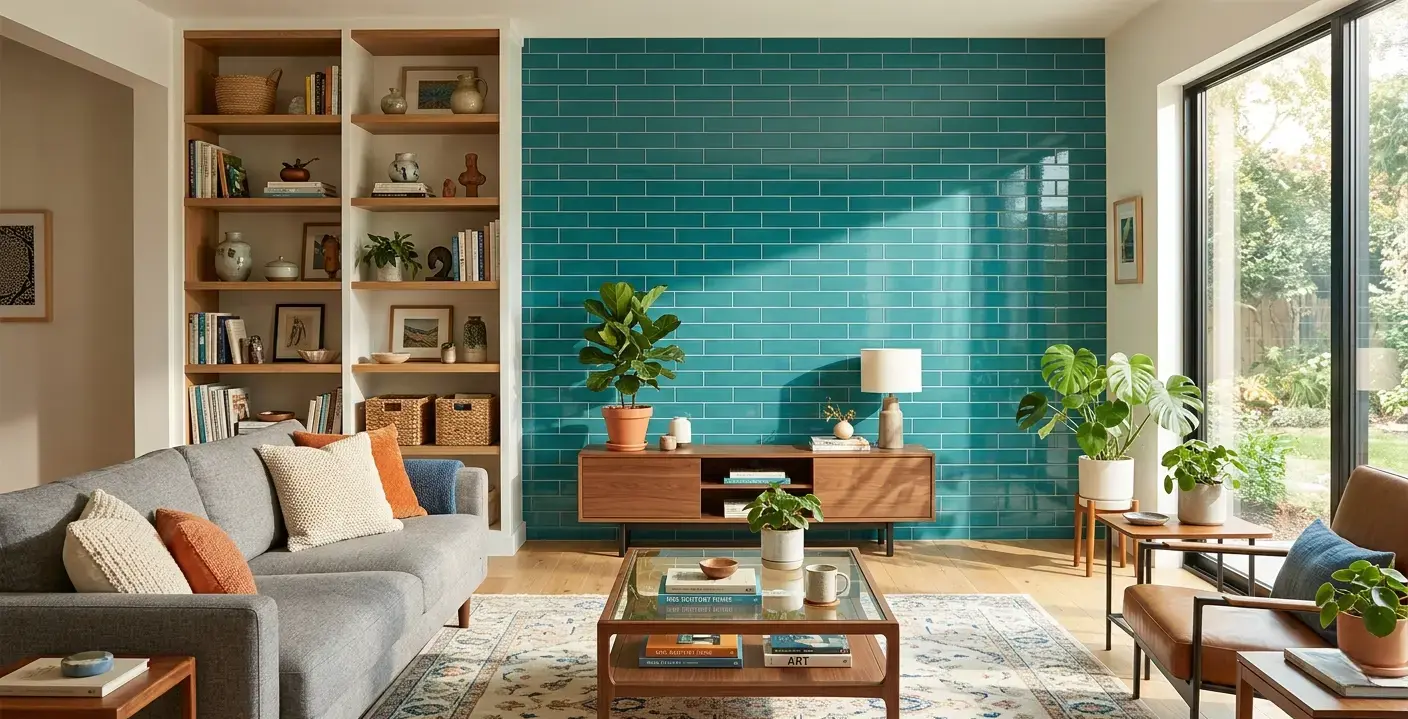
Teal porcelain tile brings a rich blue-green color to kitchens, bathrooms, and living room designs without sacrificing the long-term surface performance that makes porcelain a top choice for demanding residential spaces. A matte finish reduces glare and adds textural depth, making this tile variation work equally well in geometric arrangements and clean grid layouts. Firing above 2,200°F produces the dense, low-absorption body that makes teal porcelain tile a durable choice for kitchen and bathroom walls - and select floor installations where design impact and performance both matter.
Teal Porcelain Tile: Material, Finish, and Core Specifications
Porcelain is classified within the vitreous-to-impervious tile category defined by ANSI A137.1, characterized by water absorption at or below 0.5%. The matte finish on teal porcelain tile reduces light reflection, which is a practical advantage in well-lit kitchens and bathrooms where polished surfaces can create visual disruption. White and cream tones serve as the natural secondary color pairing, complementing teal's cool undertones against warm cabinetry, stone surfaces, and grout choices throughout a space.
Standard teal porcelain tile formats present either a solid‑color body with subtle surface texture or a geometric patterned face. In both styles, the teal shade remains the dominant design feature, ensuring it serves as the primary visual statement rather than being overshadowed by heavy veining or secondary accents.
Specification
|
Detail
|
Material | Porcelain |
Finish | Matte, Polished, Glazed, Textured |
Primary Color | Teal |
Secondary Color | White / Cream |
Standard Thickness | Typically 3/8 in. (9.5 mm) |
Water Absorption | ≤ 0.5% (ANSI A137.1, porcelain class) |
Mohs Hardness | 7-8 |
DCOF | ≥0.42 (ANSI A326.3) |
PEI Rating | PEI 0–2: wall and light-traffic use; PEI 3–4: standard residential; PEI 5: maximum durability. |
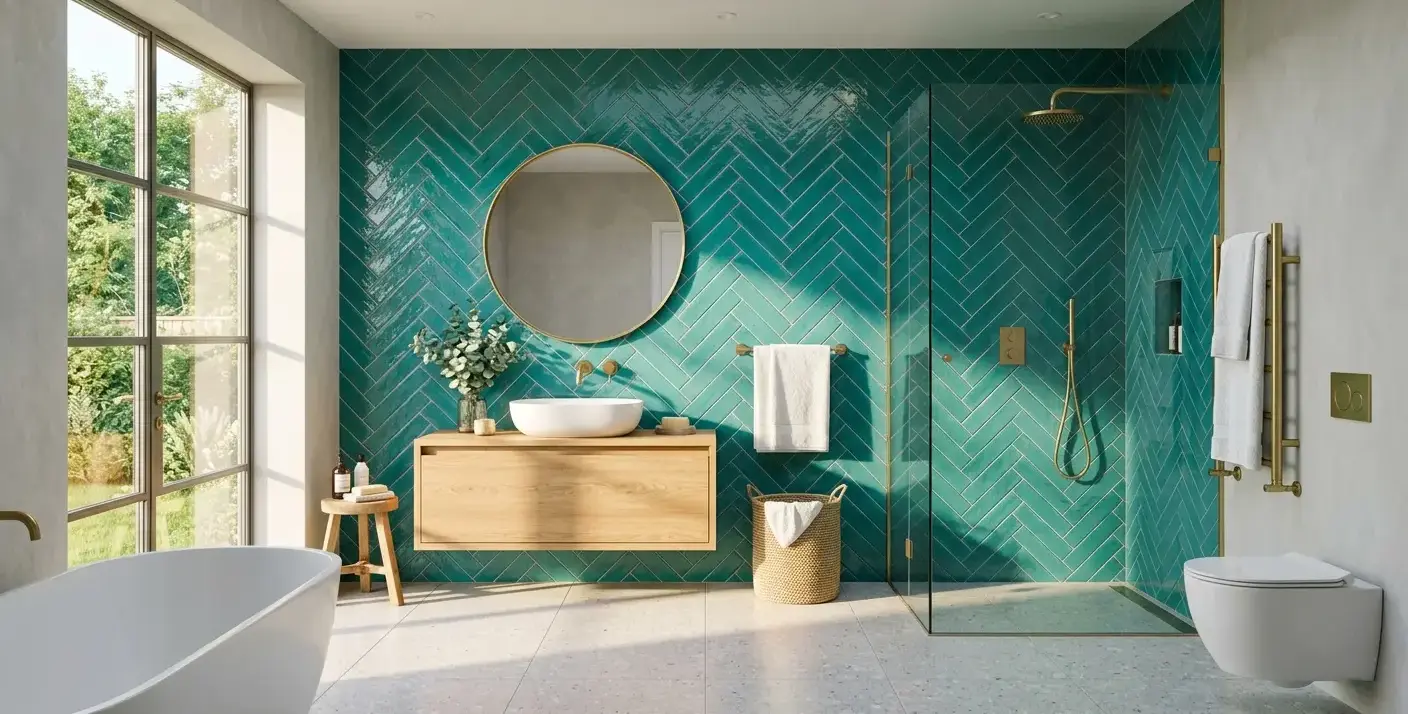 Conceptual rendering
Our latest Porcelain collection
Check out what's new in our inventory!
Bold Color, Flexible Layouts for Kitchen and Bathroom Designs
The versatility of teal porcelain tile becomes most apparent across its layout range. A standard grid pattern maximizes color presence, making it effective for kitchen backsplashes where a consistent teal field draws the eye without requiring additional decorative complexity. Herringbone and chevron layouts introduce diagonal movement, adding depth to bathroom shower walls and accent walls without changing the tile itself.
Vertical stack layouts help lower-ceiling rooms read taller, a practical technique for powder rooms and compact bathrooms where teal tile adds strong character within a tight footprint. For current layout ideas and porcelain color pairings, the bathroom tile design trends guide covers leading approaches for 2026.
In living room designs, teal porcelain tile arranged in a horizontal brick-joint pattern works well on accent walls alongside fireplaces or built-in shelving. Teal's blue-green tone bridges warm interior palettes and cooler contemporary aesthetics, lending cross-style versatility that few solid colors match.
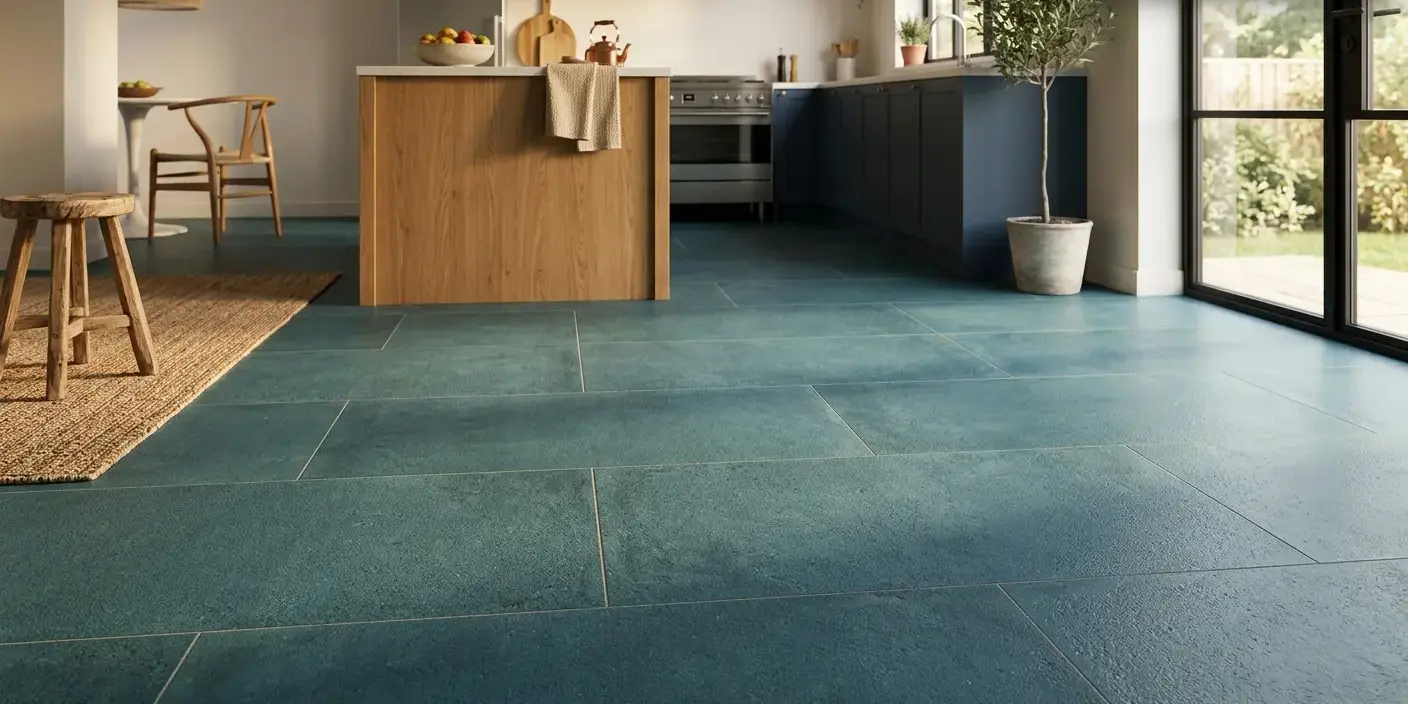 Conceptual rendering
Practical Advantages of Teal Porcelain Tile in Everyday Use
The functional characteristics of porcelain tile translate directly into daily performance benefits for kitchen, bathroom, and living room applications, provided routine care with pH-neutral cleaners is followed.
- Low moisture absorption: Porcelain in the vitreous-to-impervious classification absorbs 0.5% water or less per ANSI A137.1, supporting kitchen and bathroom wall applications where periodic moisture contact occurs.
- Color-through construction: Many teal porcelain tiles carry color through the tile body, so everyday surface wear does not expose a contrasting white subsurface underneath.
- Stain resistance: The dense, low-porosity porcelain surface resists household stains from cooking grease, soap residue, and food pigments, though prompt cleanup of acidic substances is still advisable to preserve finish integrity.
- Fade stability: Color baked into the porcelain body during high-temperature firing delivers long-term consistency, though extended direct UV exposure may shift surface perception in certain installations over time.
- Dimensional precision: Machine-pressed porcelain tiles offer reliable sizing consistency supporting uniform grout joint spacing across a field; edge type should be confirmed with the supplier to determine minimum joint width.
For a complete overview of porcelain tile classifications, performance grades, and finish types, the porcelain tile complete guide covers the full specification landscape.
Why Teal Porcelain Tile Is a Smart Long-Term Investment
Porcelain tile holds one of the longest documented service lifespans of any hard tile surface, with maintained installations performing reliably for decades. The Tile Council of North America establishes industry performance benchmarks through its ANSI tile standards, covering water absorption, breaking strength, and wear resistance across tile product categories, giving designers and buyers objective criteria for material comparison.
Two ASTM standards anchor porcelain tile performance assessment: ASTM C373 governs water absorption testing and ASTM C648 defines breaking strength requirements, providing measurable benchmarks across kitchen, bathroom, and living room applications.
Teal as a color has maintained relevance across multiple design generations, appearing in coastal, contemporary Mediterranean, Moroccan-influenced, and mid-century modern interiors. This cross-style presence reduces the design risk associated with color-forward tile choices, because the hue is not locked to a single trend cycle. Properly maintained teal porcelain tile holds its appearance under routine pH-neutral cleaning, with more targeted care applied based on grout type and the specific demands of the installation environment.
Nova Tile and Stone offers commission-free design consultations at showroom locations across Northern Nevada and California. As a family-owned direct importer, the team helps match teal porcelain tile to the right size, layout, and grout combination without a sales agenda driving the recommendation.
Frequently Asked Questions
Bathroom floor suitability in wet conditions requires a DCOF of 0.42 or higher per industry standards. The DCOF value for this teal porcelain tile has not been confirmed by the supplier. Until that rating is verified, teal porcelain tile should be specified for bathroom wall and dry-area floor applications only.
White and light gray grout are the most effective pairings with teal porcelain tile. White grout creates strong contrast that defines individual tile shapes. Light gray grout provides a softer visual transition and tends to show less discoloration from everyday exposure in kitchen and bathroom environments.
Porcelain tile falls within the water absorption range of 0.5% or less defined by ANSI A137.1 for the vitreous-to-impervious tile class, meeting the material threshold for outdoor consideration. Freeze-thaw suitability should still be confirmed against this specific product's tested results before specifying for exterior or seasonally unheated installations.
Porcelain is denser, harder, and lower in water absorption than standard ceramic tile. For kitchen and bathroom applications where moisture resistance and long-term surface performance are priorities, porcelain is the stronger material choice. Ceramic suits low-exposure wall applications where budget is the primary factor.
Grid and herringbone are the most frequently specified patterns for teal porcelain tile in kitchen backsplash designs. Grid layouts emphasize color presence across the full surface. Herringbone adds directional movement that pairs well with contemporary and transitional cabinet styles without requiring additional decorative elements.