Taj Mahal Stone Kitchen
A Taj Mahal stone kitchen features quartzite slabs recognized for their soft, creamy base and delicate veins of gold and gray. As a naturally occurring metamorphic rock, it ranks between 7 and 7.5 on the Mohs hardness scale harder than marble and comparable to granite making it scratch-resistant, heat-tolerant, and well suited for active kitchen environments.
It is available in polished, honed, and
leathered finishes, accommodating a wide range of cabinet styles and interior aesthetics. With annual sealing, the surface resists staining and etching, offering homeowners a low-maintenance investment that holds both aesthetic appeal and long-term resale value.
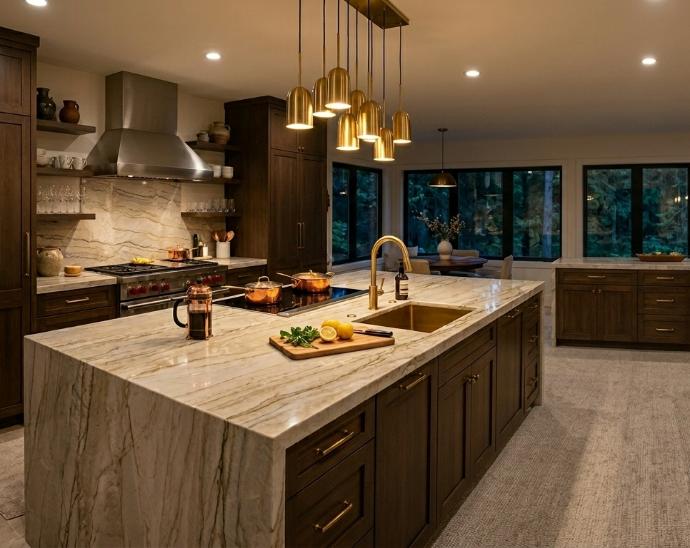
The Timeless Aesthetic of Taj Mahal Quartzite
Few natural stones bring warmth and understated refinement
to a kitchen quite like this quartzite. Its creamy base accented by soft veins
of gold, ivory, and gray creates an inviting atmosphere that works well
alongside a variety of cabinet finishes, from crisp white and natural wood to
deep olive and muted gray. Because each slab is shaped entirely by nature, no
two installations look the same, giving every kitchen a genuinely one-of-a-kind
result.
Unlike trend-driven materials that can feel dated within a decade, it
carries a timeless quality comparable to marble but with significantly better
durability and performance. Interior designers and stone fabricators
consistently recommend it for homeowners who want a visually striking surface
without demanding constant upkeep. To explore what is available, take a look at
these quartzite
kitchen options curated for a range of styles and spaces.
Why Taj Mahal Quartzite Is Built for a Working Kitchen
Its appeal extends well beyond appearance. Ranking between 7
and 7.5 on the Mohs hardness scale, it outperforms marble and holds its own
against granite in scratch resistance, meaning everyday contact with knives,
cookware, and heavy appliances causes minimal damage. Because quartzite forms
under intense geological pressure and temperature, the surface tolerates brief
contact with hot cookware without scorching or warping a common concern with
engineered alternatives.
When sealed annually, liquids bead on top rather than
penetrating the stone, keeping staining risk low. For households that need a
countertop capable of enduring daily demands while staying polished, this material
strikes a rare balance between resilience and elegance that few other natural
stones can offer. View the full Taj Mahal quartzite
slab selection to find the right fit for your space.
Ready to see it in person?
Visit our slab collection to explore the full range of natural stone surfaces available, find the perfect fit for your kitchen.
Thinking about upgrading your kitchen?
Request a free slab quote today and let our team walk you through finish options, thickness, and sizing tailored to your space.
A Premium Surface That Adds Lasting Home Value
Selecting this quartzite for a kitchen renovation is both a
design and financial decision worth serious consideration. Unlike engineered
quartz, which can yellow or degrade with prolonged use, natural quartzite
retains its structural integrity and appearance over time. This longevity
translates directly into resale value. Homebuyers and real estate professionals
consistently recognize premium natural stone as a high-value feature.
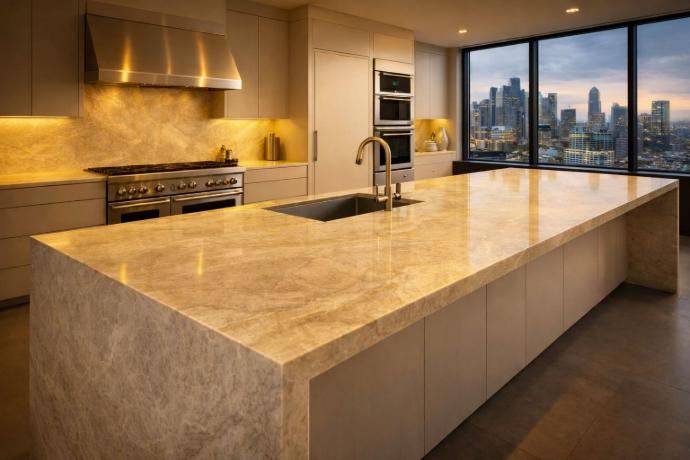
Available
in 2 cm and 3 cm slab thicknesses, it offers flexibility for standard
countertops and statement waterfall island installations alike. For those
planning a remodel and seeking a surface that is as practical as it is refined,
it remains one of the top recommendations among fabricators and interior
designers. Explore the full
collection or book a consultation in store to get started.
Frequently Asked Questions
Yes. Ranking between 7 and 7.5 on the Mohs hardness scale versus marble's 3 to 5, quartzite resists scratching, etching, and surface damage from acidic substances such as lemon juice, vinegar, or wine far more effectively, making it the more practical choice for everyday kitchen use.
Yes. Formed under extreme geological heat and pressure, the surface tolerates brief contact with hot cookware without scorching or discoloring. Using trivets for prolonged exposure is still advisable, as sustained thermal changes can affect the sealant and, over time, the stone's surface integrity.
Most fabricators recommend sealing once a year, though frequency may vary depending on usage and finish. A reliable indicator is the water bead test. When water stops beading and begins to absorb into the surface, it is time to reseal. Consistent upkeep preserves the stone's resistance and appearance over the long term.
Yes. Its warm, creamy base and soft veining complement white and off-white cabinetry particularly well, producing a layered yet clean look. It also works with natural wood, taupe, sage green, and deep gray finishes, making it one of the most adaptable countertop choices across different kitchen styles.
Yes. Premium natural stone is consistently recognized as a value-adding feature by homebuyers and real estate professionals alike. Because this quartzite holds its appearance and structural quality over time unlike some engineered surfaces that fade or look dated it contributes positively and durably to a home's overall market value.
Visit Our Showrooms
Visit one of our four showrooms to view current Taj Mahal quartzite inventory in person and compare slab color, veining, and finish more accurately. Because each slab is natural stone, available options can vary by location and incoming shipment, so seeing the material up close often makes the selection process much easier.
You can also book a free design consultation or request a quote to confirm current availability for your project. For added convenience, showroom pickup is available at all four locations, and slab shipping can also be arranged across the contiguous United States.