Taj Mahal Quartzite Kitchen
When it comes to kitchen countertops that combine timeless
beauty with lasting durability, Taj Mahal Quartzite stands in a class of its
own. Quarried naturally in Brazil, this stunning metamorphic stone features a
warm creamy base with soft gold and gray veining that brings effortless
elegance to any kitchen.
With a hardness rating of 7–7.5 on the Mohs scale, it
outperforms marble in scratch, stain, and heat resistance, offering the
luxurious look homeowners love without the high-maintenance upkeep, making it
one of the most sought-after choices for kitchen countertops and islands today.
This stone works beautifully for full kitchen countertops, waterfall islands, full-height backsplashes, and accent surfaces. Its soft veining gives larger applications a seamless, refined appearance.
The Long-Term Value of Choosing This Quartzite Slab
One of the most compelling reasons to invest in this stone
is how well it adapts across different kitchen styles. Its neutral tones work
equally in modern, transitional, and farmhouse-inspired interiors, making it a
design choice that remains timeless. Available in both polished and brushed
finishes, it offers real flexibility. A polished surface delivers a glossy,
reflective look that highlights the stone's veining, while a brushed finish
provides a more understated, matte texture suited to contemporary spaces.
Beyond aesthetics, its durability translates directly into long-term home
value, as premium natural stone countertops are a recognized factor in real
estate appeal. Explore the full stone
and slab collection or schedule a consultation
to get expert guidance on choosing the best fit for your kitchen.
Why Taj Mahal Quartzite Is a Smarter Choice for Your Kitchen
Homeowners who love the appearance of marble but need a
surface built for real kitchen use consistently turn to this quartzite as the
more durable alternative. Ranking 7–7.5 on the Mohs hardness scale, it is
harder than most granites and significantly more resistant to scratches, chips,
and daily wear compared to marble, which scores only 3–5. Its naturally dense
composition also makes it less porous than many other stones, reducing the risk
of staining from common kitchen spills such as wine, juice, or oils.
With
periodic sealing, the surface maintains excellent resistance to stains and
etching over time. Its heat tolerance, a result of being formed under extreme
geological pressure, allows it to withstand brief contact with hot cookware
without damage, a genuine advantage in a busy kitchen. Browse available Taj Mahal stone options
to find the right slab for your space.
View Taj Mahal Quartzite Slab Inventory
Our Taj Mahal quartzite inventory may include full stone slabs and selected pre-fabricated countertop options in different thicknesses and finishes. Availability can vary by location, so checking current stock is the best way to compare options for your kitchen project.
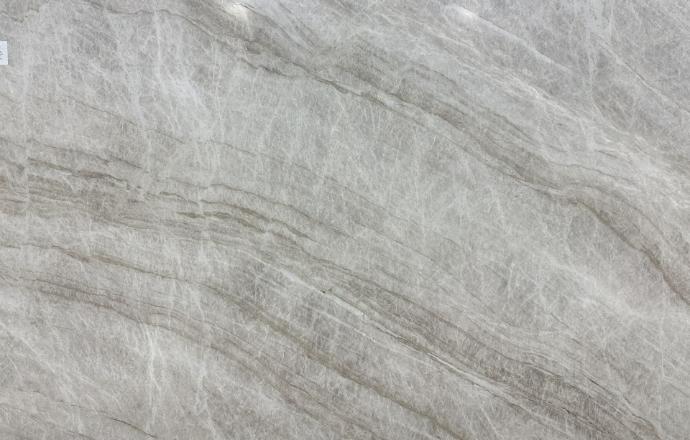
(QUARTZITE)
Thickness: 3.0 cm
Finish: Honed (matte)
Store Location: Reno, NV
Warehouse: C7A
Taj Mahal
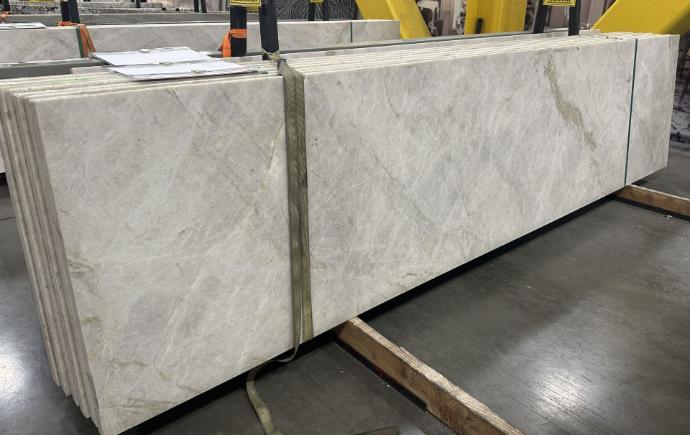
Taj Mahal
(QUARTZITE)
Thickness: 2.0 cm
Finish: Honed (matte)
Store Location: Reno, NV
Loc: A9BB
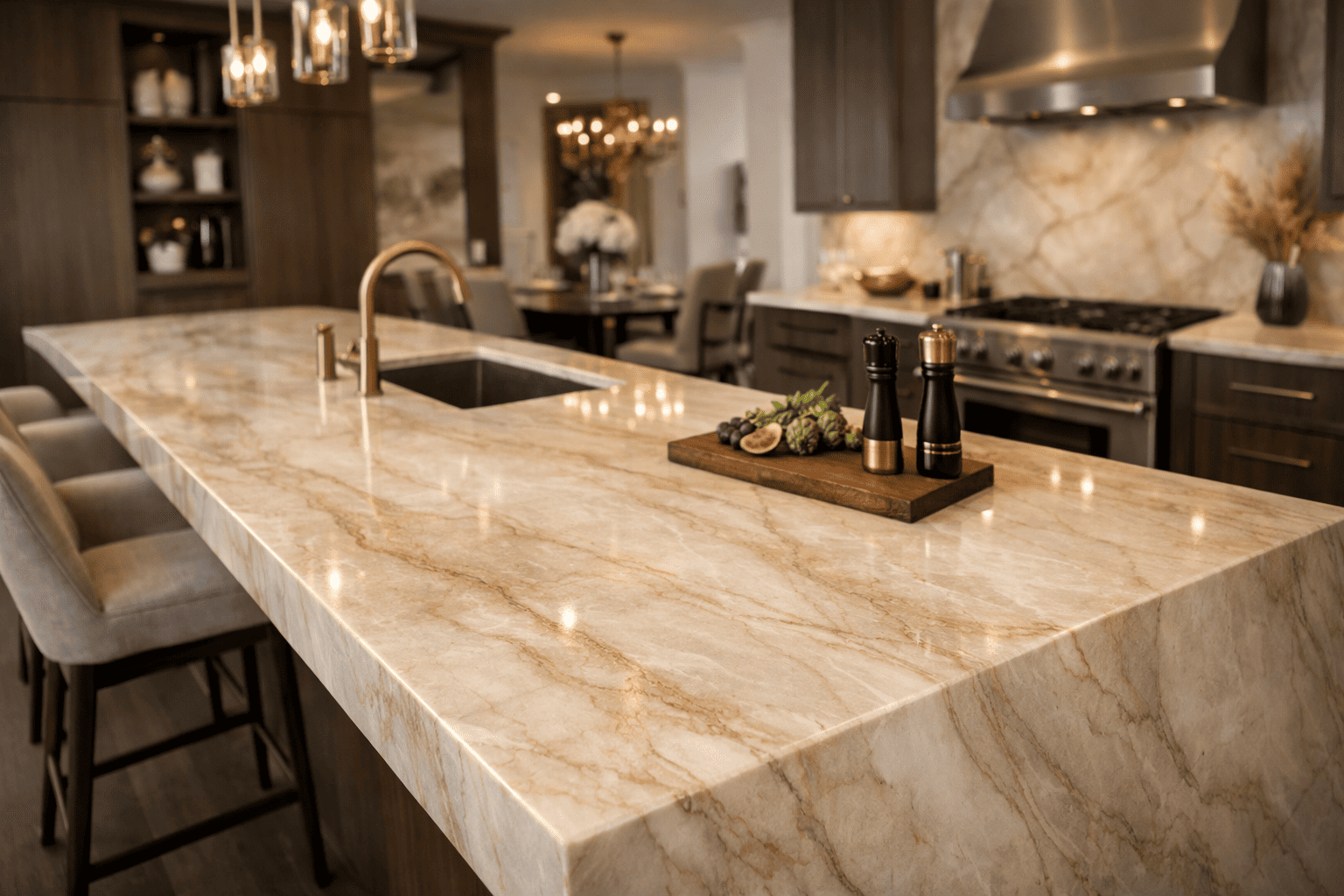
The Natural Beauty of a Taj Mahal Quartzite Kitchen
Few natural stones strike the same balance between elegance
and everyday practicality. Its warm, creamy base tone paired with delicate
gold, gray, and ivory veining gives any kitchen a refined, timeless character
that complements a wide range of cabinetry from white shaker to deep navy and
warm taupe.
Because every slab is shaped by nature over millions of years, no
two surfaces are identical, ensuring a truly one-of-a-kind result. Whether used
for a full countertop layout, a waterfall island, or a full-height backsplash,
this natural
quartzite slab brings a quiet sense of luxury that elevates the entire
space.
Because natural quartzite varies from slab to slab, viewing inventory in person can make the selection process much easier. Tone, veining, movement, and finish can look different depending on lighting and slab size, which is why many homeowners and designers prefer to visit a showroom before making a final choice.
Taj Mahal quartzite remains one of the most dependable choices for kitchen countertops because it combines natural beauty with everyday durability. Its warm neutral tones and soft veining work well with a wide range of cabinet colors, hardware finishes, and backsplash styles, making it easy to design around.
At Nova Tile and Stone, both shipping and pickup are available for Taj Mahal quartzite, giving homeowners and contractors added flexibility when planning a kitchen project.
Frequently Asked Questions
Yes. This quartzite ranks 7–7.5 on the Mohs hardness scale, placing it above most granites that typically score between 6 and 7. This means it resists scratching from kitchen utensils, cutlery, and cookware more effectively, making it an excellent surface for high-traffic kitchens.
Because quartzite is a metamorphic rock formed under intense geological heat and pressure, it has a natural tolerance for high temperatures. Brief contact with hot pots or pans is unlikely to cause damage, though using trivets consistently is still advisable to preserve the sealed surface over time.
Compared to marble, this quartzite is considerably less porous and more resistant to common kitchen stains from liquids such as wine, coffee, and citrus. Applying a quality sealer at recommended intervals significantly enhances its stain resistance and keeps the surface looking its best with daily use.
Its warm, neutral base works well with a broad range of cabinet finishes. White, cream, and light gray cabinets allow the stone's veining to take center stage, while warm taupe, sage green, and deep navy create a striking contrast that feels both current and sophisticated. This versatility is one of the key reasons designers continue to use it across a variety of project styles.
Taj Mahal Quartzite is 100% natural stone, formed from ancient sandstone transformed by heat and pressure within the earth. Engineered quartz, by contrast, is a manufactured material composed of crushed quartz bound with resins and pigments. While both offer durability, natural quartzite produces a unique slab with no two pieces exactly alike, whereas engineered quartz delivers a more consistent, uniform surface.