Stone veneer is a thin layer of natural stone attached to the exterior walls of a building as a non-structural facing, which means it covers the wall without carrying the building's load. On residential projects, homeowners, designers, and contractors typically use stone veneers for a house exterior on full façades, partial wall sections, entrances, and porch or walkway columns. How the stone performs outdoors depends on the specific stone, the quality of the installation by a qualified contractor, and how water drains away from the wall. Because natural stone varies in color and texture from piece to piece, our tile and stone selection is a useful place to begin narrowing down options.
Placing Stone Veneer on Façades, Walls, Entrances, and Columns
Our slab inventory lets you browse available slabs before selecting stone veneers for a house exterior, and your fabricator can advise on whether a slab may be cut into panels for your walls or columns.
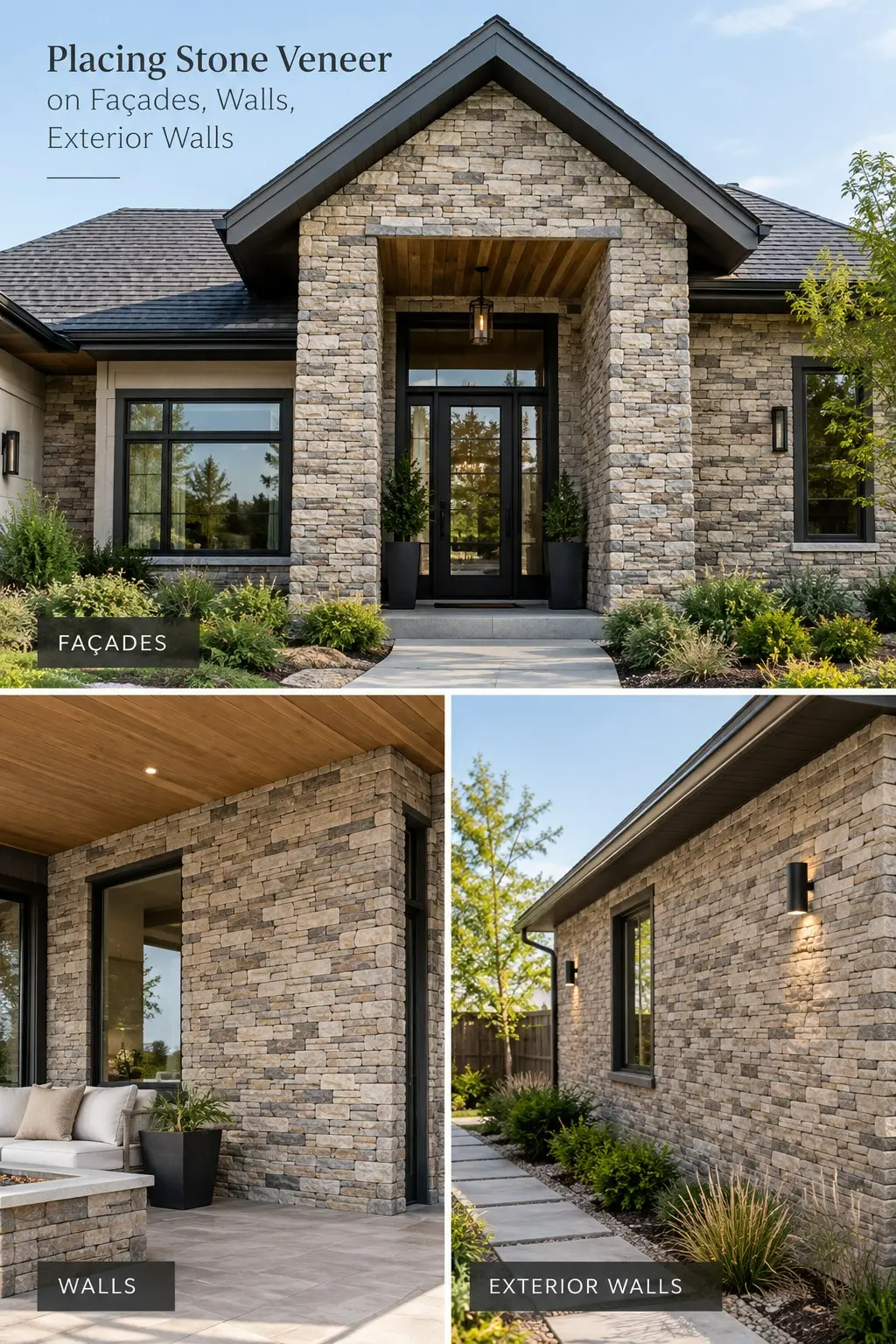 Conceptual rendering
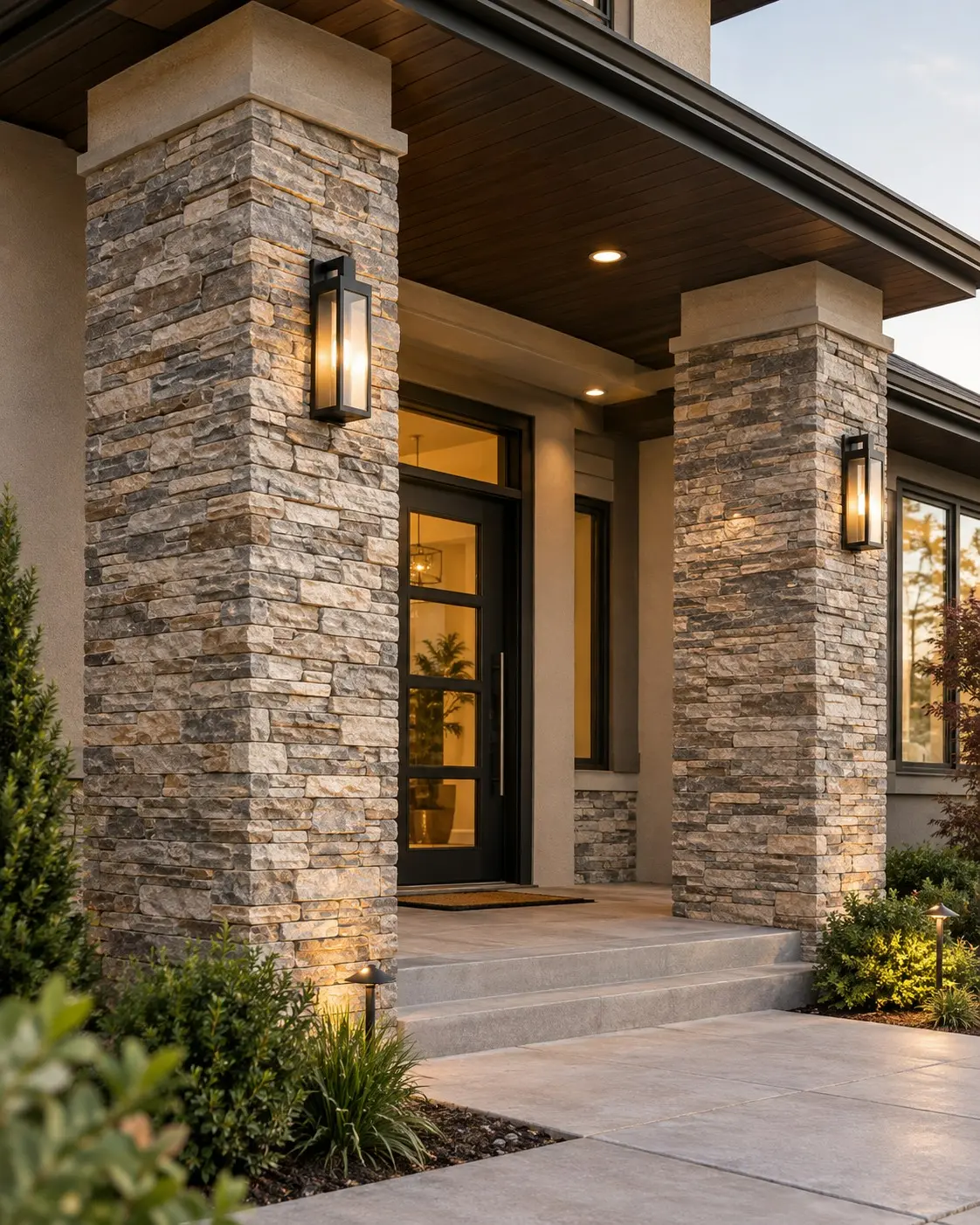 Conceptual rendering
Stone veneers for house exteriors can cover as much or as little of a home as the design calls for. A full façade covers the front elevation of the house in stone. A partial application places stone on selected areas, such as the lower section of an exterior wall or a single accent wall, while the rest of the home keeps its existing siding. Around an entrance, stone can frame the front door and the surrounding wall. On porches and covered walkways, it can wrap columns from base to top or cover only the lower portion. Deciding on placement early helps your contractor estimate how much material the project needs. When planning real stone for house exteriors, it is also worth sourcing enough material for the whole area at once, since natural stone from different batches can vary in color and texture.
Planning for Weight, Water, and Sun
Three practical factors shape how stone veneer works on a home. The first is weight. Natural stone adds load to a wall, so your contractor should confirm that the existing wall is suitable before stone veneers for a house exterior are installed. The second is water. Rain on the face of the stone is expected, but water that collects at the base of a wall or gets trapped behind the veneer may lead to staining or damage, which is why the bottom edge of the stone is typically kept clear of soil and the wall is built to let water drain. The third is sun.
Many natural stones keep their color in direct sunlight, but some may change slightly in tone over time. Installation itself is handled by a qualified mason or contractor, and this article on how stone veneer is typically installed gives an overview of the general process. If environmental impact is part of your decision, the guide to environmental and health product labels for natural stone explains the labels and certifications that may apply to stone products.
Contact and Visit us Today!
Cleaning and Upkeep for Stone Veneer Surfaces
Stone veneers for house exteriors generally need simple, periodic care, but the stone and the mortar joints between pieces both deserve attention. For cleaning methods suited to natural stone for exterior walls, the natural stone care guidelines from the Natural Stone Institute are a helpful reference.
- Choose cleaners labeled safe for natural stone, and test any new product on a small, less visible area first.
- Keep acidic products, abrasive pads, and harsh chemicals off the stone and the mortar joints, since they can etch or discolor some stones and wear down mortar.
- Look over the mortar joints periodically for cracks or gaps, since open joints can let water in behind the veneer, and have your contractor repair any damage.
- Keep soil, mulch, and landscaping from building up against the bottom row of stone so the base of the wall can dry out.
- Clear leaves and debris from ledges, sills, and the tops of columns where water can sit.
- Trim back vines and climbing plants, which can hold moisture against the surface and work into the joints.
- Ask a stone care professional whether your specific stone would benefit from sealing.
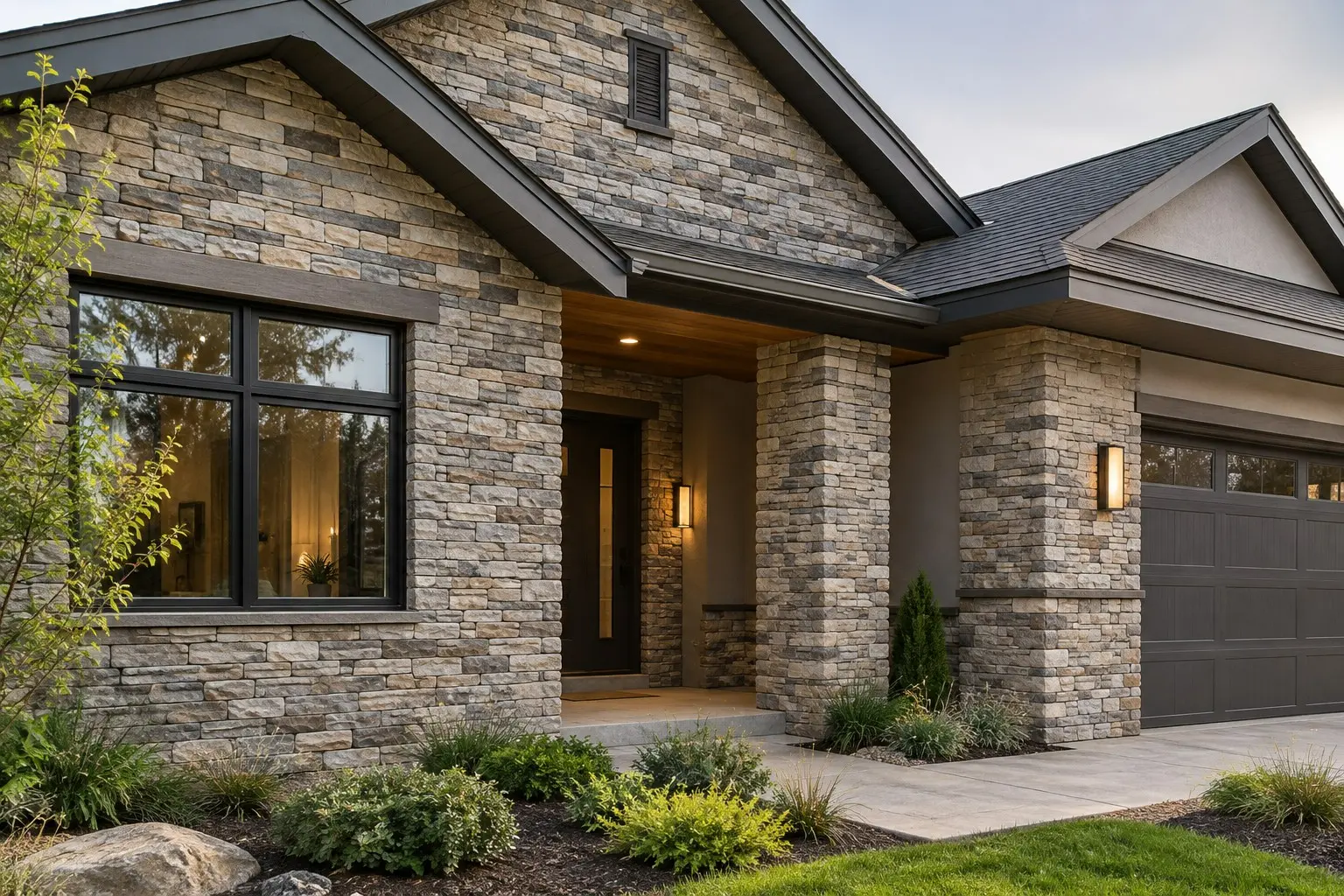
Conclusion
Choosing stone veneers for house exteriors comes down to three decisions: where the stone will go, which color and texture suit the home, and how much material the project needs. Our team can help you review colors and textures in our selection, so you can share clear material choices with your contractor or fabricator.
Free Design Consultation Slab QuoteNote: Some images on this page may be conceptual renderings created to illustrate design possibilities and may not depict actual installations.
Frequently Asked Questions
There is no single rule for how much stone to use. On some homes, stone veneers for house exteriors cover the full front elevation, while on others they are limited to the lower portion of the walls, the entrance, or the porch columns. A designer or contractor can help decide where the stone should start and stop so it looks intentional alongside the rest of the home.
Yes, porch and walkway columns are a common place for stone veneers for house exteriors, either wrapped from base to top or covered only on the lower portion. A qualified contractor should confirm that each column can support the added weight of natural stone before work begins.
It depends on the existing surface. Siding such as vinyl or wood is usually removed so the wall can be prepared with a moisture barrier and proper backing before stone veneers for a house exterior go on. Brick may be able to take stone directly if it is clean and sound, but a qualified contractor should evaluate the surface first.
Sealing depends on the specific stone. Some stones used as stone veneers for house exteriors are left unsealed, while others may benefit from a breathable sealer that lets moisture escape from the wall. A stone care professional can advise whether sealing suits your stone.
Moss and algae tend to grow on shaded walls that stay damp. Trimming back nearby plants, keeping water directed away from the wall, and cleaning gently with a product labeled safe for natural stone can help keep stone veneers for a house exterior clear. Avoid high-pressure washing, which can loosen mortar joints.