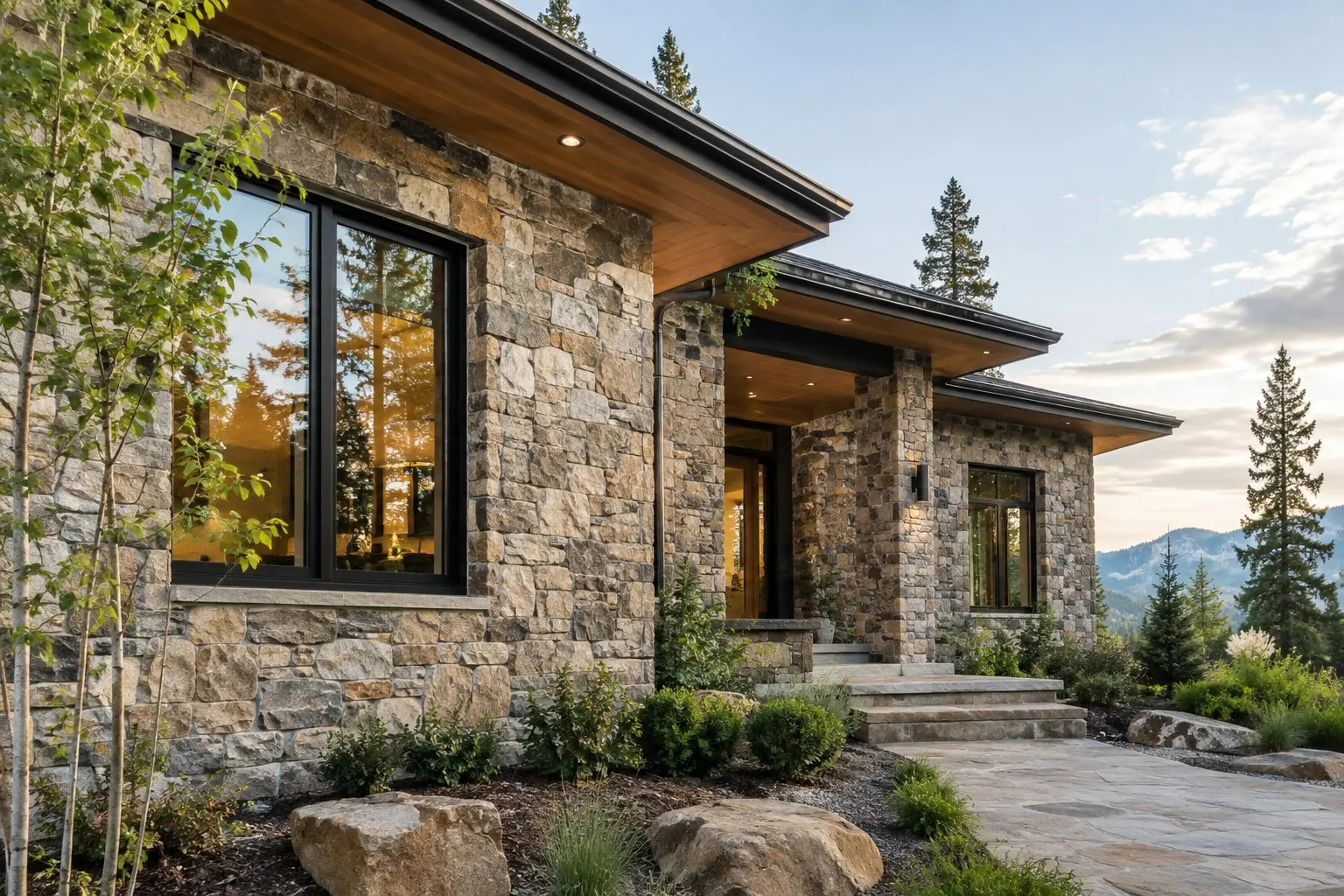
Natural stone refers to quarried material such as granite, quartzite, and travertine that is cut into slabs, tiles, and architectural pieces without the manufacturing or firing process used for engineered materials.
Granite, quartzite, and travertine are used for exterior facades, walls, entrances, and columns. Suitability depends on the specific stone, product format, installation system, and exposure conditions.
Natural stone exterior surfaces are valued for the lasting texture, character, and durability that come from the material's natural formation, along with the range of density, porosity, and finish options available. Our team works with several of these stone types suited to outdoor use, each with its own characteristics that affect how it performs once installed outside.
What Types of Natural Stone Work Well for Exterior Design?
Granite, quartzite, and travertine are natural stone options for exterior architectural projects. The selected product should be suitable for its intended placement, local climate, and exposure to moisture or freezing temperatures.

Granite
Forms from cooled magma, dense, crystalline structure suited to facades, columns, and entry surrounds.
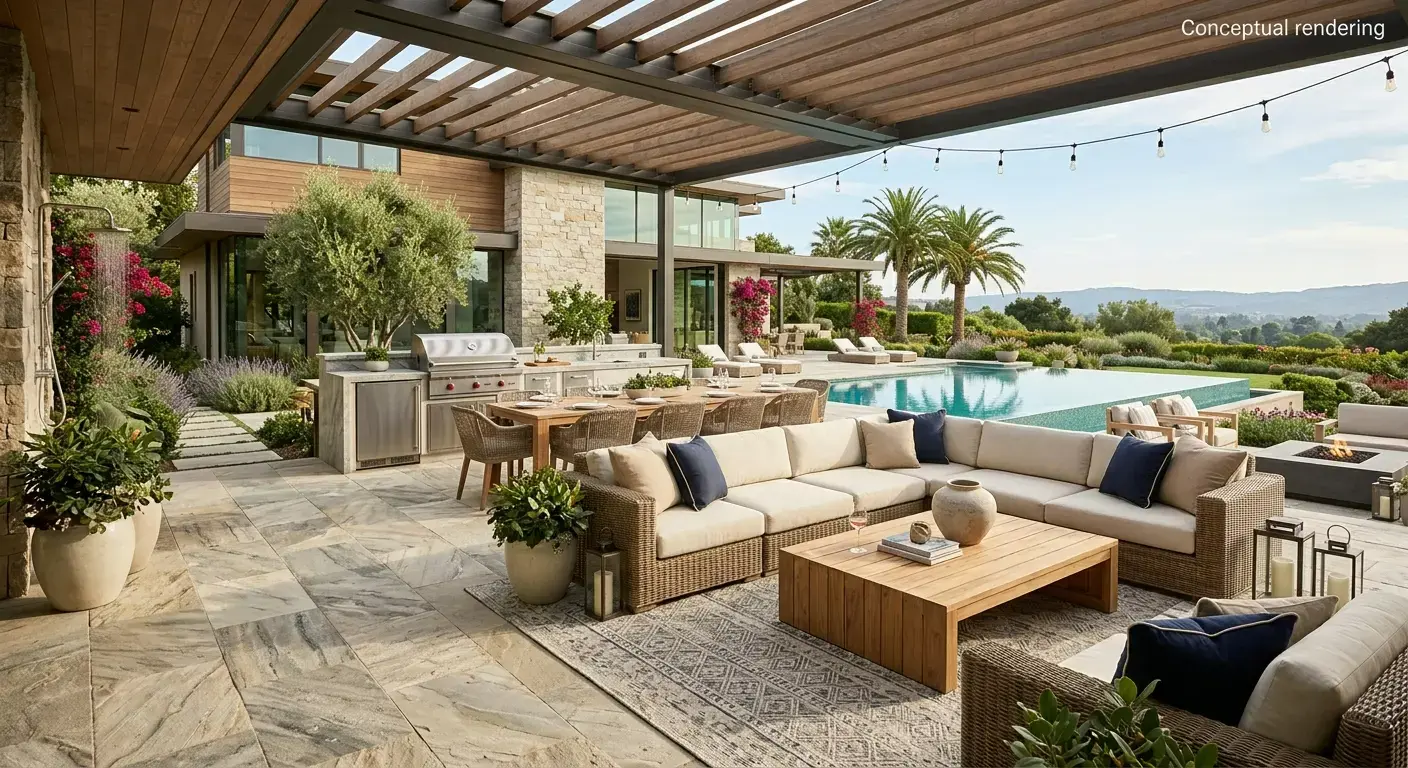
Quartzite
Sandstone transformed under heat and pressure, hard, frequently used for exterior wall cladding.
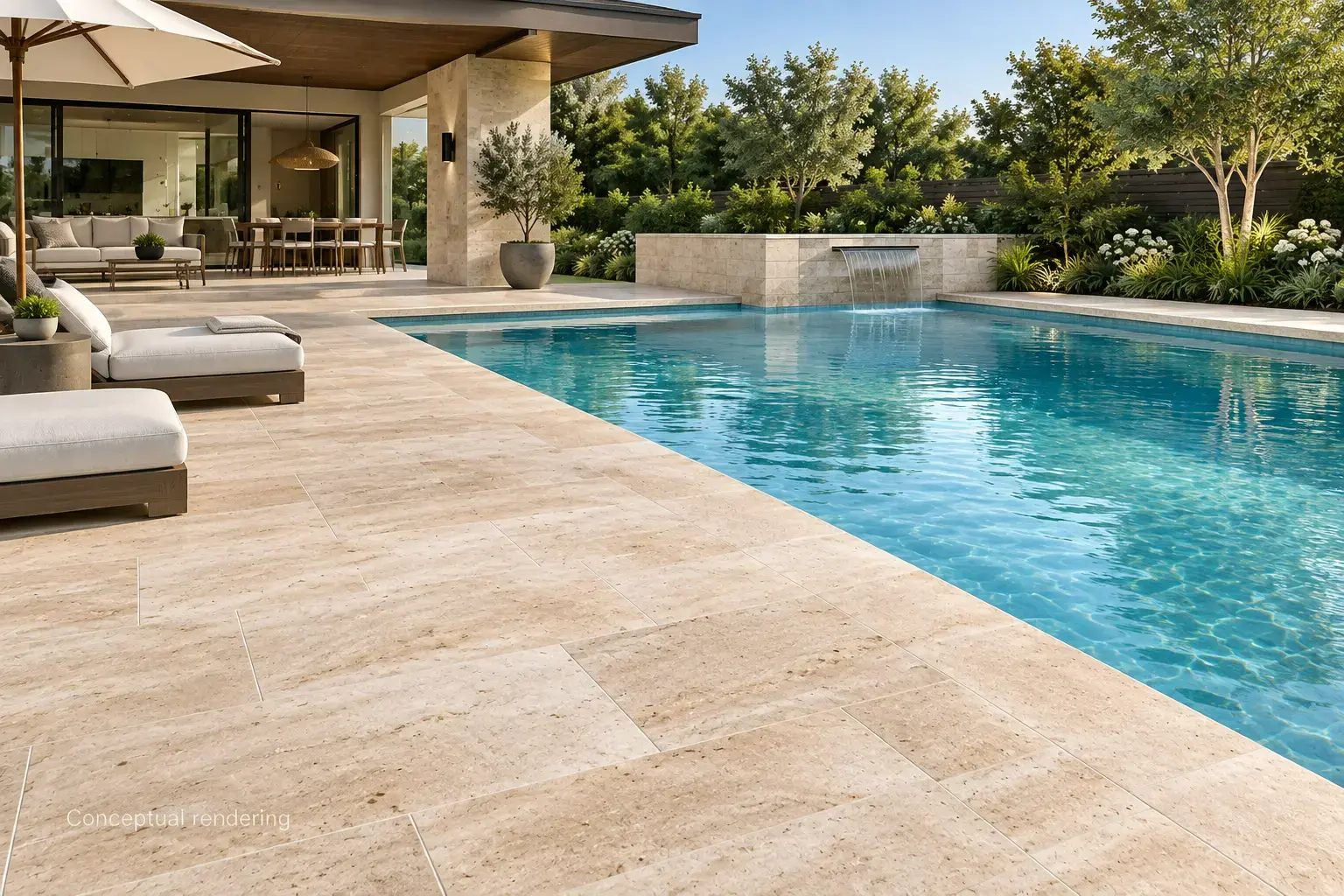
Travertine
Forms through mineral deposition from water and has natural pores and voids. Suitability for walkways, veneer, and column wraps.
These installations are typically carried out by a contractor or fabricator, who selects anchoring or setting methods suited to outdoor conditions and the stone type being used. Our current slab selection includes options across these stone types for homeowners and design professionals planning an exterior natural stone project.
Homeowners interested in the environmental profile of their material can also review this guide to environmental and health product labels for natural stone for additional background.
How Does Natural Stone Perform in Exterior Environments?
Exterior natural stone is chosen for its ability to withstand ongoing weather exposure, though performance still depends on the specific stone type and finish selected, and no stone is entirely unaffected by the elements over time. Granite and quartzite are dense stones with low absorption rates, so moisture penetration is generally limited.
Even with that density, standing water should not be left to pool against any stone surface for extended periods, since prolonged saturation can affect the material over time. Travertine has a naturally porous structure, and sealing helps reduce moisture absorption, with periodic resealing needed to keep that protection in place.
Direct sunlight is not typically a concern for natural stone. That said, prolonged UV exposure combined with repeated temperature swings can contribute to gradual surface changes over many years, and this can vary by stone type and finish.
Finish selection also affects traction for entrances and walkways: honed and textured surfaces tend to offer more grip in wet conditions than a highly polished one, though caution is still worthwhile on any wet exterior surface. Routine cleaning with a mild, pH neutral product helps maintain the surface, whereas abrasive cleaners and harsh chemicals can wear down the finish over time and are best avoided.
For additional exterior specific technical background, Use Natural Stone's exterior resources are a helpful reference.
How Do You Care for Natural Stone Exterior Surfaces?
Caring for exterior natural stone mainly comes down to routine cleaning and periodic sealing, since outdoor surfaces face weather, dust, and organic buildup that indoor stone rarely encounters. Consistent care helps facades, walls, and columns continue looking the way they did at installation.
Rinse exterior stone surfaces periodically to remove dust, pollen, and organic debris.
Clean with a soft brush and a mild, pH neutral cleaner rather than abrasive scrubbers or harsh chemicals.
Reseal porous stone types such as travertine on a schedule suited to your climate and exposure level.
Address moss, mildew, or algae growth promptly in shaded or moisture prone areas.
Avoid pressure washing at close range, since high pressure can affect certain finishes over time.
For general stone care guidance beyond what is covered here, the Natural Stone Institute's care recommendations offer additional detail.
Conclusion
Natural stone remains one of the most established materials for exterior architectural design, and choosing between granite, quartzite, and travertine usually comes down to the specific application, whether that is a full facade, an entry wall, a column wrap, or a walkway. With routine cleaning and, where needed, periodic sealing, exterior natural stone is built to hold up to weather exposure over the long term, offering lasting durability along with the natural texture and character that drew you to it in the first place.
Our team has worked with natural stone since Nova Tile and Stone was founded in 2005 by the Hartman family. We now operate four showroom locations across Nevada and Northern California, serving homeowners, interior designers, and contractors.
If you are also weighing manufactured alternatives, our blog post on choosing between natural stone and porcelain pavers covers some of those differences. When you are ready to move forward, you can request a quote for your project.
Note: Some images on this page may be conceptual renderings created to illustrate design possibilities and may not depict actual installations.
Frequently Asked Questions
Granite, quartzite, and travertine are the natural stone types most commonly used for exterior walls and facades, since each one is suited to ongoing outdoor exposure. The right choice usually comes down to the look you want and the specific application, whether that is a full facade, an entry wall, or column cladding.
Natural stone is a popular choice for outdoor architectural surfaces because it is naturally dense and weather resistant, but durability still depends on the stone type, finish, and how consistently the surface is cleaned and sealed. Routine care and avoiding harsh chemicals both help exterior natural stone perform well over time.
Sealing frequency depends on the stone type, its porosity, and the climate it is exposed to, with porous stones like travertine generally needing more frequent resealing than denser stones such as granite or quartzite. Checking the surface periodically for water absorption is a simple way to tell when resealing is needed.
Natural stone generally holds its color well outdoors, but very long term sun exposure combined with repeated weather cycles can lead to subtle surface changes in some stone types over many years. Choosing a stone type and finish suited to your climate helps the surface keep its original appearance longer.
Dense stones such as granite and quartzite generally hold up well through freeze thaw cycles because they absorb very little moisture, but more porous stones can be more susceptible to cracking if water gets into the surface and freezes repeatedly. Proper drainage and installation help reduce this risk, but sealing does not make an unsuitable stone frost resistant.
Our latest content
Check out what's new in our company !
Visit our Showrooms Now!
SACRAMENTO
6100 Warehouse Way, Sacramento, CA 95826
 Google Maps
Store hours this week:
- Mon. - Fri.: 7:30 am - 5:00 pm
- Sat. - Sun.: Closed
MINDEN
2548 Business Pkwy, Minden, NV 89423
Store hours this week:
- Mon. - Fri.: 7:30 am - 6:00 pm
- Sat.: 9:00 am - 3:00 pm
- Sun.: Closed
RENO
12835 Old Virginia Rd Suite 24, Reno, NV 89521
Store hours this week:
- Mon. - Fri.: 7:30 am - 6:00 pm
- Sat.: 9:00 am - 3:00 pm
- Sun.: Closed
FERNLEY
1855 US Highway 95A North, Fernley, NV 89408
Store hours this week:
- Mon. - Fri.: 7:30 am - 4:00 pm
- Sat. - Sun.: Closed