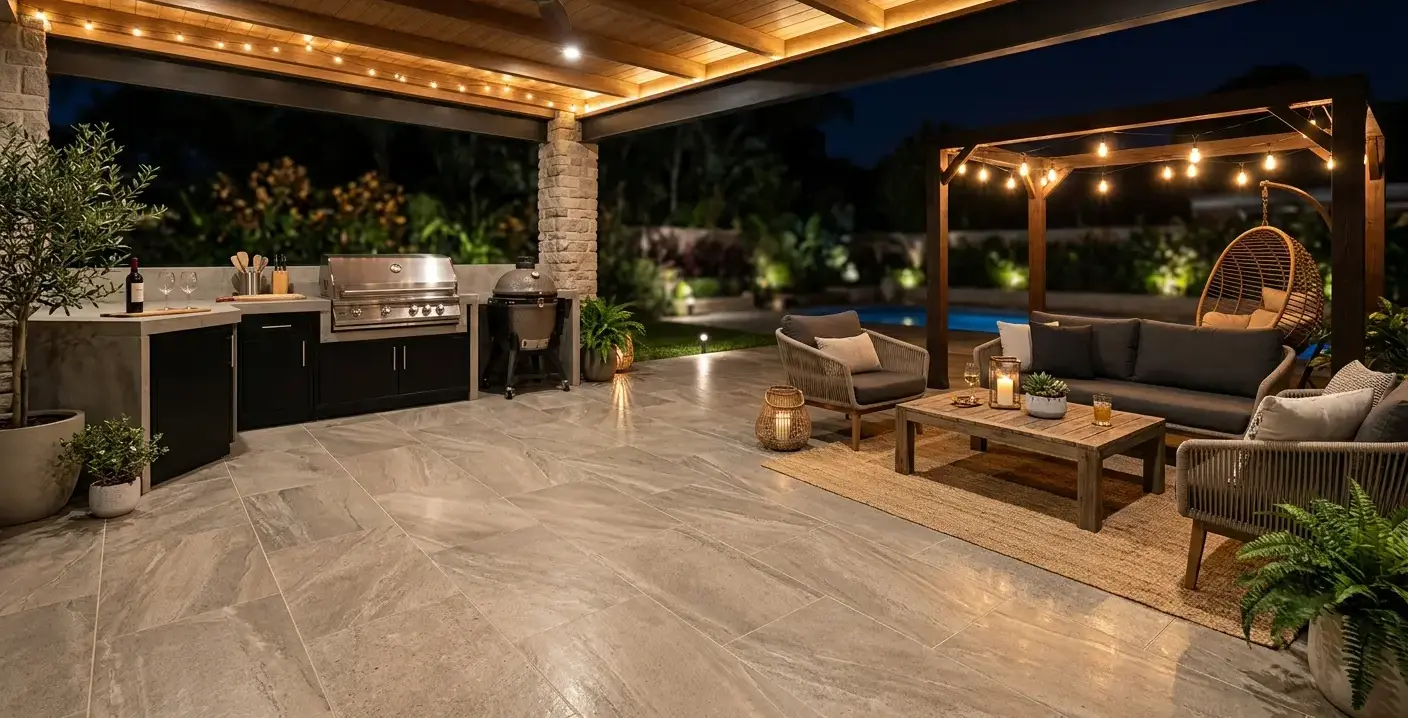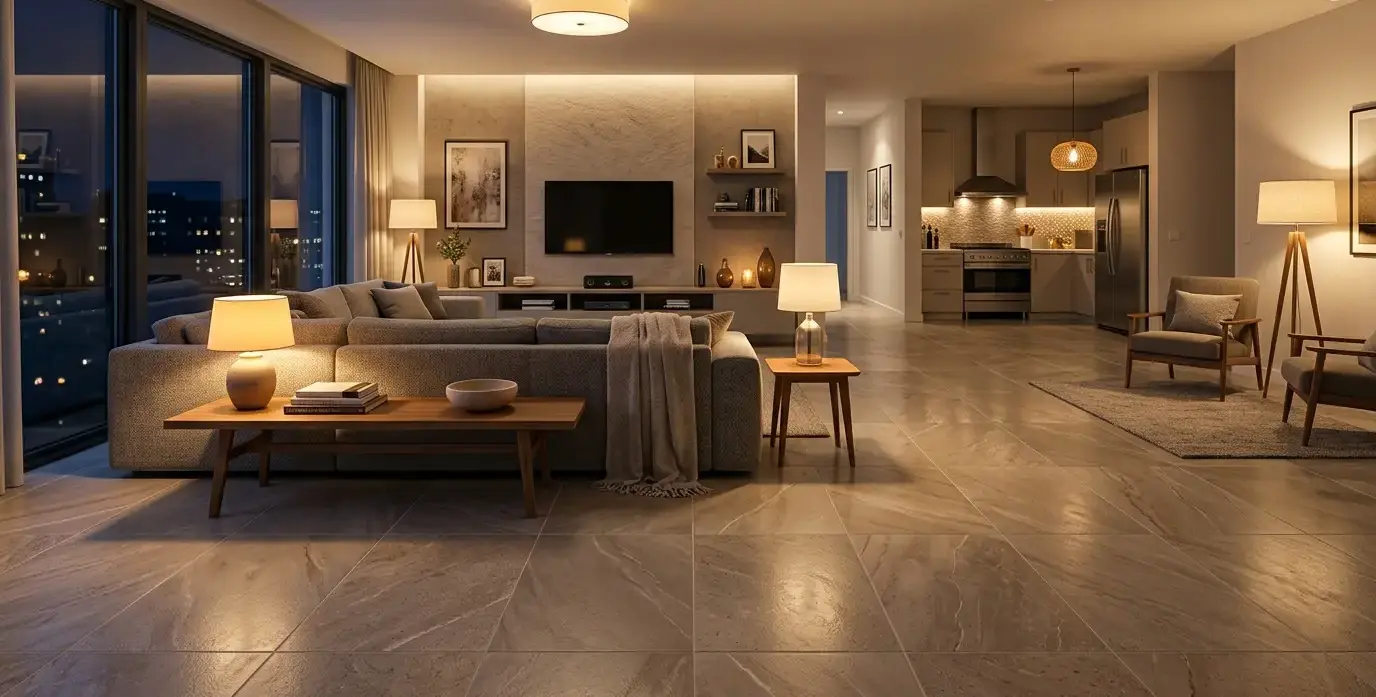
Stone look porcelain floor tile brings the texture and movement of natural travertine to a dense, low-maintenance surface built for everyday living. Manufactured from refined porcelain clay, this floor tile pairs soft, irregular veining with a matte finish that reads as authentic stone without the sealing schedule natural stone demands. It suits kitchen floors, bathroom floors, living room flooring, hallway transitions, and covered patio areas where a consistent look matters from room to room. Homeowners researching stone look porcelain floor tile
for a renovation project can review specifications, layout options, and care guidance below before requesting samples or scheduling a design consultation.
Porcelain Floor Tile Specifications and Durability
This stone look tile is manufactured through a vitrification process that fuses refined clays at high temperatures, producing a dense body with very low porosity. It is available in a 24 inch by 24 inch format with rectified edges, which allow tighter grout joints than pressed-edge tile formats. A matte, honed-style finish captures the texture of natural travertine while remaining easier to maintain than sealed natural stone.
Compared to smaller mosaic or subway layouts, this medium format tile reduces the number of grout lines across a floor, a detail many homeowners prefer for kitchen, bathroom, living room, and hallway flooring where a continuous visual line matters most.
*Finish, format, and edge type are assumed characteristics please contact us for more clarifications
SPECIFICATION | DETAIL |
Material | Porcelain |
Format | 24 in x 24 in (600 mm x 600 mm), rectified edge* |
Finish | Matte, travertine-style texture* |
Surface Hardness | Mohs 7 (porcelain category benchmark) |
Water Absorption | 0.5% or less, ISO 10545-3 (porcelain category benchmark) |
Standard Thickness | Approximately 8mm or more for floor tile (category standard) |
A Mohs hardness of 7 places porcelain in line with quartz, a benchmark that reflects the material category's resistance to everyday scratching under normal residential and light commercial use. Water absorption at or below 0.5 percent, measured under ISO 10545-3, is the defining threshold for true porcelain and supports the category's reputation for low maintenance.
Our latest product in this category
Check out what's new in our collection!
Design Flexibility for Stone Look Floor Tile
A 24 inch square format supports several layout patterns, including a straight lay for a calm, grid-like look, a brick joint offset for a more traditional floor tile pattern, and a diagonal lay that can visually widen a narrow hallway. Herringbone remains an option for smaller accent zones near an entryway.
In kitchens, a warm greige tone with soft ivory veining coordinates with wood cabinetry and stone countertops alike. Bathroom floors gain the same matte texture underfoot, while living room and hallway flooring carries a consistent, stone-inspired tone through connected spaces.
Because true porcelain carries water absorption at or below 0.5 percent as a category standard, stone look porcelain floor tile is a candidate for covered patio areas in most regions. Homeowners in climates with hard winter freezes should confirm frost-rating data for a specific product line before choosing stone look porcelain floor tile for outdoor use. Nova Tile and Stone's indoor-outdoor flooring ideas guide reviews additional considerations for connecting interior and exterior floors.
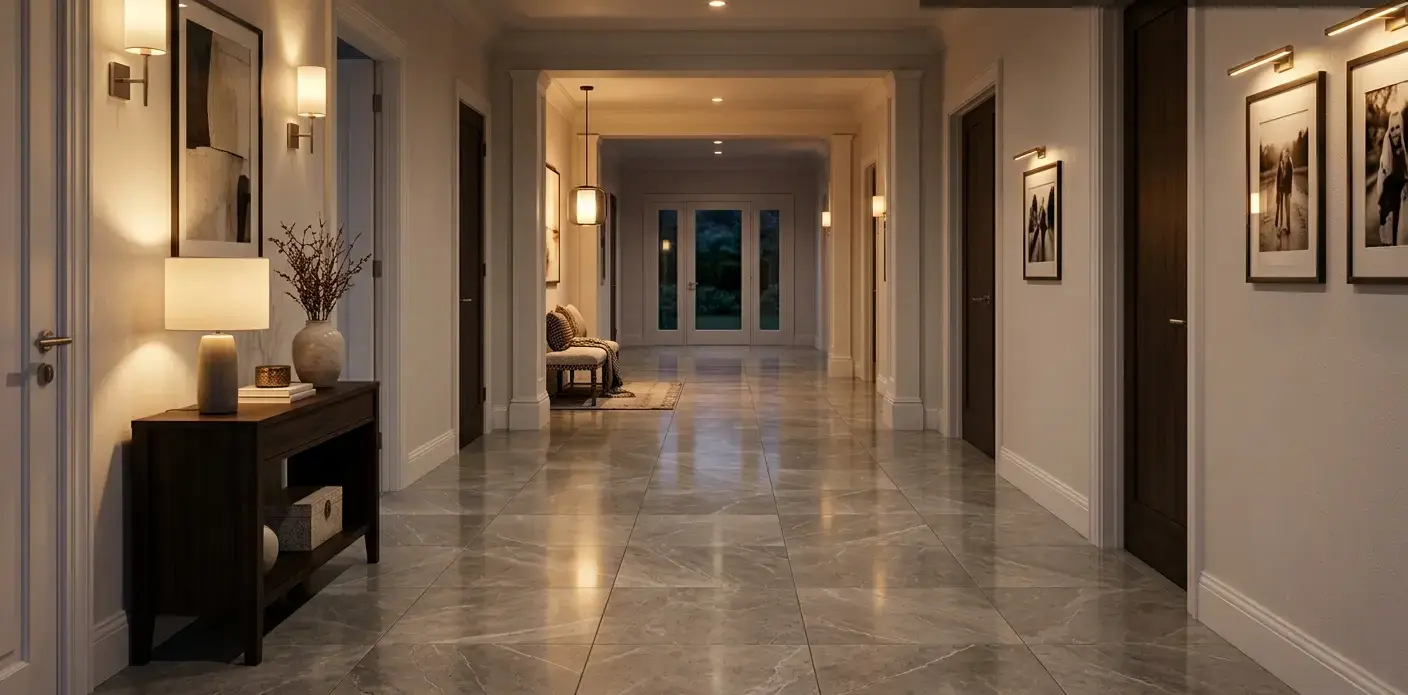 Conceptual rendering
Layout inspiration for stone-look tile continues to evolve alongside broader interior trends. Global showcases such as this 2026 design events guide highlight material pairings currently shaping residential design.
Practical Benefits of Stone Look Floor Tile
- Low-maintenance surface: glazed porcelain does not require the periodic sealing natural travertine needs, though routine sweeping and pH-neutral cleaning help preserve the finish.
- Stain resistance: the dense, low-absorption body helps resist everyday spills from cooking and daily use, though wiping spills promptly still supports long-term appearance.
- Scratch resistance: a Mohs 7 hardness rating, comparable to quartz, supports everyday durability under normal foot traffic, though grit and furniture feet can still mark any hard-surface floor over time.
- Consistent appearance: rectified edges allow narrower grout joints for a cleaner floor line across kitchen, bathroom, living room, and hallway spaces.
- Design continuity: the same tile face can visually connect interior rooms with covered patio areas, subject to the climate-specific frost confirmation noted above.
Long-Term Value of Porcelain Floor Tile Flooring
Choosing this flooring category is typically a long-term decision. Porcelain is defined by ASTM C373 and ISO 10545-3 water absorption testing at or below 0.5 percent, a threshold that supports resistance to moisture-related wear over decades of everyday use. Residential floor tile is commonly manufactured to meet PEI III wear classifications or higher under ASTM C1027 testing, a category standard associated with continued performance in high-traffic areas such as kitchens, hallways, and living rooms.
Because the color and travertine-style veining run through a manufactured, non-porous body rather than a natural, porous stone bed, this tile avoids the recurring sealing schedule natural travertine requires, which can reduce long-term maintenance costs. Homeowners comparing tile surface options across a full remodel can review the complete porcelain tile guide for finish, size, and technical specification comparisons before finalizing a floor tile selection.
Comparing samples under real household lighting remains the most reliable way to confirm color and finish before purchase. Additional stone-look options are available across Nova Tile and Stone showrooms. Homeowners can also visit a local showroom to see the travertine-style texture in person and request a take-home sample.
Our latest content for Porcelain Tile
Check out what's new insight for this tile!
Frequently Asked Questions
Stone look porcelain floor tile is a manufactured floor tile designed to reproduce the texture and veining of natural stone, such as travertine, using a dense, low-absorption porcelain body rather than quarried material.
Yes. Porcelain tile is commonly used in bathrooms and kitchens because its low water absorption, at or below 0.5 percent under ISO 10545-3, resists moisture better than more porous flooring materials.
Glazed porcelain typically does not require sealing because the surface is non-porous, unlike natural travertine or limestone, which need periodic sealing to maintain moisture resistance.
Porcelain with water absorption at or below 0.5 percent is a common choice for covered patio areas. Homeowners in regions with hard winter freezes should confirm frost-rating specifications for their chosen product before choosing it for outdoor use.
Stone look porcelain reproduces travertine's texture and veining in a manufactured body that resists staining and does not require the same sealing schedule as natural, porous stone.
Ready to bring a timeless, stone-inspired look to your floors? Schedule a design consultation with Nova Tile and Stone's team to review finishes, sizes, and take-home a $1 samples tile for this porcelain floor tile before your next flooring project begins.