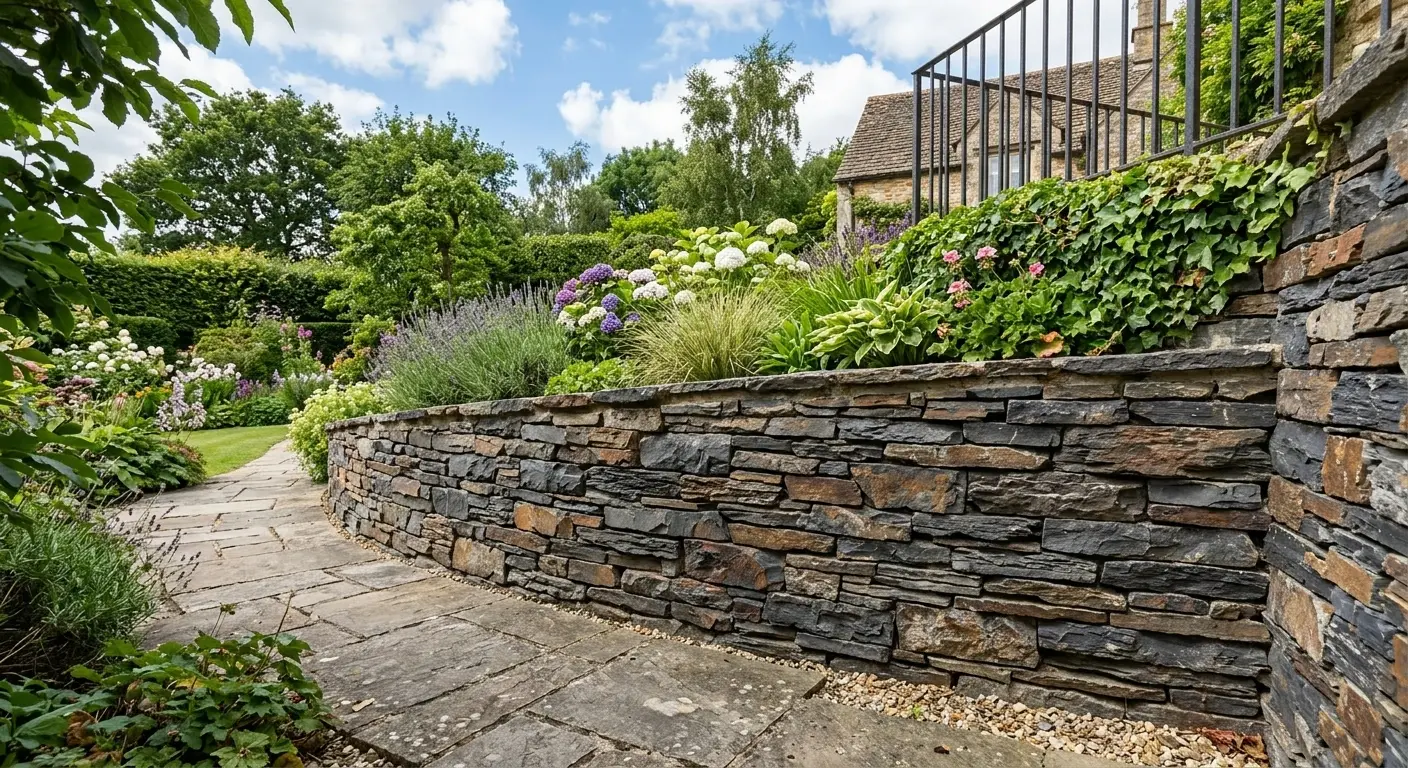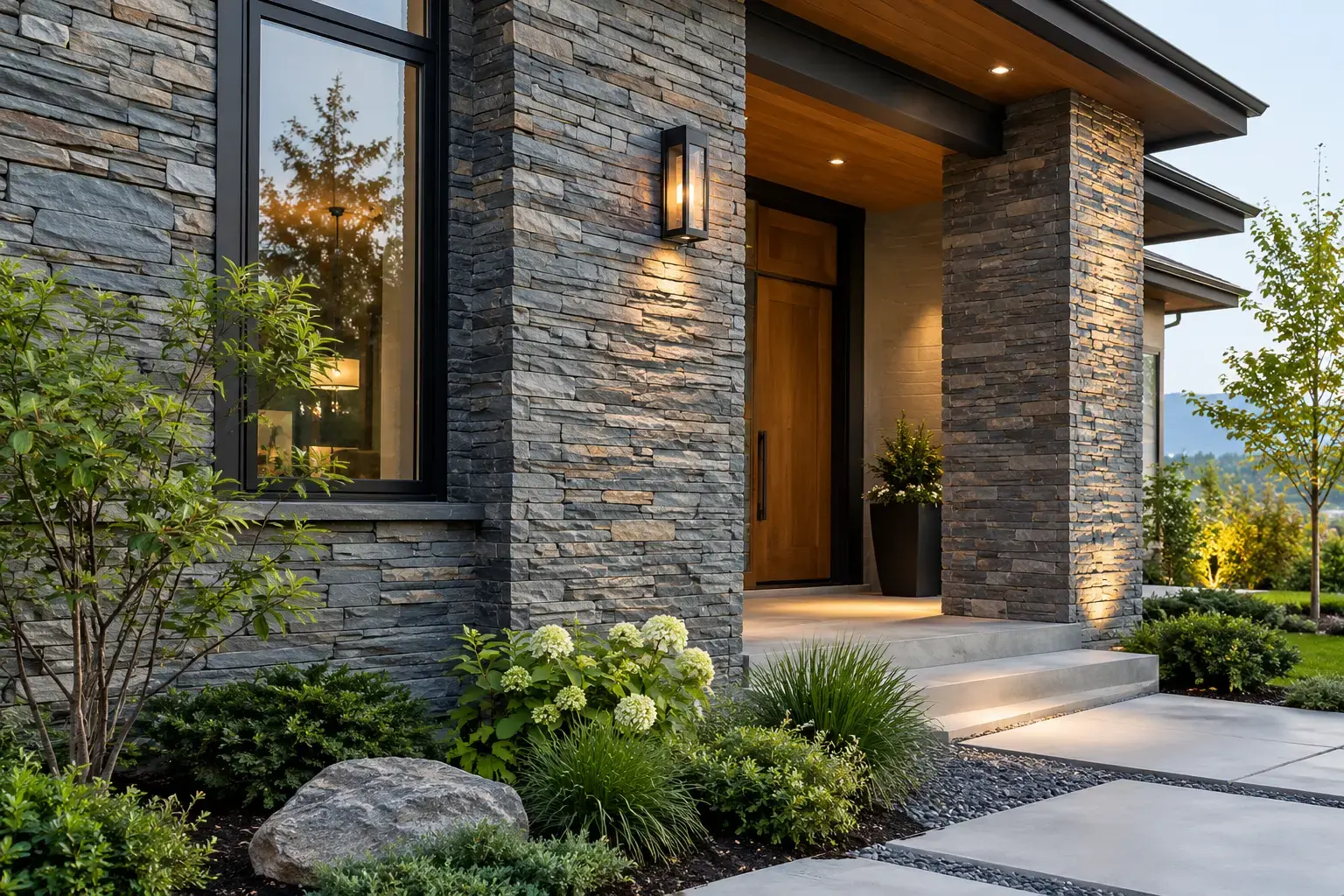
Slate ledger stone is a natural wall cladding made of thin, split strips of slate stacked in horizontal rows and bonded into panels, typically 6 by 24 inches. Each panel's rugged, layered surface comes from slate, a fine-grained metamorphic rock formed from shale or mudstone. According to the ASTM C629 standard for slate dimension stone, slate is selected for either interior or exterior use. Slate ledger stone is commonly used on fireplace surrounds and accent walls
This format is designed to recreate the look of a dry-stacked wall without setting each piece by hand. Each panel typically holds many slim strips in varying lengths and thicknesses, either bonded with adhesive or mounted on a mesh backing, depending on the manufacturer. Many panels have offset ends that interlock with neighboring panels, which can help hide the seams once the wall is complete.
Most collections also offer matching L-shaped corner pieces for outside corners. Corner returns vary by line, with published sizes such as 6 by 12 by 6 inches and 6 by 18 by 6 inches.
What Is Slate Ledger Stone?
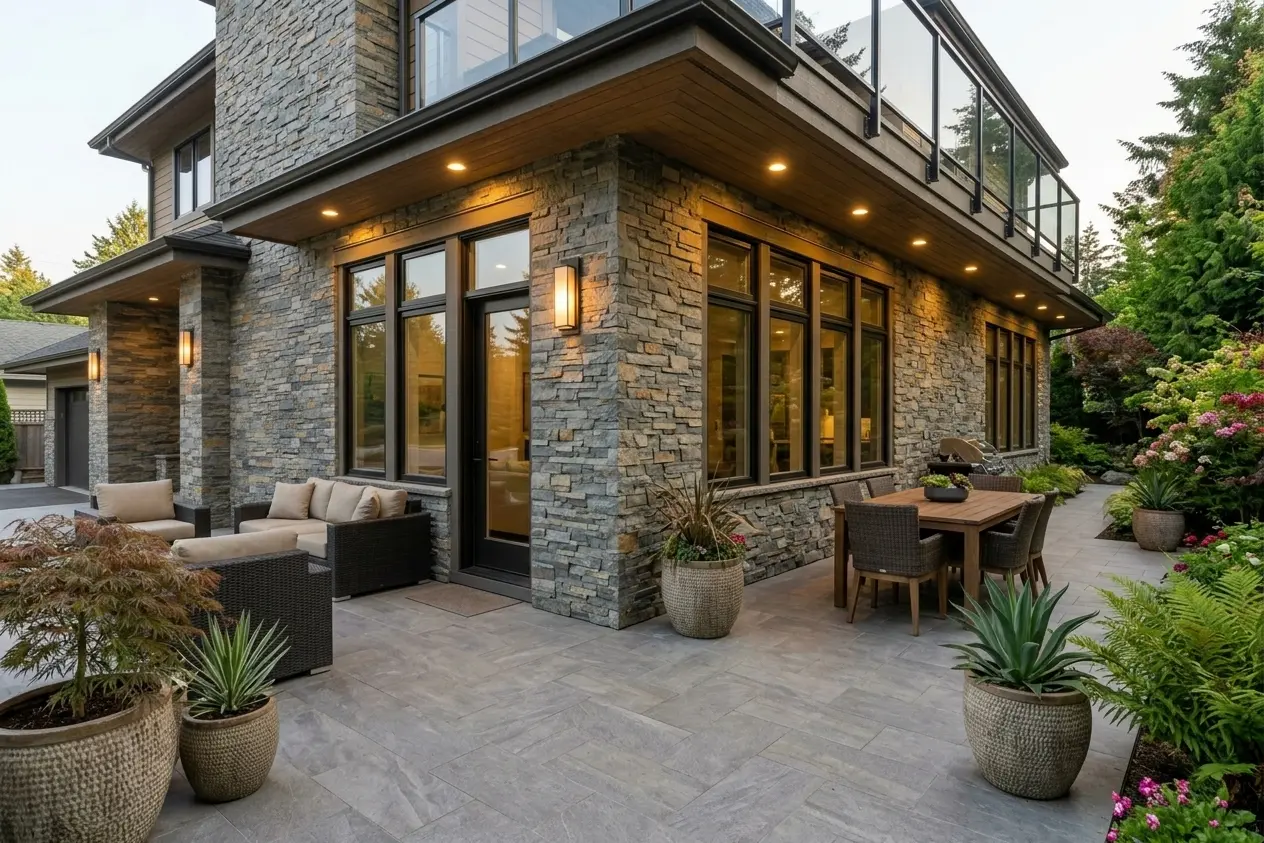 Conceptual rendering
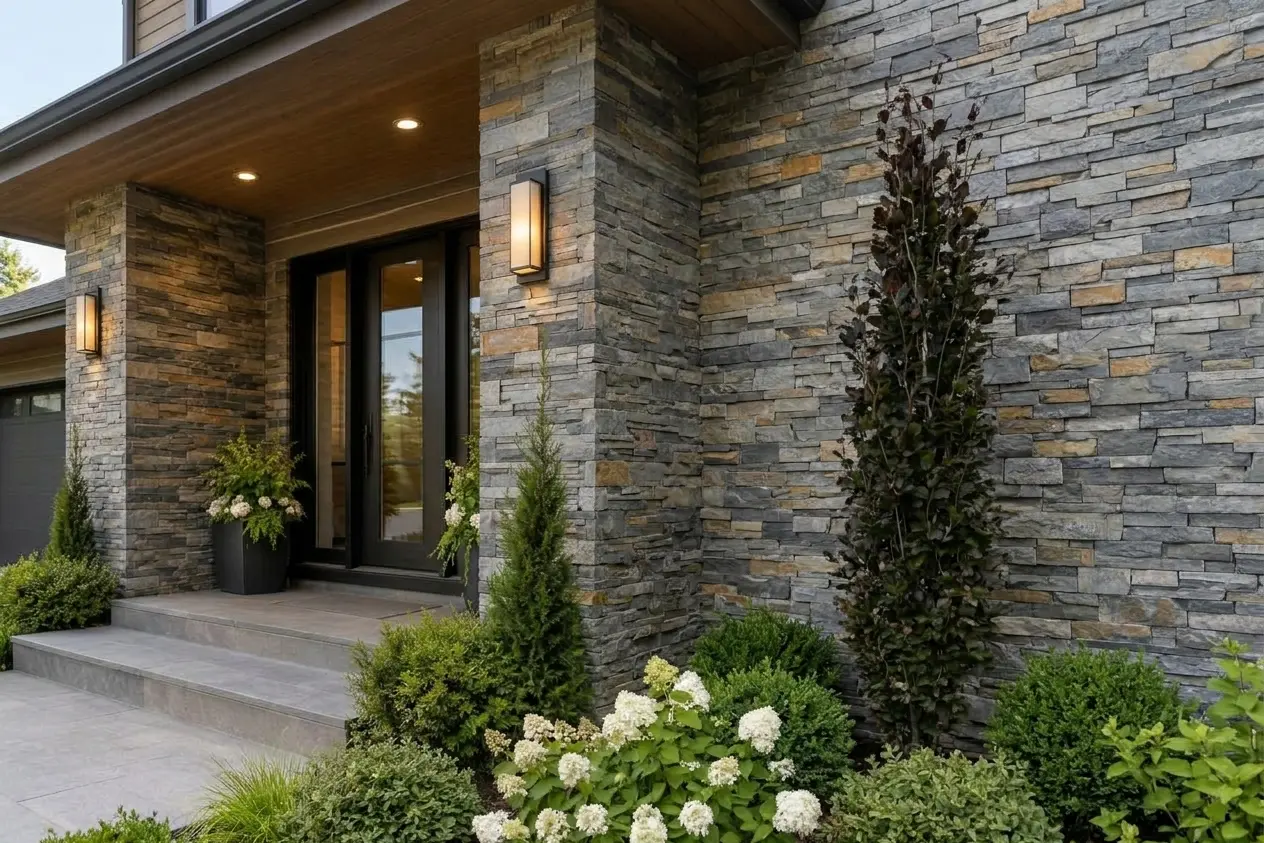 Conceptual rendering
How Geology Creates Split-Face Slate Texture
As pressure flattens the parent rock, its tiny platy minerals line up in one direction. Geologists describe how this mineral alignment creates cleavage, which allows the rock to split into thin sheets.
That structure allows strips to be split rather than sawn across the face. A split-face surface typically shows fine ridges and small steps, and strips of different thicknesses sit at slightly different depths. Across a stacked slate wall, this relief can catch light and cast shadow lines along each course.
The same layering can affect durability. Home inspection educators explain how mineral impurities and long-term moisture cycles can cause layers to separate along cleavage planes, a process known as delamination. More absorbent, lower-quality material can also be more vulnerable to freeze-thaw damage.
Colors You Will Find in Slate Ledger Panels
Color is largely influenced by the rock's mineral content, so shades can shift from strip to strip. Industry coverage notes that this material comes in grays and blues as well as earthy rust, beige, and green. Panels are commonly offered in black and charcoal, gray, green, and multicolor blends that combine gray with gold, rust, and brown.
To spread this variation more evenly across a wall, manufacturers commonly recommend blending panels from several boxes rather than working through one box at a time.
Slate Compared With Other Ledger Panel Materials
Ledger panels are also made from quartzite, marble, travertine, and sandstone. Geology references explain how quartzite forms from sandstone and marble from limestone or dolomite.
Geologists classify slate as a foliated rock, while quartzite and marble are non-foliated, so they generally lack a layered internal structure. Marble can also react with acids, which matters when choosing cleaning products for marble panels.
Color is another common difference. In ledger collections, marble, quartzite, and travertine are often offered in lighter whites, creams, and silvers, while slate tends toward darker grays, blacks, greens, and rust tones.
Ledger Stone Fireplace Surrounds and Other Uses
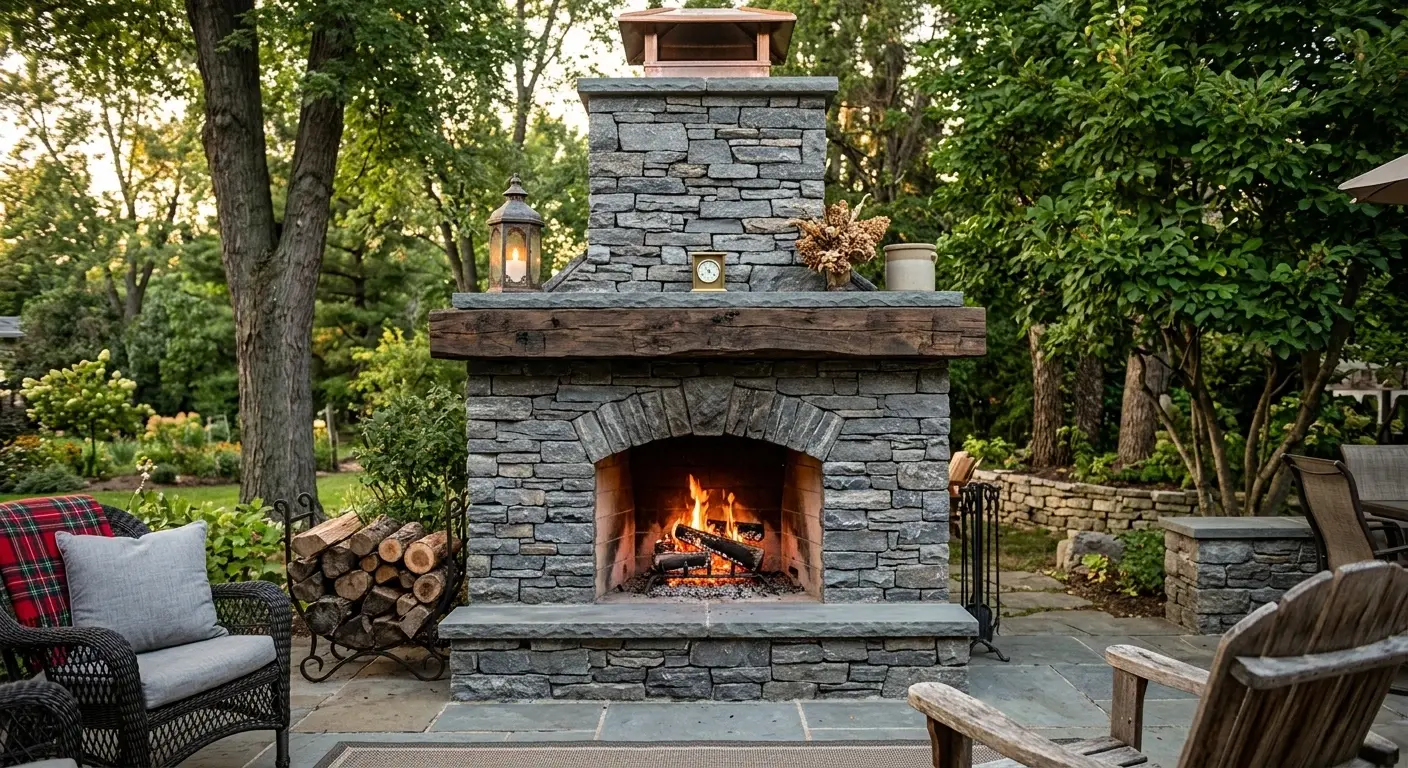
Design editors note that stone fireplaces can look at home in modern spaces as well as rustic ones. Before planning a ledger stone fireplace, confirm with the panel manufacturer that the product and its setting materials are suitable near heat, and follow the fireplace unit's guidelines.
Other applications include kitchen backsplashes, columns, outdoor kitchens, and walls around pool areas.
Indoor and Outdoor Suitability: What to Check
Each product's technical data sheet lists ratings to review before choosing slate ledger stone for a project:
- Wet areas: Some panels are rated for wet interior walls such as shower surrounds, while others are limited to dry areas.
- Freeze-thaw exposure: Frost resistance ratings vary between products, which matters for outdoor walls in cold climates.
- Surface type: Some products are rated for walls only, while others are listed for both walls and floors.
- Weight: Published specifications for manufactured panels list roughly 5 to 12 pounds per square foot, which is considerably less than what heavy quarried panels weigh, and that load should be accounted for in the wall structure.
For more on placement, the interior ledger stone page covers indoor applications, while the exterior stone guide compares thin veneer with full cladding for façades, entrances, and columns.
How to Judge Slate Ledger Stone Quality
Because each slate ledger stone panel is assembled from many small pieces, construction quality can vary between products. Well-made panels typically have consistent overall dimensions and thickness, with each strip firmly bonded to its neighbors or to the mesh backing. Before installation, check for flaking surfaces, cracked strips, or pieces that have come loose, and consider setting aside any panel that shows these signs.
Many manufacturers also publish a shade variation rating. Tile industry educators define each variation level, from a very uniform appearance to substantial variation, with V4 indicating the highest level. Quarried products often carry a V3 or V4 rating, so the rating can offer a quick way to gauge how much color movement to expect before ordering. Viewing several full panels together can give a more realistic preview than viewing a single piece.
Caring for Slate Ledger Stone
Regular dusting with a soft-bristle brush helps keep debris from building up on the ledges of each strip. For deeper cleaning, use a pH-neutral cleaner labeled safe for this type of material. Restoration professionals caution that vinegar and bleach can etch natural surfaces and break down sealers, and abrasive pads or powders can also damage the finish.
Many manufacturers recommend sealing slate ledger stone, particularly where moisture or staining is a concern. How often to reseal depends on the product, the sealer, and the level of exposure. Exterior panels are exposed to dirt, debris, and water, so they may need more frequent attention than interior panels.
Frequently Asked Questions
Yes. Natural panels are cut from quarried rock. Manufactured look-alikes are sold as a separate product, so the product description is the best place to confirm which one you are viewing.
No. The term ledger describes the format, with narrow strips stacked into panels, and these panels are also made from materials such as quartzite and marble.
Its texture and color range can work in rustic spaces as well as modern and contemporary interiors.
Much of the material comes from India and China. Many product listings and spec sheets name the country of origin.
The terms are often used interchangeably. Both describe narrow strips arranged in horizontal courses. The first usually refers to pre-assembled panels, while the second can also describe walls built from individual pieces.
Curious About Something Else?
Note: Some images on this page may be conceptual renderings created to illustrate design possibilities and may not depict actual installations.