Ruby Red Granite Slabs: Bold Color, Natural Durability
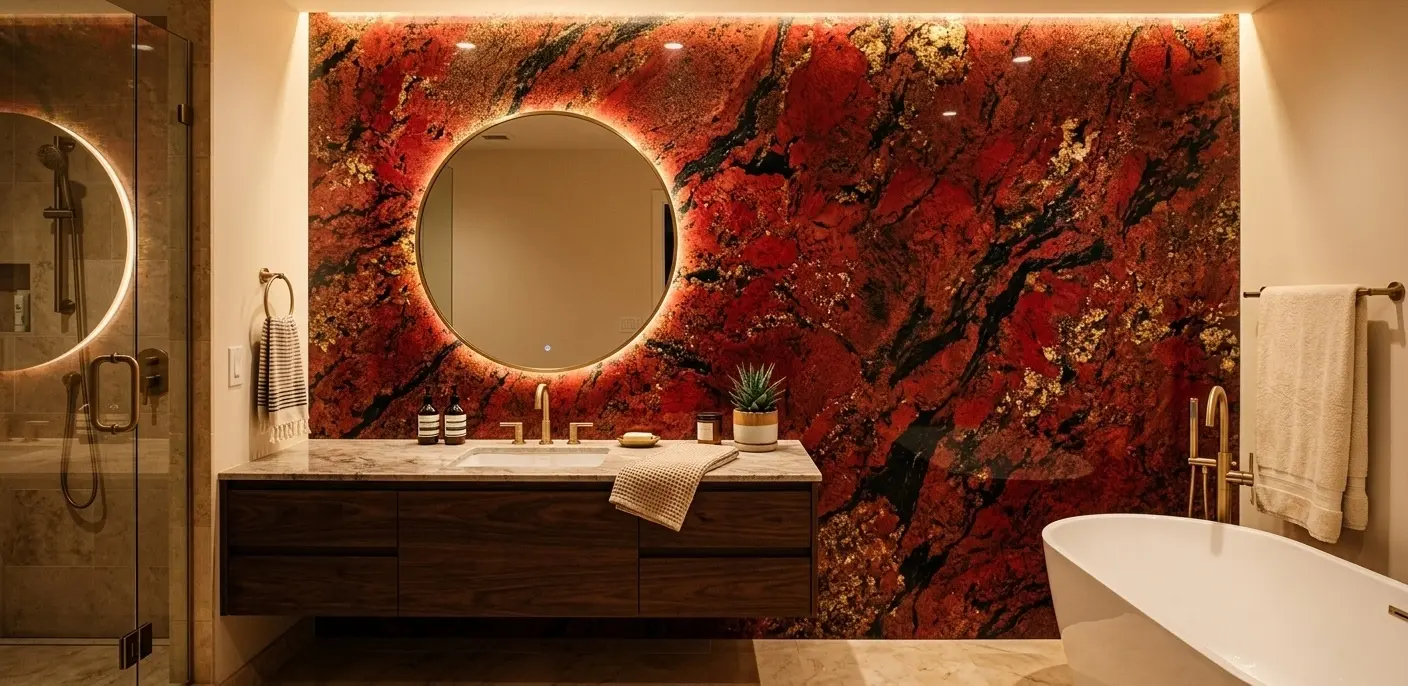
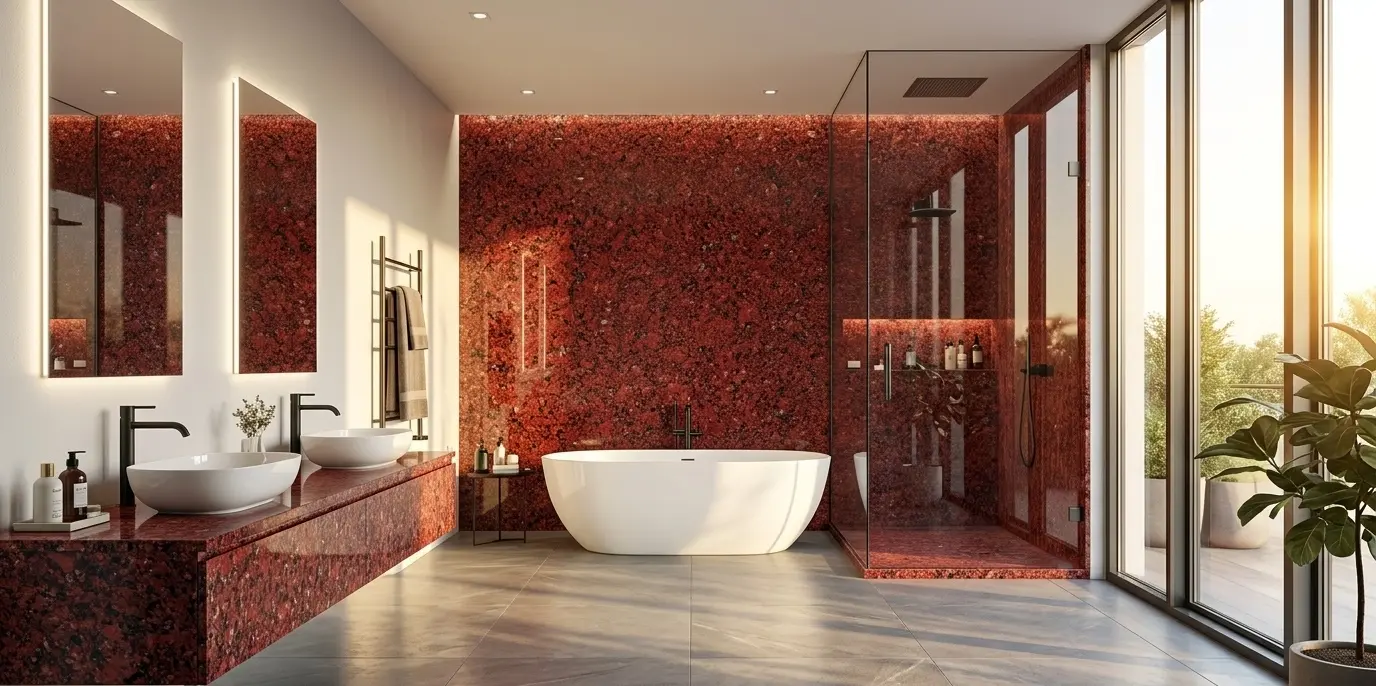
Ruby red granite is one of the rarest natural stone varieties available in slab form today. Its deep crimson base is richly threaded with black, gray, and gold mineral deposits, creating a surface pattern that no engineered material can replicate. Available in polished, honed, and leathered finishes, this stone performs across kitchen countertops, bathroom vanities, floors, and feature walls, giving designers and homeowners a bold yet versatile option that earns its place in any serious stone project.
At Nova Tile and Stone, every slab is sourced directly from premier quarries worldwide and available for in-person viewing at four showroom locations before any commitment is made. Browse our live slab inventory to see what's currently in stock.
Material, Finish, and Scale
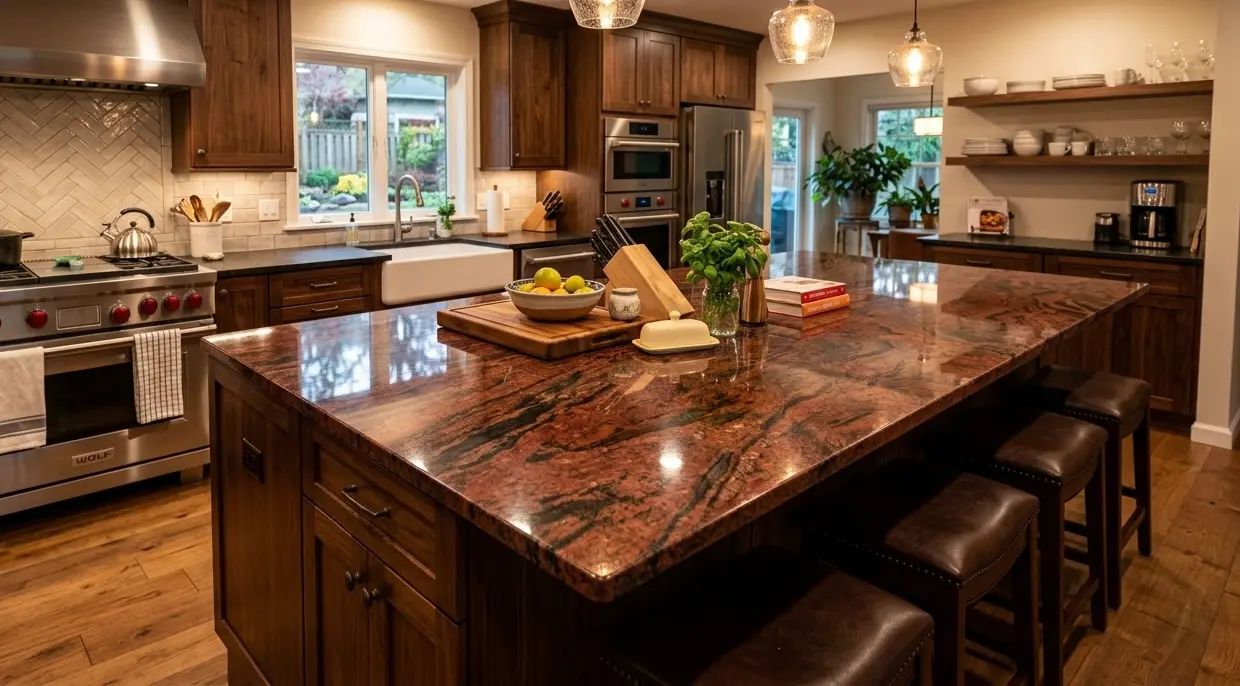
Ruby red granite is a natural igneous stone formed under intense heat and pressure over millions of years. Slabs are typically available in 2 cm and 3 cm thicknesses, with the 3 cm option preferred for kitchen islands and waterfall-edge countertops because it provides structural strength without additional substrate support. The polished finish intensifies the stone's vivid red and mineral tones to a mirror-like depth and is the preferred choice for modern kitchen countertop applications. The honed finish delivers a smooth, low-sheen surface suited to transitional and contemporary interiors.
The leathered finish adds subtle texture that conceals fingerprints while preserving full color richness, making it a practical selection for bathrooms and high-traffic floors. Unlike standard subway tile layouts that rely on repetition for visual interest, a single ruby red granite slab creates visual impact through natural variation and rare color that no uniform pattern can produce.

Rare Color That Works Across Every Room
Ruby red granite adapts to a wider range of applications than its striking color might suggest. On kitchen islands, a polished red slab creates a commanding focal point that pairs well with white, dark walnut, or matte black cabinetry.
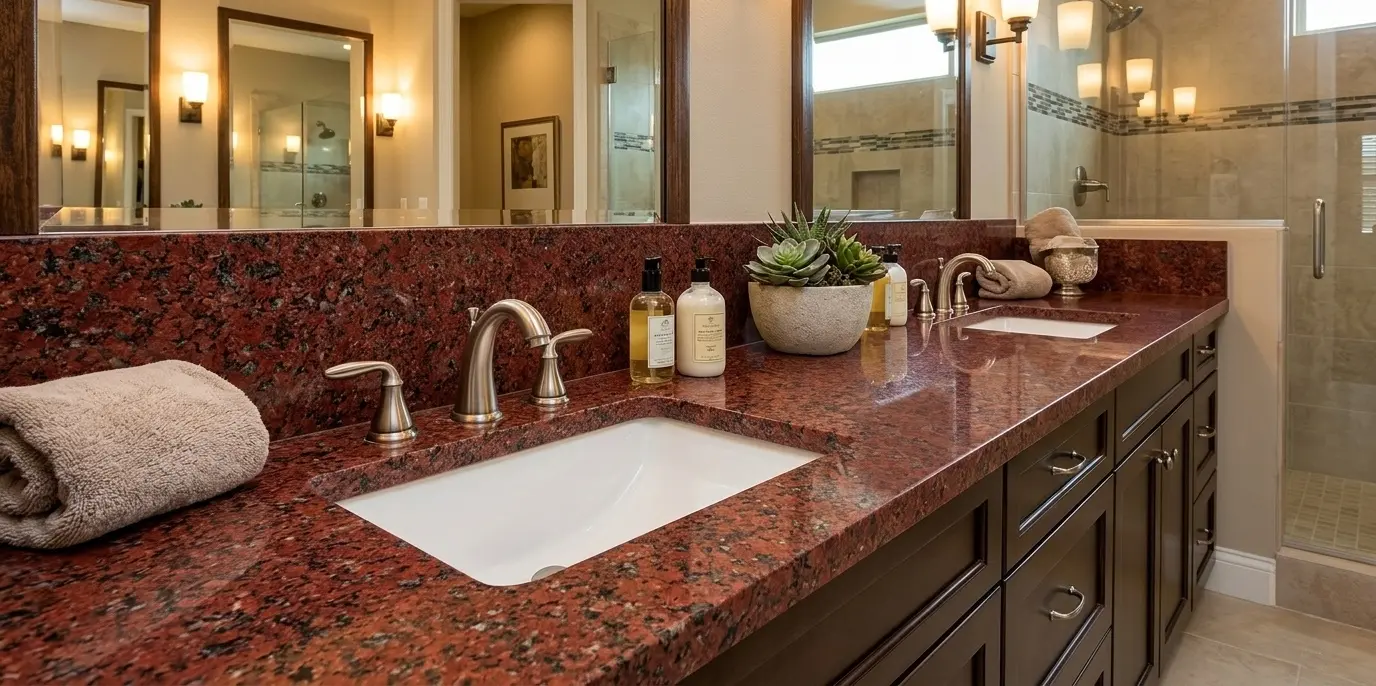
On bathroom vanities, the honed or leathered finish brings warmth and depth without competing with surrounding fixtures. As a floor material, the stone's hardness makes it a reliable choice for entryways and open-plan living areas. Feature walls and fireplace surrounds benefit from a book-matched layout, where two mirrored slabs are opened symmetrically to reflect the natural veining pattern across the full surface.
For a broader view of how granite performs across kitchen applications, the granite kitchen countertop collection offers additional options worth comparing before finalizing your selection.
What Makes Ruby Red Granite a Practical Choice
- Scratch resistance: Granite ranks 6 to 7 on the Mohs hardness scale, resisting everyday knife marks and surface abrasion
- Heat tolerance: The stone withstands cookware and baking sheets without cracking or scorching, but it is highly advisable to use a heat pad or trivet to protect the sealant from discoloration.
- Low-maintenance sealed surface: Resealing once every one to two years keeps liquids and bacteria from penetrating the stone
- One-of-a-kind character: No two ruby red granite slabs share identical veining, ensuring a genuinely unique surface every time
- Finish versatility: Three distinct finish options let you match the surface character to any room's functional and aesthetic requirements
A Rare Stone That Holds Its Value
Ruby red granite's scarcity translates directly into long-term financial value. Rare stone varieties consistently outperform more common materials in resale assessments because their limited availability signals quality and exclusivity to prospective buyers. A properly maintained granite surface can last the full lifetime of a home, requiring only routine cleaning and periodic resealing to retain its original character.
The deep red tones and natural mineral movement in this stone never date, which means the design choice holds its appeal across decades rather than trends. Granite is equally well-suited to demanding outdoor environments. If you are planning a whole-home stone approach, our granite outdoor kitchen countertop page covers how the material performs under exterior conditions.
Frequently Asked Questions
Yes. Its hardness, heat resistance, and sealed surface make it one of the most practical choices for busy kitchens. The bold color works best paired with neutral cabinetry that lets the stone take center stage.
A honed or leathered finish is recommended for bathrooms. Both options reduce surface glare and offer a tactile quality that suits the warmer, more intimate setting of a vanity or feature wall.
Most granite surfaces need resealing once every one to two years. A water absorption test is the easiest way to check: if water soaks in rather than beading on the surface, it is time to reseal.
Yes. Its density and hardness make it suitable for floors, walls, and accent surfaces. For floors, a leathered or honed finish is recommended over polished because it provides better traction.
It can. Against dark walnut it creates a layered, luxurious look. Against white or cream cabinetry, the red reads more vividly and the veining contrast is sharper. Lighter surroundings tend to showcase the stone most effectively.