Granite Kitchen Countertop
Premium Natural Stone Slabs for Your Home
Granite for kitchen countertops are natural stone surfaces made from igneous rock, prized for their exceptional durability, heat resistance, and unique aesthetic patterns. As one of the hardest natural materials available for residential use, granite ranks 6-7 on the Mohs hardness scale, making these surfaces highly resistant to scratches, heat damage up to 1,200°F, and bacterial growth when properly sealed.
Each slab contains distinct mineral compositions, primarily quartz, feldspar, and mica that create unrepeatable veining and color variations ranging from classic blacks and whites to exotic blues and reds. The stone's weight typically measures 18-20 pounds per square foot, requiring reinforced cabinetry for proper support. When maintained with periodic resealing every 1-2 years, these surfaces deliver 20+ years of performance.
View Our Granite Kitchen Countertop Slab Inventory
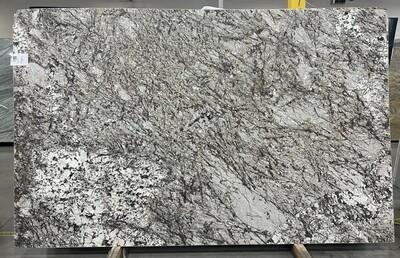
Avorio
(Granite)
- Thickness:2.0 cm
- Finish: Leathered
- Store Location: Reno, NV
Avorio is a granite slab with a light background and dense black, gray, and charcoal movement that gives the surface strong visual texture. Its leathered finish softens the reflection and adds a more natural, tactile feel, which works well in kitchens that need depth without a glossy look. At 2.0 cm thick, Avorio is a good option for homeowners who want a surface with character, contrast, and a more understated finish.
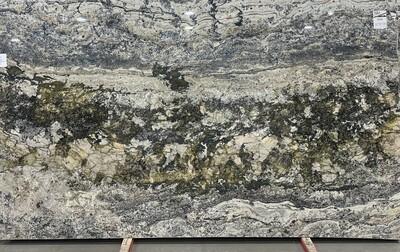
Azurite
(Granite)
- Thickness:3.0 cm
- Finish: Polished
- Store Location: Reno, NV
Azurite is a granite slab with dramatic movement, layered mineral patterning, and a mix of gray, cream, black, and earthy tones. The polished finish brings out the stone’s depth and color variation, making the slab feel more vibrant and defined. At 3.0 cm thick, Azurite offers a substantial look and is well suited for statement countertops, kitchen islands, and projects where bold natural movement is the main design feature.
Explore our curated slabs inventory
Selecting the Perfect Granite Kitchen Countertop Slab
Once you've decided on this natural stone, selecting the right slab becomes your next consideration. Choosing your surface begins with examining full slabs in person rather than small samples to reveal the complete color palette and veining pattern. Consider these key factors:
Edge profiles
Clean
beveled edges suit modern spaces, while ornate ogee profiles complement
traditional designs
Color
coordination
Select tones that harmonize with your cabinetry and overall design vision
Lighting
interaction
Darker
stones create dramatic contrast in bright spaces, while lighter tones open up
smaller rooms
Professional Fabrication and Installation
Professional fabrication transforms raw slabs into precisely fitted surfaces tailored to your layout. Expert fabricators measure your space, account for appliances and fixtures, and cut the stone using specialized equipment that prevents chipping or cracking.
Seam placement requires careful planning to maintain aesthetic continuity, particularly for large islands or L-shaped configurations. Installation handles complex cuts around sinks and cooktops while ensuring cabinetry properly supports the stone's weight.
Granite Slab Inventory, Pickup, and Shipping
Our granite slab inventory changes regularly, with new selections arriving across all four showroom locations in Reno, Minden, Fernley, and Sacramento. Because granite is a natural stone, every slab is unique. Color, veining, and mineral patterning can vary from piece to piece, even within the same variety. Seeing full slabs in person is the best way to choose a surface that fits your space, style, and project goals.
If you would like help comparing materials or narrowing down your options, you can book a free design consultation before making a final decision.
In-Store Pickup
Granite slabs are available for pickup at any of our four showroom locations. Our team can help coordinate timing and loading so pickup works smoothly with your fabricator's schedule.
Local Delivery
We also offer local delivery for granite slabs within our service areas. Delivery availability and scheduling can be confirmed with your nearest showroom or through our team.
Nationwide Shipping
Granite slabs can also be shipped nationwide. Crating, freight, and handling are arranged through our logistics partners. If you are ordering from outside your local area, you can request a quote for your slab, shipping, and delivery details.
Transform Your Space
Ready to upgrade your cooking area with the natural elegance and durability of this stone?
Our showrooms feature an extensive selection of premium slabs in diverse colors and finishes. Our experienced design consultants help you navigate options that align with your aesthetic vision and functional requirements. Visit our locations to see full slabs in person and discover how these surfaces can redefine your space.
Stop by any of our four showrooms:
Reno | Minden | Fernley | Sacramento
.
Frequently Asked Questions
Most surfaces require resealing every 1-2 years, though frequency depends on stone porosity and usage patterns. Perform a simple water test by placing drops on the surface, if water beads up, the seal remains effective; if it absorbs within minutes, resealing is needed.
While highly durable, impacts from heavy objects dropped on edges or corners can cause chips. Proper support during installation and reinforced edges minimize this risk. Small chips can often be repaired using color-matched epoxy by professionals.
Yes, hardness remains consistent across colors. However, darker stones may show water spots or fingerprints more readily than lighter varieties, while lighter options can require more frequent sealing due to higher porosity in certain quarries.
Use pH-neutral cleaners or mild dish soap with warm water for daily cleaning. Avoid acidic cleaners like vinegar or lemon juice, which can degrade the sealant over time. Wipe spills promptly, especially oils and acidic substances, to prevent potential staining.
Standard slabs come in 2cm and 3cm thicknesses. The 3cm option provides greater durability and requires less support structure, making it ideal for overhangs and waterfall edges, while 2cm works well for standard installations with adequate cabinet support.