Granite, Quartzite, and Travertine Siding
Climate plays a large role in choosing real stone siding, since each material absorbs water differently.
Granite: Dense and low in absorption, granite is commonly used for exterior cladding and is known for UV resistance. Its speckled grays, blacks, tans, and pinks can suit both traditional and contemporary homes.
Quartzite: Quartzite is also dense and low in absorption, with layered bands of color and a glassy, crystalline surface. Like granite, it is known for UV resistance.
Travertine: Travertine offers warm, earthy tones and natural pitting that can add a softer texture. Because it typically absorbs more water than granite, some travertines may not suit exterior use where freeze-thaw cycles are frequent, so confirming a product's suitability for colder climates is worthwhile.
Where to Use Stone Siding on Your Home's Exterior
Once a material is selected, it can wrap an entire elevation or highlight a few features.
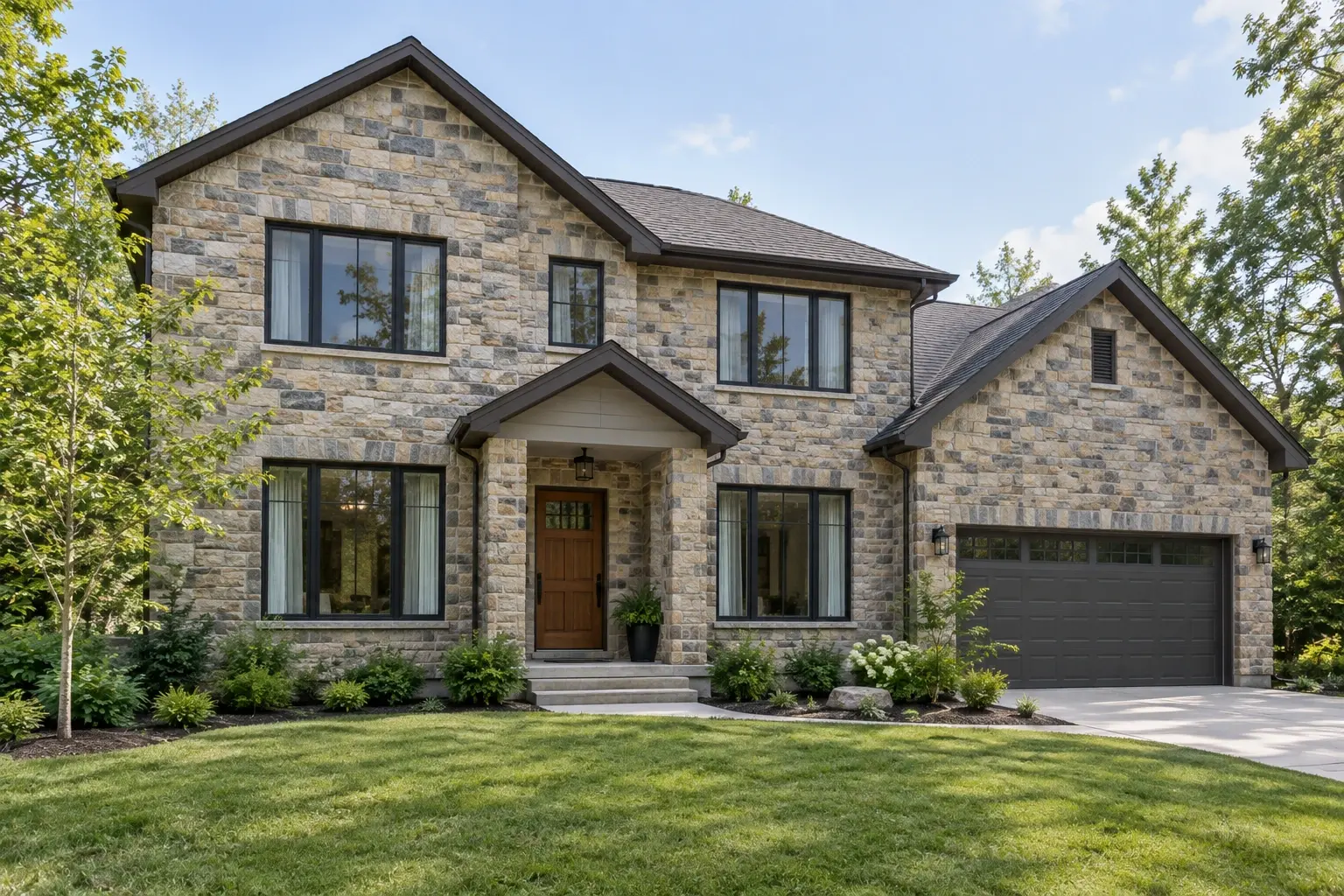
- Full facades: Covering the front elevation can create a grounded look often seen on mountain, rustic, and traditional architecture.
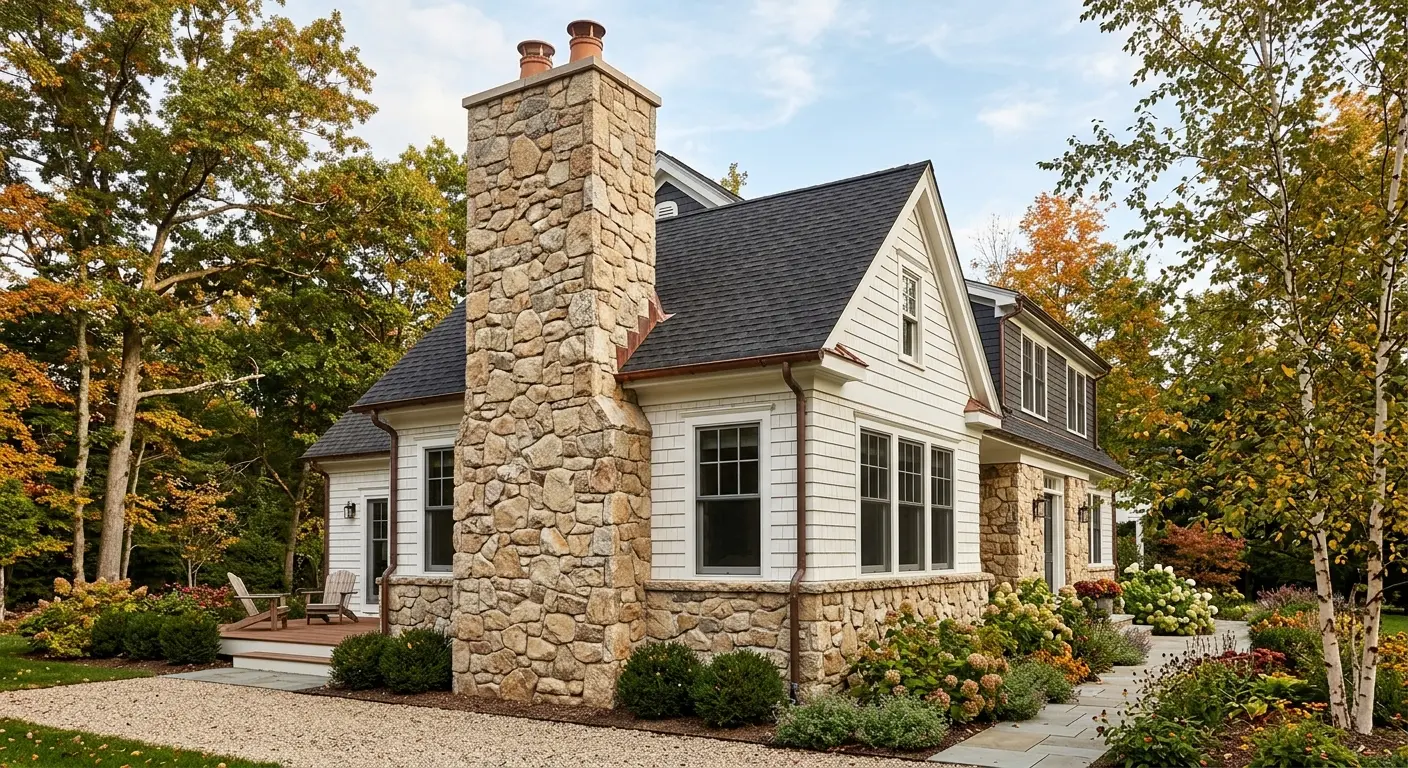
- Wainscot: A band along the lower walls can add texture at eye level and help visually anchor the house to its site.
- Entries and porch columns: Wrapped columns and entry walls can draw attention to the front door.
- Chimneys: Cladding an outside chimney can make it a vertical focal point.
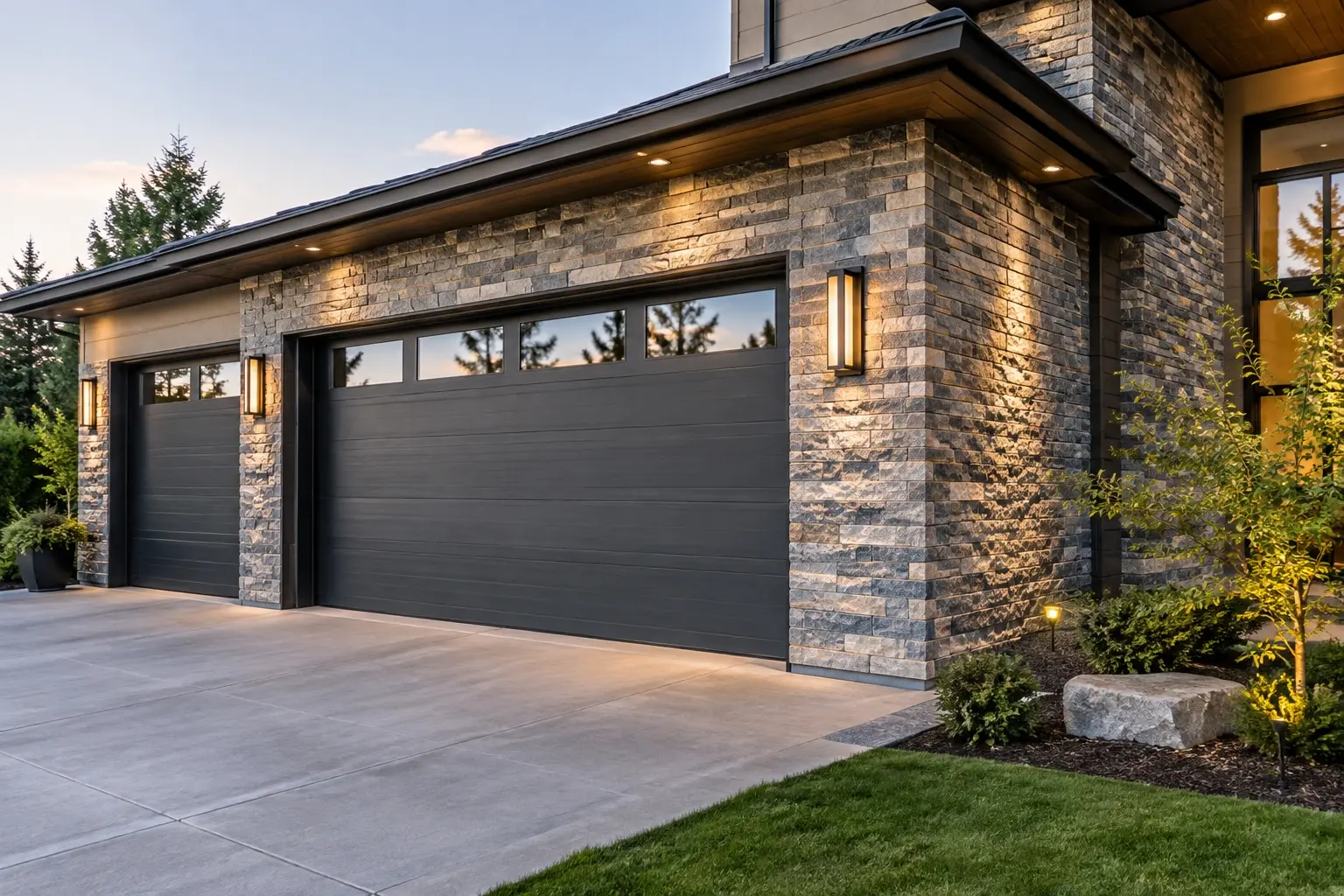
- Garage fronts and accent walls: Smaller areas can add interest with a modest amount of material.
Using real stone siding on one or two of these areas can change how a home reads from the street.