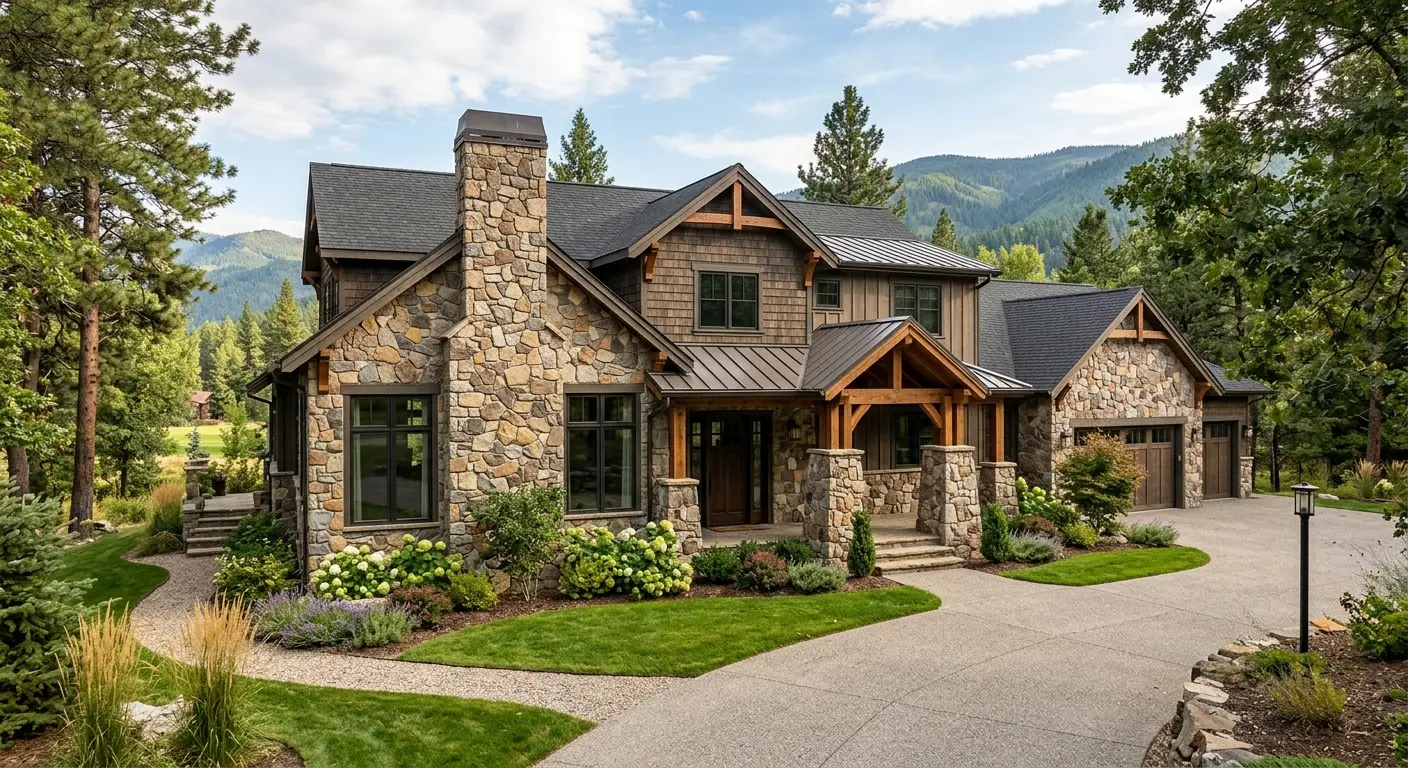
Exterior stone siding, also called stone cladding, is natural rock that has been quarried and cut into pieces or panels to cover a home's outer walls. It can help shield the wall structure from weather while giving the exterior a varied, natural appearance through differences in grain, color, and markings. How well it performs outdoors is strongly influenced by two properties: porosity and mineral composition.
Porosity affects how much water the stone absorbs and how well it handles freeze-thaw cycles. Mineral composition affects how it reacts to acid rain: calcite-based stones such as travertine can etch over time, while silicate stones such as granite and quartzite are generally more resistant. For selecting stone for outdoor walls, ASTM C1528, the standard guide for selecting natural stone for construction, provides guidance on choosing dimension stone for building applications.
Stone Veneer and Other Formats for Exterior Walls
Stone for exterior walls is cut into several formats that differ in weight, depth, and surface pattern.
Thin stone veneer
Slim pieces cut from natural stone. Thin veneer is a lighter format of exterior stone siding than full-thickness stone and offers a similar color and texture.
Full-thickness stone
Deeper, heavier pieces that can create a traditional masonry appearance.
Panels, ledgers, and large-format tiles
Pre-cut shapes that can form more consistent patterns, from stacked ledger styles to smooth surfaces with fewer joints.
Granite
Granite is an igneous rock formed from slowly cooled magma. It consists mainly of silicate minerals such as quartz and feldspar, which often give it a speckled, crystalline appearance.
Quartzite
Quartzite is a metamorphic rock created when quartz-rich sandstone recrystallizes under intense heat and pressure. This process fuses the grains into a dense, hard stone, and minor minerals left from the original sandstone can form streaks across its surface.
Travertine
Travertine is a form of limestone deposited around mineral springs, especially hot springs, through the rapid precipitation of calcium carbonate. Its natural pits and banded structure can give homes an old-world character.
Stone-Look Porcelain as an Alternative
Porcelain is an engineered material made from refined clay fired at high temperatures. Stone-look designs replicate natural veining and texture with more consistent color from piece to piece. According to the ANSI A137.1 standard, porcelain tile has a water absorption rate of 0.5% or less, which can make it a practical choice for homeowners who want the appearance of exterior stone siding with less upkeep.
Material Options for Exterior Stone Siding
Stone Siding Finishes, Colors, and Patterns
Finish has a strong influence on how stone reads from the street. Honed surfaces are smooth and matte, which often suits contemporary architecture. Leathered finishes have a gently textured, low-sheen surface. Polished surfaces are glossy and can highlight color and veining, although calcium carbonate stones react with acids, so on these stones a polish may gradually dull with weather exposure. Specialty finishes can add further texture for a rugged, natural character.
Pattern matters as well. Large-format pieces tend to create clean lines on modern facades, while smaller units in stacked or random layouts often feel more traditional. Comparing samples against your roofing, trim, and windows can help the exterior stone siding complement the rest of the home.
How Climate Affects Exterior Stone Performance
In cold regions, water absorbed into stone expands when it freezes, which can damage the surface over time. Travertine's porosity varies widely from one deposit to another, so travertine calls for extra attention where winters bring repeated freezing, while low-absorption porcelain tends to be less affected by freeze-thaw cycles.
Acid rain affects calcium carbonate stones such as travertine and marble gradually. As the calcite slowly dissolves with repeated exposure to acid rain, surfaces can roughen and fine details can soften over time, which is worth weighing for homes in areas with frequent rainfall.
Matching these properties to your local climate can help you choose exterior stone siding suited to long-term outdoor exposure.
Residential Applications for Stone Cladding
Stone can be used on large wall areas as well as on smaller architectural features.
- Full facades: Stone across a front elevation can create a cohesive, substantial look.
- Wainscot accents: A stone band along the lower portion of exterior walls can add texture and contrast.
- Entry and porch columns: Stone-clad columns can help frame the front entrance.
- Chimney cladding: Stone on a chimney can help tie it to the rest of the house.
- Accent walls, bump-outs, and gable ends: Stone on individual wall sections can add depth next to other siding materials.
Using exterior stone siding on one or two focal areas can add character while using less material than full coverage. Exploring the Nova Tile and Stone collections can help narrow down stone options that fit the exterior design. For help selecting materials for a specific project, schedule an appointment with our team.
Frequently Asked Questions
It is natural rock that has been quarried and cut into pieces or panels to cover the outside walls of a home. Also called stone cladding, it can help protect the wall structure from weather and adds natural variation in grain, color, and markings.
Thin veneer is cut into slim pieces, which makes it lighter while keeping a similar color and texture. Full-thickness stone uses deeper, heavier pieces and can create a more traditional masonry look.
Silicate stones such as granite and quartzite are generally more resistant to acid rain. Calcite-based stones such as travertine and marble can slowly dissolve with repeated exposure, which may roughen their surfaces and dull a polished finish over time.
When water absorbed into stone freezes, it expands and can damage the surface over time. Stones with higher porosity, such as some travertines, call for extra attention in cold climates, while low-absorption porcelain tends to be less affected.
Stone-look porcelain can be a practical option for homeowners who want the appearance of stone with less upkeep. It offers more consistent color from piece to piece, and under the ANSI A137.1 standard it has a water absorption rate of 0.5% or less.
Note: Some images on this page may be conceptual renderings created to illustrate design possibilities and may not depict actual installations.