Skip to Content
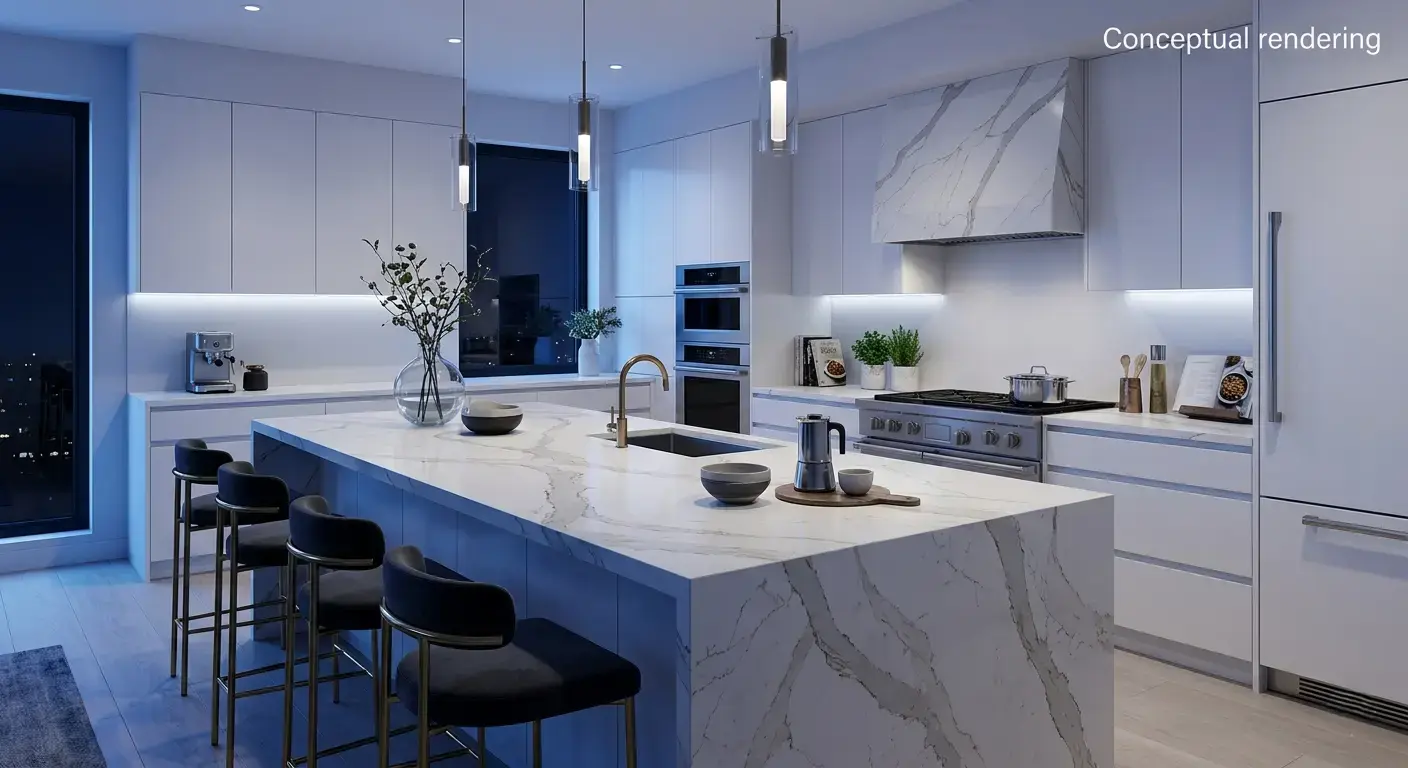
Conceptual rendering of Calacatta quartz kitchen island Conceptual rendering

Quartz Top Kitchen Island

A kitchen island is one of the most used surfaces in the home. It handles meal prep, casual dining, homework, and everything in between. The countertop material you choose for it needs to hold up to that kind of daily use, and quartz is one of the more practical options available for that reason.

This page covers what quartz is as a countertop material, how it performs on a kitchen island, and what to consider when selecting a slab.

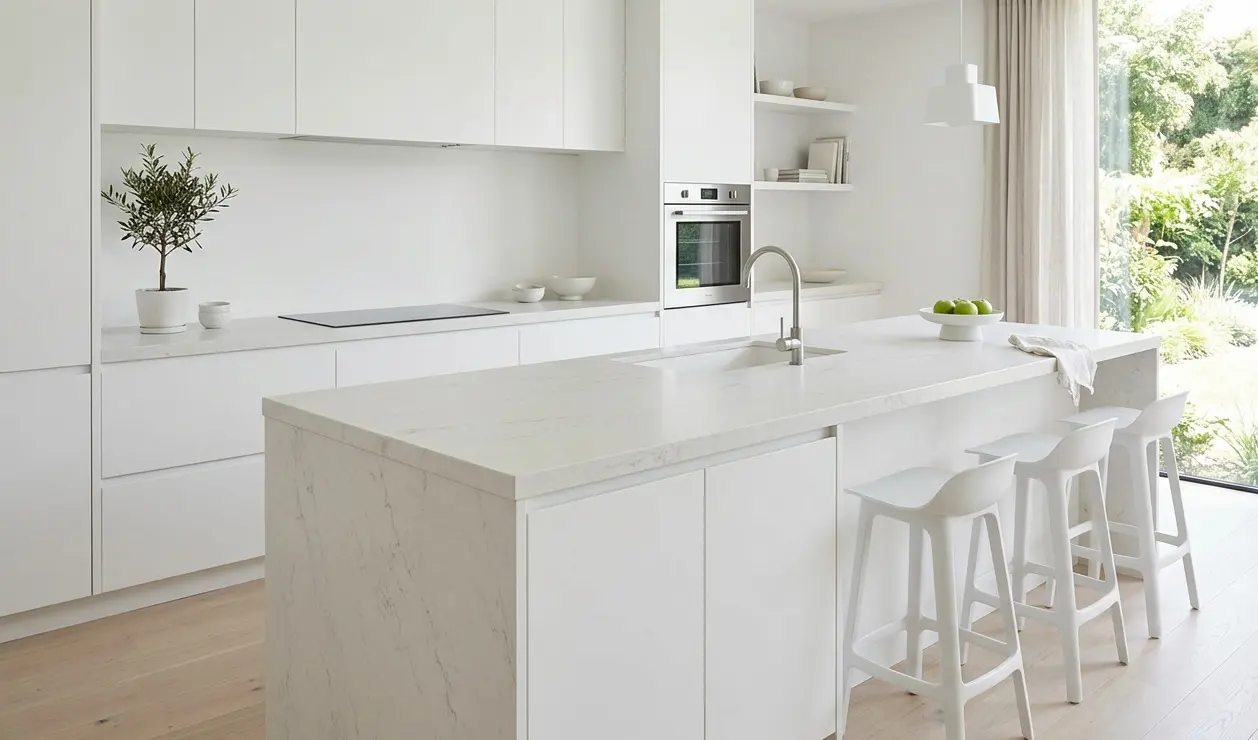
Conceptual rendering of white marble-look quartz slab on contemporary kitchen island

    What Quartz Actually Is

    Engineered quartz is a manufactured material composed primarily of ground quartz crystals, typically around 90 to 95 percent, bound together with resins and pigments. Because the manufacturing process controls color and pattern distribution, quartz surfaces tend to be consistent in appearance from one section of the slab to another. That consistency is one of the reasons it gets used frequently on kitchen islands, where the countertop is often visible from multiple angles.

    It is worth distinguishing engineered quartz from quartzite, which is a natural metamorphic stone. The two materials have different properties, different care requirements, and different appearances. If you are weighing your options, our quartzite kitchen island page covers that material in detail. The two names sound similar and are frequently confused, so confirming which material you are looking at before making a purchase decision is worthwhile.

    Request A Free Quote

How Quartz Performs on a Kitchen Island

Engineered quartz rates between 7 and 7.5 on the Mohs hardness scale, which means it resists scratching from most kitchen tools and utensils. It is also non-porous, which means it does not require periodic sealing the way natural stone does. Spills from acidic foods and liquids such as wine, citrus juice, and vinegar do not etch the surface the way they would on marble or dolomite.

Heat resistance is one area where quartz requires attention. The resin content in engineered quartz can be damaged by prolonged direct heat exposure. Placing hot pots and pans directly on the surface is not recommended. Trivets and hot pads address this, but it is worth knowing before installation.

Cleaning is straightforward. Warm water and mild dish soap handle most everyday messes. Harsh abrasive cleaners and products containing bleach or high-pH chemicals are not recommended, as they can break down the resin binders over time and affect the surface finish. Contractors and builders working on multiple projects can also apply for a trade account for streamlined ordering.

 Thickness and Edge Profiles

Quartz for kitchen island tops is available in different thicknesses, most commonly 2 cm and 3 cm. The 3 cm thickness is the more common choice for residential kitchen countertops because it provides a substantial edge profile without requiring lamination. Edge profiles such as eased, beveled, mitered, and waterfall affect the finished look of the island and are worth discussing with your fabricator before ordering.

A waterfall edge, where the countertop material continues vertically down the sides of the island to the floor, requires additional slab material and more precise fabrication, affecting both cost and lead time. If a waterfall edge is part of your design plan, factoring that into your slab selection early helps avoid material matching issues later in the project.

Larger islands may require more than one slab. Because engineered quartz is manufactured rather than quarried, matching across slabs from the same production run is generally more consistent than it would be with natural stone. You can browse what is currently available on our live slab inventory page before visiting a showroom.

Read Our Blog Guides For Slabs

Your Dynamic Snippet will be displayed here... This message is displayed because you did not provided both a filter and a template to use.
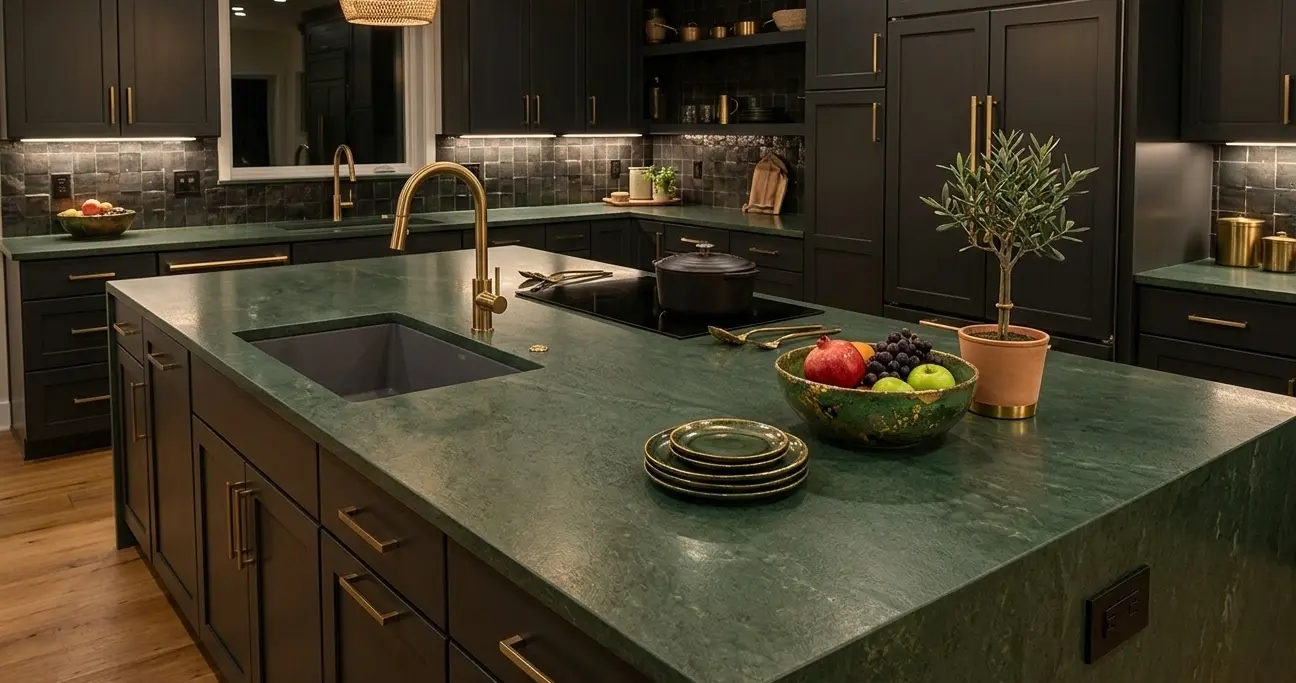
Conceptual rendering of green quartz in kitchen island

Selecting a Quartz Slab

Because engineered quartz is manufactured, the color and pattern range is wide. Options run from solid whites and grays to designs that replicate the veining of marble. When selecting a slab for a kitchen island, it helps to consider how the island top will relate to the surrounding countertops, cabinetry, and flooring. A strong contrast between the island top and the perimeter countertops can work well in certain layouts, while a more unified palette suits others.

Lighting conditions in your kitchen also affect how a slab reads in the space. A color that appears a certain way in a showroom under bright lighting may read differently in a kitchen with limited natural light. Bringing cabinet samples, flooring samples, or photos of your space gives your design consultant more to work with when helping you narrow down options.

You can schedule a design consultation appointment online before your visit. Our design consultants can walk you through available options during a free design consultation at any of our four tile and stone showroom locations in Reno, Sacramento, Minden, and Fernley. Viewing slabs in person gives you a more accurate read on how a material will look in your space than a screen does. You can also browse our full natural stone and tile collections before your visit.

Frequently Asked Questions


No. Engineered quartz is non-porous and does not require sealing. This is one of the practical differences between engineered quartz and natural stone options like marble or granite, both of which benefit from periodic sealing.

Quartz is scratch-resistant but using a cutting board is still recommended. Cutting directly on any stone surface will dull knife edges, and over time repeated cutting can affect the surface finish.

Engineered quartz and quartzite are different materials. Quartz is manufactured and non-porous, requiring no sealing and offering consistent color and pattern. Quartzite is a natural stone with a Mohs hardness of 7 to 7.5, requires periodic sealing with frequency depending on the specific stone and level of use, and carries the natural variation that comes with stone formed geologically. The better choice depends on your priorities for maintenance, appearance, and budget.

Engineered quartz is generally not recommended for outdoor applications. UV exposure can cause discoloration over time, and temperature fluctuations can affect the resin binders in the material. Natural stone slabs are a more suitable option for outdoor countertops.

The most common thickness for residential kitchen island countertops is 3 cm. It provides a solid edge profile and does not require lamination to achieve a standard countertop appearance. Your fabricator can advise on thickness based on the specific design of your island.

Curious about something else?


Nova Tile and Stone: Four Showrooms, One Source

Shop natural and engineered stone slabs and tile at any of our four showrooms in Reno, Minden, Sacramento, and Fernley, carrying granite, marble, quartzite, travertine, and more.