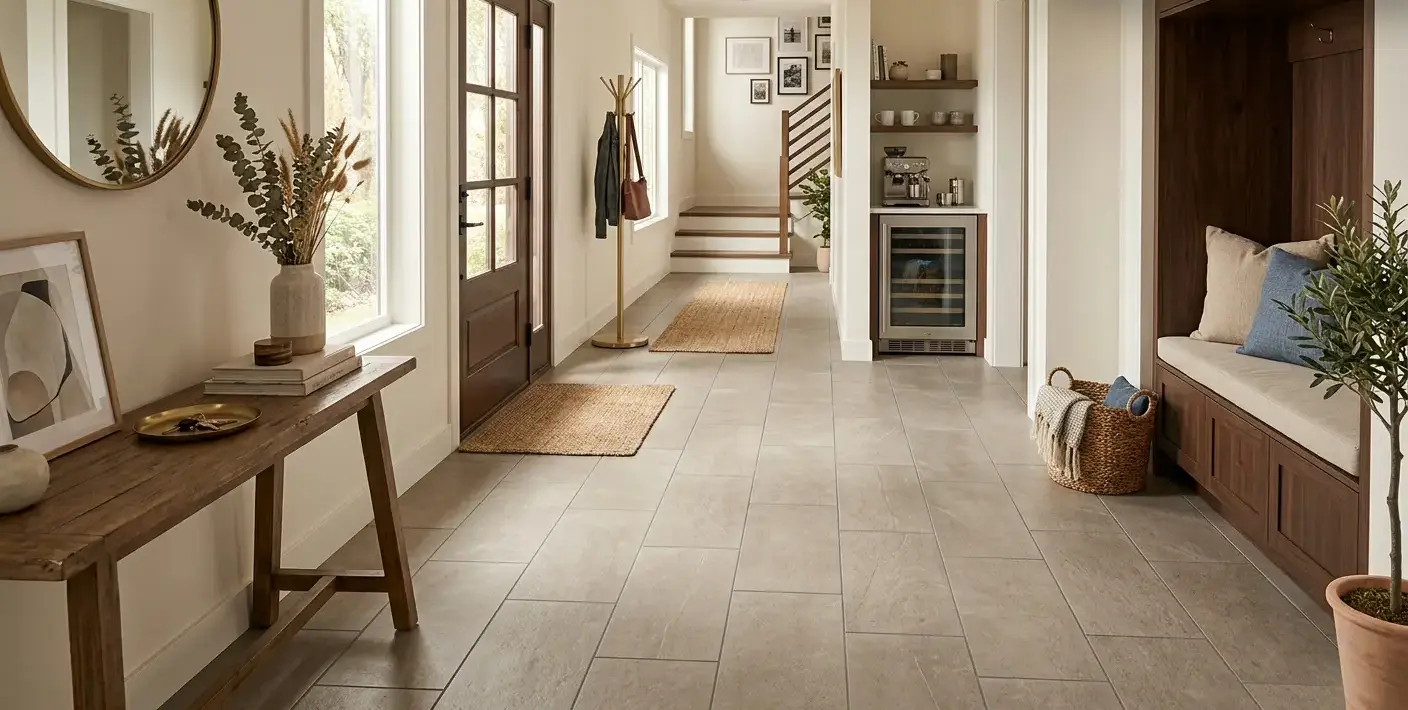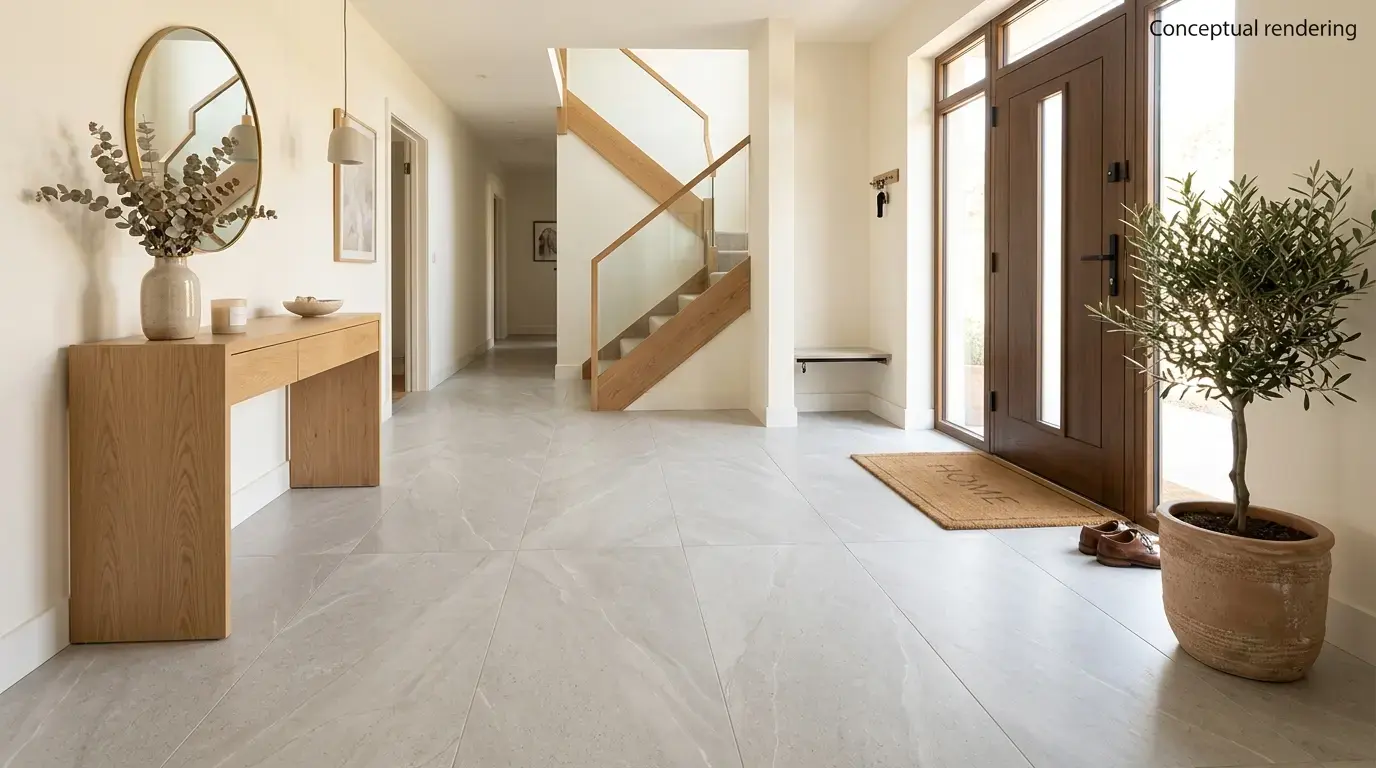
Porcelain tile for entryway floor projects brings together durability, low-maintenance care, and design versatility in one surface. As a fully vitrified porcelain product, it is engineered to withstand the heaviest foot traffic in the home, including the first few steps inside the front door. Nova Tile and Stone's entryway-ready porcelain combines a dense, low-absorption body with a warm greige tone and soft linear veining, creating a floor that reads as elegant while standing up to daily wear. For homeowners weighing tile surface options for a foyer, mudroom, or hallway transition, porcelain remains one of the more balanced choices available.
Porcelain Entryway Floor Tile: Material, Finish and Durability at a Glance
Porcelain earns its reputation as an entryway floor tile through composition rather than marketing claims. The clay body is fired at high temperatures until it vitrifies into a dense, low-porosity surface, a process that gives porcelain surface an edge over standard ceramic in high-contact areas like foyers. Compared with the smaller ceramic subway formats common in kitchens, entryway floors typically favor a larger tile format, since fewer grout lines mean less dirt collects along the transition from outdoors to in. A warm greige finish with soft linear veining suits an entryway because it helps camouflage tracked-in dust and salt residue better than a stark white or high-gloss surface, though periodic cleaning still keeps the floor looking its best. Homeowners wanting the full technical picture beyond entryway applications can consult the porcelain tile guide for finish, sizing, and specification details across the entire porcelain category.
 Conceptual rendering
SPECIFICATION |
DETAIL |
Body Type | Fully vitrified porcelain |
Surface Hardness | Mohs 7, comparable to quartz |
Water Absorption | 0.5% or lower per ISO 10545-3 |
Standard Thickness | 8mm and up for floor-rated porcelain |
Recommended Traffic Rating | PEI III minimum for residential floors |
Our latest product listing
Check out what's new in our company!
Layout Options for Entryway Floor Designs
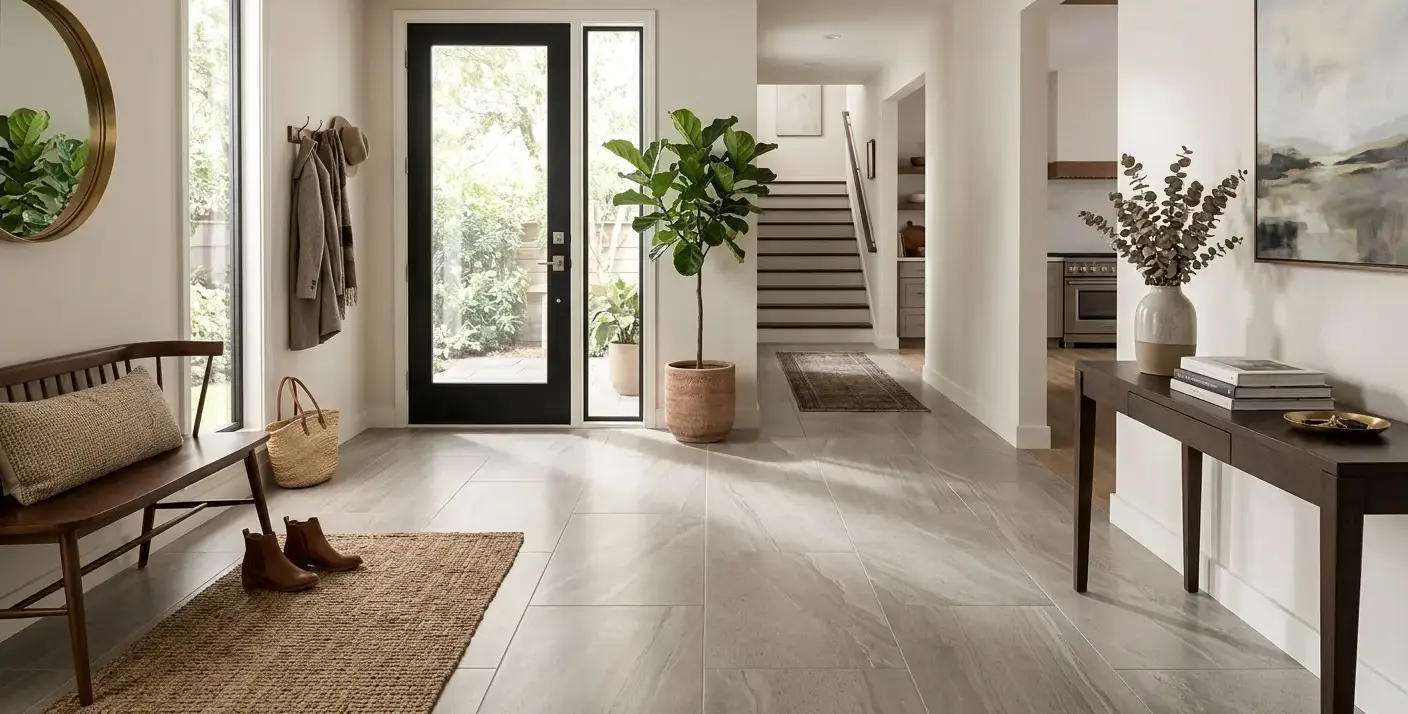
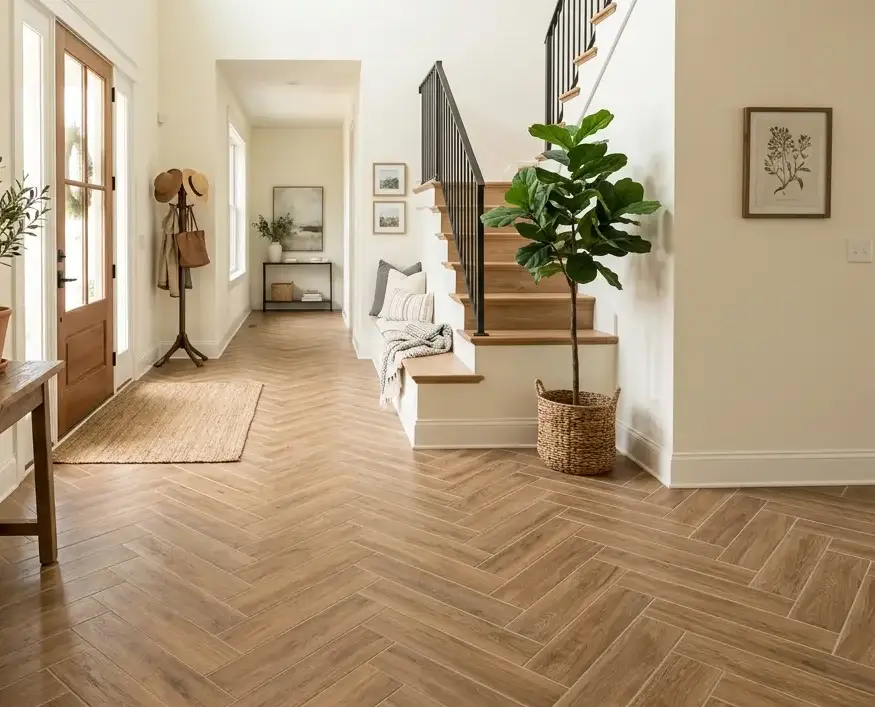
Entryway floor designs benefit from layout choices that either calm a small foyer or make a statement in an open-concept mudroom. A straight running-bond layout keeps sightlines simple and suits narrow entry halls, while a staggered offset pattern softens the repetition of a single-tone porcelain tile surface. Herringbone and basket-weave layouts add movement and read as more formal, a fit for entries that open directly into a living or dining space. Vertical stacking can visually lengthen a low-ceilinged mudroom, and pairing the entryway tile with a contrasting trim piece helps define the transition between flooring materials at the front door. Homeowners comparing porcelain against other materials before settling on a layout can shop tile by type to see how formats and finishes differ side by side.
Why Porcelain Tile Surface Performs in High-Traffic Entryways
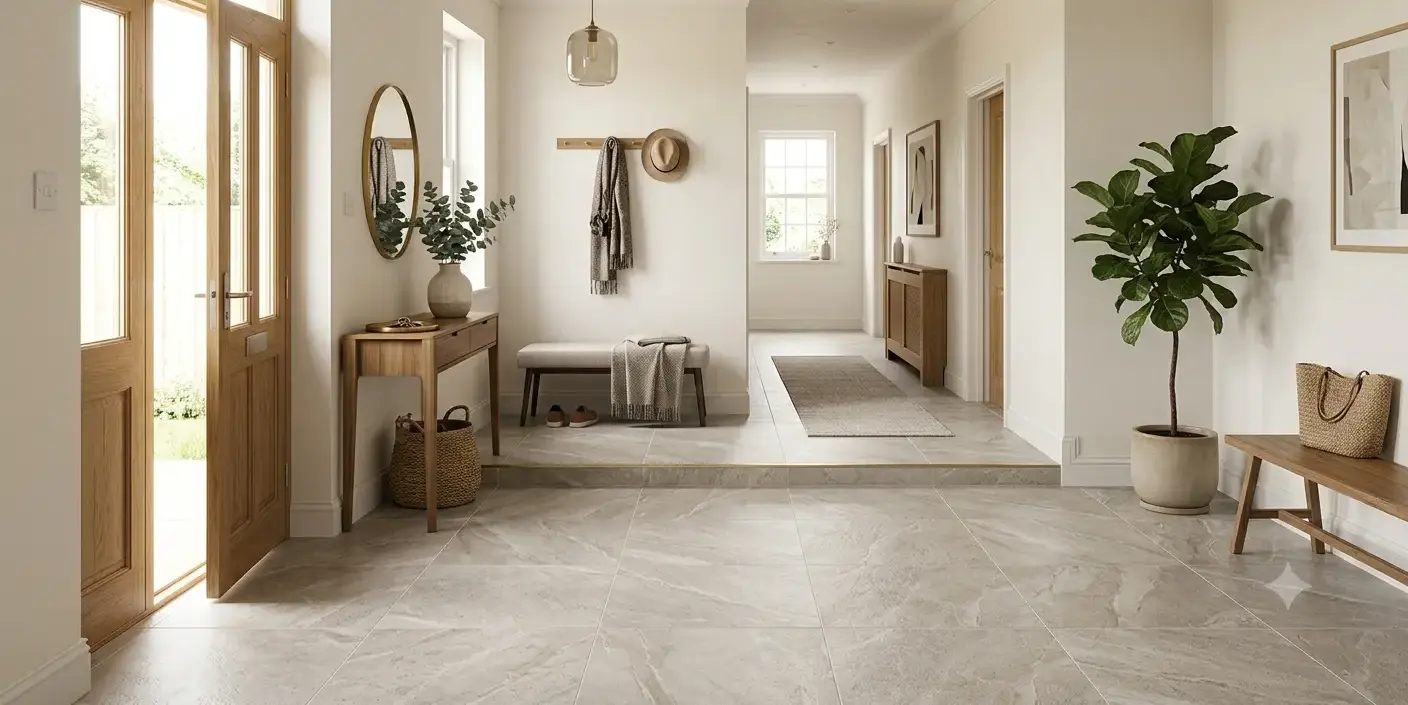 Conceptual rendering
- Low water absorption limits staining from tracked-in rain, snow melt, and mud, though spills are still easiest to manage when wiped up promptly.
- A dense, fired body resists scratching from shoe grit and pet claws better than many softer flooring materials, provided abrasive debris is swept regularly.
- Warm greige tones and soft veining help mask dust and light scuffing between cleanings, a practical advantage in a room that sees constant use.
- A non-porous surface does not require sealing, simplifying the maintenance routine compared with unsealed natural stone.
- The tile transitions cleanly into hallways and adjoining rooms, supporting a cohesive look from the front door onward.
Homeowners ready to compare options can shop entryway tile options across the full porcelain lineup.
Long-Term Value of Tile for Entryway Floor Projects
An entryway floor absorbs more daily impact than almost any other surface in the home, which makes material choice a long-term decision rather than a cosmetic one. Porcelain's ANSI A137.1-referenced manufacturing standards and dense composition give it a durability profile suited to a floor meant to outlast several rounds of furniture and design trends, provided it receives routine sweeping and pH-neutral cleaning. Because color often runs through the full body in porcelain lines like this one, minor surface wear tends to be less noticeable over time than on a glazed-only product. Broader flooring industry innovation, including advances covered in trade publications like this flooring industry innovation report, continues to push manufacturers toward more durable, better-bonded tile systems overall. For entryway-specific care notes and design ideas, the entryway durability guide offers additional detail worth reviewing before ordering. Visiting a Nova Tile and Stone showroom lets homeowners compare warm greige porcelain against other entryway-appropriate finishes in person, since lighting and adjacent trim colors change how a tile surface reads outside a sample board.
Frequently Asked Questions
Yes. Porcelain's dense, low-absorption body resists the moisture, grit, and daily traffic that concentrate at a home's main entry point, making it a durable option when paired with routine sweeping and prompt cleanup of tracked-in debris.
A matte or lightly textured finish tends to suit entryways because it hides scuffs, dust, and light residue better than a high-gloss surface, though the best finish ultimately depends on the surrounding decor and personal maintenance preferences.
Most glazed porcelain does not require sealing because its surface is non-porous, though heavily textured or unglazed porcelain can benefit from an occasional penetrating sealer to protect the surface over time.
Medium formats that reduce the number of grout lines, such as those in the 12x24 inch range, tend to keep small entryways feeling open, though the ideal size depends on the room's overall footprint and layout.
Porcelain is fired at a higher temperature than standard ceramic, producing a denser body with lower water absorption, which generally gives it an advantage in high-traffic, moisture-prone areas like entryways.
Ready for a Floor That Handles Every Arrival?
A well-chosen porcelain tile turns a busy entryway into the first sign of a well-designed home. Explore entryway-ready porcelain colors and formats to find a floor that welcomes every arrival with lasting style.