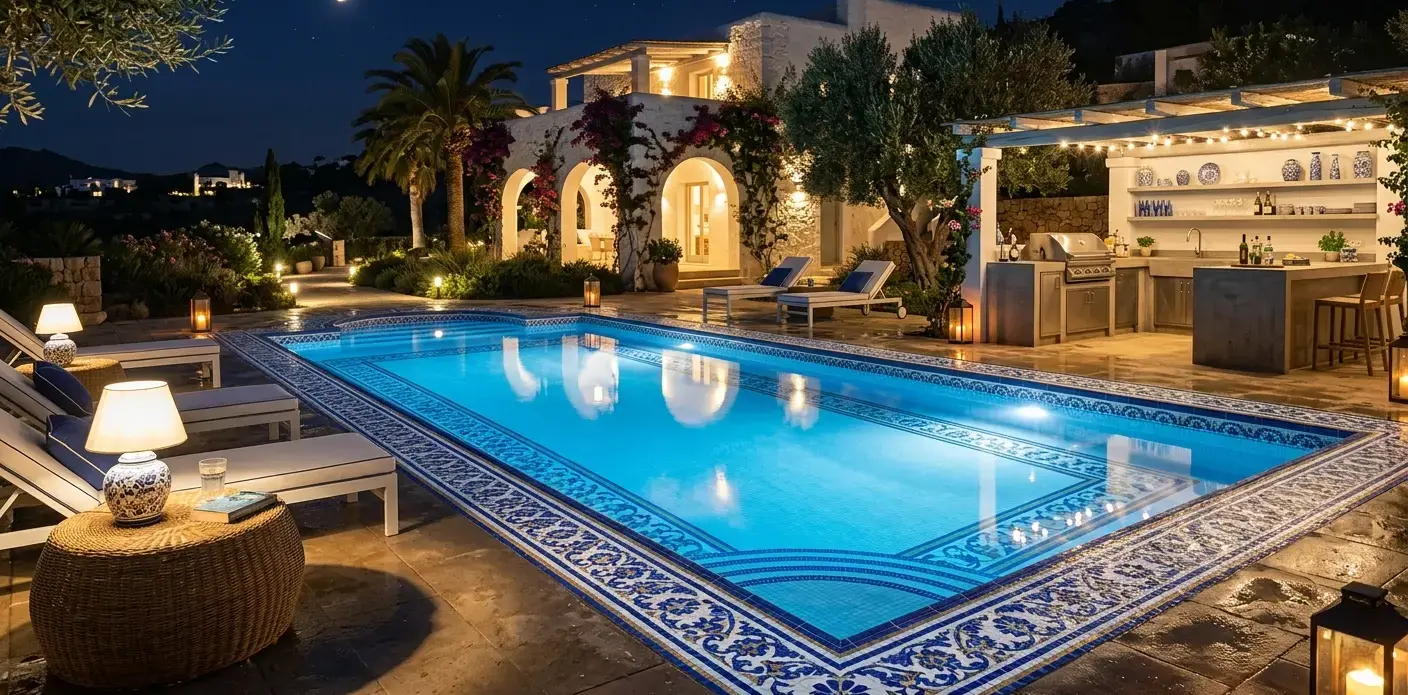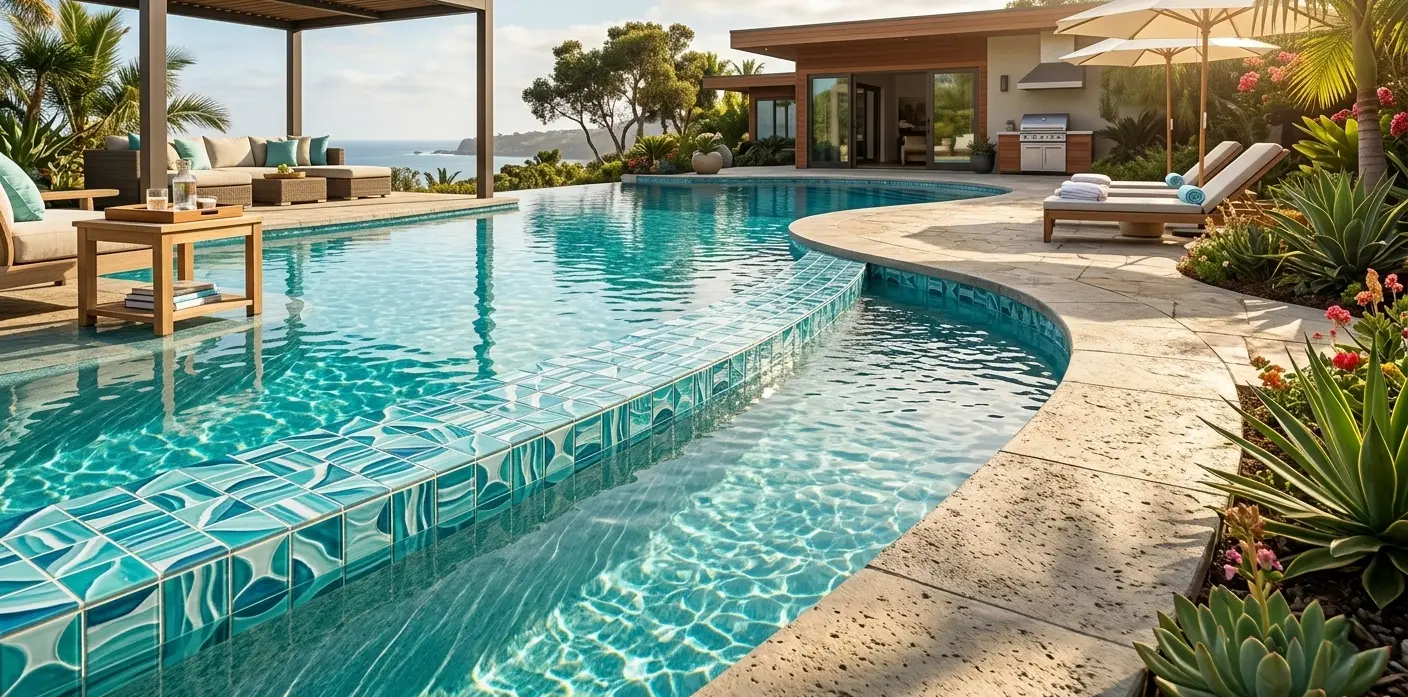
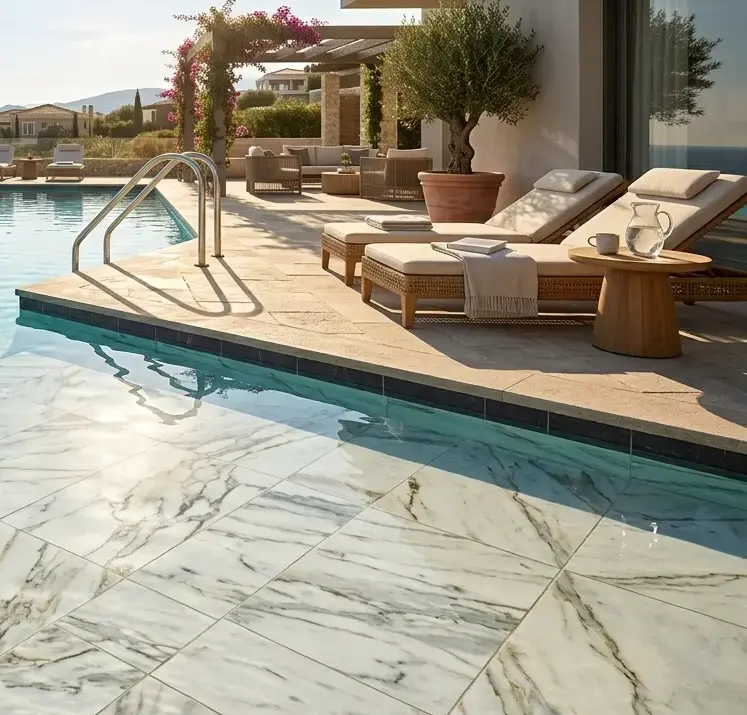
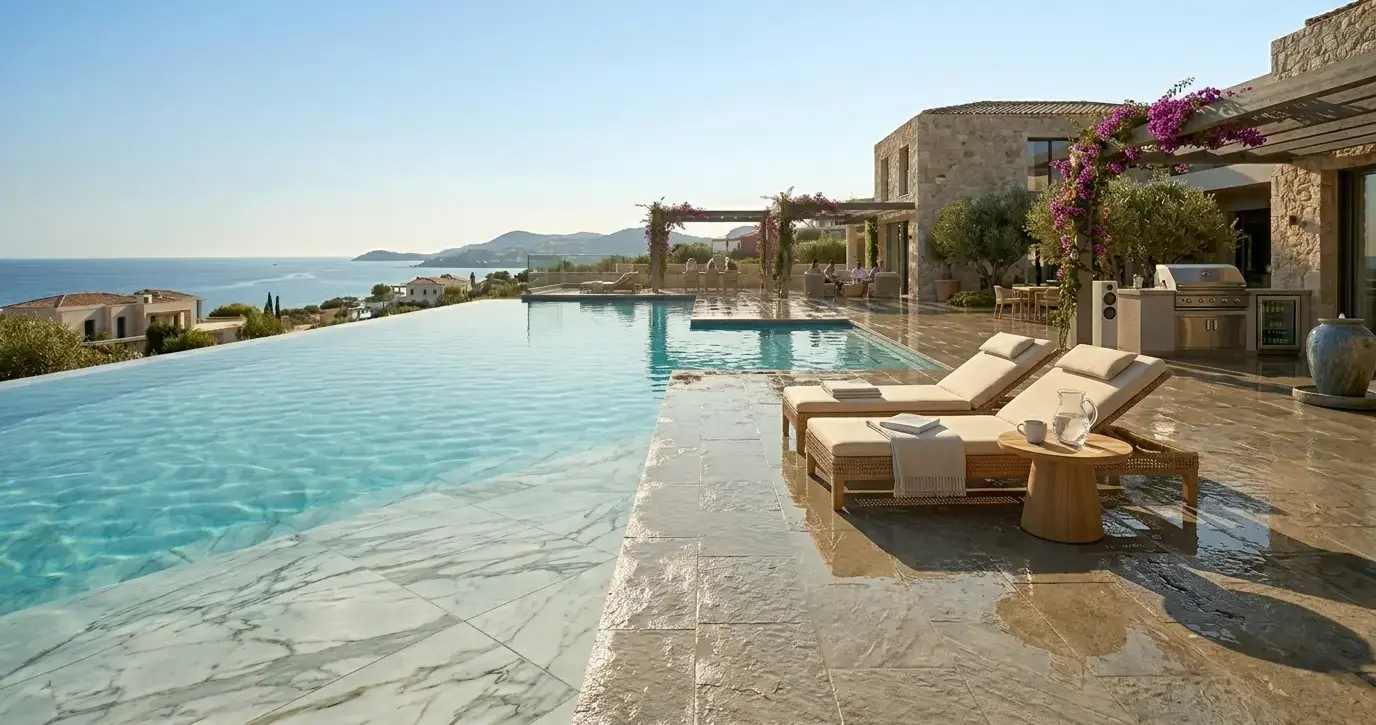
Porcelain Pool Tile brings dense, low-absorption porcelain to waterlines, pool floors, and surrounds. Fired from refined clay at high temperature, this tile carries a water absorption rate at or below 0.5%, which classifies the body as impervious. It is offered in ocean-blue and complementary sand tones, with a glossy glazed face and gentle marble-style veining that suits modern and Mediterranean pools alike. Because porcelain shrugs off moisture and handles freeze-thaw cycles, it performs in year-round outdoor settings, though proper care preserves its appearance. The sections below explain how Porcelain Pool Tile balances lasting performance with pool-ready style.
Porcelain Pool Tile Specifications and Material Strengths
Porcelain Pool Tile is manufactured from carefully selected vitrified clay, fired at extremely high temperatures until it develops a dense, impervious body. This tight structure is the reason the material consistently absorbs water at or below 0.5%, a threshold that classifies it as impervious under ISO standards. That density translates into reliable moisture resistance, making porcelain particularly suited for submerged applications such as pools, spas, and fountains where dimensional stability is critical.
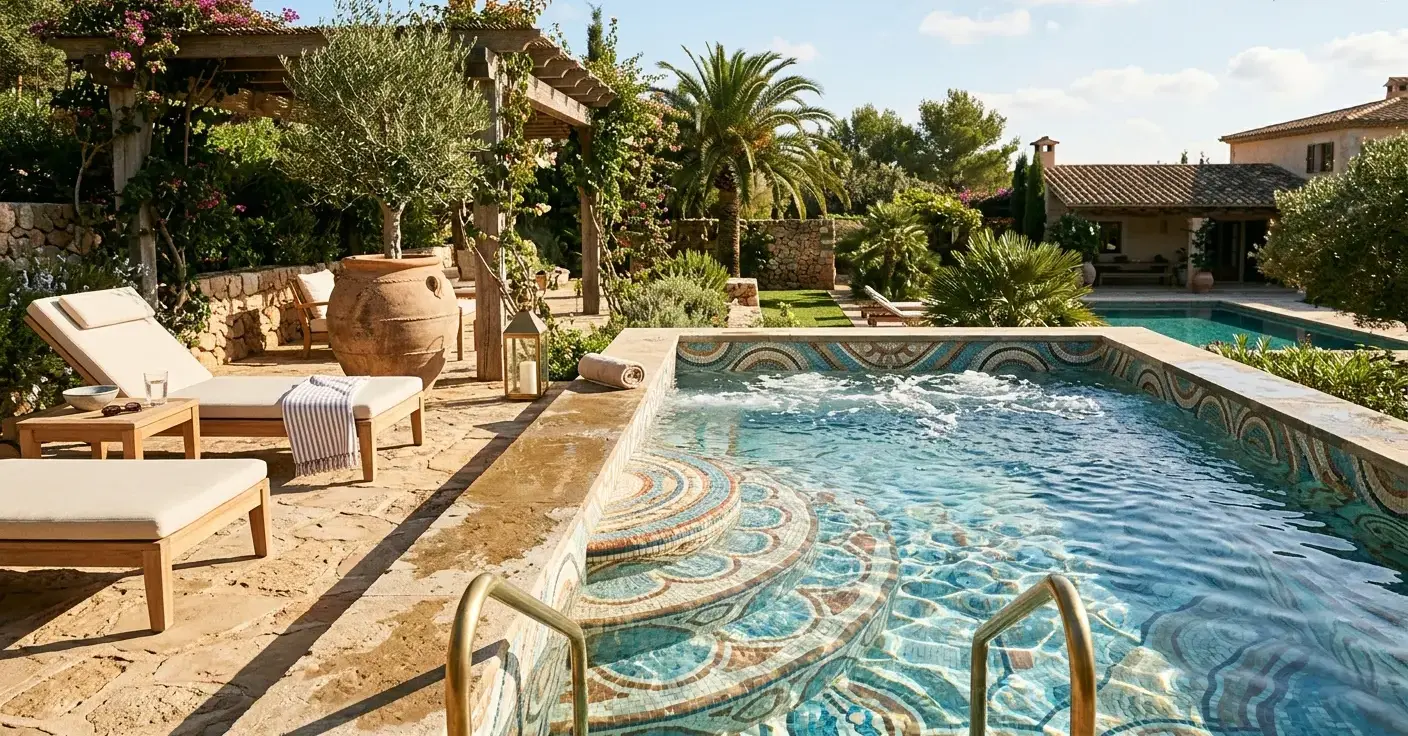
This tile is available in a wide range of formats, from intricate mosaics designed for curved steps and decorative waterlines to larger field sizes that cover pool floors and expansive spa surrounds. A glossy glazed finish is the showcase option for waterline bands, where the constant presence of water intensifies and deepens the color, creating a reflective, jewel‑like effect. Textured and matte options, on the other hand, are engineered for traction and safety, making them practical for wet decks, steps, and exterior surrounds where slip resistance is essential.
Use cases extend across waterline accents, pool floors, stair treads, spa interiors, and custom water features. When compared with standard ceramic field tile, which absorbs more water and can swell or warp under prolonged exposure, porcelain remains dimensionally stable and resists deterioration. Grout joints, however, still require routine cleaning and maintenance to prevent staining or buildup.
Against glass mosaic layouts, porcelain offers a denser body, greater durability, and a broader range of formats. It can scale down to mosaic dimensions for curved installations while also scaling up to larger panels for expansive surfaces, giving designers flexibility across multiple applications. For those seeking coordinated looks, the wider Nova porcelain tile collection provides an array of related finishes, colors, and sizes, allowing homeowners and designers to compare options and achieve cohesive poolside aesthetics.
 Conceptual rendering
Property | Detail |
Surface hardness (Mohs) |
Vitrified porcelain body; Mohs hardness typically 7 or above - confirm per specific format |
Standard Thickness | 3/8 in (9.5 mm) typical for mosaic formats; 1/2 in (12 mm) for large-format field tile - confirm per SKU.
|
Water Absorption | At or below 0.5% (impervious; ASTM C373, ANSI A137.1) |
Slip Resistance (DCOF) | ≥ 0.42 required for wet pool decks and surrounds (ANSI A326.3); specify textured finish for deck applications |
PEI Wear Rating | Confirm per SKU; Class 3 or higher recommended for pool floors and steps subject to foot traffic |
Breaking Strength | Tested per ASTM C648; confirm minimum value per format before specifying for pool floors or steps |
Pool Tile Designs for Every Layout
Pool Tile Designs reward planning, and this Porcelain Pool Tile adapts to many arrangements. Stacked, brick-offset, vertical, and herringbone layouts all work, each shifting how light and water play across the surface.
Smaller mosaic sheets curve neatly around steps, benches, and spa edges, while larger formats cover open floors with fewer joints. A linear band of mosaic also defines a crisp waterline.
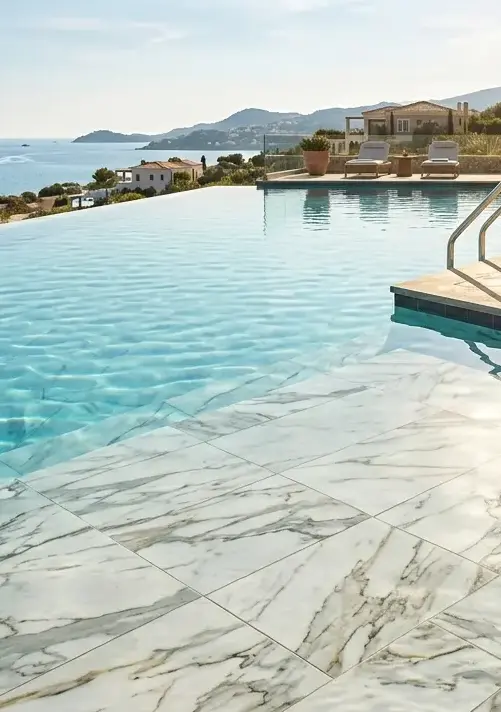
The marble-style veining gives these stone-look surfaces a natural sense of movement that mirrors water. To book a design consultation, a Nova design expert can map a palette to your space.
Stay informed with the latest swimming pool equipment standards by exploring the detailed guide on NSF/ANSI 50‑2025 compliance published by ANSI.
 Conceptual rendering
 Conceptual rendering
New Porcelain Tile Collection
New Porcelain Tile Inventory !
 Conceptual rendering
Why Porcelain Pool Tile Performs Poolside
- Low water absorption at or below 0.5% resists moisture intrusion, though grout still needs regular cleaning to stay bright.
- A frost-resistant body suits outdoor pools through freeze-thaw cycles, though seasonal inspection helps the surface last.
- Fired color holds up well against sun exposure and resists fading, though proper care preserves the finish over time.
- The smooth glazed face releases everyday pool residue with routine rinsing, though buildup at the waterline still needs attention.
- For pool decks and wet surrounds, select a textured finish that meets a DCOF of 0.42 or higher under ANSI A326.3.
- Aqua tones and marble-style veining echo natural water movement, giving the variation a cohesive, pool-specific look.
A Lasting Investment in Pool Surfaces
A pool surface takes constant exposure, so material choice shapes long-term value. Porcelain Pool Tile earns its place through an impervious body that stays stable across seasons, though no surface is fully maintenance-free.
The timeless blue palette and marble-style veining age gracefully, which protects design appeal as trends shift. That combination of durability and restraint makes Porcelain Pool Tile a sensible long-term pick.
Performance for pool applications is governed by published standards, which strengthens buyer confidence. Water absorption follows ASTM C373 and ANSI A137.1, slip is measured under ANSI A326.3, abrasion under ASTM C1027, and breaking strength under ASTM C648. Buyers can request available documentation per format.
Nova supports the decision with free design consultations, 100% U.S.-based client services, and home delivery alongside four showroom locations. For care that protects the finish, see this porcelain tile complete guide.
Recent Blog Highlights
Catch Up on Our Recent Innovations!
Frequently Asked Questions
Yes. Porcelain absorbs water at or below 0.5%, which makes the body frost-resistant and stable through freeze-thaw cycles, though seasonal inspection helps it last.
A glossy glazed face suits waterlines and submerged areas, while a textured finish that meets a DCOF of 0.42 or higher under ANSI A326.3 suits wet pool decks.
Fired porcelain color holds up well against sun exposure and resists fading, though routine cleaning preserves the appearance over time.
The impervious porcelain body limits moisture absorption, though rinsing surfaces and maintaining grout keeps saltwater pools looking their best.
Mosaic bands, stacked, brick-offset, and herringbone layouts all work, since smaller mosaics curve with steps and spas while larger formats suit open floors.