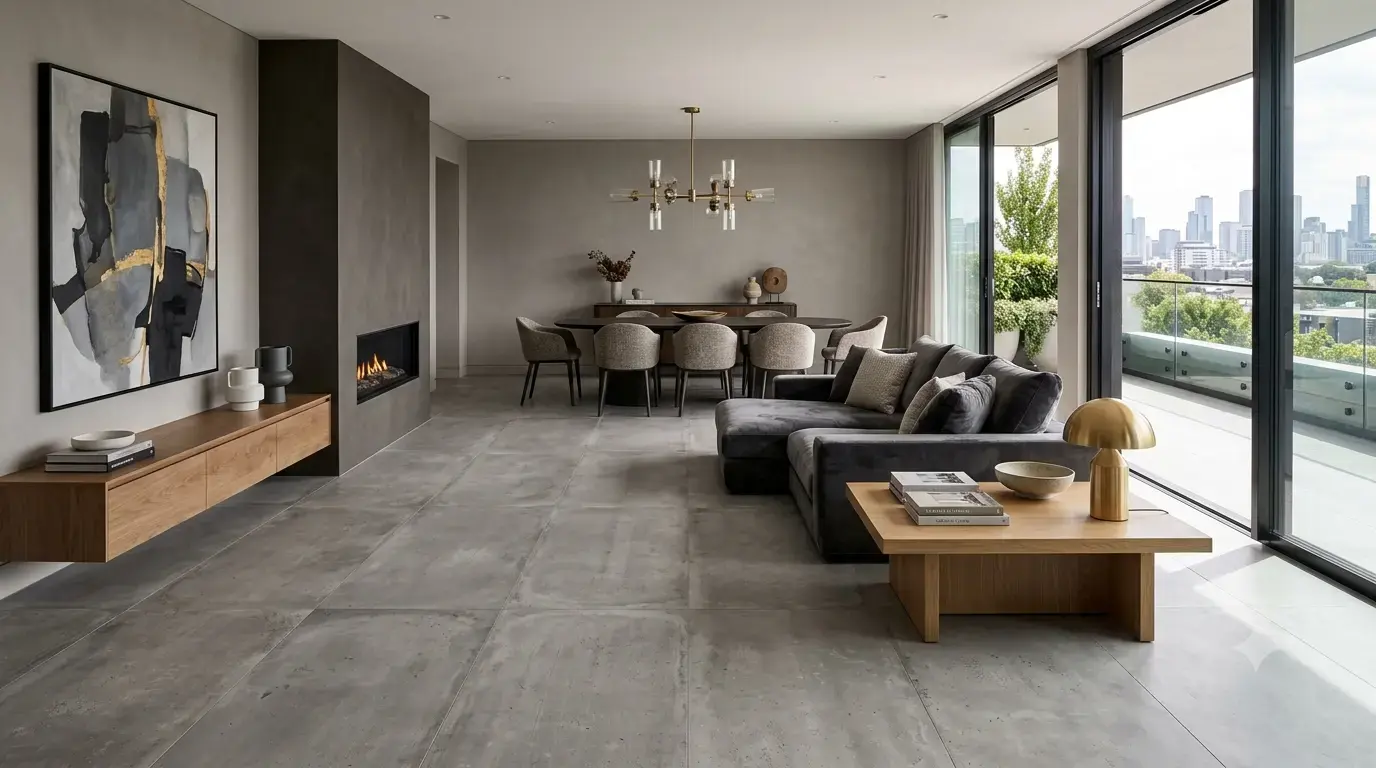
Porcelain Floor Tile For Living Room
Porcelain floor tile has a water absorption rate below 0.5 percent and a PEI durability rating of 4 to 5, making it one of the most moisture- and wear-resistant flooring options for a living room. The tile is produced by firing refined clay, feldspar, and silica at temperatures around 2,300 to 2,400 degrees Fahrenheit, a process defined under ANSI A137.1 that creates a dense, vitrified body far less porous than standard ceramic. That density is what allows porcelain floor tile to resist scratches, stains, and everyday spills in high-traffic living spaces, and why it holds up well in open floor plans where living rooms connect directly to kitchens and entryways.
Featured Products!
Why Porcelain Suits a Living Room Floor
A living room floor has to handle a mix of conditions: bare feet, shoes, spilled drinks, dragged furniture, and sunlight fading through windows over time. Porcelain addresses each of these. Look for a PEI (Porcelain Enamel Institute) rating of 4 or 5, which indicates the tile can withstand heavy residential foot traffic without visible wear; our complete guide to porcelain tile breaks down what each PEI class means room by room. Because color runs through the tile body rather than sitting on a surface glaze, small chips are far less noticeable than they would be on standard ceramic. The material's non-porous surface also means spilled coffee, wine, or pet accidents wipe away without soaking in or leaving a permanent mark.
Porcelain also holds up well under thermal changes. Its dimensional stability makes it compatible with radiant floor heating systems, so a cold floor doesn't have to be a tradeoff for durability. That combination of comfort and performance is one reason open-concept homes increasingly extend the same tile from the kitchen into the living room, creating a continuous surface with no transition strips to catch a vacuum or a toe.
Style Options for a Living Room
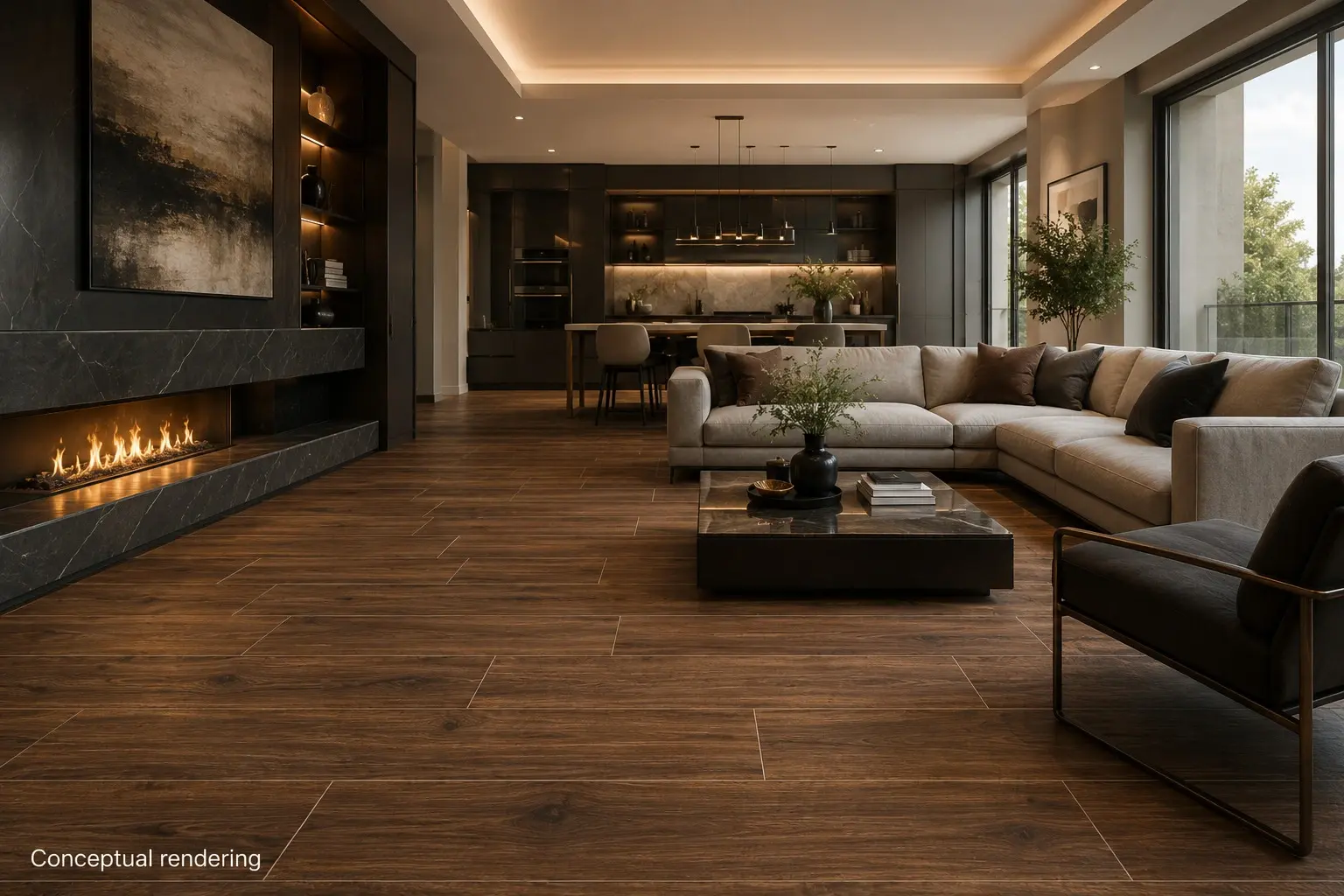
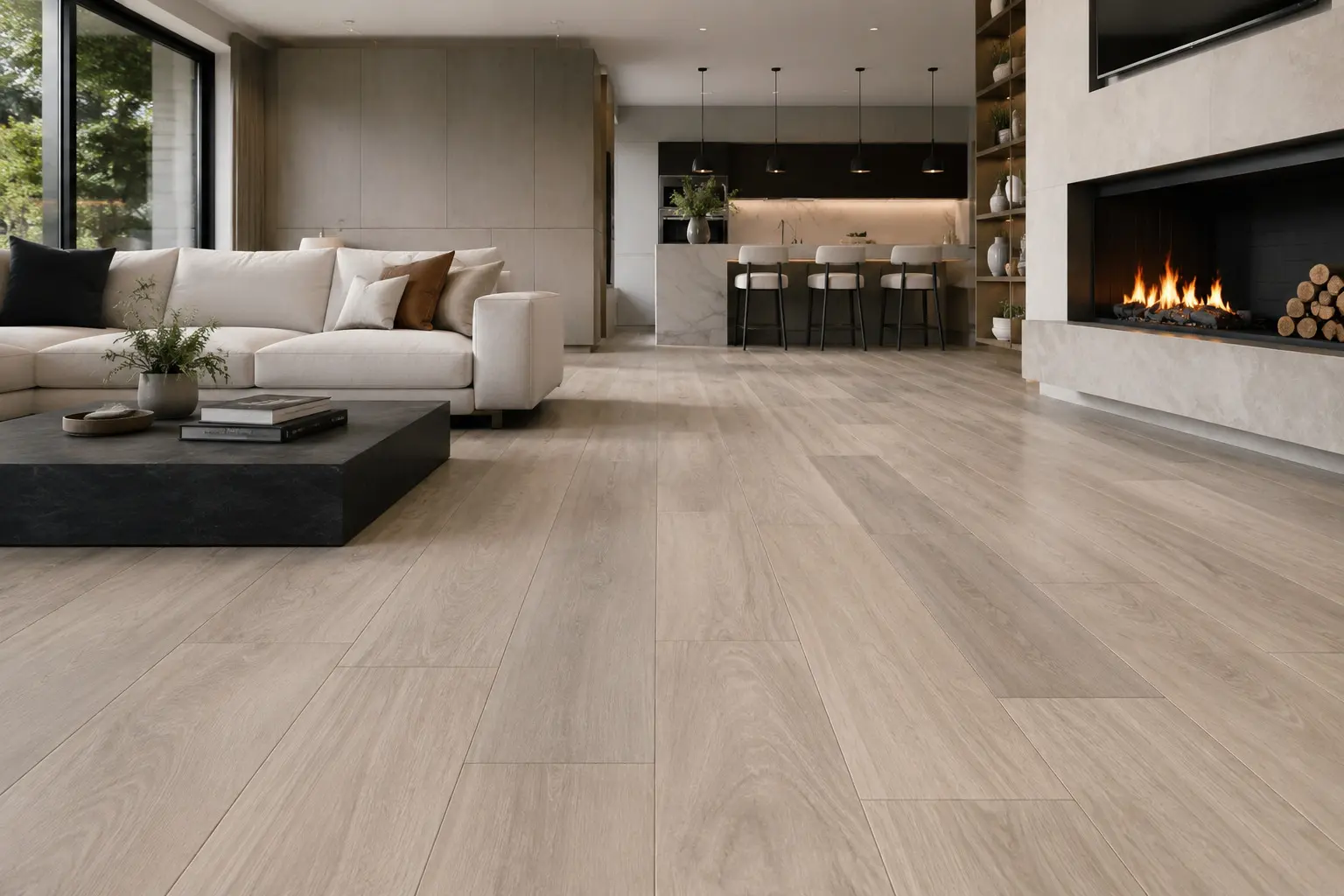
Porcelain floor tile is manufactured using inkjet printing technology that reproduces the look of natural materials in fine detail. Wood look porcelain replicates hardwood grain and tone while avoiding the scratching and moisture sensitivity that come with real wood. Marble and stone look finishes deliver a similar visual effect without the sealing that natural stone requires. Large format tiles, typically 12x24 or larger, reduce the number of grout lines across a living room floor, which many homeowners prefer for a cleaner, more open look; our porcelain tile flooring lineup includes several large-format options built around this idea. Rectified edges allow those tiles to sit closer together, narrowing grout lines further.
Finish also plays a role in how a living room reads visually. Matte finishes tend to suit relaxed, everyday spaces and hide dust and footprints better between cleanings, while polished finishes reflect more light and can make a smaller living room feel more open. Because porcelain is produced in a wide range of sizes, from smaller mosaics to oversized panels, the same style family can often be carried from the living room floor onto a fireplace surround or accent wall for a cohesive look throughout the space.
Maintenance
Because porcelain is dense and non-porous, the tile itself does not need sealing. Routine care is limited to regular sweeping and occasional mopping with a pH-neutral cleaner. Harsh acidic or abrasive cleaners should be avoided, since they can dull certain finishes over time. Grout lines are more porous than the tile and may benefit from periodic sealing, particularly in high-traffic living areas, to keep them resisting dirt and moisture. Furniture pads under table and sofa legs are also worth using, since dragging heavy pieces across any hard flooring surface can leave fine scratches on the surface over time, even on a material as durable as porcelain.
Porcelain Tile Blog Guides
Choosing and Installing Porcelain for a Living Room
Porcelain's density and weight call for professional installation, including correct substrate preparation, thin-set mortar rated for low-absorption material, and proper spacing to prevent lippage between tiles. This is not a material suited to guesswork, and getting the subfloor and layout right the first time protects the investment in the finished floor. Booking a free design consultation ahead of time can help settle format, finish, and layout questions before an installer ever sets foot in the room.
Frequently Asked Questions
Yes. Its water absorption rate below 0.5 percent and PEI 4-5 durability rating make it well suited to the daily foot traffic, furniture movement, and occasional spills a living room floor experiences.
It can feel cooler than carpet, though its dimensional stability makes it compatible with radiant floor heating systems, which many homeowners use to offset that effect in living spaces. .
No. The tile itself is dense and non-porous, so it does not require sealing. Grout lines are more porous and may benefit from periodic sealing in high-traffic areas.
Yes. Inkjet printing technology allows wood look porcelain to replicate grain and tone closely while avoiding the scratching and moisture sensitivity associated with real hardwood.
Professional installation is recommended. The tile's density and weight require correct substrate preparation and proper spacing to prevent lippage, which is difficult to achieve without experience.