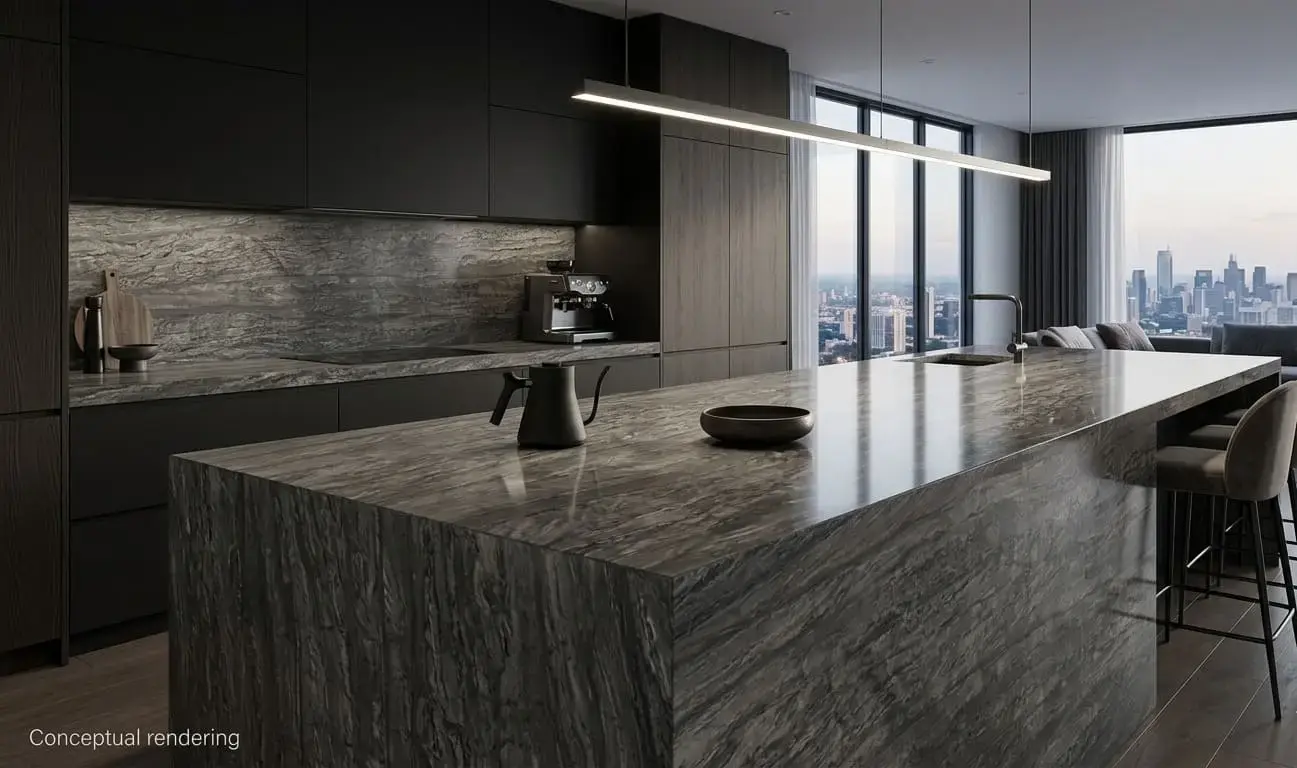
A polished slab is a large-format stone surface buffed to a high-gloss, reflective finish through a multi-stage grinding process that refines the surface, intensifies natural color and veining, and closes the surface pores. It is among the most widely used surface finishes for applications in residential kitchens and bathrooms.
Polished slabs are available in four primary countertop materials, including marble, quartzite, dolomite, and engineered quartz, each offering a different balance of aesthetics, hardness, and maintenance requirements. The polished finish is preferred for countertops because its closed surface pores reduce liquid absorption, make spills easier to detect and clean, and showcase the full visual depth of the stone.
Common Uses of Polished Countertop Slabs
Polished slabs for countertops are used across a wide range of residential and commercial settings, with the kitchen countertop being the most common application. The smooth, reflective surface brightens the space and makes it easier to spot and wipe up spills, which is why it is especially favored in high-use cooking and food preparation areas. In bathroom vanity applications, it is equally practical and well suited to daily exposure to water, soaps, and personal care products.
Kitchen islands, bar countertops, and commercial surfaces in hotels and restaurants are also common uses, particularly when a slab features dramatic natural veining that can serve as a design focal point in an open-concept layout. Compared to a honed or leathered stone finish, the polished surface reflects more light, which makes it a popular choice in spaces where brightness and visual depth are priorities.
Featured Polished Slab Selections
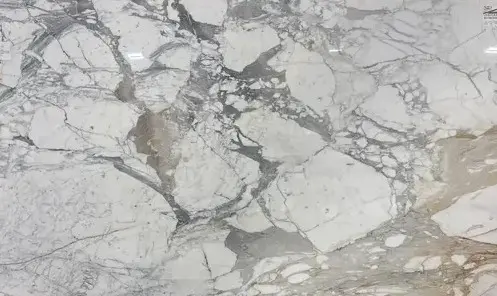
Calacatta Marble
Dimensions: 117" × 71" (57.69 sq ft)
Thickness: 2.0 cm
Finish: Polished
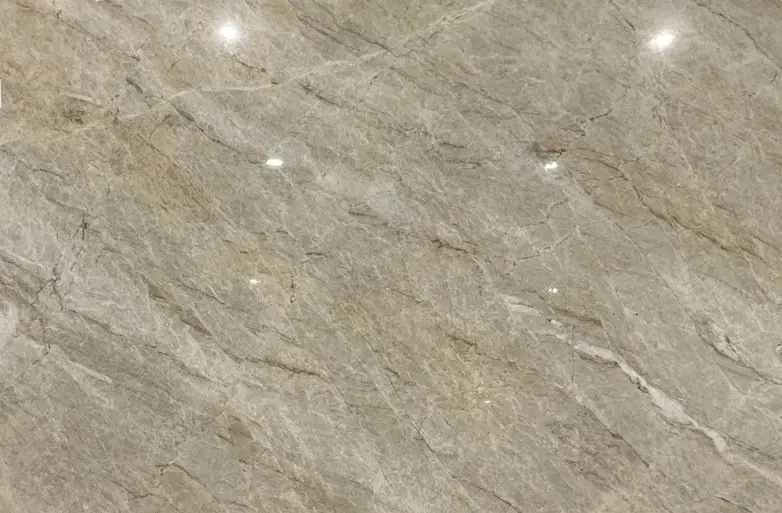
Allure Quartzite
Dimensions: 116" × 79" (63.64 sq ft)
Thickness: 2.0 cm
Finish: Polished

Calacatta Laza Quartz
Dimensions: 138" × 74" (70.92 sq ft)
Thickness: 2.0 cm
Finish: Polished
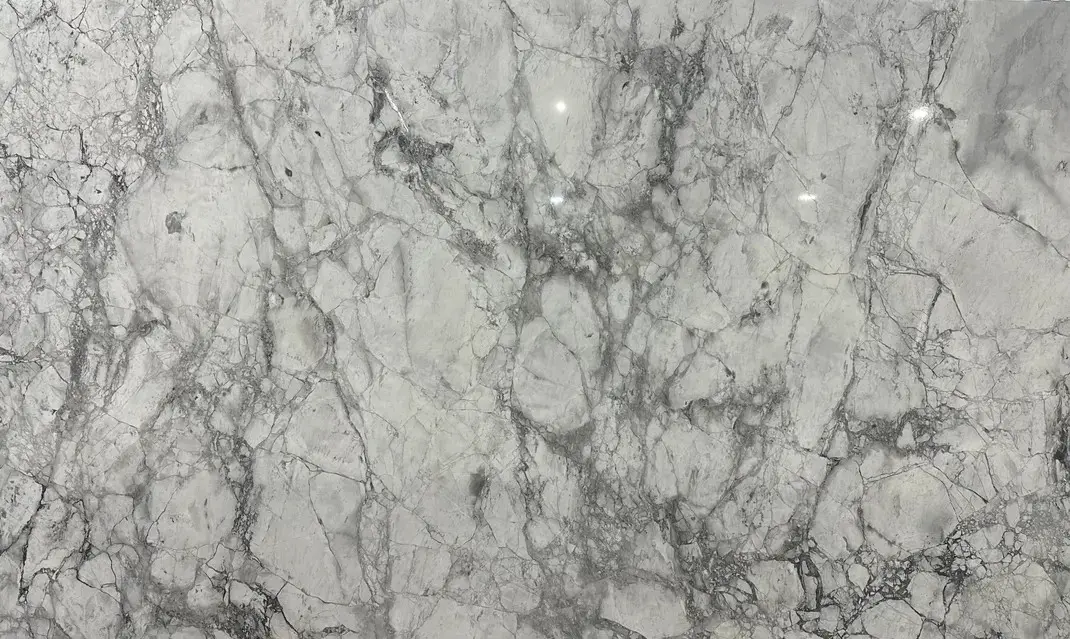
Super White Dolomite
Dimensions: 129" × 77" (68.98 sq ft)
Thickness: 2.0 cm
Finish: Polished
Explore Our Stone Slab Selection
Polished Slab: Material Options and Performance Specs
Choosing the right polished slab for a countertop project depends on the material's hardness, appearance, and care requirements, as well as where and how the surface will be used. Each option also has different fabrication characteristics that can affect lead times and edge profile availability.
Marble
Marble is a metamorphic rock composed primarily of calcite, prized for its distinctive veining, translucency, and range of tones from pure white to deep grey, green, and gold. With a Mohs hardness of 3 to 5, it is more susceptible to scratching and etching when exposed to acidic liquids, and it works best in lower-traffic kitchen areas or bathroom vanities where consistent, attentive care can be maintained.
Quartzite
Quartzite is a natural metamorphic rock formed from sandstone under intense heat and pressure, rating approximately 7 on the Mohs scale. Unlike marble and dolomite, true quartzite is silica-based rather than calcium-based, which means it is generally resistant to etching from food-related acids under normal use. A polished quartzite slab also tends to be scratch-resistant and heat-resistant, making it a reliable choice for high-use kitchen environments. Its soft veining in white, grey, or warm beige tones makes it a popular countertop material for those who want the visual elegance of marble with greater durability.
Dolomite
Dolomite is a sedimentary rock composed of calcium magnesium carbonate, sitting between marble and quartzite in terms of hardness at approximately 3.5 to 4 on the Mohs scale. The finish is refined and subtle, available in tones that closely resemble marble, particularly in white and grey varieties. While more resistant to etching than marble, dolomite still benefits from sealing and careful maintenance, and it performs especially well in bathroom vanity settings where its soft tones complement a range of interior styles.
Engineered Quartz
Engineered quartz is a manufactured surface made from approximately 90 to 95 percent ground quartz bound with polymer resins and pigments. Unlike natural stone, quartz slabs are non-porous by default and generally do not require sealing. A polished quartz countertop is known for being stain-resistant, scratch-resistant, and resistant to bacterial growth, making it one of the more practical options for busy kitchens. It rates approximately 7 on the Mohs scale and is available in a wide range of colors and patterns that can closely replicate the look of natural stone.
How to Care for a Polished Stone Countertop
A consistent stone care routine can help preserve a polished slab countertop's finish and extend its lifespan. For everyday cleaning, use a soft cloth or sponge with warm water and a pH-neutral stone cleaner. Avoid abrasive scrubbing pads, bleach, ammonia-based cleaners, and acidic products, as these can damage the stone surface or cause etching on calcium-based stones such as marble and dolomite.
Beyond daily cleaning, sealing is an important part of maintaining natural stone. Marble, being the most porous, typically requires resealing every 6 to 12 months in kitchen settings, while quartzite and dolomite generally need resealing every 1 to 2 years. A simple water bead test can confirm when resealing is needed. Engineered quartz is non-porous by nature and generally does not require sealing.
Heat protection is equally important. On natural stone, trivets or heat pads should always be used to avoid thermal stress. On engineered quartz, high heat can damage the polymer resin binders, and the resulting marks are often difficult to repair. Wiping up spills promptly and using cutting boards during food preparation can also help protect the surface from scratching and staining over time.
Frequently Asked Questions
A polished slab has a high-gloss, reflective surface with tightly closed pores, while a honed slab is finished to a matte or satin appearance at an earlier stage of the same process, leaving the pores more open. A leathered finish goes through a different texturing process that adds subtle dimension while retaining some of the stone's natural character. Polished finishes show fingerprints and water spots more visibly than honed or leathered alternatives, but their closed-pore surface absorbs less liquid and is easier to clean.
Marble can be used for kitchen countertops, but it requires more care than harder materials. It is susceptible to etching from acidic substances and scratches more easily than quartzite or engineered quartz. It works best in lower-traffic areas where consistent sealing and prompt spill cleanup can be maintained.
Sealing frequency varies by material. Marble typically needs resealing every 6 to 12 months in kitchen use, while quartzite and dolomite generally require resealing every 1 to 2 years. Use the water bead test to check: if water absorbs into the surface instead of beading on top, it is time to reseal. Engineered quartz is non-porous and generally does not require sealing.
No. The polished finish on engineered quartz is designed to hold up well under normal use and is unlikely to need repolishing with proper care. Because quartz is non-porous, it generally does not require sealing, and routine cleaning with mild dish soap and water is sufficient. Prolonged heat exposure and harsh chemical cleaners should be avoided, as these can damage the resin binders over time.
Yes, natural stone slabs can develop a duller appearance over time due to micro-scratches and surface etching, particularly on calcium-based stones such as marble and dolomite. The finish on these surfaces can be professionally repolished to restore their original sheen. For engineered quartz, the surface is more resilient, though deep scratches or chemical damage may still require professional attention.
Find Your Ideal Polished Slab at Nova Tile and Stone
Selecting the right polished slab is one of the most impactful decisions in any kitchen renovation, kitchen remodel, or bathroom project. At Nova Tile and Stone, we carry a curated selection of marble, quartzite, dolomite, and engineered quartz slabs, each available in a polished finish that brings out the full character of the material. Our team can guide you through the material selection process, discuss slab dimensions and edge profiles, and help you understand the care requirements for each option. Whether you are planning a full home renovation or updating a single surface, visit our showroom to view our current inventory, or contact us to request samples and a project consultation.