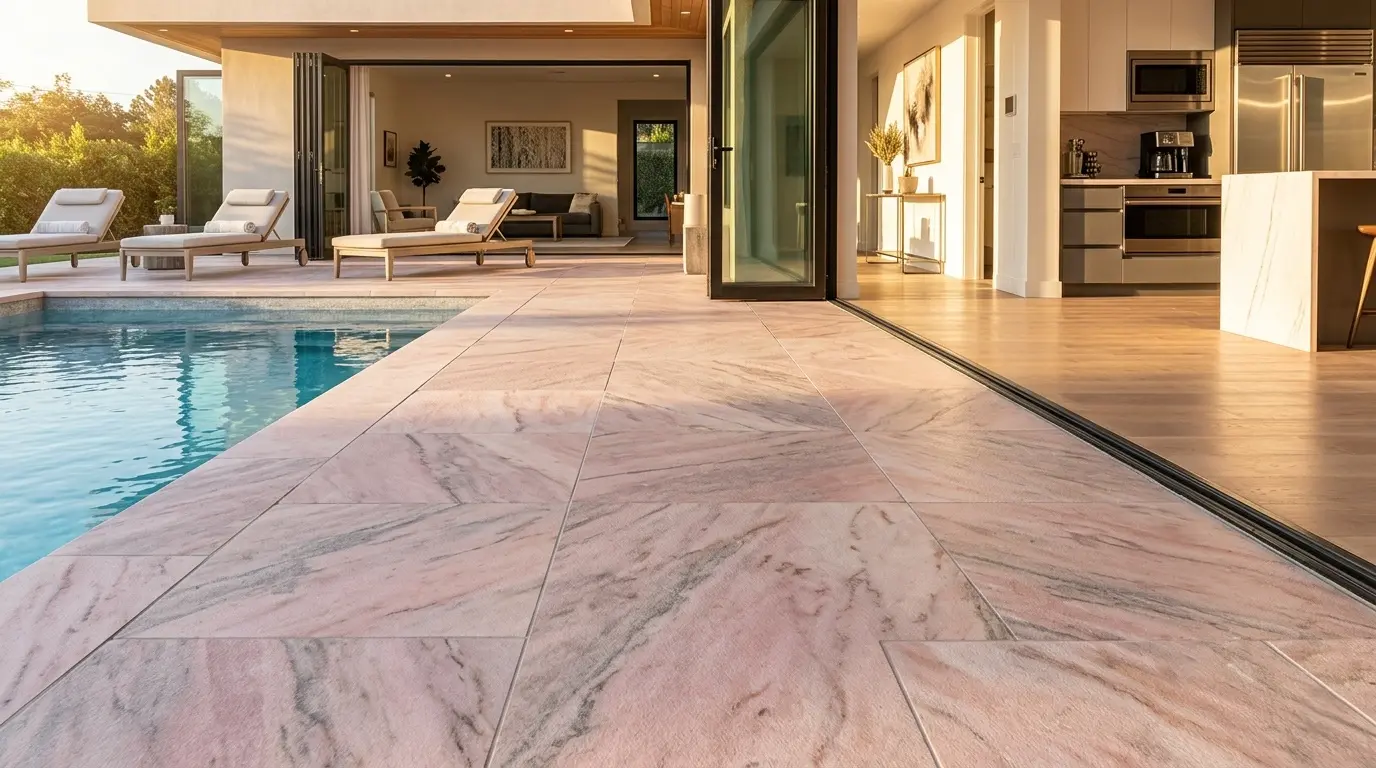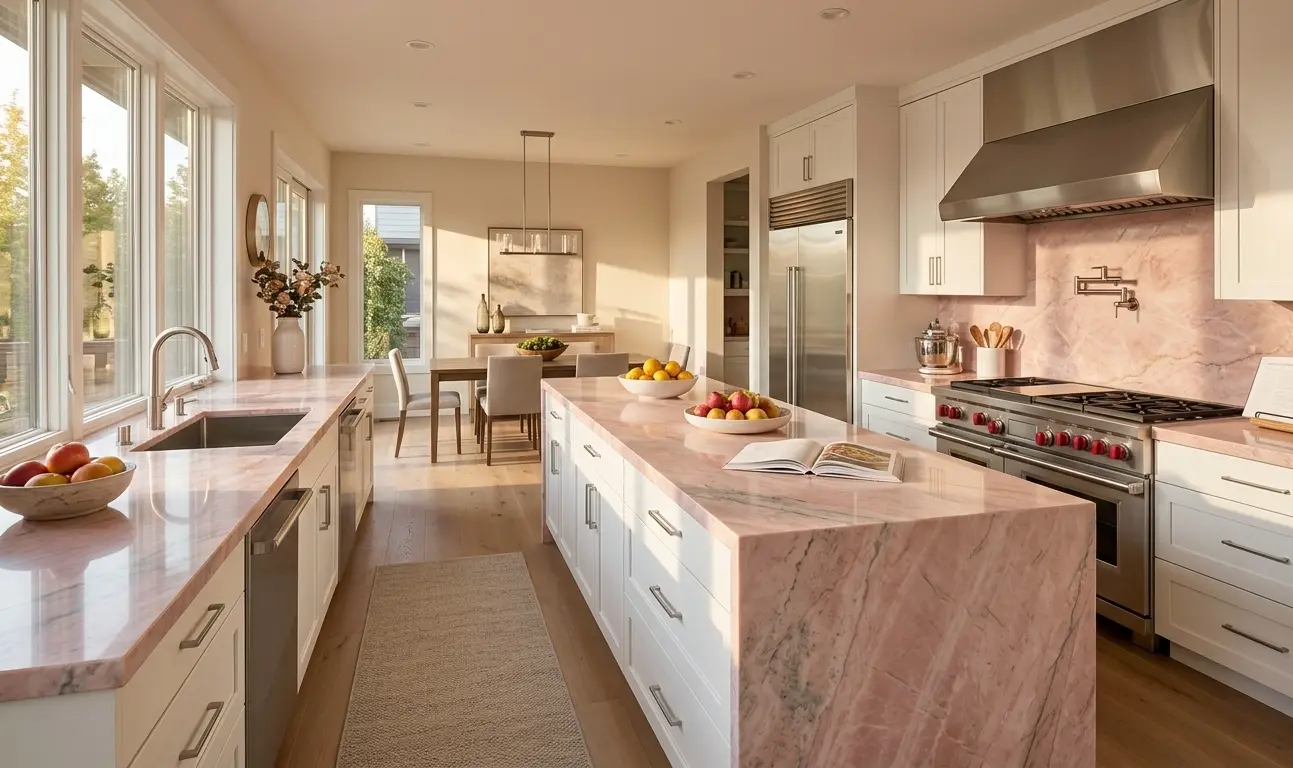
Pink Dolomite is a naturally quarried stone slab prized for its soft blush and rose‑toned hues, accented by subtle cream or grey veining that ensures each piece is unique. This versatile natural stone is available in polished, honed, and leathered finishes, making it suitable for kitchen countertops, bathroom vanities, flooring, and decorative wall applications. Its distinctive veining adds organic warmth while offering durability that stands up to everyday use. Designers and homeowners value Pink Dolomite for its balance of elegance and strength, creating interiors that feel timeless yet practical. Whether you’re sourcing materials for a remodel or new build, Pink Dolomite delivers a one‑of‑a‑kind surface that enhances both residential and commercial spaces with lasting appeal.
Pink Dolomite: Material Details, Finish Options, and Surface Specs
Pink Dolomite is a carbonate rock composed primarily of calcium magnesium carbonate, shaped over millions of years through sedimentary and metamorphic processes. It registers approximately 3.5 to 4 on the Mohs hardness scale, placing it slightly harder than standard marble and making it a capable surface for countertops, vanities, and light-traffic floors. Standard slab dimensions typically range from 55" x 110" to 65" x 130", with thicknesses of 2 cm (3/4") and 3 cm (1-1/4") to accommodate different structural requirements.
Most Pink Dolomite is quarried in Brazil and Turkey, regions recognized for producing slabs with dramatic natural movement and rich coloring. Compared to marble, dolomite offers improved resistance to surface etching and everyday abrasion. Compared to engineered quartz, it delivers an organic depth and warm palette that manufactured surfaces simply cannot replicate. Browse current selections through Nova Tile and Stone's live slab inventory to view actual available slabs before making your decision.
Surfaces That Adapt: Design Layouts and Application Ideas
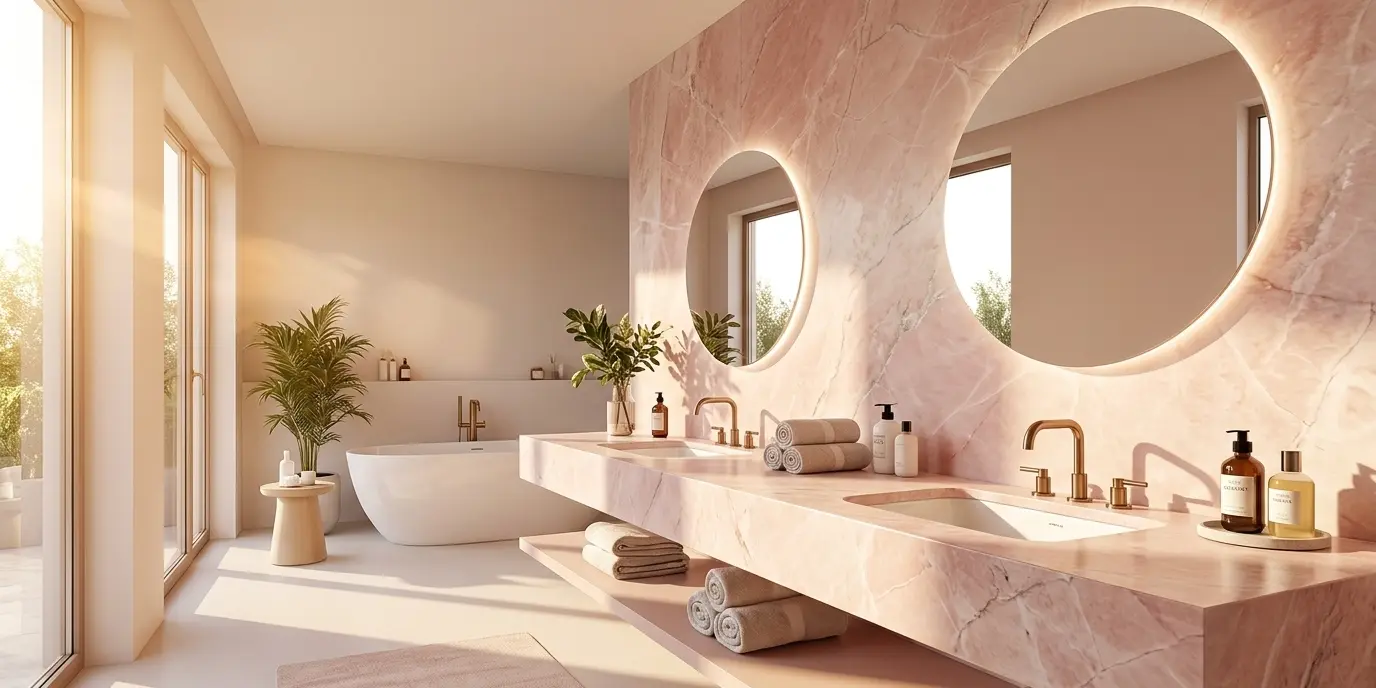
Pink Dolomite is a natural fit for multiple layout approaches. In kitchens, a book-matched horizontal orientation draws attention to the stone's natural veining flow. For bathroom vanities, a vertical stack adds height and visual structure. Herringbone and offset patterns work well on floors, adding movement without overwhelming the room. The stone's soft blush tones pair beautifully with white cabinetry, warm wood accents, and brushed gold or matte black hardware, creating interiors that feel both modern and inviting.
In kitchens, a polished finish highlights its luminous veining, while honed or leathered textures add subtle depth and a tactile quality to countertops and islands. As bathroom vanities, Pink Dolomite introduces a spa‑like elegance, balancing durability with organic warmth. Used as a dramatic feature wall, its polished surface captures and reflects light, transforming interiors into radiant focal points. Designers value Pink Dolomite for its versatility, timeless appeal, and ability to harmonize with a wide range of materials, making it a sought‑after choice for refined spaces.
Built to Perform: Why Pink Dolomite Works in Demanding Spaces
- Heat-tolerant surface compatible with kitchen countertop use near cooking areas
- Leathered finish resists fingerprints and surface marks on bathroom vanities and walls
- Honed finish works well for flooring, pool decks, and outdoor patio applications with proper sealing
- Each slab carries unique veining, ensuring your surface is genuinely original
- Compatible with radiant floor heating systems when used as interior flooring
- Regular sealing, once every one to two years, strengthens stain resistance across all finishes
For a deeper look at how finish selection affects performance across applications, the Natural Stone Slab Flooring: Your Complete Guide to Materials, Finishes and Care is a useful resource when planning your project.

A Surface That Holds Its Value for Decades
Natural stone is one of the few surface materials that gains perceived value over time rather than losing it. Pink Dolomite, with its distinctive blush coloring and special veining pattern, is not a trend-driven choice. It has been used consistently in high-end residential and commercial projects because its organic beauty holds across evolving design trends.
Unlike laminate or engineered surfaces that degrade with years of heavy use, a properly sealed Pink Dolomite slab retains its character and resists surface wear across kitchen countertops, bathroom vanities, and flooring. The investment pays off in both daily function and long-term property value.
Expert design consultants for natural stone projects offer free design consultations to help you choose the right slab, finish, and layout for your specific project. With 100% U.S.-based client support available Monday through Friday and home delivery options, the full service experience is built around making your selection process easy.
Frequently Asked Questions
Yes. Pink Dolomite handles regular kitchen use well. A polished or honed finish with periodic sealing protects against staining from acidic liquids and everyday cooking.
Polished, honed, and leathered finishes are all available. Polished offers high gloss, honed is smooth and matte, and leathered adds a subtle textured surface.
Dolomite is slightly harder and more resistant to etching than standard marble, making it a practical and visually similar alternative for surfaces that see regular daily use.
Yes. A honed or leathered finish is recommended for outdoor use. Sealing is essential to protect the surface against weathering and moisture absorption.
Once every one to two years is the general recommendation, though frequency depends on the finish type and the intensity of daily use in your space.