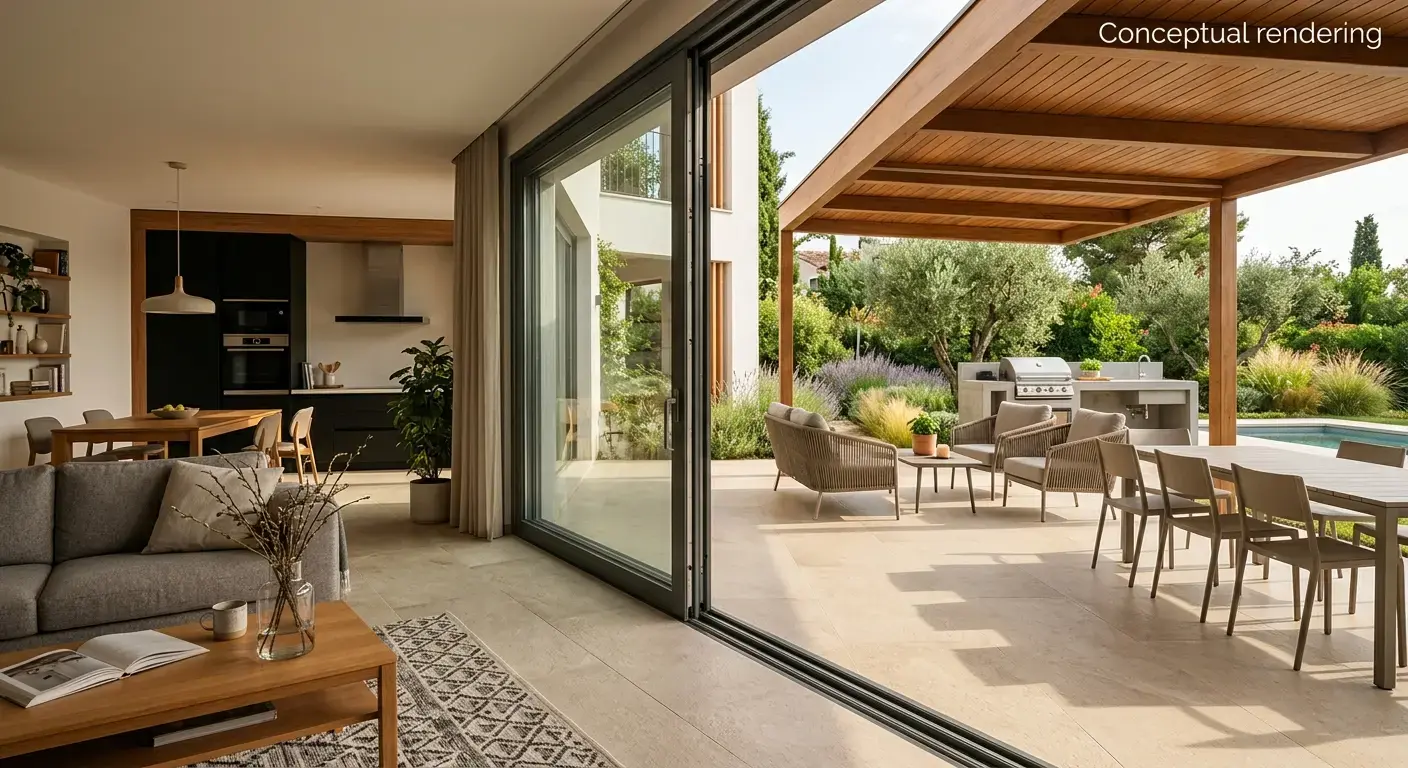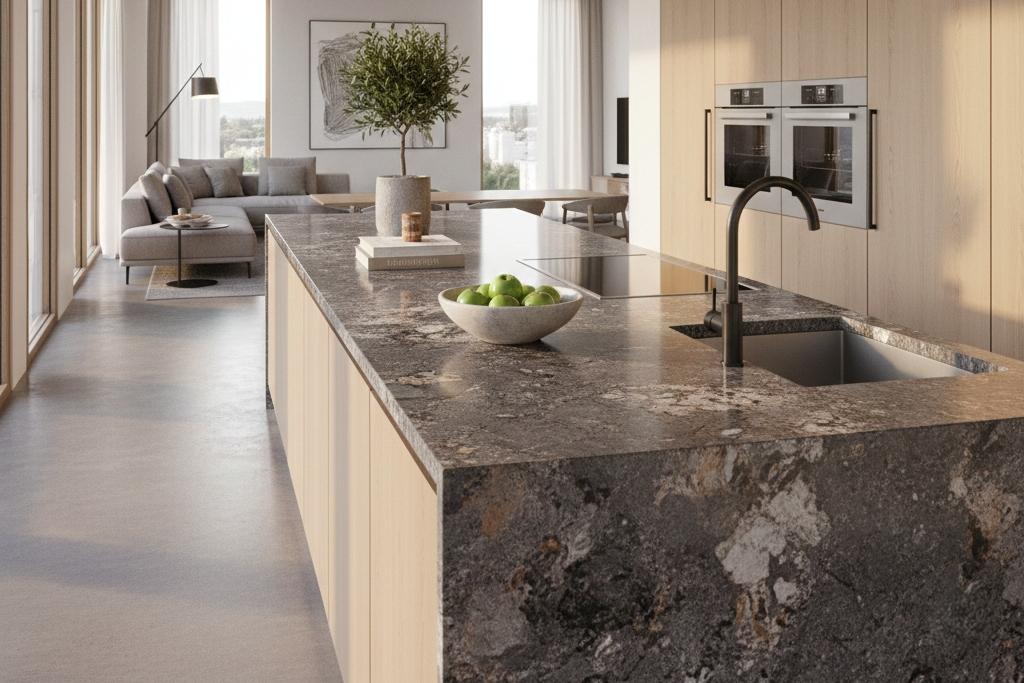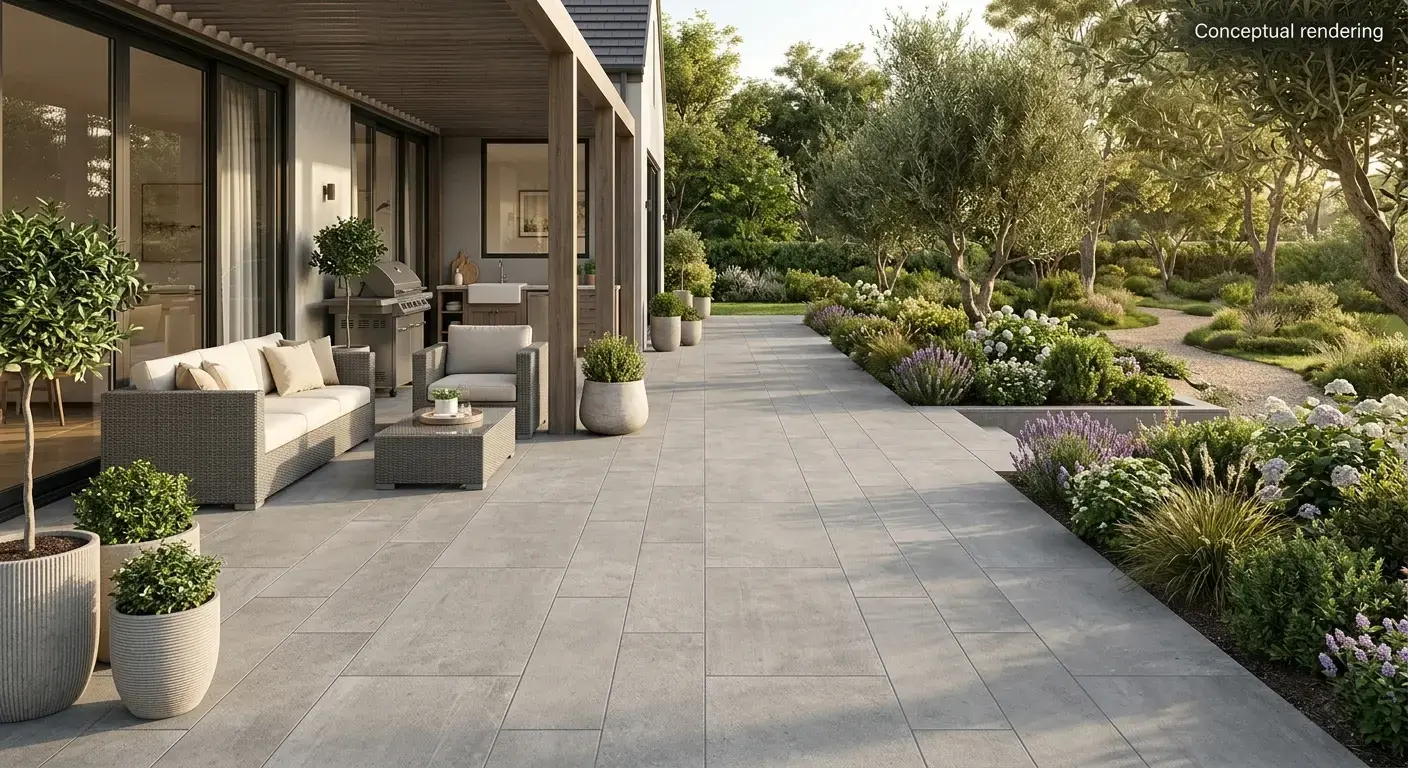
Porcelain is one of the most widely used materials for exterior installations, and the reason is straightforward: it handles the outdoors without compromise. Outdoor porcelain tiles are fired at temperatures between 2,300 and 2,400 degrees Fahrenheit, a process that produces a dense, low-porosity material with a water absorption rate below 0.5%. That physical property drives performance in every outdoor setting, from a residential patio to a pool deck to a covered terrace.
We carry porcelain across a wide range of styles, sizes, and finishes suited to exterior applications. Our $1 sample program makes it easy to see and feel the material before committing to a full order, and every sample ships free.
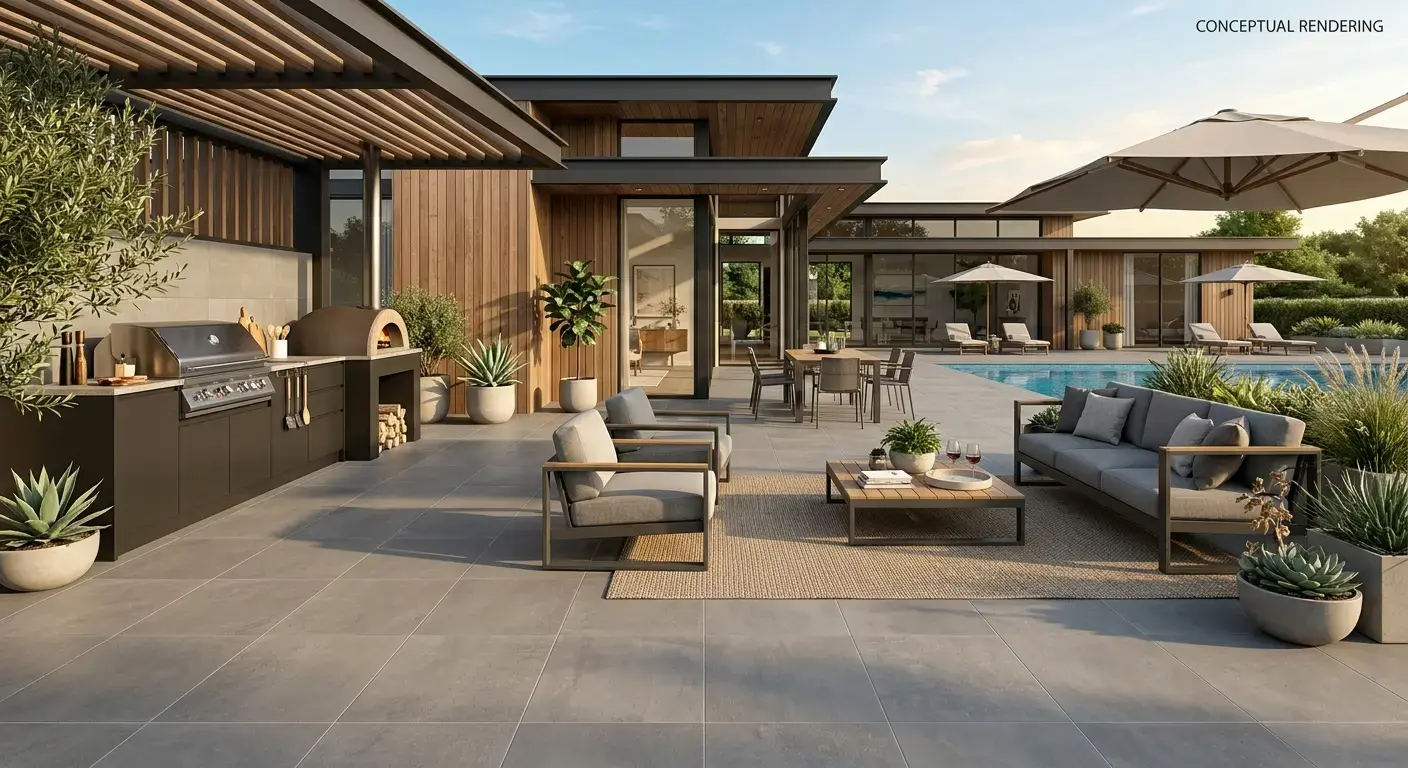 Conceptual rendering
Why Porcelain Works Outdoors
The performance characteristics of outdoor porcelain tile come directly from how it is made. The high-temperature firing process creates a tile body that is harder, denser, and far less porous than standard ceramic. For a deeper look at how porcelain is manufactured and graded, our complete guide to porcelain tile covers the full material breakdown. That low water absorption rate is the core of its outdoor suitability: water cannot penetrate deeply enough to cause damage during freeze-thaw cycles, which means the tile holds up in climates like Northern Nevada and Northern California where temperatures swing significantly across seasons.
UV resistance is another functional advantage. Unlike some surface materials that fade or shift in color after prolonged sun exposure, porcelain retains its finish and color because the pigment is integrated into the tile body rather than applied as a surface coating. This is relevant for patios and garden paths where direct sun exposure is constant.
Slip resistance is also a primary consideration for outdoor tile selection. Porcelain tiles intended for exterior floors are available with textured or matte finishes that provide adequate traction when wet, which is important around pool surrounds and exterior staircases. The PEI rating system, which measures surface hardness and wear resistance, grades outdoor-appropriate tiles at 4 or 5, indicating suitability for heavy to extremely heavy traffic conditions.
Common Outdoor Applications
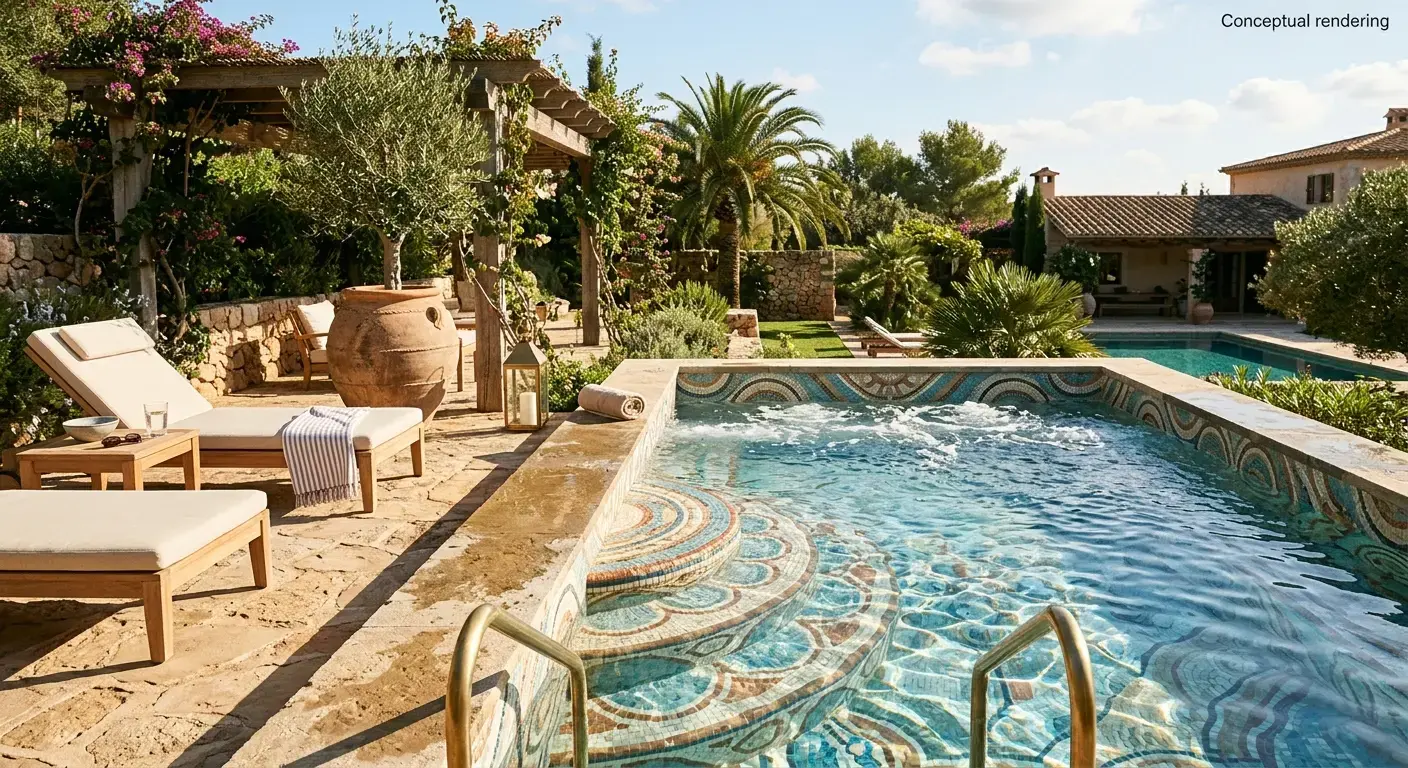
Outdoor porcelain tile is used across several types of exterior spaces. Patios and terraces are the most common residential application, where large-format tiles in natural stone or concrete looks provide clean, low-maintenance coverage.
Our slate-look porcelain in a 12x24 natural or grip finish is one example of a format well suited to exterior floor applications. Pool surrounds call for textured finishes specifically to address wet-surface safety requirements. Garden paths and walkways suit the material's resistance to foot traffic and organic staining from leaves and soil.
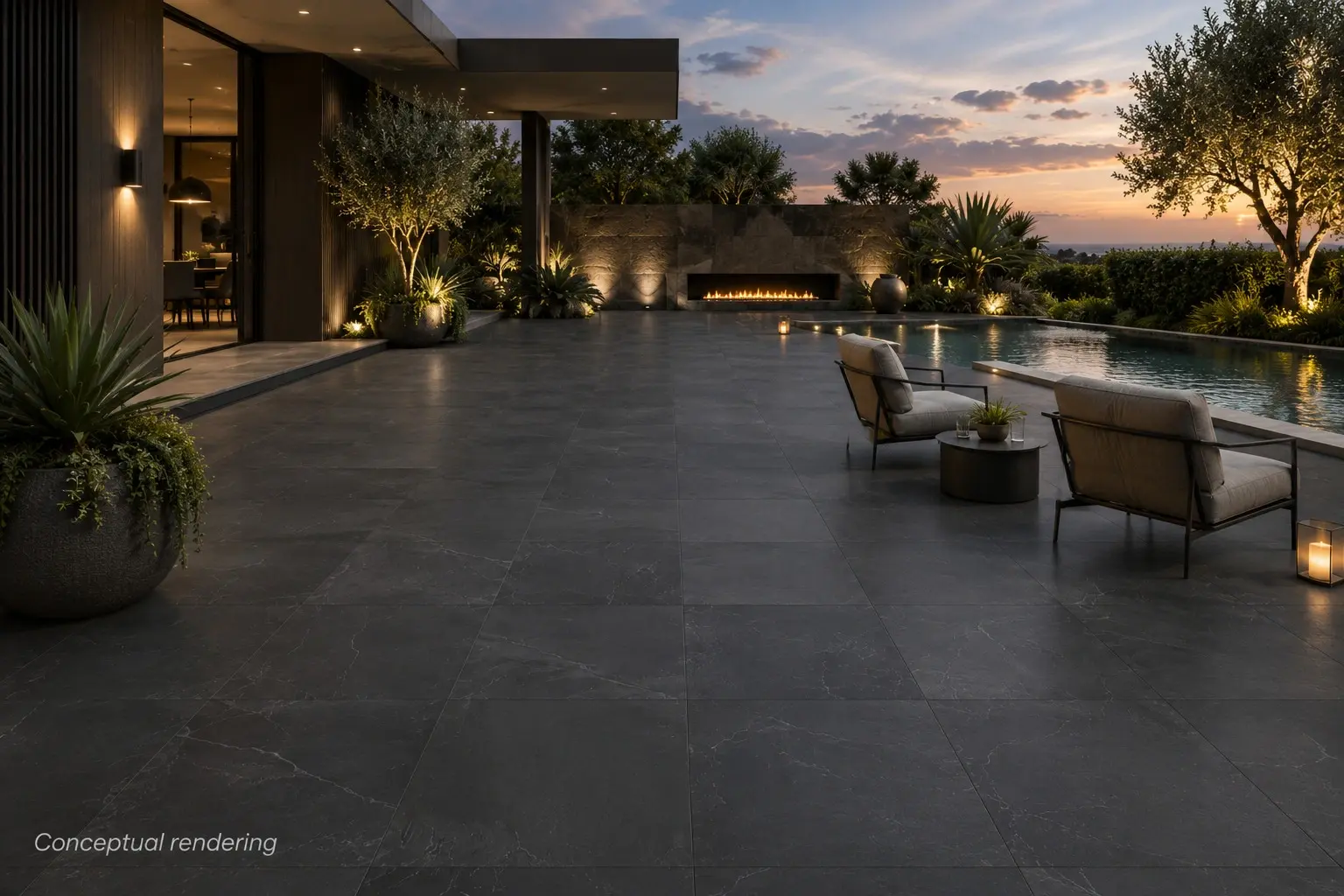
One practical design approach is to select the same tile for adjacent indoor and outdoor areas. Our 24x24 terrazzo porcelain tile in a matte finish is one option that works across both interior and connected exterior spaces.
Because porcelain is manufactured with consistent dimensions and finishes, it can bridge a living room and a connected terrace seamlessly, creating a visual continuity that extends the perceived size of the interior space. Homeowners interested in extending a stone aesthetic outdoors may also find our marble-look porcelain tile collection worth reviewing for covered terrace applications.
Our latest content
Check out what's new in our company !
Finish and Format Considerations
Not every porcelain tile is appropriate for outdoor use regardless of the body material. Polished finishes, while suitable for interior floors, become slippery when wet and are generally not recommended for exterior installations unless the application is vertical, such as an outdoor accent wall. For horizontal outdoor surfaces, matte or textured finishes are the correct choice.
Format size is also a practical factor outdoors. Larger tiles require a flatter, more precisely prepared substrate, which means outdoor installations benefit from careful site preparation. Thicker tile formats provide additional resistance to cracking under temperature fluctuation and physical stress. Our design consultants are available at all four of our Home Design Center showroom locations to help match the right format and finish to your specific project conditions. Free design consultations are available in Reno, Sacramento, Minden, and Fernley, as well as online.
Maintenance
Porcelain is consistently chosen for exterior spaces in part because of the minimal maintenance it requires once installed. The non-porous surface does not require sealing, unlike natural stone surfaces that need periodic treatment to maintain stain resistance.
Routine care involves sweeping to clear debris and occasional mopping with a mild, pH-neutral cleaner. Grout joints benefit from a penetrating sealer applied after installation and periodically reapplied based on usage and exposure. For questions about installation and care, our tile and stone showroom team is available Monday through Friday, 7:30am to 4:00pm PST.
Frequently Asked Questions
Yes. Outdoor porcelain tiles have a water absorption rate below 0.5%, which means very little moisture penetrates the tile body. In freeze-thaw conditions, water that cannot be absorbed cannot expand within the tile and cause cracking. This makes porcelain a suitable choice for exterior installations in climates that experience cold winters.
Matte and textured finishes are recommended for outdoor horizontal surfaces such as patios, pool decks, and walkways. These finishes provide slip resistance when wet. Polished finishes are generally reserved for interior floors or outdoor vertical applications where wet-surface traction is not a concern.
No. Porcelain tile does not require sealing due to its non-porous structure. Grout joints, however, should be sealed with a penetrating grout sealer after installation and reapplied periodically based on traffic and exposure conditions.
Yes, provided the tile has an appropriate finish for the outdoor surface. Selecting the same tile for an interior floor and a connected outdoor terrace creates visual continuity between the two spaces. Confirm that the tile's finish and PEI rating are suitable for the outdoor conditions before installing horizontally in an exterior application.
Yes. We offer a $1 sample program on tile orders, and all samples ship free. Each sample is a 4"x4" cut of the actual tile, so you can evaluate the finish, texture, and color in the light conditions of your specific outdoor space before placing a full order.