Onyx Stone Countertops
Luxury, Beauty, and Lasting Elegance
Onyx stone countertops are a premium natural stone surface known for their translucency, dramatic veining, and rich color variation, ranging from warm honey and cream to deep green and black.
In the commercial stone industry, onyx refers to banded calcite, a sedimentary stone that forms when mineral-rich groundwater or spring water deposits layers of calcite crystals over time. It is most commonly used in bathroom vanities, bar tops, and decorative accent surfaces where its visual impact can be fully appreciated.
View Our Current Slab Inventory
Unlike granite and quartzite, onyx allows light to pass through its surface, making onyx slabs for countertops a popular choice for backlit applications where LED lighting placed beneath the stone creates a glowing, luminous effect.
At Nova Tile and Stone, we carry a curated selection of onyx slabs for countertops across our showroom locations in Reno, Sacramento, Minden, and Fernley, sourced from premier quarries worldwide for both residential and commercial projects.
Translucent
Luminous
Distinctive
What Makes Onyx Stone Countertops Unique?
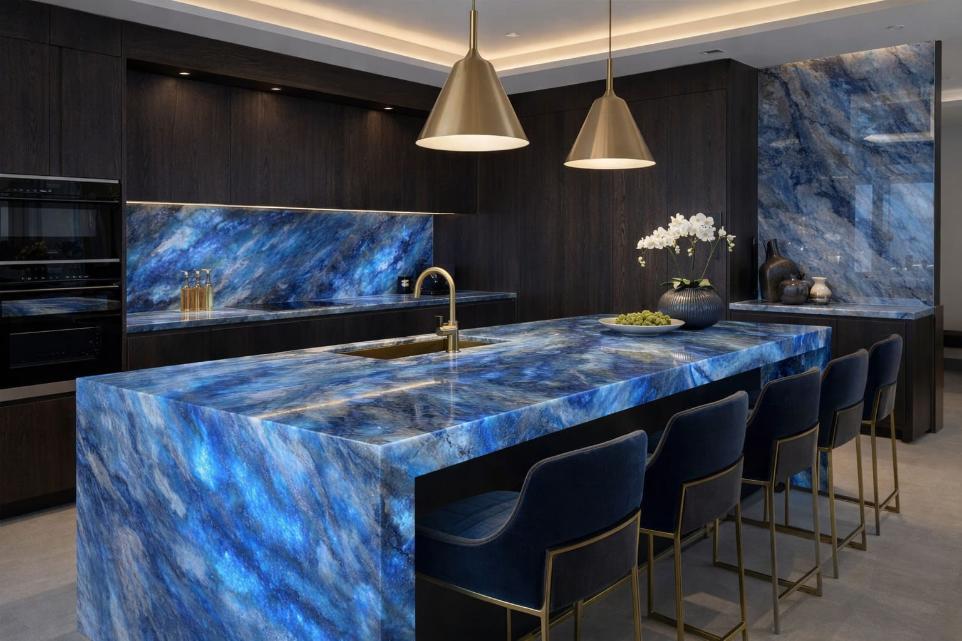
This formation process is also what gives
onyx its defining characteristic: translucency. Because light passes through
its surface rather than reflecting off it, onyx creates a visual depth that no
other countertop material can replicate.
No two slabs share the same pattern, making each onyx countertop a surface that exists nowhere else, a distinction that sets it apart from every other natural stone option on the market.
Onyx used in countertops is composed of
calcium carbonate (CaCO3) and is closely related to marble, limestone, and
travertine, all sharing calcite as their primary mineral. It forms on or near
the earth's surface as groundwater rich in dissolved calcite emerges and
deposits mineral layers over time.
Variations in water flow rate and trace mineral impurities produce its characteristic banding and color range, from warm honeys and creams to rich greens and dramatic blacks.
Onyx Slabs for Countertops: Performance and Practicality
Understanding how onyx performs in daily use is essential before choosing it for any application. Because it is banded calcite, it rates approximately 3–4 on the Mohs hardness scale, significantly softer than granite (6–7) or quartzite (7+). This makes it more susceptible to scratching, chipping, and etching than most other countertop stones, and it performs best in moderate- to low-traffic applications.
Onyx countertops are an exceptional choice for:
Given its softness and sensitivity, professional fabricators experienced with onyx are strongly recommended for cutting and installation. For full kitchen applications, consistent sealing, cutting boards, and trivets are essential to preserving the surface long-term.
Caring for Your Countertops
Knowing how onyx performs naturally leads to understanding how to care for it. Because it is a porous stone, its calcite composition reacts chemically with acidic substances, when acids contact the surface, the calcite dissolves, causing permanent etching and surface dullness. This sensitivity makes a consistent maintenance routine essential.
- Sealing: Seal upon installation using a penetrating sealer rated for calcite-based stones. Resealing frequency depends on usage, the type of sealer used, and the color of the slab, lighter slabs stain more easily and may need more frequent attention.
As a general guideline, most onyx countertops require resealing every one to three years, with high-use surfaces needing attention more often. Your fabricator or stone supplier can provide a resealing schedule specific to your slab.
- Cleaning: Use only a
pH-neutral stone cleaner or warm water with mild dish soap. Apply the cleaner
to a soft microfiber cloth rather than directly onto the stone, as the surface
can absorb liquid quickly. Avoid abrasive scrubbers, bleach, vinegar-based
products, or any acidic cleaner.
- Spill response: Blot spills
immediately, do not wipe, as this spreads the liquid. Acidic substances such
as wine, coffee, and citrus juice are especially harmful and can etch the
surface if left even briefly.
- Protection: Use cutting boards and trivets consistently. Avoid placing hot pans directly on the surface and never drag appliances or heavy objects across it.
Transform Your Space
With the right placement and care, onyx stone countertops deliver a level of beauty that few natural materials can match. The depth of color, the movement of the veining, and the translucent glow of a well-chosen slab turn any surface into a lasting investment in design.
At Nova Tile and Stone, finding the perfect onyx slab is a seamless experience. Whether you are designing a bathroom vanity in Reno, a bar top in Sacramento, or a feature wall in Minden or Fernley, our team is on hand to help you select the right slab and discuss finish options.
Browse our onyx slab collection online or stop by your nearest Nova Tile and Stone showroom today.
Learn More About Our Offerings
Frequently Asked Questions
Onyx can be used in kitchens but performs best as an accent surface in lower-traffic areas. Rating 3–4 on the Mohs hardness scale, it is more prone to scratching and etching than harder stones. For full kitchen use, consistent sealing, cutting boards, and pH-neutral cleaners are essential to maintaining its appearance.
All three are natural stones, but they differ significantly in hardness and composition. Quartzite is silica-based and rates 7+ on the Mohs scale, making it one of the most durable countertop options. Marble is also calcite-based like onyx and similarly sensitive to acids, but is generally harder and more widely suited to kitchen use. Onyx is set apart by its translucency and dramatic banding, qualities neither marble nor quartzite can replicate.
Yes, backlighting is one of the most popular applications for onyx slabs. LED panels placed beneath the slab illuminate the natural veining and color depth in a way no other countertop material can match. It is especially effective in bar tops, bathroom vanities, and feature walls.
Resealing frequency depends on usage, the type of sealer used, and the color of the slab. Most onyx countertops require resealing every one to three years, with lighter-colored slabs and high-use surfaces needing more frequent attention.
Nova Tile and Stone carries onyx slabs across all four showroom locations in Reno, Sacramento, Minden, and Fernley. Viewing in person is strongly recommended, as photographs rarely capture the full depth and translucency of the stone.