Natural stone and porcelain both hold up well as exterior pavers, but they differ in three concrete ways: consistency, environmental profile, and repairability. Porcelain is manufactured and fired at high temperature, so pieces from the same batch look nearly identical and resist moisture thanks to very low porosity. Natural stone, such as granite, quartzite, or travertine, is quarried rather than manufactured, so no two pavers share the same veining, and it carries a documented global warming potential of about 22 kilograms of CO2 equivalent per square meter for paving, compared to 82.2 kilograms for terrazzo.
Neither material is the automatic choice for every project. Porcelain fits a homeowner who wants uniform color and low upkeep, while natural stone fits one who wants unique character, a lower documented environmental footprint, and the option to refinish a damaged paver instead of replacing it.
What's the Real Difference Between Natural Stone and Porcelain Pavers?
Porcelain pavers are engineered: clay and mineral materials are blended, pressed, and fired at high temperatures to produce a dense, uniform slab. Every piece from the same batch looks close to identical, which is exactly the point.
Natural stone pavers, whether granite, quartzite, or travertine, come out of the ground with their pattern already set by geology. No two slabs carry the same veining or movement, and that variation is what draws homeowners to it in the first place. Nova Tile and Stone carries both sides of that choice across our full range of exterior stone and pavers, and browsing our current slab inventory side by side is the fastest way to see how much that natural variation actually shows up in person.
That geological origin has a practical side effect worth planning around. Natural stone comes from specific quarry lots, so a large project needs enough material pulled from a matching lot to keep the look consistent across the whole space. Porcelain has less of that constraint, since a manufacturer can generally reproduce a batch specification more predictably than a quarry can match a stone lot, though even manufactured tile carries some run-to-run shade variation of its own.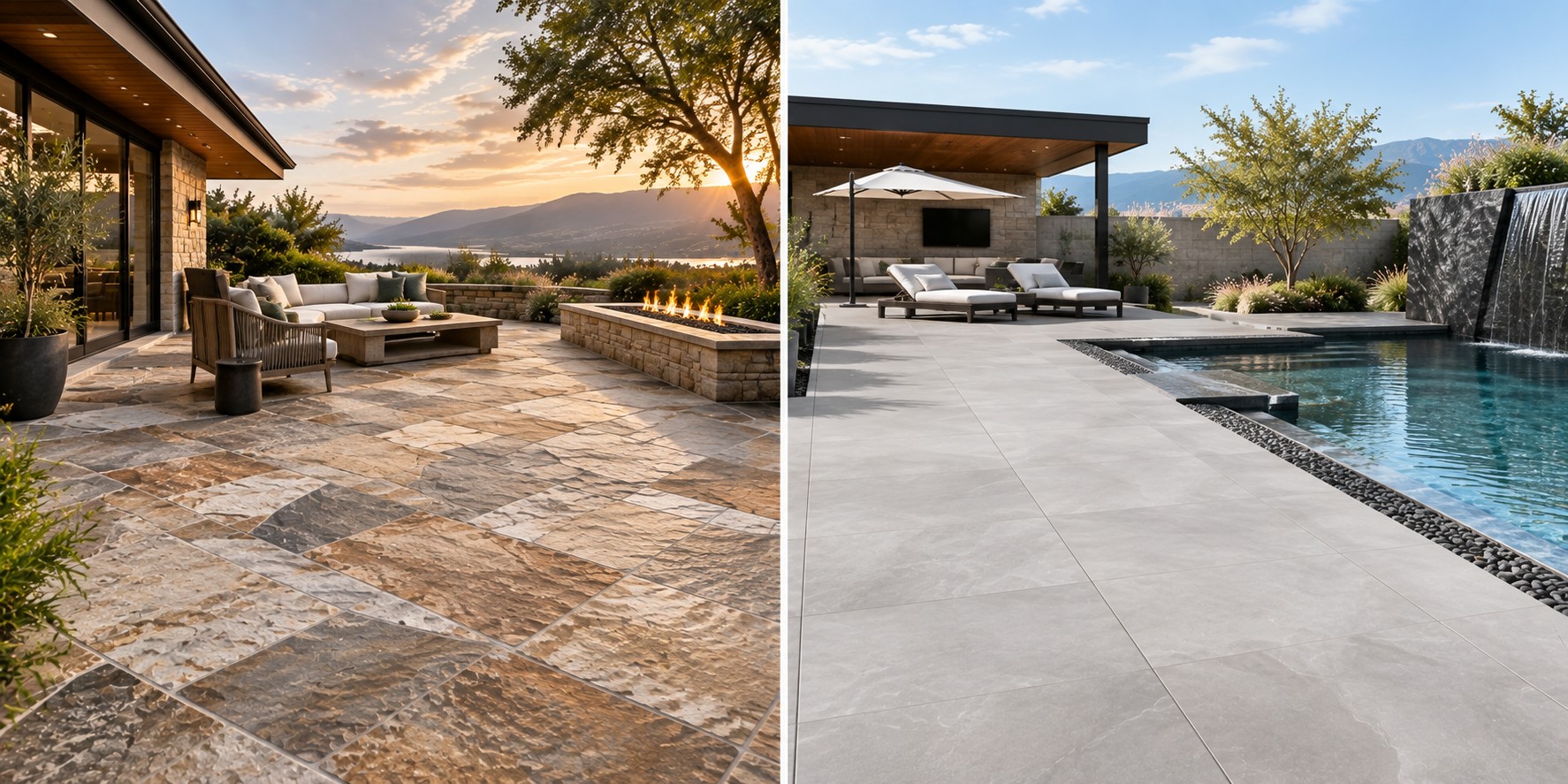
Is Natural Stone More Eco-Friendly Than Porcelain?
Natural stone's advantages are documented, not just marketing language. It is a single-ingredient material that requires no manufacturing inputs beyond cutting and finishing. Environmental Product Declarations published for natural stone show it carries a global warming potential of about 22 kilograms of CO2 equivalent per square meter for flooring and paving, compared to 82.2 kilograms for terrazzo, and industry guidance on stone paving durability confirms that a properly selected, properly installed stone can perform for generations with routine care.
Porcelain, by contrast, is a manufactured product fired at high temperatures, which involves more processing steps than a quarried stone that only needs cutting and finishing. That does not make porcelain a poor choice. It makes the two materials different on a criterion many homeowners never think to compare.
These declarations matter beyond marketing language because they get used inside LEED, BREEAM, and other green building certification systems to verify sustainability claims rather than take a manufacturer's word for it. A homeowner who cares about that kind of documentation has an actual paper trail to point to with natural stone.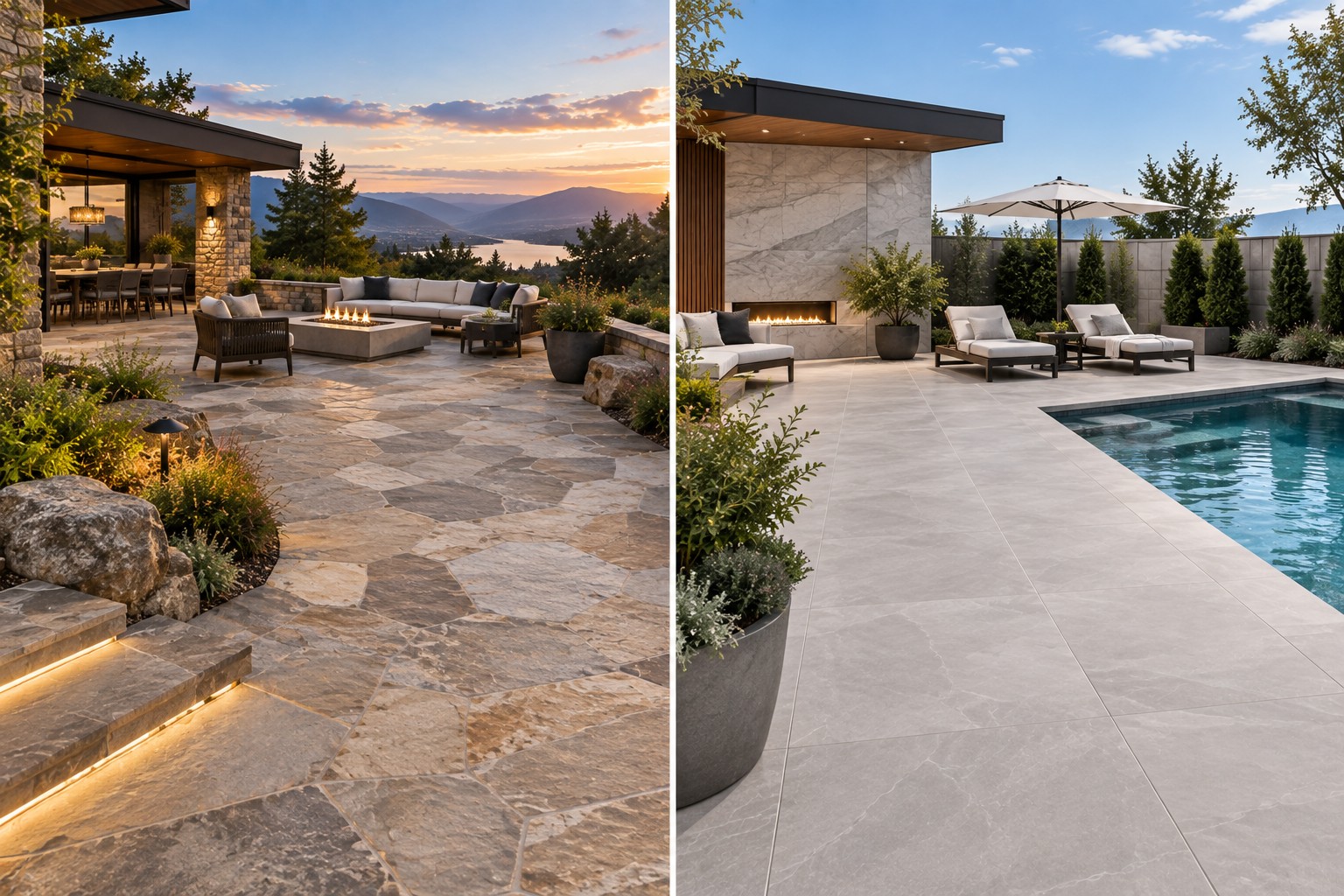
How Do Natural Stone and Porcelain Handle Freeze-Thaw, Salt, and Sun?
Environmental exposure changes how a paver performs over time, regardless of material. In climates with freeze-thaw cycles, moisture that enters a more porous stone can expand when frozen and lead to cracking or surface deterioration. Thermal expansion in hot climates and salt exposure in coastal areas are additional factors that affect long-term performance.
Porcelain's manufacturing process gives it very low porosity, so it resists moisture absorption well, though performance still varies by specific product and finish. Denser natural stone options, like granite and quartzite, hold up in freeze-thaw conditions in a broadly similar way, while softer, more porous stone needs more attention in those same climates.
Traffic matters just as much as climate for paver applications specifically. A driveway or a frequently used walkway sees more direct wear than a patio, and that constant use can expose weaknesses in a stone that would otherwise go unnoticed on a lower-traffic surface. Denser materials generally hold their finish longer under that kind of repeated use, regardless of whether the paver is natural stone or porcelain.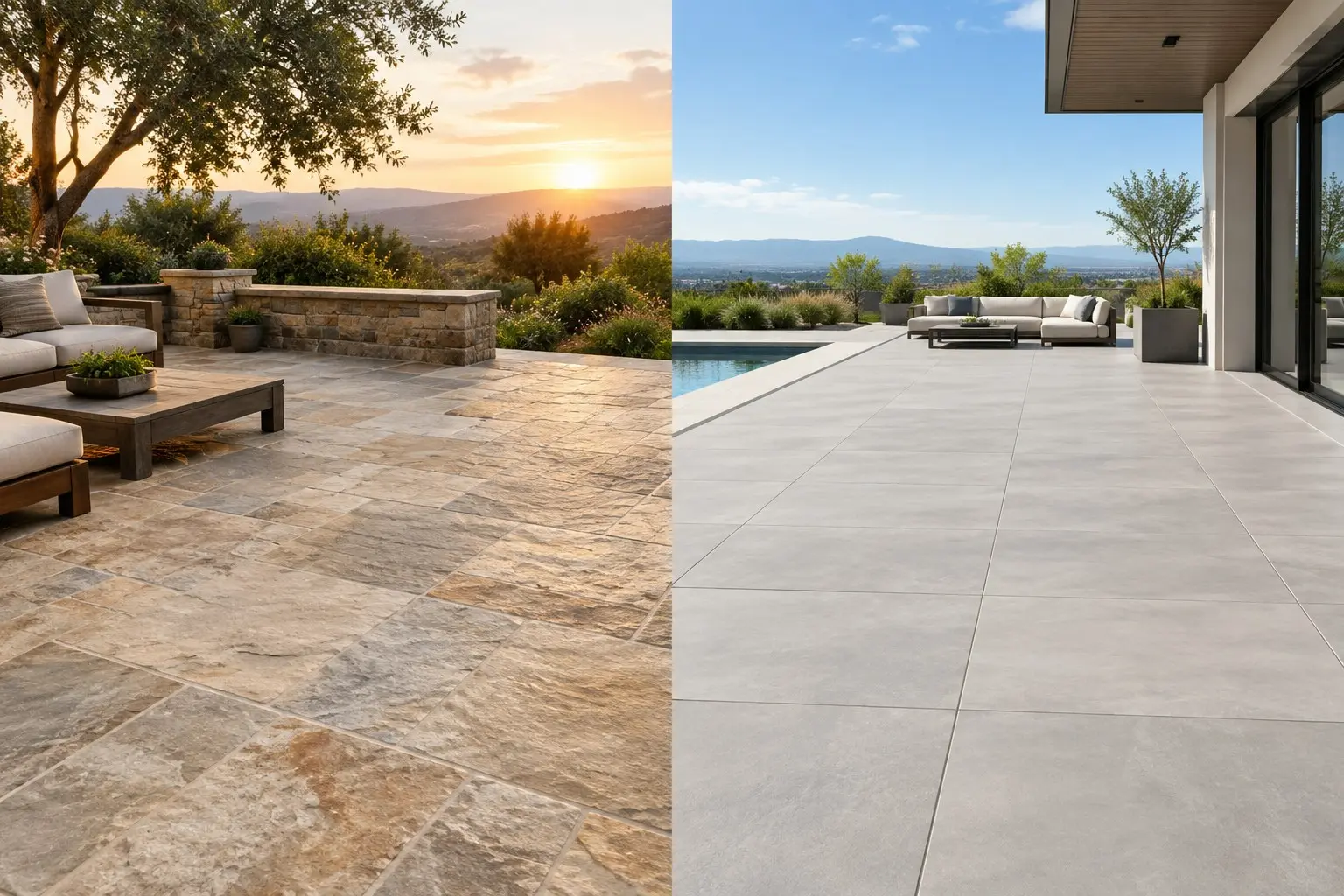
Getting Consistency vs. Getting Character
A large, modern patio or a pool deck with long unbroken sightlines is often where porcelain's manufactured consistency pays off. Every paver reads the same from one end of the space to the other, with no surprises in tone or veining to plan around.
A courtyard or walkway meant to feel more organic tends to favor natural stone instead. Two homeowners can order the same natural stone paver and end up with slightly different-looking patios, and most people who choose natural stone are choosing that variation on purpose.
A home with an existing natural stone facade, foundation, or fireplace tends to point toward natural stone pavers too. Matching a manufactured porcelain color to a natural material that already has its own variation is harder to get exactly right than pairing natural stone with natural stone.
Care That Matches How Each Material Is Built
Natural stone care starts with knowing whether a stone is calcareous or siliceous, since acidic cleaners can etch calcium-based stones like travertine but are more tolerated by silica-based stones like granite and quartzite. For pavers specifically, natural stone care guidance recommends flushing outdoor areas with clear water and a mild bleach solution to remove algae or moss, a routine that porcelain's smoother, non-porous surface generally needs less often.
Porcelain is non-porous, but regular cleaning is still recommended to keep the joints between pavers looking their best. Neither material demands constant attention outdoors, but the specific upkeep looks different enough that it is worth planning for before installation, not after.
Longevity and What Happens When One Gets Damaged
Natural stone's long track record comes with a practical advantage: a chipped or dulled paver can often be refinished or repolished rather than replaced outright, which is part of why stone structures built generations ago are still standing today. That same durability is suitable for daily use, but proper care will help preserve its appearance over the decades a paver installation is expected to last.
Porcelain does not offer that same repair path. A damaged piece typically needs to be swapped for a new one, since the surface finish is set during manufacturing and cannot be refinished on site the way stone can.
That repair path also reinforces the earlier environmental point. A stone paver that gets refinished instead of replaced never becomes landfill waste in the first place, which is part of why natural stone's lifecycle numbers look as good as they do on paper.
Deciding Which Paver Fits Your Project
Neither material is the automatic right answer for exterior paving. Porcelain fits a homeowner who wants a uniform, low-maintenance surface and does not mind replacing an occasional damaged piece down the road. Natural stone fits a homeowner who wants unique character, a documented lower-impact material, and is comfortable with occasional resurfacing instead of replacement.
A simple way to narrow it down: weigh how much visual consistency matters against how much natural variation appeals to you, and factor in whether the project is a high-traffic driveway, a lounging patio, or something in between. High consistency and low occasional upkeep point toward porcelain. Character, documented environmental credentials, and long-term repairability point toward natural stone.
Seeing both materials next to each other tends to make the decision easier than reading specs. Whether you are closest to our Reno, Minden, or Sacramento showroom, comparing actual pavers under real light settles more questions than a spec sheet ever will.
The same goes for our Fernley location. Once you have picked a direction, requesting a quote on the specific slab you are considering is the fastest way to see where your project stands.
Note: Some images on this page may be conceptual renderings created to illustrate design possibilities and may not depict actual installations.
Frequently Asked Questions
Yes, both hold up well outdoors. Porcelain resists moisture absorption due to its manufacturing process, while denser natural stone options like granite and quartzite perform similarly in freeze-thaw conditions, though softer stones need more care in harsh climates. Traffic also plays a role, since a driveway or heavily used walkway shows wear faster than a patio regardless of material.
No. Porcelain's low porosity means it does not require sealing the way many natural stone options do, though regular cleaning is still recommended to keep the surface and joints looking their best.
Natural stone has documented Environmental Product Declarations showing lower embodied carbon than manufactured flooring materials like terrazzo, since it requires cutting and finishing rather than a full manufacturing process. These declarations are recognized within LEED and BREEAM certification systems, giving homeowners a documented way to compare materials rather than relying on marketing claims alone. Porcelain does not carry that same single-ingredient advantage.
Often, yes. Natural stone can typically be refinished or repolished rather than replaced, which is part of why stone installations can last for generations with proper care.
Yes. Natural stone should be cleaned according to its mineral classification, since acidic cleaners can damage calcium-based stones like travertine. Outdoor paver areas also benefit from an occasional mild bleach solution to remove algae or moss buildup.