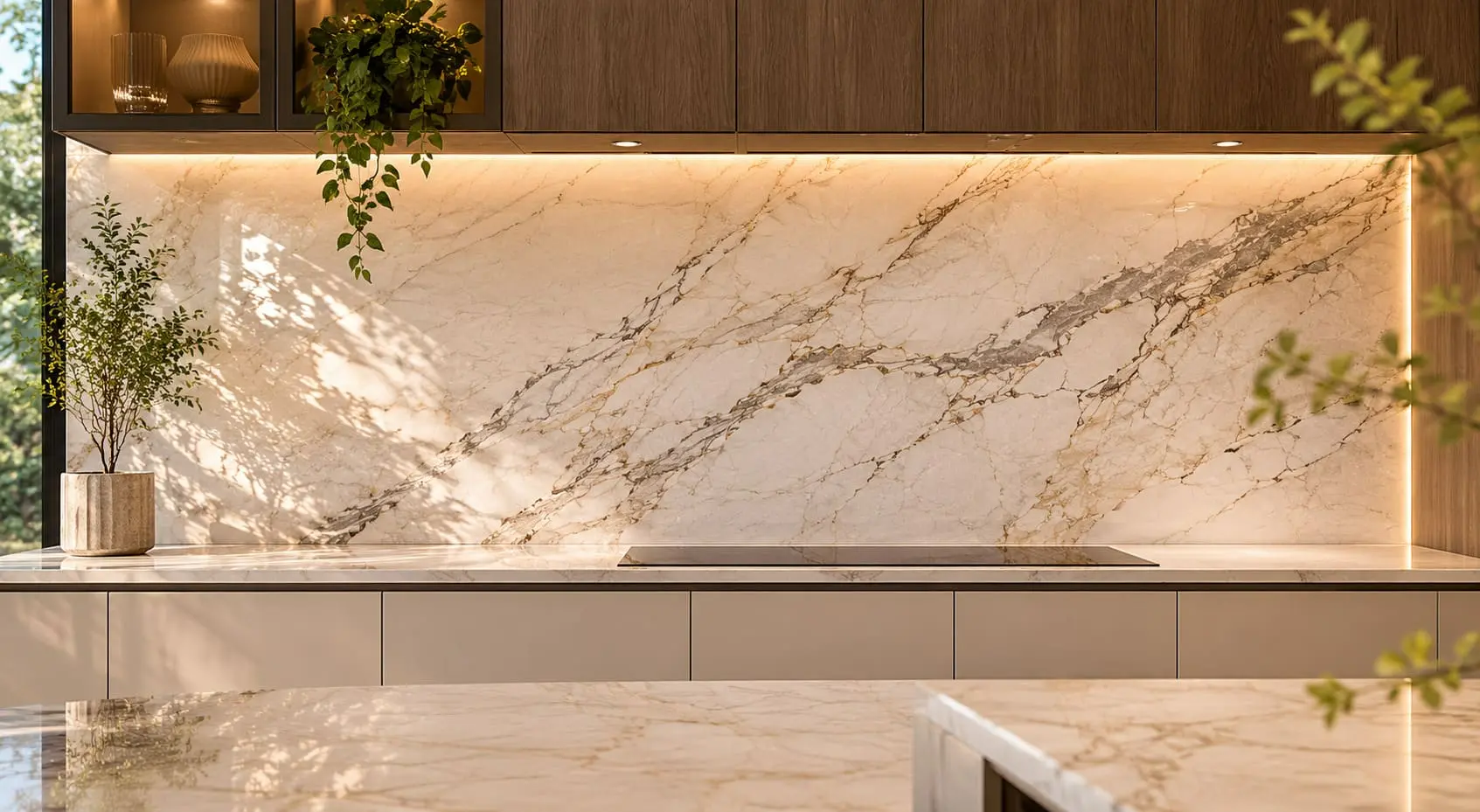
Marble is a natural stone valued for the depth and
refinement it brings to interior spaces. When used on a wall, it adds visual
presence without overwhelming the room. A continuous cut of marble installed
vertically behind a kitchen range, sink, or bathroom vanity functions as both a
protective covering and a primary design element.
Each slab carries its own
variation in tone, veining, and movement, which means every installation has a
character of its own. Our team works with homeowners, interior designers, and
contractors looking for natural stone
backsplash options that hold up over time, and marble is one of the
materials we carry that consistently delivers that kind of presence.
Why Marble Works Well on a Backsplash Wall
One of the qualities that makes marble a strong candidate
for backsplash use is how well it reads at eye level. A backsplash is
one of the most visible surfaces in a kitchen or bathroom, and marble's natural
variation in tone and veining tends to draw attention in a way that adds depth
to the overall space without competing with other design elements. Because the
stone is cut from a single slab, the surface can cover a large vertical area
with a visual continuity that smaller formats cannot always achieve.
Marble
also works well alongside a range of other materials commonly used in kitchens
and bathrooms, including wood cabinetry, metal fixtures, and engineered
countertop surfaces, making it a versatile choice for a variety of interior
styles. Marble's surface, particularly in a honed or leathered finish, can
also help soften the overall look of a space that might otherwise feel hard or
flat. These qualities make marble a material that tends to hold its visual
relevance over time rather than dating quickly with changing trends.
Choose Your Perfect Stone Slab Request Your Slab Quote
Finish Options and Material Character
Marble is available in polished, honed, leathered, and specialty finishes, each of which changes how light interacts with the stone and how much texture is felt against it. A polished finish reflects more light and creates a more formal look. A honed finish offers a softer, matte appearance suited to quieter, more understated designs. A leathered finish adds a subtle texture and subdued sheen. Specialty finishes, such as brushed or textured surfaces, provide additional depth and character for more distinctive design applications.
Finish selection often comes down to
the overall design direction of the space and the level of maintenance the
homeowner is comfortable with. Our team is available to help identify the right
option for each project. Those who want additional guidance before deciding can
also review recommendations from the natural stone industry on selecting the right finish.
Polished finish
Honed (matte) finish
Leathered finish
Specialty finish
Durability, Sensitivity, and What to Expect
Marble can perform well on interior walls, but it requires informed use and consistent care to maintain its appearance. Marble is suited for indoor installations and is not typically recommended for outdoor use. Behind a sink, range, or vanity, it is regularly exposed to moisture, splashing, and in kitchen settings, cooking residue. Marble may be more sensitive to acidic substances than some other natural stones, so spills should be cleaned promptly to reduce the chance of surface effects. Abrasive cleaners and harsh chemicals should be avoided as these can affect the finish over time.
The stone can be a lasting
choice for interior wall applications when properly maintained, but results
will depend on how well the care routine matches the material's requirements.
Our latest content
Read our blogs for more information:
Day-to-Day Maintenance Tips
Keeping marble in good condition on a wall requires a few consistent habits. Our team recommends the following:
- Wipe spills promptly, particularly anything acidic such as citrus juice, vinegar, or cleaning products, as these can affect the stone over time.
- Use a mild, pH-neutral cleaner for regular cleaning rather than abrasive products or harsh chemicals.
- Seal the stone periodically based on the finish and exposure level, and consult a stone care professional for product-specific guidance.
- Avoid leaving standing water at the base of the installation or where the slab meets another material.
- Clean with a soft cloth or non-abrasive sponge to protect the finish during routine maintenance.
- Check seams and cut edges periodically, as these areas may need attention to stay properly sealed.
For those considering other options, our team also carries quartz for backsplash applications. Visit our quartz backsplash page to learn more about how that material performs on wall surfaces.
Frequently Asked Questions
Marble can work well behind a kitchen range or sink, but it calls for more attentive care than some other stone options. The material may be more sensitive to acidic substances, so cooking residue and food splatter should be wiped away promptly. Mild cleaners are recommended for routine maintenance, and periodic sealing helps protect the finish. For homeowners comfortable with that level of care, marble can add lasting character to a kitchen wall. Those still exploring options may find it helpful to browse kitchen backsplash ideas and design options to see how different materials and styles compare.
The right finish depends on the design direction of the space and how the area will be used. A polished finish tends to give the stone a reflective, formal appearance and works well in spaces where light and refinement are priorities. A honed finish offers a softer, matte quality and may be more forgiving in areas with frequent contact. A leathered finish introduces more texture and a quieter sheen; specialty finishes offer additional depth for more distinctive applications. Our team can help narrow down the best option based on the specific wall application and maintenance preference.
Sealing frequency depends on the finish, daily exposure, and the sealer used. Many installations may benefit from resealing roughly once a year, though areas with heavier moisture may need more frequent attention. A stone care professional can provide guidance tailored to the specific project. Following the sealer manufacturer's instructions is an important part of keeping the stone in good condition.
Marble can be a good fit for bathroom walls, particularly behind a vanity where a refined look is the priority. The stone can perform well in indoor environments with moderate moisture exposure, but proper sealing is important to help protect it over time. Prompt attention to standing water and product buildup supports the stone's long-term condition. Our team can help identify the right slab and finish based on the specifics of the bathroom space.
Slab size can affect how the stone reads across a wall. Larger cuts allow more of the natural tone and veining to show with fewer interruptions, which can create a more cohesive result. Smaller cuts may require more seams depending on the coverage area, which changes the overall visual. Our team works with customers to find slab sizes that suit the scale of the project and the design intent of the space.
Curious About Something Else?
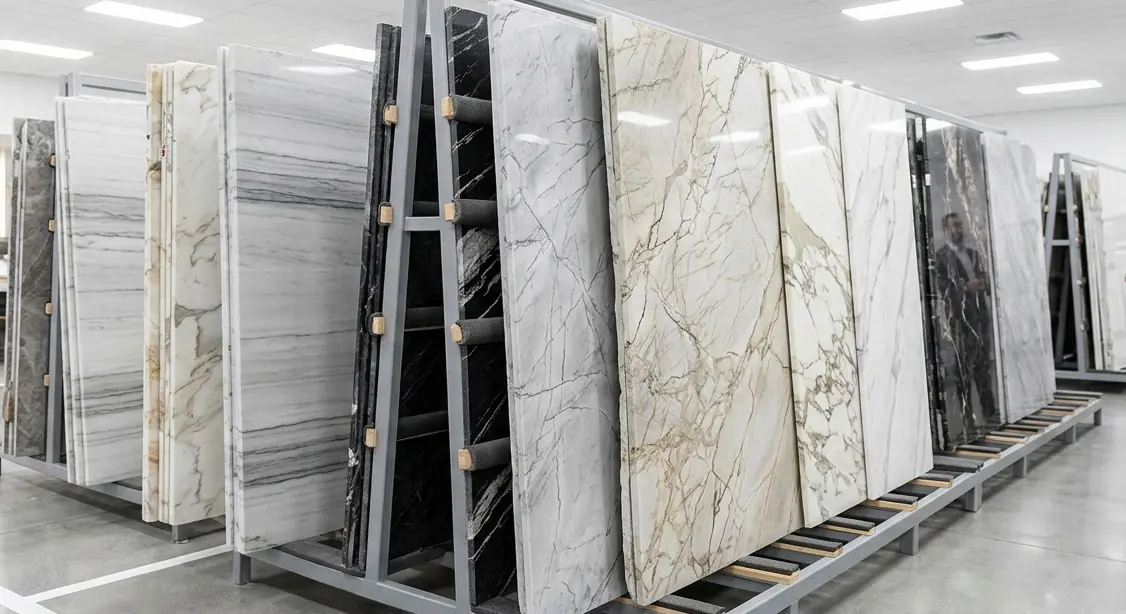
Who
We Are and How We Work
Our company was founded in 2005 by the Hartman family with a focus on helping customers find natural and engineered stone that suits their specific projects. We serve homeowners, interior designers, and contractors across our four showroom locations. Customers are welcome to schedule a showroom appointment to view available marble slabs in person and speak with our team directly.