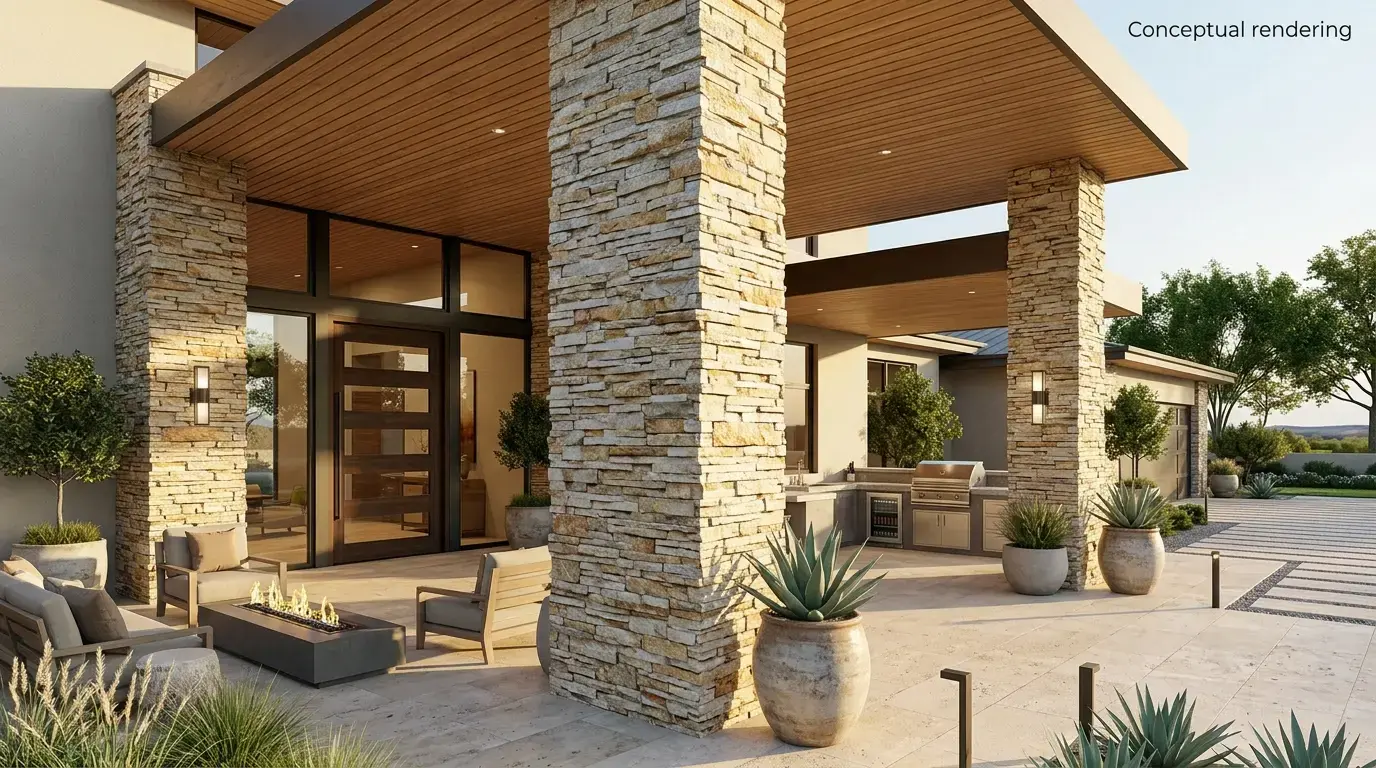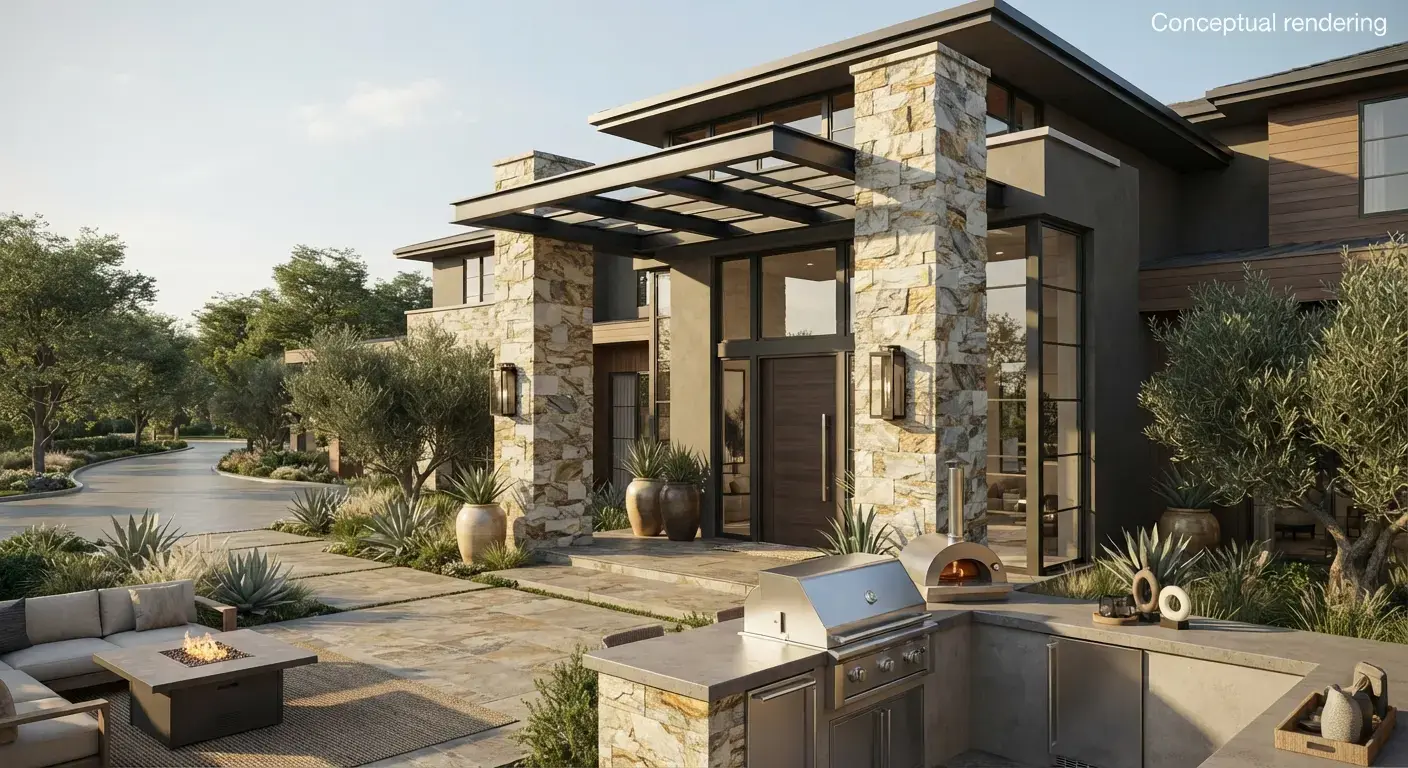
Ledger stone columns feature thin natural stone pieces, fitted and glued together in stacked rows to form panels that clad pillars or posts. Ledger stone, also known as ledgestone or stacked stone, is most often sold in 6 x 24-inch panels, with 8 x 18-inch and 8 x 24-inch formats also available.
Ledger stone is a cladding material, so it covers the surface of an existing column rather than supporting the structure. Flat panels cover each face of a column, and corner pieces finish the outside corners with natural stone edges. Ledger panels are produced in natural stones including quartzite, slate, marble, travertine, limestone, and granite. Quartzite and slate are siliceous stones that generally resist acids better than calcium-based marble, travertine, and limestone, a difference that can affect how each stone performs outdoors.
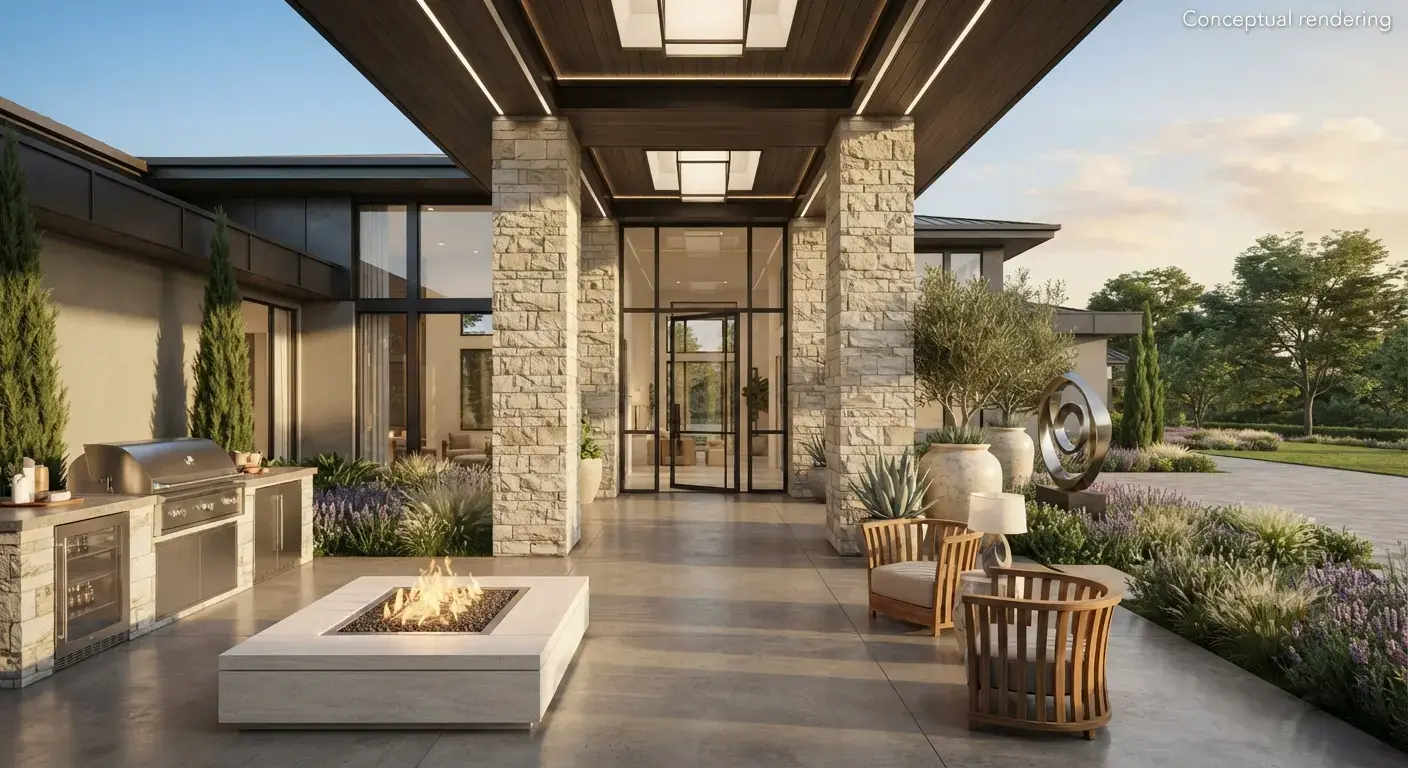 Conceptual rendering
Why Homeowners Choose Ledger Stone Columns
Stone column cladding can give porches, entryways, and open rooms a solid, finished look. Natural ledger panels also offer three practical advantages:
- Dimensional texture: The stacked pieces in each panel vary in thickness, which creates natural shadow lines across the faces of a column.
- Near-seamless joints: Many panels have stepped or Z-shaped ends that interlock, which can help minimize the appearance of seams between them.
- Indoor and outdoor ratings: Many natural ledger panels are rated for both interior and exterior walls, so the same stone can often carry from a front porch into the home.
Where Stacked Stone Columns Work Best
Exterior Porch Columns and Pillars
Outdoors, ledger stone columns frame porches, entries, gates, and patios, where the stone is exposed to the weather throughout the year.
Interior Columns
Indoors, ledger stone can turn structural columns in living rooms, entryways, and open floor plans into textured focal points.
Commercial Spaces
Many ledger panel lines are rated for commercial as well as residential use, and the material appears in retail, office, and hospitality interiors.
How to Choose Stone for Stacked Stone Column Cladding
Stone choice is especially important for exterior ledger stone columns, which face rain, sun, and freezing temperatures.
Quartzite: Quartzite is generally dense, which can make it well suited to exterior columns.
Slate: Water absorption varies by product, so review specifications before exterior use.
Travertine: Travertine is porous and sensitive to acids, so exterior use in cold climates deserves extra review.
Marble: Marble can be affected by acidic rain over time, so it is generally better suited to interior columns.
Water absorption is a key predictor of freeze-thaw performance, because stone that absorbs little water is less likely to crack or spall when trapped moisture freezes and thaws. Some product listings state frost resistance directly, so confirm that rating before choosing from Nova Tile and Stone’s offerings for an exterior column.
Lighting Stacked Stone Columns
Lighting can significantly affect how ledger stone columns look, especially at night. Grazing places a fixture close to the stone so light skims across the surface, which can highlight raised edges and create shadows in the recesses. Wall washing tends to spread light more evenly and soften those shadows. Moving a fixture closer to or farther from the column can deepen or reduce the shadow effect.
How to Clean and Seal Ledger Stone
Manufacturers commonly recommend a penetrating sealer for natural ledger stone to help protect it from moisture and staining, with periodic resealing according to the product's care instructions. For routine cleaning of ledger stone columns, use a pH-neutral cleaner made for natural stone and a soft brush that can reach into the rough surface. Avoid vinegar and other acidic cleaners, especially on calcium-based stones.
Frequently Asked Questions
No. The column underneath provides the structural support, while the ledger stone serves as a decorative surface.
Ledger panels and corner pieces are made in straight, linear formats, so square and rectangular columns are generally the best fit. Curved surfaces such as round columns and arches can be difficult to clad with flat panels.
Measure the linear footage of outside corners. For a square column, multiply the column height by four, then compare that total with the coverage listed for each corner piece.
Weight depends on the stone and panel thickness. Manufacturer listings for 6 x 24-inch panels work out to roughly 7 to 13 pounds per square foot, with thickness ranging from under half an inch to about one and a half inches.
Natural ledger stone columns use quarried stone. Manufactured stone veneer, by contrast, is cast from concrete or made with aggregates, pigments, and resins to imitate stone, so check product descriptions to confirm what you are buying.
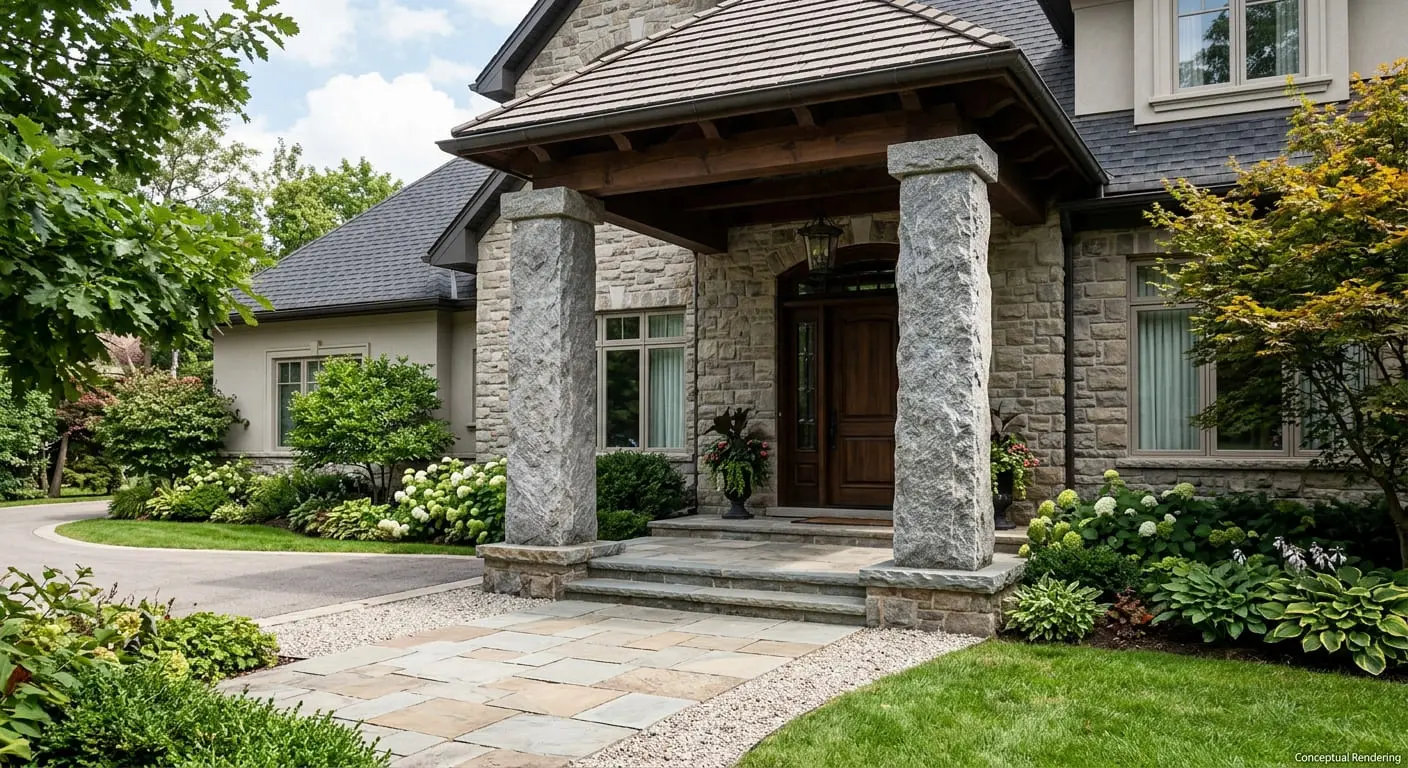
Note: Some images on this page may be conceptual renderings created to illustrate design possibilities and may not depict actual installations.