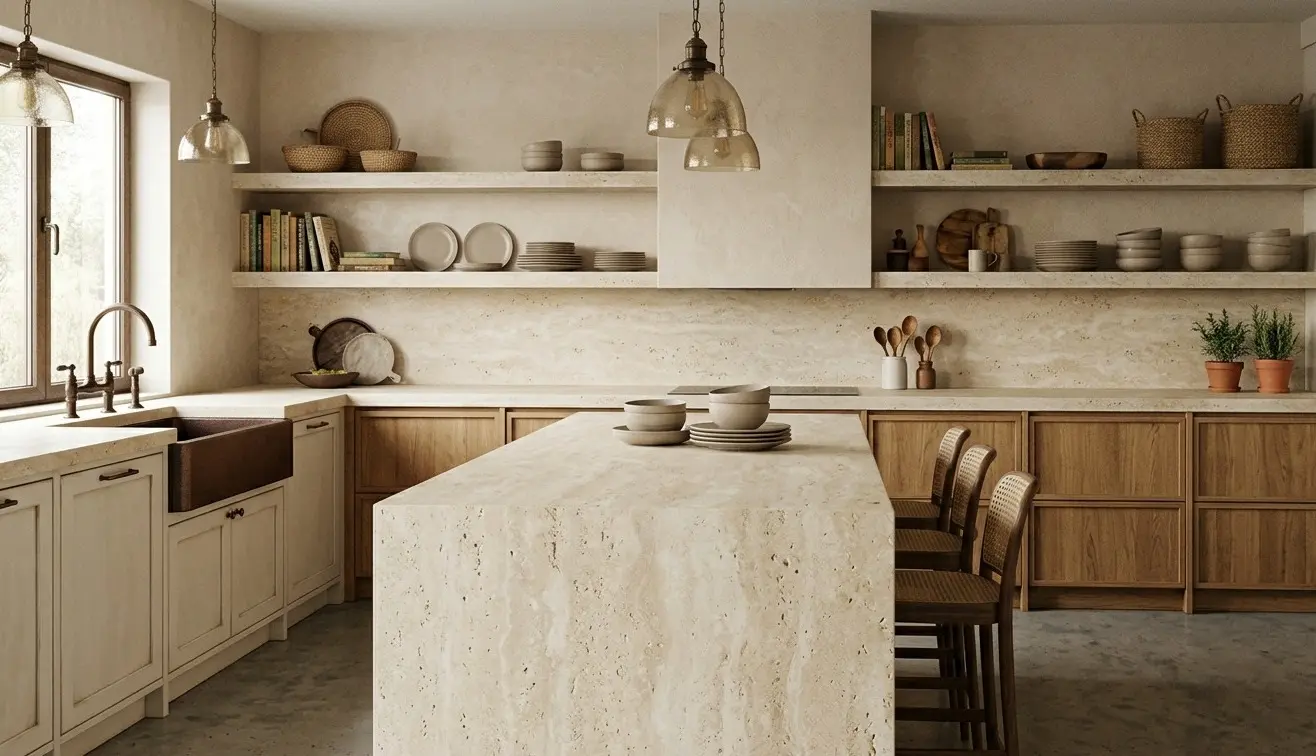
Warm, Textured, and Shaped by Centuries of Natural Formation
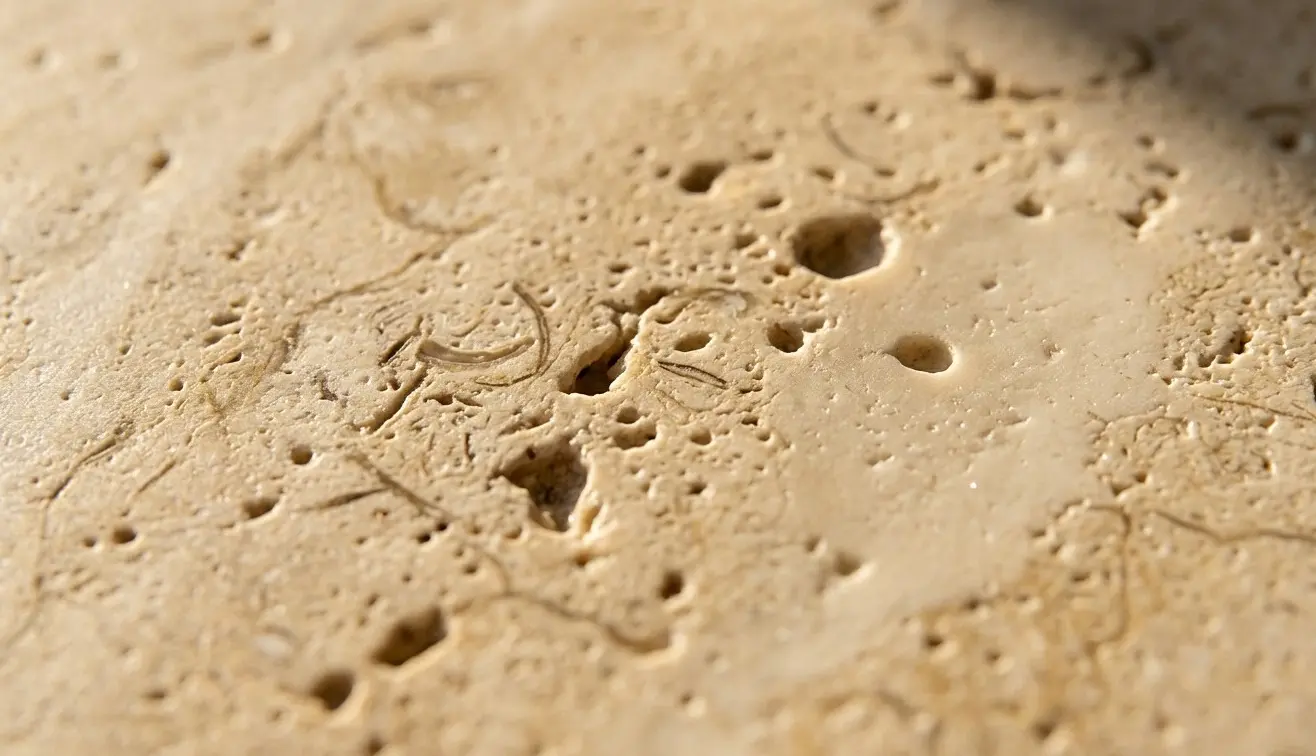
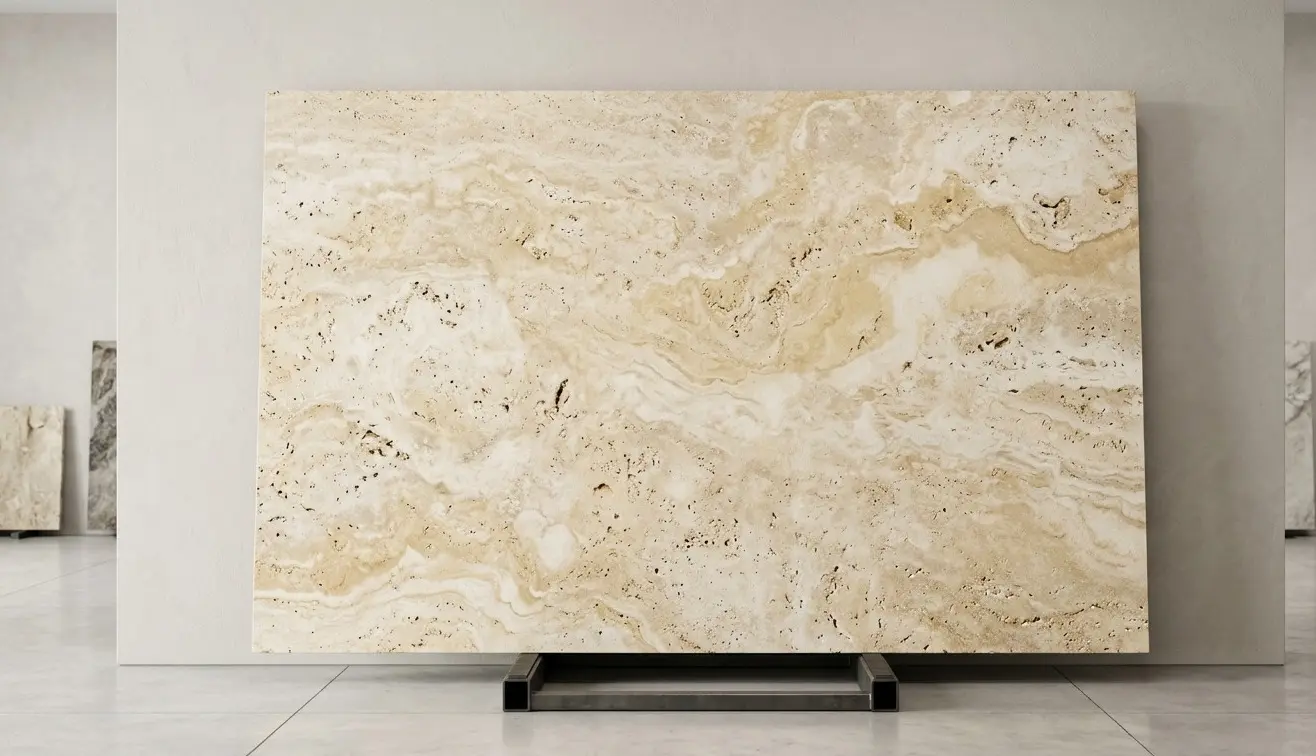
Travertine is a sedimentary limestone formed by the rapid precipitation of calcium carbonate around mineral hot springs, rating 4 to 5 on the Mohs hardness scale and developing a naturally porous, textured structure as part of its geological formation. The leathered finish highlights that organic character more clearly than any other finish, accentuating the stone's natural pitting and surface variation while adding a low-sheen, tactile quality that polished and honed alternatives present very differently. When applied to a filled travertine slab, the leathered finish produces a surface that carries the warm, earthy palette of natural travertine in ivories, creams, golds, and walnuts alongside a texture that makes the material feel genuinely handmade, settled, and built to age beautifully.
Leathered travertine is a distinctive choice for countertops, bringing organic warmth and character to kitchens and bathrooms that no polished surface can fully replicate.
Before you step into a showroom, browse the leathered travertine selection at Nova Tile and Stone, a premium natural stone slab supplier with four convenient locations across Reno, Sacramento, Minden, and Fernley.
Travertine at Its Best with a Leathered Finish
Travertine's defining characteristic is its natural surface variation: the subtle pitting, fossil traces, and mineral movement that give each slab an organic, layered quality that manufactured surfaces cannot replicate. A polished finish partially conceals that character under a reflective gloss layer. A honed finish softens it into a matte uniformity. A leathered finish, by contrast, emphasizes the stone's inherent texture, bringing its natural pitting and surface variation into clearer focus while adding the tactile dimension of the diamond-brushing process.
That surface character is what makes Leathered travertine slabs such a strong choice in warm, layered kitchen designs where organic materials and natural textures are part of the overall design intention. The leathered surface also conceals fingerprints and everyday kitchen contact marks more effectively than polished travertine, which is a practical daily benefit in active kitchen environments. Filled travertine slabs are the correct specification for countertop applications, as filling the stone's natural voids with resin or grout creates a smooth, even surface across the slab that is practical for countertop use. Sealing every 1 to 2 years is the standard recommendation for travertine countertops, with more frequent sealing for outdoor applications.
Compared to standard subway tile layouts, which fragment the stone's natural character into repetitive small units with grout lines requiring ongoing maintenance, a full leathered travertine slab delivers the stone's warm palette and natural texture as one continuous, uninterrupted surface. For broader reference on how travertine performs across countertop applications and finish types, the travertine countertop page provides useful foundational context
Note: Some images on this page may be conceptual renderings created to illustrate design possibilities and may not depict actual installations.
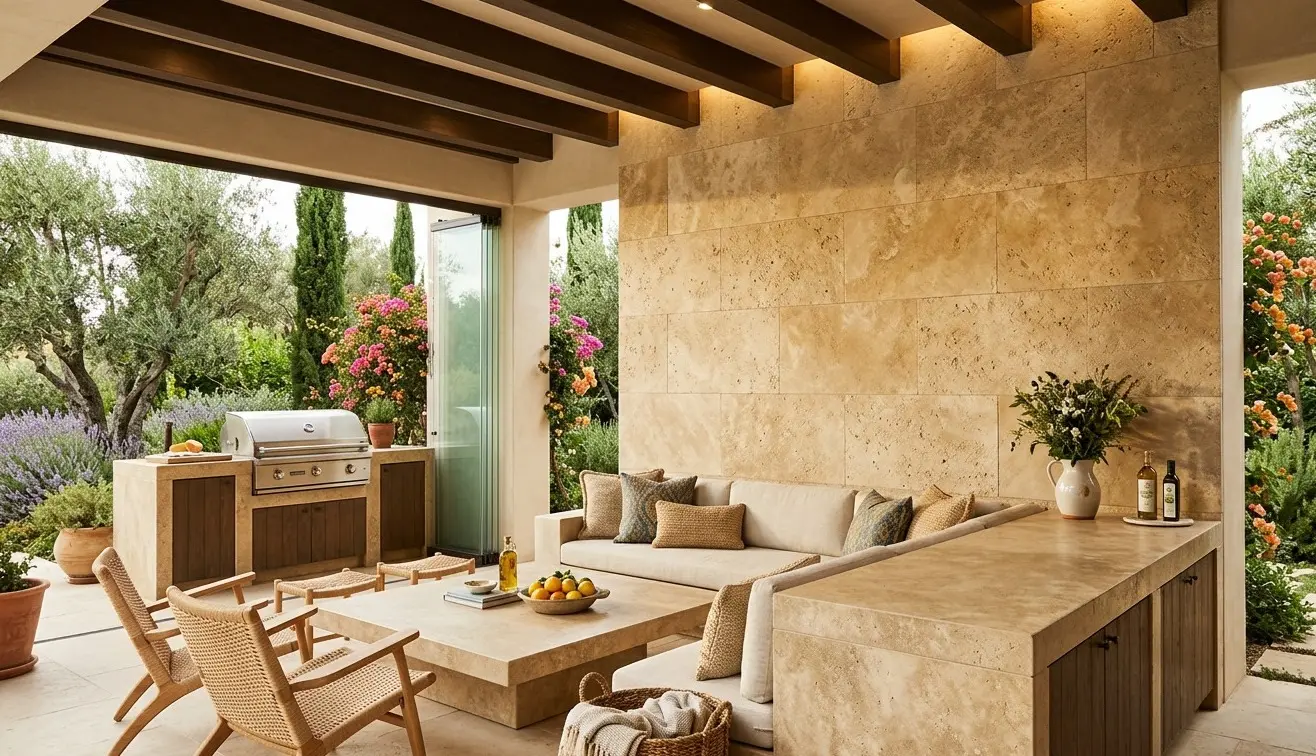
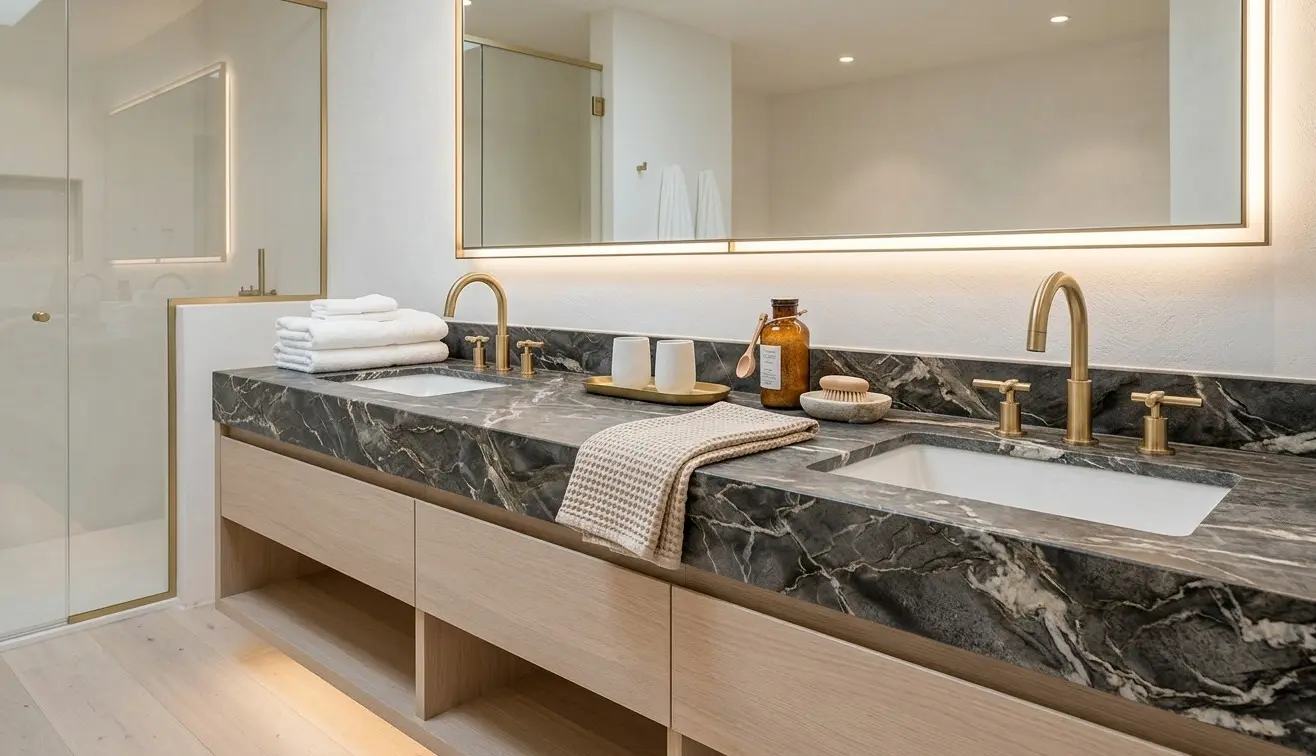
Where Leathered Travertine Countertops Create the Most Impact
Leathered travertine commonly used for countertops are a strong design choice in spaces where warmth, natural character, and an organic connection to material history are priorities. The finish gives the stone a presence that suits specific design directions more than others, and the placement and layout choices you make shape how that presence reads in each room.
Kitchen Countertops, Islands and Custom Stone Applications
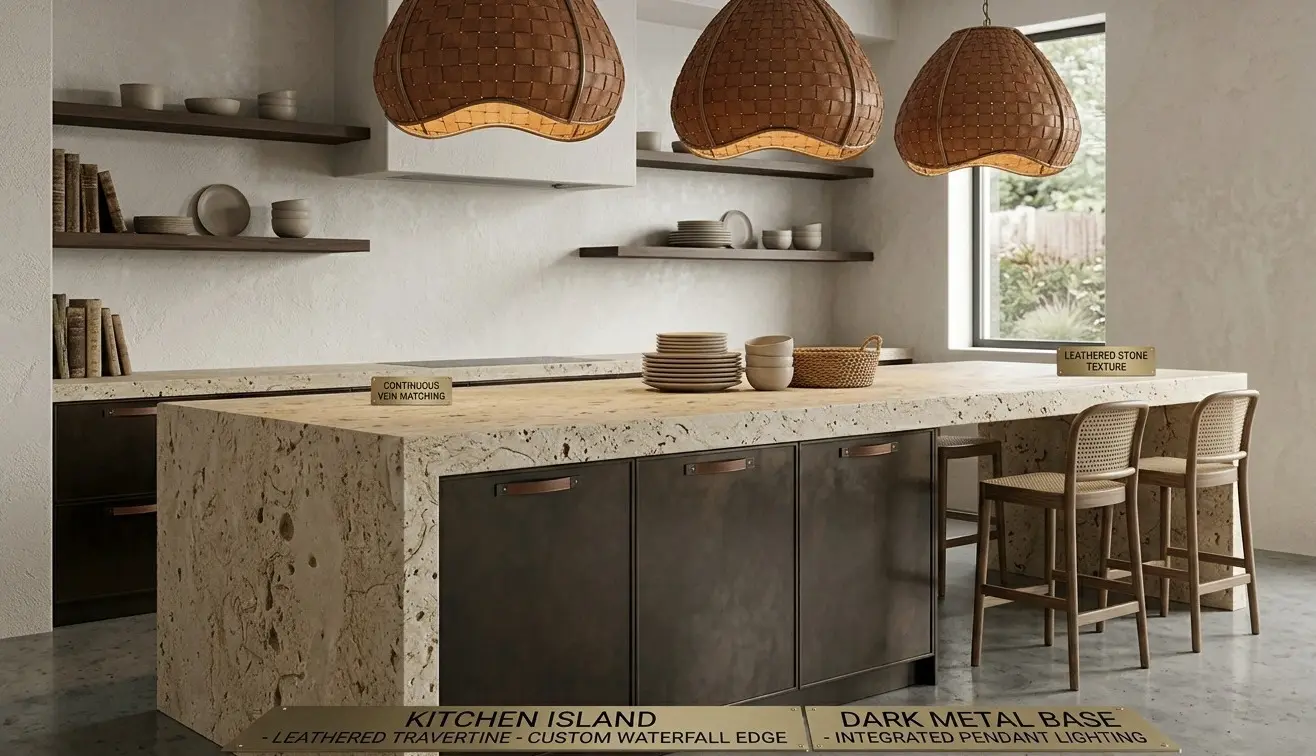
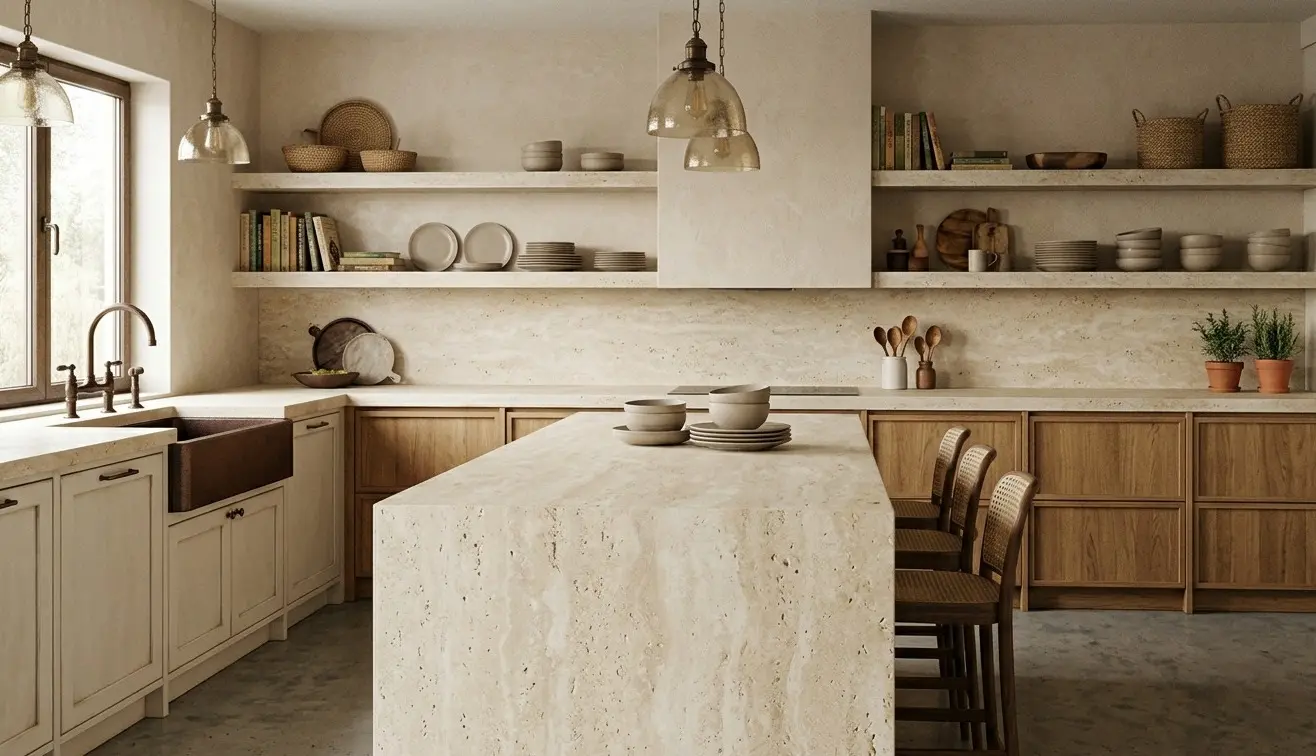
In a kitchen setting, leathered travertine is particularly well suited to transitional, Mediterranean, rustic, and farmhouse design directions where the stone's warm palette and organic texture reinforce the overall aesthetic rather than working against it. On a kitchen island, the leathered surface handles daily contact from prep work, casual dining, and family activity with the practical advantage of concealing marks between cleanings more effectively than polished alternatives. A custom waterfall edge in leathered travertine allows the stone's natural pitting and warm veining to flow from the horizontal surface to the vertical island sides, creating an architectural feature that reads as genuinely natural and handmade. For buyers exploring how travertine performs in kitchen countertop settings, the travertine kitchen countertop page covers application details and finish comparisons in an active cooking environment.
Bathroom Vanities, Feature Walls and Accent Applications
For bathroom vanities, the leathered travertine finish introduces a spa-like organic warmth that polished stone does not deliver in the same way. The warm ivories, creams, and golds of travertine pair naturally with brushed gold, oil-rubbed bronze, and matte black fixtures in bathroom designs that prioritize natural material warmth over high-gloss formality. On feature walls and in shower surrounds where properly sealed, leathered travertine panels add a rich, dimensional presence that tile formats cannot replicate at the same scale. The stone is also suitable for outdoor wall cladding and accent surfaces where the leathered finish weathers gracefully over time. For buyers comparing travertine bathroom countertop options before selecting a finish, the travertine bathroom countertop page provides finish-specific guidance and application details.
The Daily Benefits of Leathered Travertine on Countertops
Leathered travertine are a warm and characterful natural stone surface, but consistent care, correct sealing, and appropriate use habits are essential to preserving both the stone's finish and its protective sealant layer.
- Leathered finish emphasizes natural texture more clearly than polished or honed, but requires sealed filled slabs for practical countertop use
- Heat resistant, handles brief hot cookware contact, the use trivets are always the right habit for extended heat exposure
- Sealing every 1 to 2 years is the standard for indoor countertops, more frequently for outdoor or high-traffic applications
- Stain resistant when sealed, but acidic spills including citrus, wine, and vinegar should be wiped up immediately to prevent etching
- Mohs 4 to 5, harder than marble, but softer than granite and quartzite, so cutting directly on the surface is not recommended
- Conceals fingerprints and contact marks more effectively than polished travertine, reducing visible cleaning needs throughout the day
- Suitable for indoor and outdoor use; but correct finish and sealing schedule must match the specific exposure level
- Develops a warm patina over time that adds to its character, but the sealant layer must be maintained to protect the surface
- Easy to clean with pH-neutral stone cleaner and mild soap, but abrasive and acidic cleaners must always be avoided
For buyers looking for a practical overview of how to choose the right countertop material for their specific kitchen needs, a helpful countertop material comparison guide provides clear guidance across natural and engineered surface options. To see leathered travertine slabs in person at full slab scale, our Fernley showroom carries current travertine inventory available for viewing.
Our latest articles!
A Surface That Deepens in Beauty Over Time
Leathered travertine for countertops are one of the few natural stone surfaces that genuinely improve in character with age rather than simply holding their condition. Travertine develops a warm, lived-in patina over years of use that adds depth to the stone's natural palette and reinforces its organic, layered quality. The leathered finish complements that aging process by providing a surface texture that reads as more natural and settled over time than the formal quality of a polished surface.
Each specific project should be evaluated individually to ensure filled slabs, the right finish, and the appropriate sealing schedule are matched to the demands of the space. Because every travertine slab is shaped by thousands of years of geological deposition, no two leathered travertine slab installations will ever look exactly alike. That natural individuality is a design asset that manufactured alternatives simply cannot offer.
Frequently Asked Questions
A leathered travertine finish is created by passing diamond-tipped brushes over a honed slab, which emphasizes the stone's natural pitting and surface texture more clearly than polished or honed finishes. The result is a low-sheen, tactile surface with a warm, organic quality that suits rustic, Mediterranean, and transitional design directions particularly well.
Yes. Filled travertine slabs are the correct specification for countertop applications. Filling the stone's natural voids with resin or grout creates a smooth, even surface that is practical for daily use. Unfilled travertine is better suited to floor and accent wall applications where the natural pitting is part of the design character rather than a functional concern.
For indoor kitchen countertop applications, resealing every 1 to 2 years is the standard recommendation. Outdoor applications may require resealing more frequently due to weather exposure. A water drop test confirms when resealing is due: if water absorbs into the surface rather than beading, the sealant needs refreshing.
Yes. The warm palette and tactile leathered finish of travertine suit bathroom environments well, creating an organic, spa-like atmosphere that polished stone does not deliver in the same way. It pairs naturally with brushed gold, oil-rubbed bronze, and matte black fixtures and works well in both single and double vanity configurations when properly sealed.
Both are calcium carbonate-based natural stones with similar hardness ranges and sensitivity to acidic substances. Travertine's defining character is its natural pitting and warm, earthy palette, while marble is known for its veining and more formal aesthetic. Leathered travertine tends to suit warmer, more organic interior settings; leathered marble suits spaces where the stone's veining character is the design priority. Both require consistent sealing and prompt spill cleanup.

Choose Your Leathered Travertine Slabs With Confidence
Leathered travertine slabs reward an in-person selection process where the stone's natural texture, warm palette, and full slab scale can all be evaluated before committing to a specific piece. Visit any of our four showrooms in Reno, Sacramento, Minden, or Fernley to explore current travertine slab inventory and speak with a design expert about finish, filling, sealing, and slab selection for your specific project.