A kitchen island countertop handles food prep, serves as a gathering spot, and sits at the visual center of the kitchen. The stone you choose affects both how the space looks and how the surface holds up over time. Natural stone slabs in granite, quartzite, and marble each bring a different set of physical properties to the island.
As a natural stone tile and slab retailer, we have carried natural stone slabs since 2005. Our four Home Design Centers in Reno, Sacramento, Minden, and Fernley stock a rotating selection across stone types, and our team offers free design consultations to help you find the right fit.
What Makes Natural Stone a Practical Choice for Island Countertops
Natural stone is quarried as a single continuous slab, so the surface has no seams through the main field, only at joints where slabs meet. For a kitchen island countertop, this matters because the island serves as the visual anchor of the room and a seamless slab reads cleanly from any angle. Stone also holds up well to moderate heat, cutting activity, and daily cleaning.
Granite
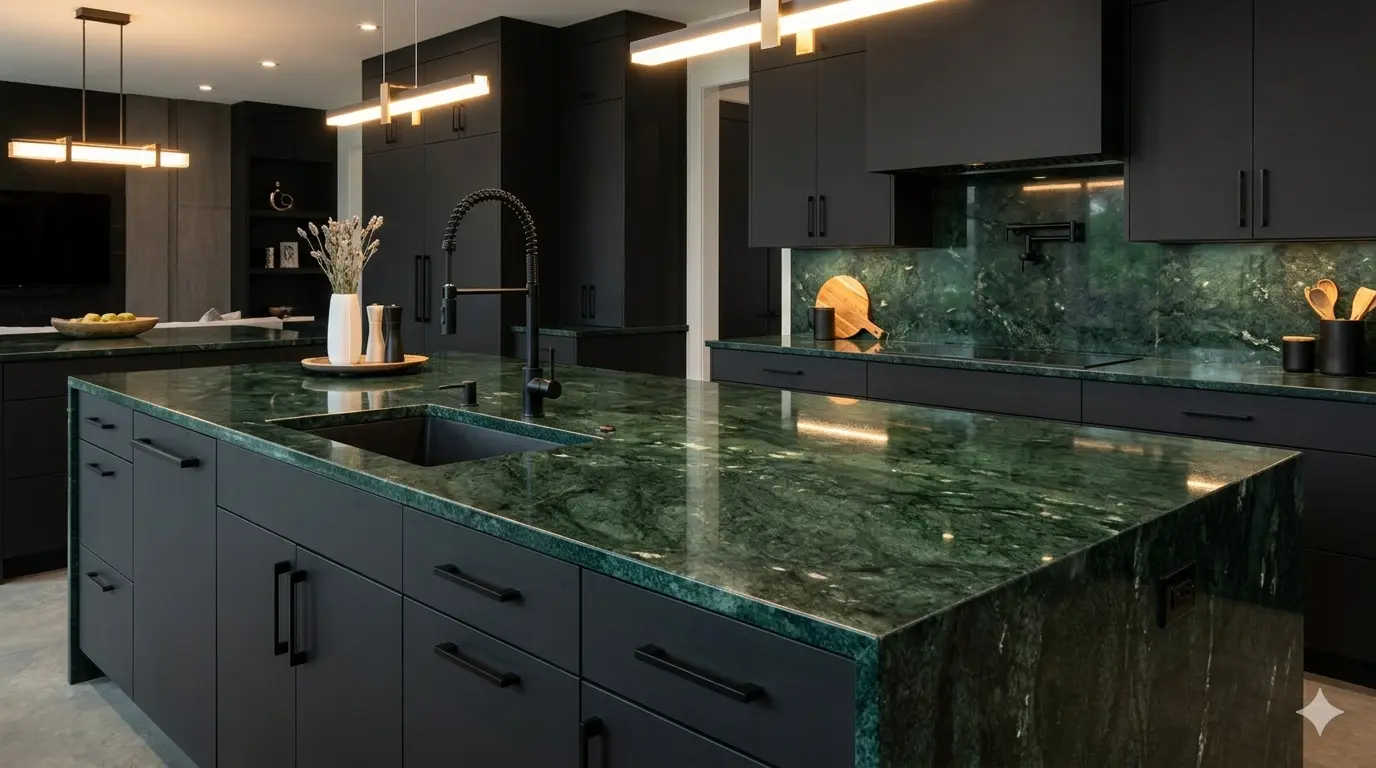
Granite ranks between 6 and 6.5 on the Mohs hardness scale. It resists scratching under normal kitchen conditions and tolerates heat reasonably well. For a kitchen island countertop that sees regular prep work, granite is a practical option. It requires sealing every one to two years to keep the surface resistant to staining from oils and liquids.
Quartzite
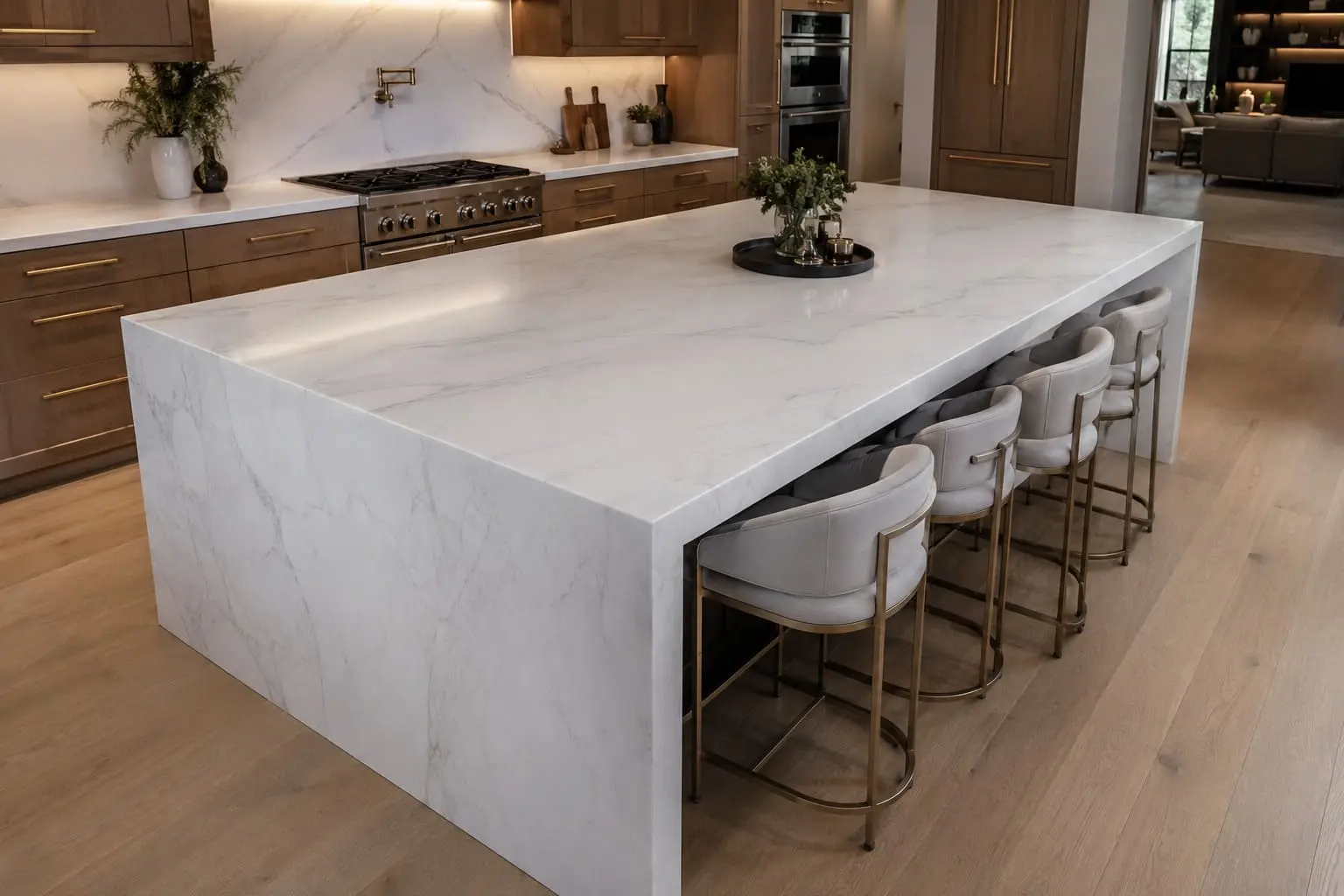
Quartzite sits between 7 and 7.5 on the Mohs scale, placing it above granite in surface hardness. It is a metamorphic rock formed from sandstone and tends toward white, cream, and gray tones with subtle linear movement. It handles daily use well and benefits from resealing every 12 to 18 months. It is less porous than marble and generally more forgiving in a working kitchen.
Shoppers should know that quartzite and softer lookalike stones are sometimes mislabeled. If hardness and acid resistance matter to you, ask to see a Mohs or acid test on any slab before purchasing.
Marble
Marble sits at around 3 to 4 on the Mohs scale. It is softer than granite and quartzite and etches on contact with acidic substances such as citrus juice, vinegar, and some cleaning products. Sealing every six to twelve months helps with staining but does not prevent etching.
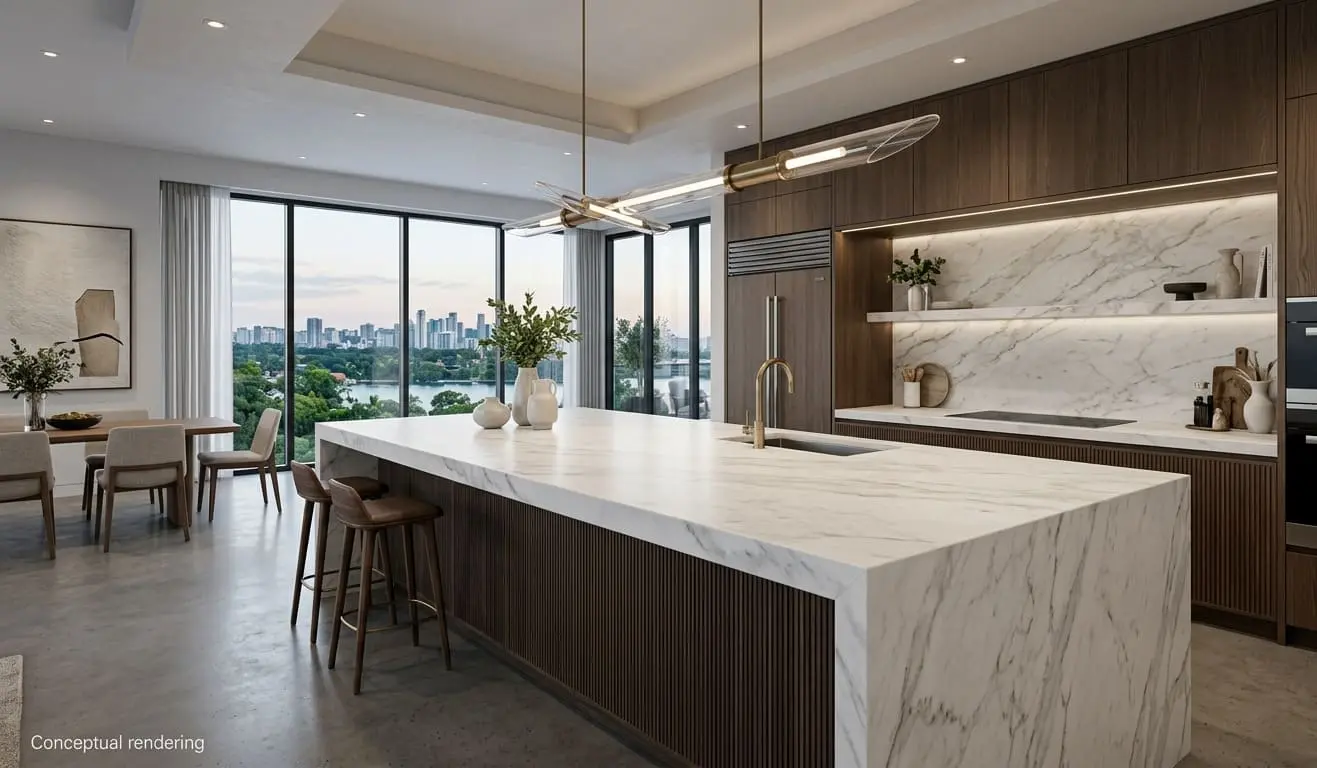
Marble is a widely used material for kitchen island countertops in kitchens where the surface is used more for serving or baking than heavy prep. Bakers favor it because the stone stays cool and dough does not stick. If color is part of your selection process, our blue kitchen island guide covers stone options by tone and finish.
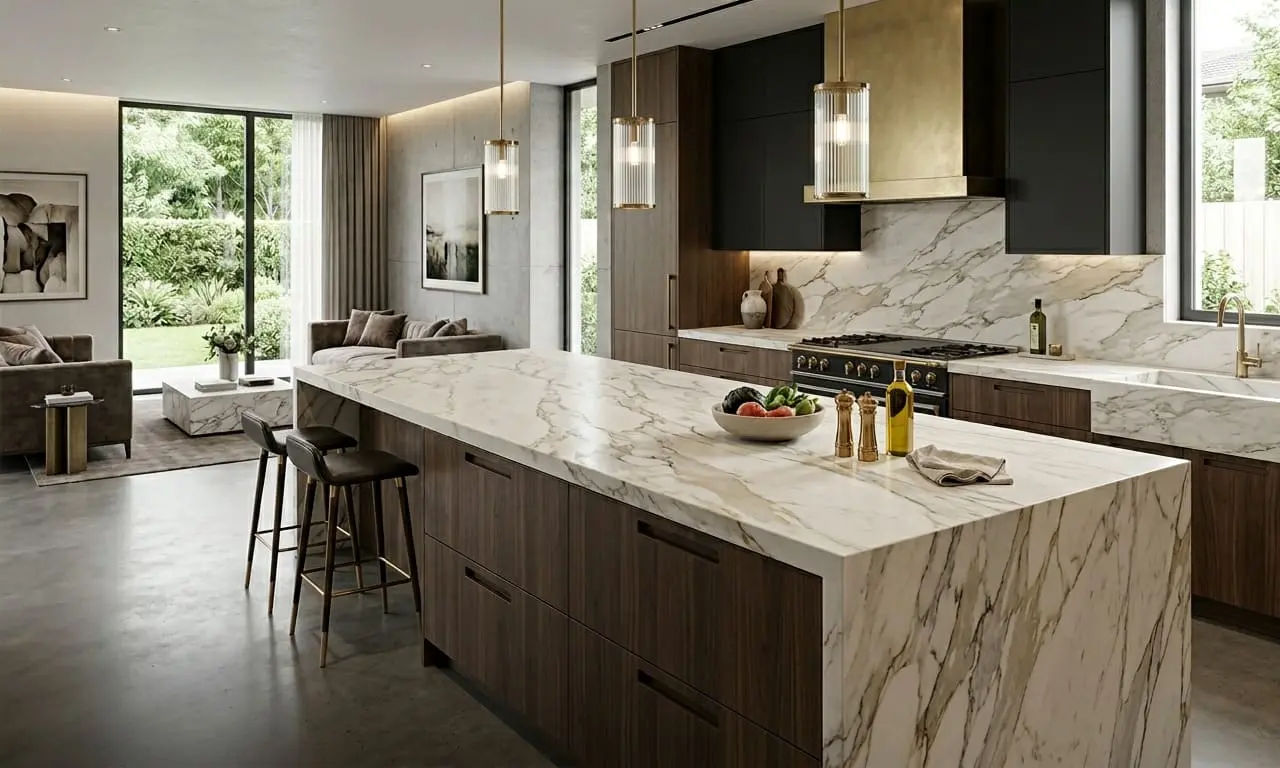
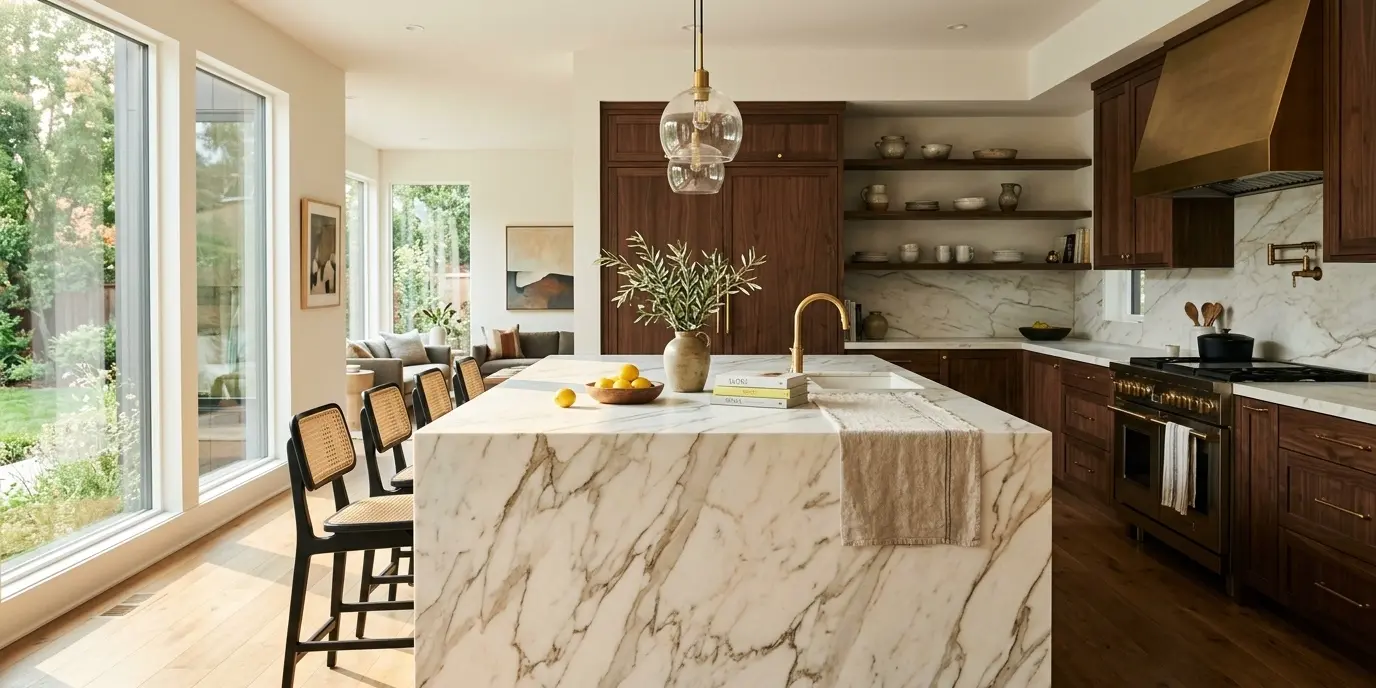 Conceptual rendering
Slab Thickness and Edge Profiles
Slabs for kitchen island countertops are most commonly fabricated from either 2 centimeter or 3 centimeter slabs. The 3 cm thickness is the current residential standard because it provides sufficient mass without additional substrate at the edges. A 2 cm slab typically needs plywood underlayment to achieve the same visual weight.
Edge profiles range from a straight cut to options like eased, beveled, ogee, or waterfall. The waterfall edge, where the slab continues vertically down the side of the island to the floor, is a common choice in contemporary kitchen designs.
Frequently Asked Questions
Granite and quartzite are two practical choices for regular prep work. Both rank high on the Mohs hardness scale, granite at 6 to 6.5 and quartzite at 7 to 7.5, and both can be sealed to resist staining. Marble is softer and etches when exposed to acidic substances, but is a frequently selected material for islands used primarily for serving or baking.
Sealing frequency depends on the stone type. Marble typically needs resealing every 6 to 12 months. Granite benefits from sealing every one to two years. Quartzite generally requires resealing every 12 to 18 months. A water bead test, where you pour a small amount of water on the surface and check whether it beads or absorbs, can help you gauge when a reseal is due.
The current residential standard is 3 centimeters. This thickness provides enough mass to sit directly on the cabinet base without additional substrate. A 2 centimeter slab typically requires plywood underlayment, though it can be built up at the edge to match the visual profile of a 3 cm slab.
Natural stone countertops are a widely recognized upgrade in residential real estate. Granite, quartzite, and marble appear frequently in buyer-facing marketing and tend to be viewed favorably during appraisals. The extent to which they affect resale value depends on the local market, overall kitchen condition, and materials used elsewhere in the home.
Yes. Nova Tile and Stone displays slabs at all four Home Design Center locations in Reno, Sacramento, Minden, and Fernley. Slabs are displayed upright so you can view the full face of each stone. Our team offers free design consultations at all locations. No appointment is required, though you can also book one in advance through our website.