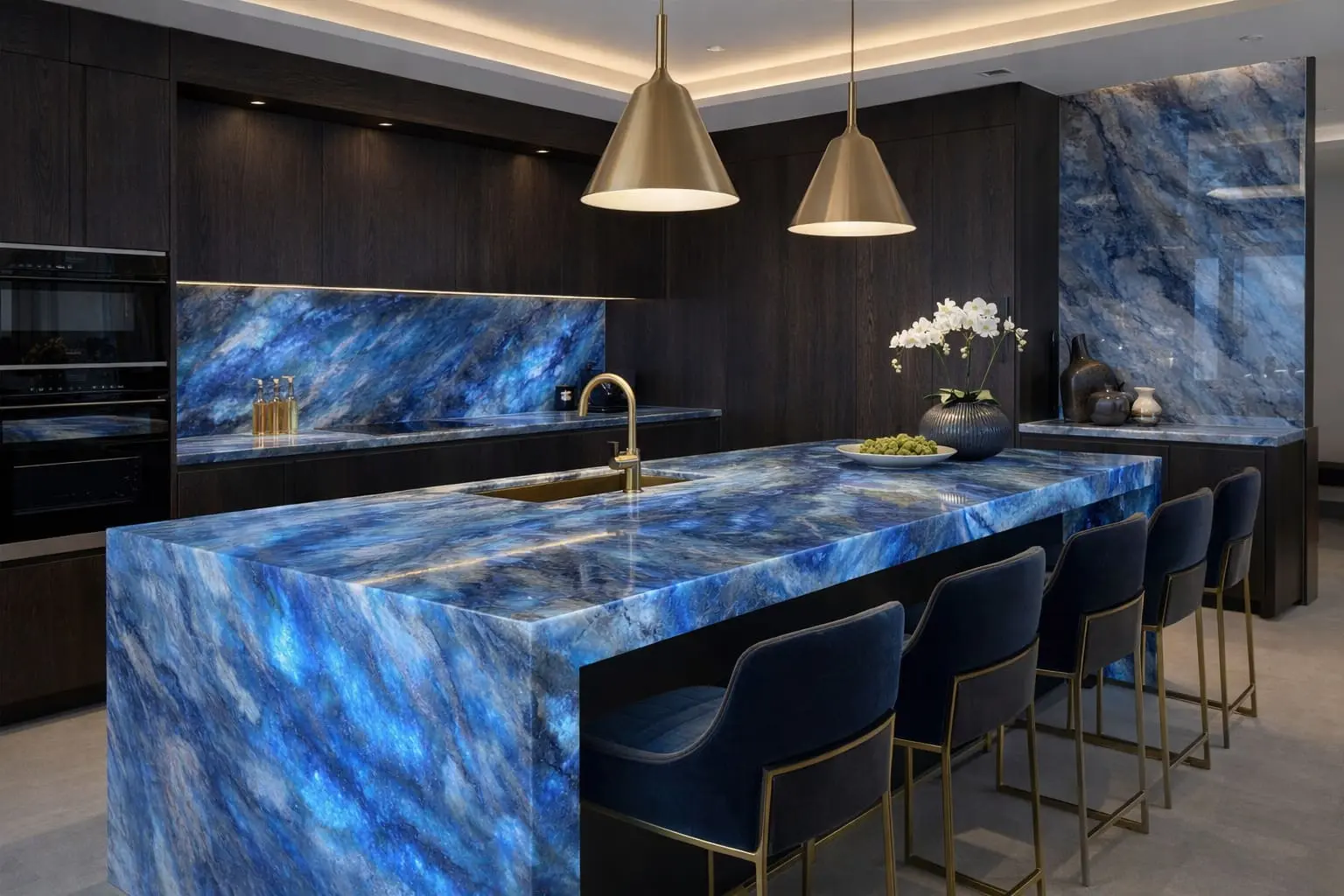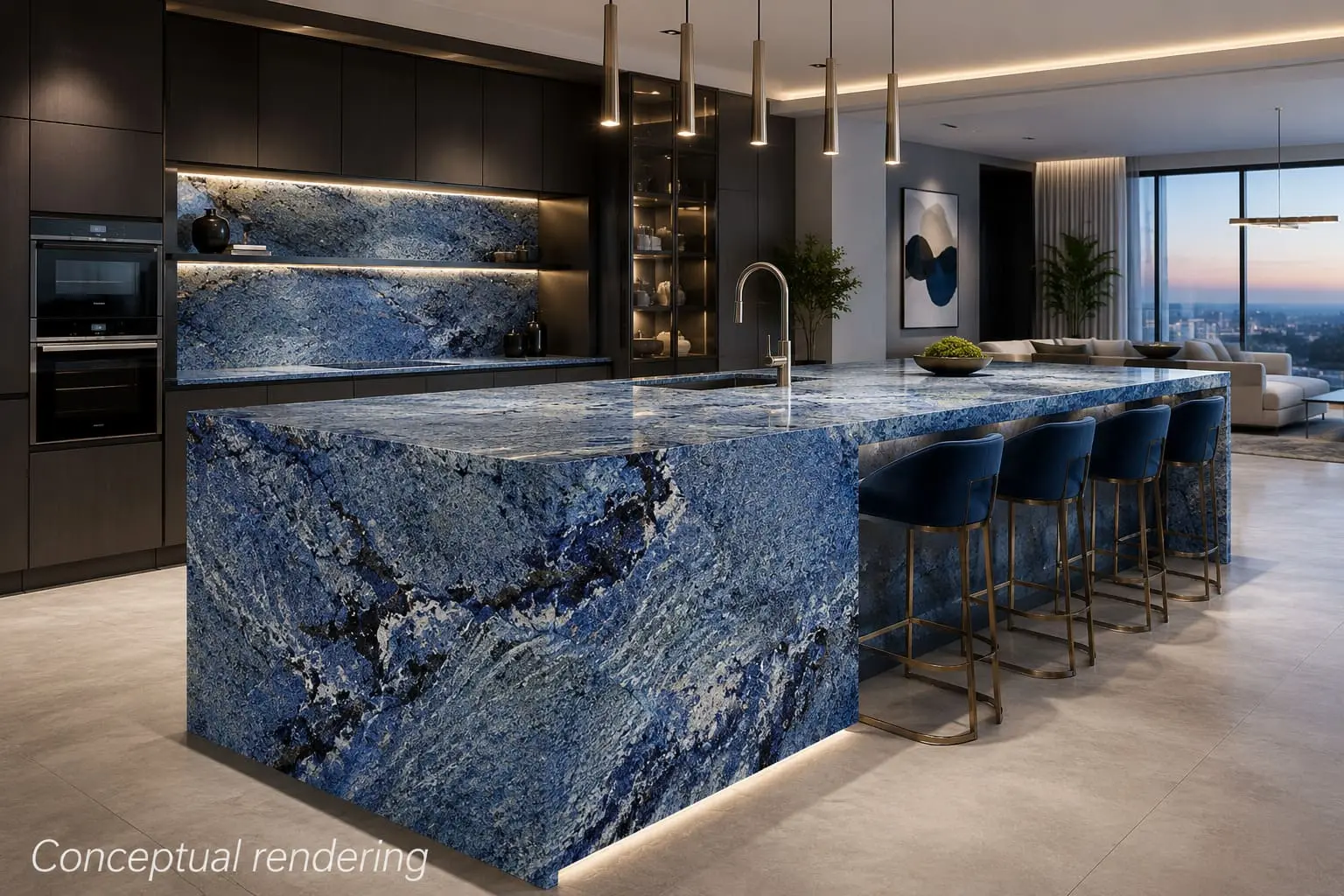
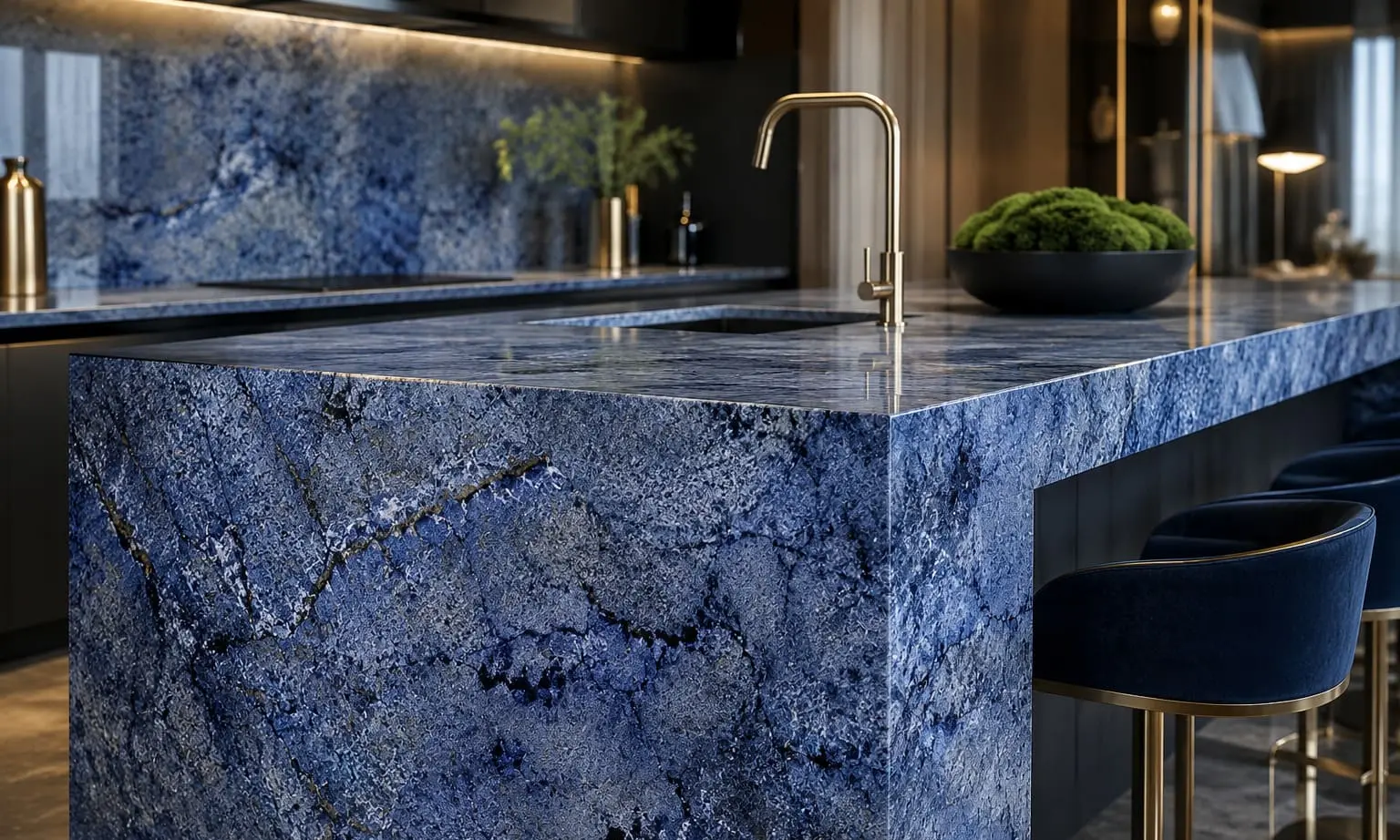
Performance Specifications: Natural vs. Engineered Blue Stone
Hardness and Scratch Resistance
Quartzite ranks between 7 and 8 on the Mohs hardness scale, placing it among the more scratch-resistant natural stone options for kitchen use. Dolomite sits at 3.5 to 4, slightly harder than marble but softer than granite. Engineered quartz rates approximately 6.5 to 7 with minimal slab-to-slab variation.
Heat Tolerance
Natural stone handles heat better than engineered stone. Quartzite and dolomite tolerate brief exposure to warm cookware, though trivets are recommended for both. Engineered quartz has a defined limit: its resin binders begin to degrade at approximately 150°F (65°C), with discoloration or warping possible above 300°F (150°C).
Porosity and Stain Resistance
Natural stone, including dolomite, quartzite, and marble, is porous and requires sealing at installation. Without a proper seal, cooking oils, wine, and acidic liquids can stain the surface. Engineered blue quartz is non-porous by design, requiring no sealing and offering strong resistance to the same substances.
Available Finishes
• Polished: High-gloss; intensifies blue tones and veining; available in both material types.
• Honed: Matte; better at concealing light scratches and etching; common in both.
• Leathered: Textured; resists fingerprints and water spots; more widely available in natural stone.
• Specialty: Brushed and antiqued options; primarily in natural stone collections.
Care and Maintenance: Keeping Your Blue Slab in Peak Condition
Natural stone and engineered quartz each have distinct care requirements. Following the right routine helps protect the surface long term.
Natural Stone Blue Slabs
Clean daily with a soft cloth and pH-neutral stone cleaner. Avoid acidic products such as vinegar and citrus-based sprays, which can etch polished and honed finishes. Blot spills promptly. Dolomite typically needs resealing every 6 to 12 months; quartzite holds its seal for 1 to 3 years. Use the water bead test to check: if drops absorb into the surface rather than beading up, resealing is likely due.
Engineered Blue Quartz
Engineered quartz requires no sealing. Clean with mild soap and warm water or a non-abrasive cleaner. Avoid abrasive pads and harsh chemicals, which can dull the finish over time. Use trivets consistently and wipe up concentrated pigments such as turmeric promptly, as prolonged contact can cause discoloration.
Shared Best Practices
For both material types, use cutting boards for knife work and wipe up standing water near edges and joints.