Skip to Content

Ivory Travertine

Natural Stone for Every Space


Ivory travertine is a sedimentary limestone known for its warm cream, ivory, and light gold tones, formed through the rapid precipitation of calcium carbonate from mineral-rich spring and geothermal waters. It is widely used in travertine flooring, wall cladding, countertops, and outdoor spaces, and is available in polished, honed, leathered, and specialty finishes. Because it is a porous stone, sealing is recommended before installation and periodically thereafter to help protect against moisture and staining. 

  At Nova Tile and Stone, each Ivory travertine slab we carry is sourced from established quarries and individually inspected for tone consistency and structural integrity before it reaches our clients.

Shop Our In-Stock Slab Collection

What Is Ivory Travertine? Understanding the Stone

Ivory travertine is defined by its characteristic porous surface texture. The rapid precipitation of calcium carbonate, combined with trapped carbon dioxide gas and organic matter, is what typically produces the stone's natural voids and subtle banding, giving each slab natural variation that tends to make individual pieces visually distinct from one another.

The stone is generally softer than granite and sits in a similar hardness range to marble, though it tends to be more porous and typically benefits from more diligent sealing to achieve comparable stain resistance. Its strength and density can vary depending on quarry origin and cut direction, which is why selecting the right grade and finish for the intended application is important.

Request a Slab Quote

Finish Options for Natural Travertine


The finish applied to this natural stone significantly influences its appearance, performance, and suitability for a given application. Polished travertine is buffed to a high sheen that can enhance color depth and natural veining, making it a popular choice for feature walls and low-traffic interior flooring. Honed travertine yields a smooth, matte surface and is among the most widely specified options for natural stone flooring and walls, generally offering a clean look with better slip resistance than polished stone. 

A leathered finish introduces a gentle texture through a brushing process that gives the surface a tactile, low-sheen quality that can help reduce the visibility of fingerprints and water marks. Sealing remains recommended across all finish types, as travertine is known to remain porous regardless of surface treatment. 

Specialty finishes, including tumbled, sandblasted, and acid-washed treatments, tend to produce more pronounced textural and aged effects suited to rustic, Mediterranean, or exterior applications.

Versatile Applications and Design Uses for Natural Stone


Travertine slab is well-suited across a wide spectrum of interior design styles, from classical European to contemporary minimalist, and has been used effectively in both residential and commercial settings.

For projects that call for a cooler, more neutral palette, gray travertine stone is a related option worth exploring alongside the ivory variation.

For travertine flooring, the stone's warm tones can complement large open spaces and pair well with hardwood, metal, and soft furnishings. Honed finishes are generally recommended for high-traffic areas where durability and cleanability are priorities. For wall cladding and feature walls, slabs cut to emphasize natural veining can produce continuous patterns that serve as a strong visual element, and the stone is frequently specified for lobby walls, fireplace surrounds, and exterior façades.

For travertine countertops and vanity tops, the polished or leathered finish can provide an elegant working surface, though consistent sealing is recommended to help guard against etching from acidic substances. In wet interior areas such as shower walls and bathroom floors, a honed or leathered finish with thorough sealing is recommended to help protect the stone over time.

For outdoor use including pool surrounds, terraces, and exterior paving, specialty finishes are generally recommended to support adequate grip and weather resistance, and the stone's relatively low thermal conductivity can make it a practical choice around pools in warm climates.

Care and Performance Characteristics


Ivory travertine slabs are available in a range of thicknesses to suit flooring, wall cladding, and countertop use. Because the stone is porous by nature, a penetrating stone sealer should be applied prior to grouting and reapplied at regular intervals to help maintain its appearance and resistance to moisture. Flooring typically benefits from periodic resealing, while countertops and wet areas such as showers may benefit from more frequent attention. 

The finish chosen also influences how the stone performs underfoot, with honed and specialty finishes generally offering better grip than polished surfaces. With the appropriate finish and a consistent care routine, this natural stone is known for its durability and has the potential to retain its appearance for many years.
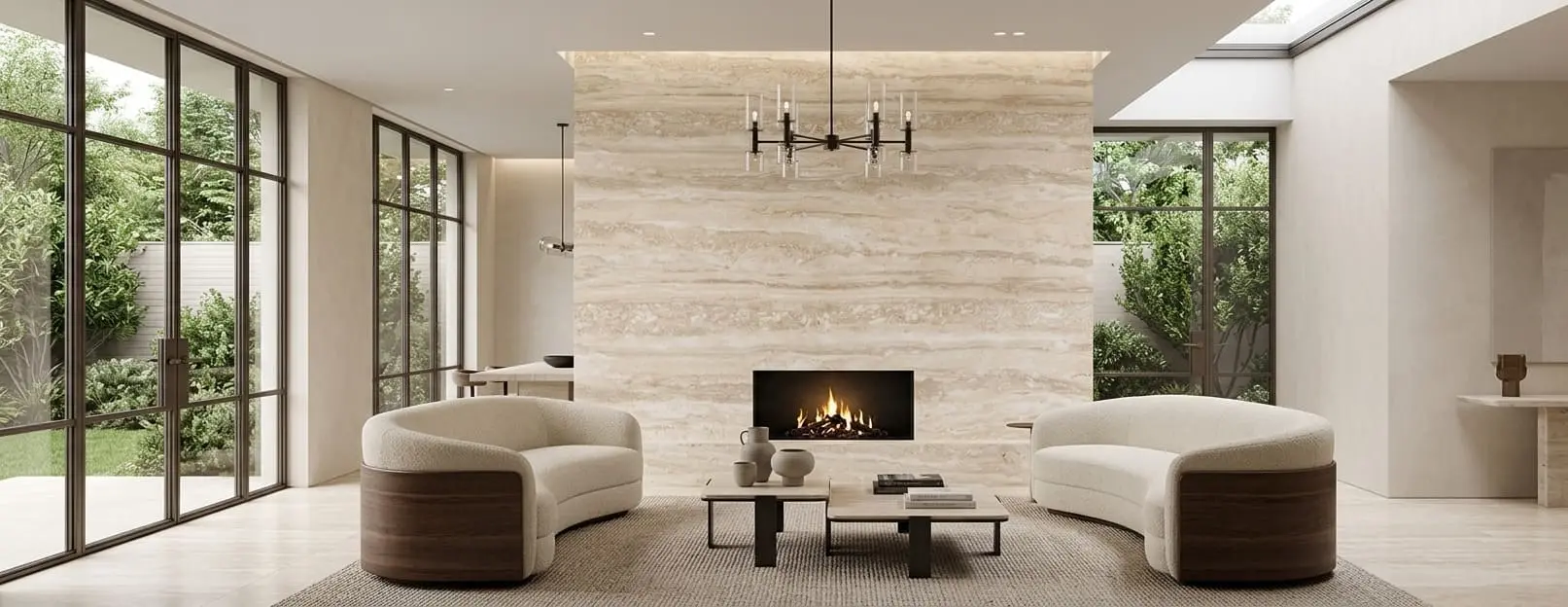
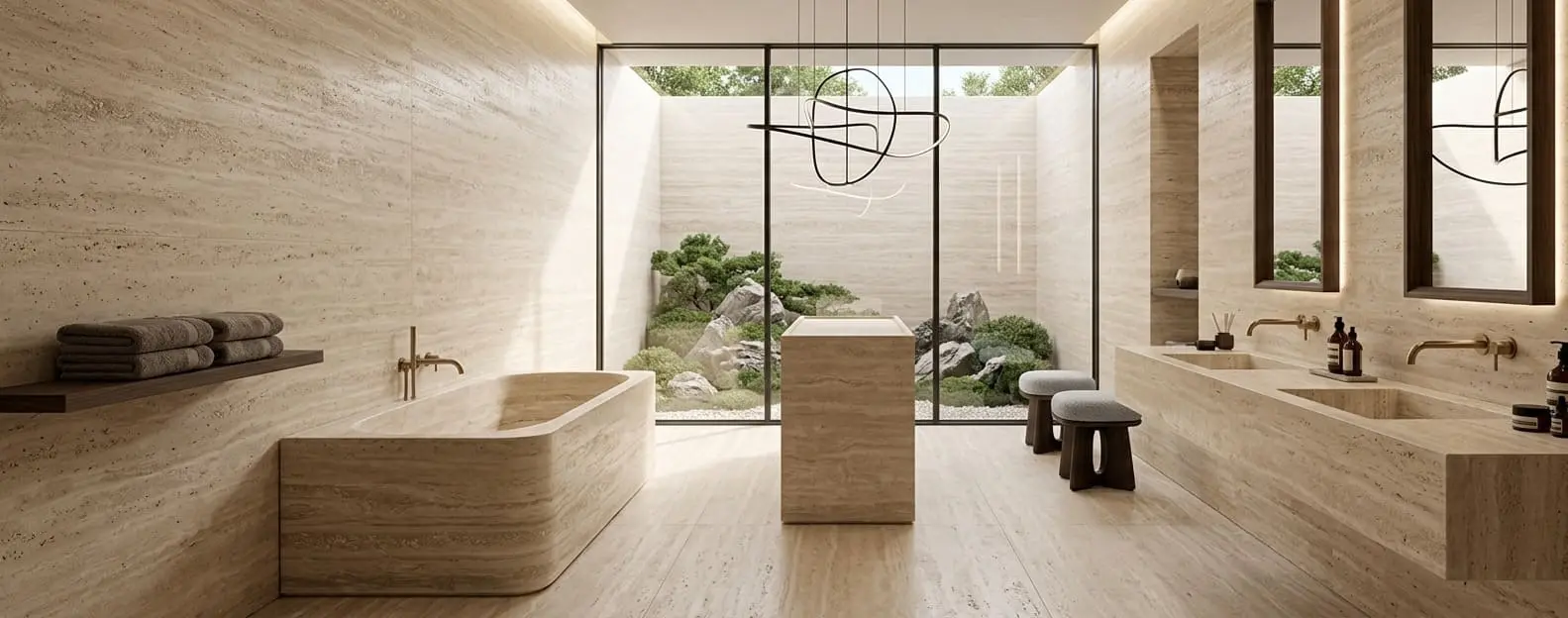
Living room with a feature wall and floor in polished ivory travertine

Transform Your Space with Travertine Slabs

Ivory travertine is widely regarded for its ability to bring warmth, texture, and organic variation to interiors and exteriors in a way that is difficult to achieve with manufactured materials. Whether the project is a luxury residential bathroom, a hotel lobby, a kitchen renovation, or an outdoor living area, our travertine slabs are well-suited to a broad range of applications. 

At Nova Tile and Stone, our team works closely with architects, interior designers, contractors, and homeowners to help identify the right slab, finish, and format for each project.

Visit our showroom to view our current selection, or contact us today to speak with our team about your project requirements.

Nova Tile and Stone Product Range

Frequently Asked Questions

Filled travertine has its natural voids packed with grout or resin to create a smoother, more uniform surface, which is a common approach for flooring and wall applications where hygiene and cleanability are priorities. Unfilled travertine retains its open pores for a more raw, textural appearance and is typically reserved for decorative or exterior applications. Unfilled surfaces generally benefit from more rigorous sealing and may be more prone to trapping moisture and debris over time.

Sealing is recommended to help protect the stone from moisture, staining, and etching caused by acidic substances. General interior floors typically benefit from periodic resealing, while countertops and high-moisture areas such as showers may benefit from more frequent attention. Using pH-neutral cleaning products between applications can help preserve the sealant and the finish beneath it.

The stone is well-suited for outdoor use and has a long history in exterior applications including paving, pool surrounds, and building façades. A specialty finish such as a tumbled or sandblasted treatment is recommended to support adequate slip resistance. In cold climates with frequent freeze-thaw cycles, filled travertine rated for freeze-thaw conditions is advisable, as open voids can trap water that expands when frozen and may contribute to surface spalling over time.

Both stones share a similar composition and hardness range, though travertine is generally more porous than marble and may benefit from more frequent sealing to achieve comparable stain resistance. Aesthetically, travertine tends to offer a warmer, more textural appearance through its characteristic voids and banding, while marble tends to present a denser structure with veining that is often more sharply defined. The choice between the two generally comes down to design intent, application, and maintenance commitment.

pH-neutral stone cleaners are recommended for routine care. Acidic substances such as vinegar, lemon juice, and citrus-based or general household cleaners can react with the stone's surface, potentially etching it and dulling the finish over time. Abrasive scrubbing pads are also best avoided on any finish. Routine cleaning with warm water and a pH-neutral stone soap applied with a soft mop or cloth is generally sufficient, and spills should be blotted rather than wiped to help reduce the risk of staining.