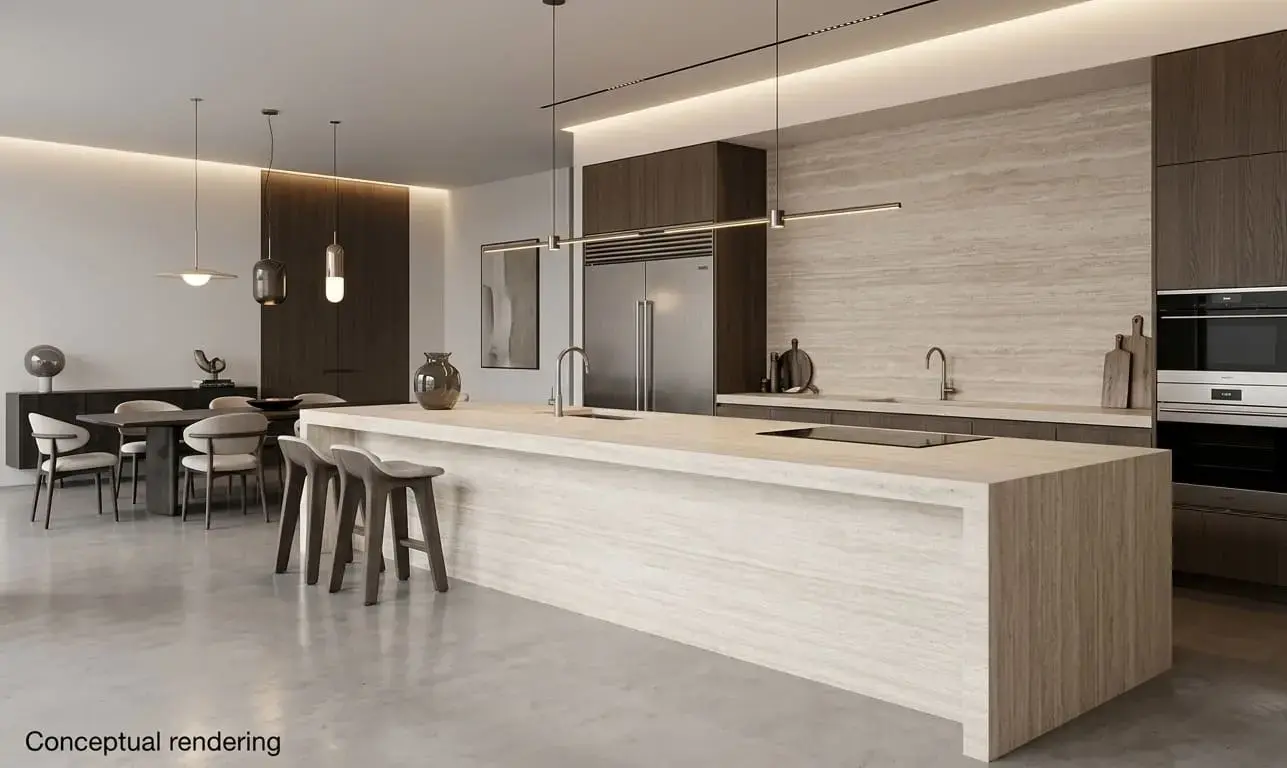
Natural and Engineered Stone for Countertops
An ivory slab is a large-format stone surface in warm white to creamy beige tones, available in natural stone (quartzite, marble, travertine, or onyx) and in engineered quartz composite form. Ivory slabs are among the most widely specified surface types for kitchen countertops, and bathroom vanities.
The word "ivory" in stone refers to color, not material: the warm, off-white tone shared across several stone families, both natural and engineered. That range makes the ivory slab one of interior design's more adaptable stone surface categories, as it tends to integrate well with both warm and cool palettes in contemporary and classical settings alike.
Each natural ivory stone type has distinct physical properties that influence where it performs best. Quartzite rates Mohs 7 and is known for strong resistance to acid etching. Marble, rated 3 to 4 on the Mohs scale, is calcite-based and susceptible to etching, though its fine veining makes it a preferred choice for bathroom vanities and decorative surfaces. Travertine is also calcite-based, known for a warm, pitted texture. Onyx, also rated 3 to 4, is among the few natural stones with light transmittance, making it well suited to backlit installations.
Engineered ivory slabs are manufactured from 90 to 94% ground natural quartz bound with polymer resins, producing a non-porous surface that resists most household stains and generally does not require periodic sealing.
Where Ivory Slabs Are Commonly Used as Countertops
The ivory slab is available in both natural and engineered forms and in four distinct finishes (polished, honed, leathered, and specialty), allowing it to be matched to the specific performance demands of each interior application.
Kitchen countertops and stone surfaces
Kitchen countertops are among the most common applications for an ivory slab. Quartzite is widely regarded as one of the stronger natural options; its Mohs 7 hardness and acid resistance mean it can handle daily cooking with a relatively low risk of surface damage. Engineered quartz offers comparable stain resistance with a non-porous construction. Marble is prone to etching from acidic substances and tends to suit households where consistent daily maintenance is a habit.
Bathroom vanities and shower walls
Marble and quartzite in polished or honed finishes are well suited to bathroom vanities and shower walls. A full-slab installation removes grout lines, contributing to a seamless surface that is easier to maintain in wet areas.
Engineered quartz is also widely specified for bathrooms, offering a consistent appearance and non-porous surface.
Ivory Slab Performance Specs: Natural vs. Engineered Stone
Quartzite is made up predominantly of fused silica grains, contributing to Mohs 7 hardness and strong resistance to acid etching, a property not shared by the calcite-based stones. It benefits from sealing and is typically recommended for resealing every one to two years.
Marble, travertine, and onyx share a calcite composition and Mohs hardness of 3 to 4. Acids such as lemon juice, vinegar, and wine can etch these surfaces, leaving marks that are difficult to address through cleaning alone. All three are typically recommended for resealing every six to twelve months. Onyx is the most delicate of the group, being translucent and scratch-prone, and is generally better suited to vertical, backlit, or low-contact surfaces.
Engineered ivory slabs contain 6 to 10% polymer resins, which introduce two limitations: resins can begin to soften at approximately 150°C (300°F), and sustained UV exposure can cause yellowing over time, making engineered quartz unsuitable for outdoor use.
A polished finish produces a high-gloss surface that amplifies color depth and veining. A honed finish results in a smooth, matte surface; honed natural stone is more porous than polished and requires more frequent sealing. A leathered finish, applied with diamond-tipped brushes, produces subtle texture and a low sheen. Specialty finishes, including brushed and sandblasted treatments, produce more pronounced texture for feature walls and cladding.
Engineered Quartz
Mohs 7 · Non-porous · Low sealing demand
Slab Thickness
2 cm / 3 cm
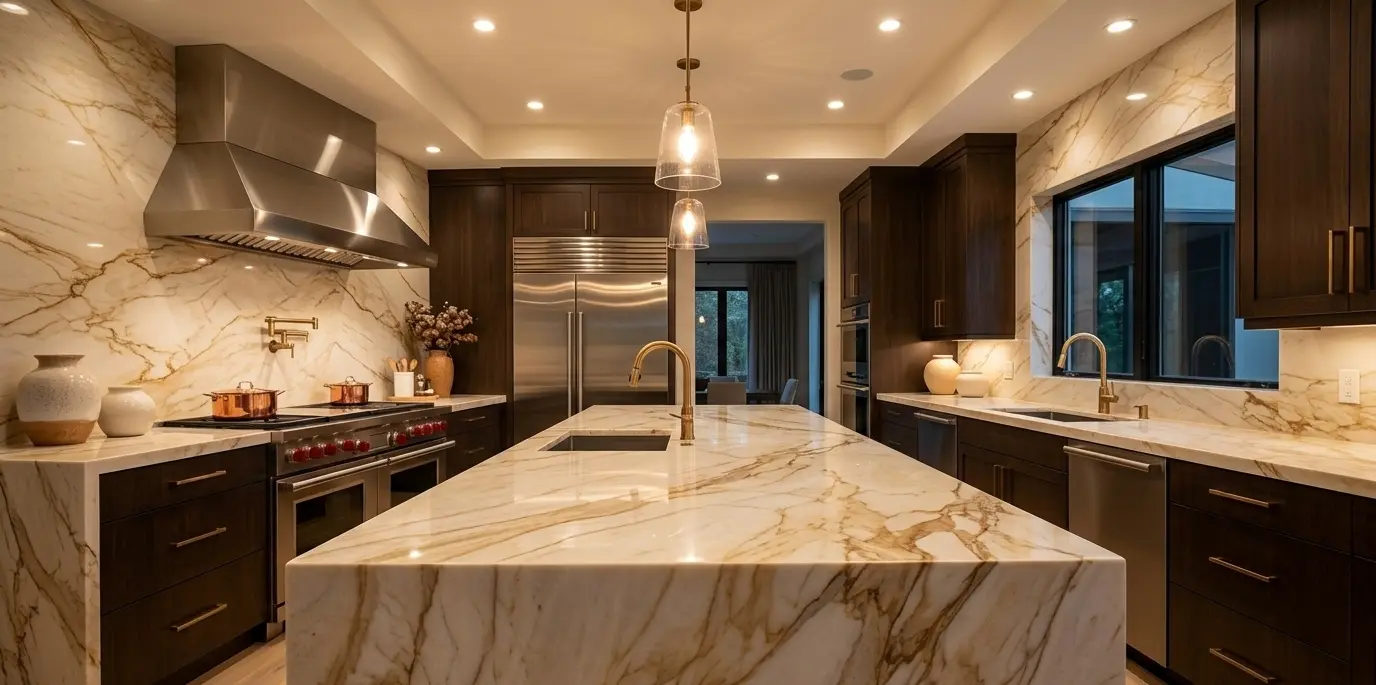
Natural Stone Hardness
Quartzite: Mohs 7
Marble, Travertine, Onyx: Mohs 3–4
Available Finishes
Polished · Honed · Leathered · Specialty
Note: Some images on this page may be conceptual renderings created to illustrate design possibilities and may not depict actual installations.
Stone Care and Maintenance for Ivory Slabs
Daily stone care for any ivory slab typically requires a soft cloth, warm water, and a pH-neutral stone cleaner. Acidic products such as vinegar, citrus-based sprays, and bleach are known to etch marble, travertine, and onyx and are best avoided. Spills on these surfaces are best wiped promptly to limit etch damage.
Quartzite is generally recommended for resealing every one to two years. Marble, travertine, and onyx, all with higher porosity and acid sensitivity, are typically recommended for resealing every six to twelve months. Honed surfaces are more porous than polished ones and benefit from resealing at the shorter end of their recommended interval. Engineered quartz does not require periodic sealing.
Using trivets under hot cookware is advisable regardless of material, as quartz resins can begin to degrade at around 150°C (300°F) and natural stones can chip under sudden heavy impact. For leathered and specialty finishes, abrasive scrubbing pads are best avoided to preserve surface texture.
Refined Tips & Inspirations
Frequently Asked Questions
An ivory slab can be a natural stone (quartzite, marble, travertine, or onyx) or an engineered quartz composite. The term "ivory" describes the color: a warm white to creamy beige tone shared across these material families, each with distinct hardness, porosity, and application suitability.
Quartzite and engineered quartz are generally strong choices for kitchen countertops. Quartzite offers Mohs 7 hardness and acid resistance, with resealing typically recommended every one to two years. Engineered quartz requires no sealing. Marble suits kitchens where careful daily maintenance is a consistent habit.
At Nova Tile and Stone, ivory slabs are available in polished, honed, leathered, and specialty finishes. Polished is high-gloss; honed is smooth and matte; leathered is textured with a low sheen; and specialty finishes include brushed and sandblasted options for more pronounced surface texture.
Natural stone types generally require periodic sealing; engineered quartz typically does not. Quartzite is recommended for resealing every one to two years. Marble, travertine, and onyx are each recommended for resealing every six to twelve months using a penetrating impregnating sealer.
Use a soft cloth and pH-neutral stone cleaner with warm water. Avoid vinegar, citrus-based products, and bleach on marble, travertine, and onyx, as these calcite-based stones etch on acid contact. Wipe spills promptly on all three stone types.