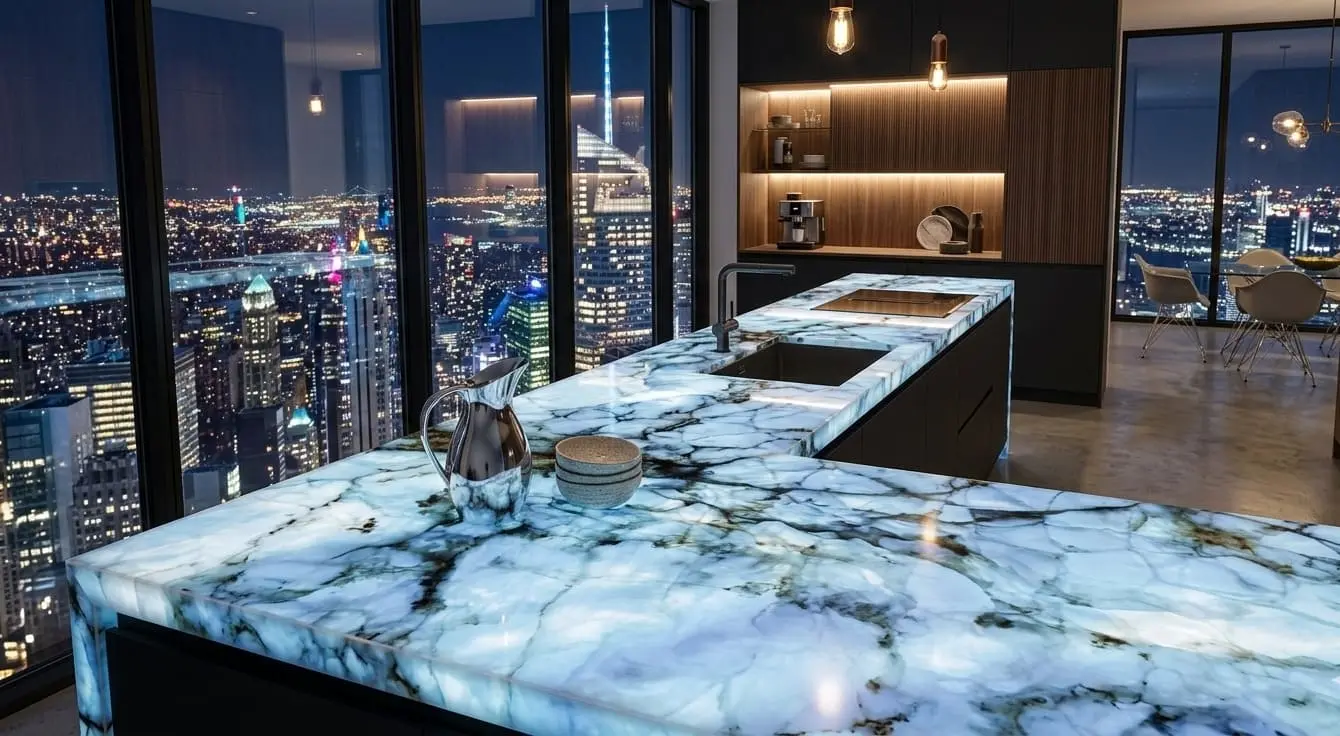
What Is a Blue Slab for Countertop?
Blue slab for countertop use refers to any large-format stone surface in blue or blue-grey tones installed as a kitchen counter, bathroom vanity, or bar top. These slabs are available in both natural stone varieties, including blue dolomite, blue quartzite, and blue marble, and engineered options such as blue quartz, each offering distinct performance characteristics, finish options, and maintenance requirements.
Blue slabs used for countertops are valued for their visual depth and the way cool tones contrast with warm cabinetry and metallic fixtures, but the right choice depends on more than appearance. The material type significantly influences durability, acid resistance, sealing frequency, and day-to-day care. Natural stone varieties vary in hardness and porosity, while engineered blue quartz offers a uniform, low-maintenance alternative.
Blue-toned stone has grown steadily in popularity as homeowners move toward surfaces with stronger visual presence. At Nova Tile and Stone, we carry a wide selection of blue slab options and guide clients through material selection, and finish choice. Use this page to compare applications, specifications, and care requirements before making your decision.
Applications: Where This Material Shines
A blue slab for countertop use is far more versatile than many people initially expect, working equally well in kitchens, bathrooms, bar tops, and utility spaces across a range of interior styles.
Bathroom Vanity
Bathroom vanity tops are another ideal application for blue slabs. Blue marble can add a spa-like sophistication to master bathrooms, while blue dolomite in a honed finish provides a softer, matte aesthetic suited to contemporary minimalist designs.
Utility Spaces
Blue slabs for countertops are also appearing in utility spaces such as laundry rooms, mudrooms, and home offices, where a hard-wearing surface with visual character adds both function and design continuity.
Kitchen
The kitchen is the most popular setting for blue slab countertops. Blue quartzite and blue quartz bring a striking contrast to white cabinetry, warm wood tones, and brushed metal fixtures. Natural stone options such as blue dolomite are especially favored in kitchen islands, where their large slab format can create a strong visual statement.
Bar Tops, Butler's Pantries and Entertainment Counters
Blue slabs also work well for home bar tops, butler’s pantries, and entertainment counters. Leathered blue dolomite, in particular, can add a tactile dimension while helping to conceal fingerprints more effectively than a polished finish.
Note: Some images on this page may be conceptual renderings created to illustrate design possibilities and may not depict actual installations.
Performance Specifications by Material
Each blue slab material has distinct hardness ratings, porosity levels, and maintenance needs that directly affect how it performs in daily use.
Blue Dolomite
Blue dolomite is a natural sedimentary stone composed primarily of calcium magnesium carbonate. It rates approximately 3.5 to 4 on the Mohs hardness scale, which places it between marble and quartzite in terms of scratch resistance. Nova Tile and Stone carries blue dolomite in four finishes:
• Polished: High-gloss surface that enhances color depth and veining detail; best for walls, low-traffic counters, and fireplace surrounds.
• Honed: Matte, smooth surface with reduced reflectivity; preferred for bathrooms and areas where a softer aesthetic is desired.
• Leathered: Textured, low-sheen surface that conceals surface marks and adds tactile interest; excellent for bar tops and kitchen islands.
• Specialty finishes: Unique treatments available for specific design applications.
Because dolomite is composed of carbonate minerals, it is moderately porous and sensitive to acids such as citrus juice, vinegar, and wine, which can cause etching. Sealing upon installation and periodic resealing based on usage are strongly recommended.
Blue Quartzite
Blue quartzite is a metamorphic rock formed from sandstone under intense heat and pressure. It ranks between 7 and 8 on the Mohs scale, making it among the hardest natural stone options for countertops. Because true quartzite is silica-based, it does not etch from household acids such as lemon juice or vinegar, which is a significant advantage over marble and dolomite. Sealing is still advisable for porous varieties, as some quartzites can absorb liquids and stain without adequate protection.
Blue Marble
Blue marble is a metamorphic stone with distinctive veining that gives each slab its own natural character. It rates approximately 3 to 4 on the Mohs scale and is susceptible to etching from acidic liquids, making it generally better suited to lower-traffic surfaces where spills are promptly addressed. Regular sealing can improve its resistance to staining.
Blue Quartz (Engineered Stone)
Engineered blue quartz is composed of approximately 90 to 95 percent natural quartz bound with polymer resins. It rates 7 on the Mohs scale and its non-porous surface generally removes the need for periodic sealing. Blue quartz is known for highly consistent patterning and color across slabs, an advantage when matching multiple countertop runs. However, its resin content makes it less heat-tolerant than natural stone, as the binders can soften or discolor under sustained direct heat.
Care and Maintenance for Blue Countertop Slabs
Proper maintenance can help preserve the appearance and support a longer service life for any blue slab surface. For natural stone countertops, including dolomite, quartzite, and marble, daily cleaning should use a soft cloth or sponge with warm water and a pH-neutral stone cleaner. Avoid abrasive scrubbing pads, bleach-based cleaners, and acidic sprays such as vinegar or citrus-based products, as these can etch or dull the surface.
Blue dolomite, blue quartzite, and blue marble all benefit from professional sealing upon installation. A penetrating sealer reduces liquid absorption through the stone’s pores, lowering the likelihood of staining. Dolomite and marble typically require resealing every 6 to 12 months; quartzite, being denser, generally needs resealing every 12 to 18 months.
Engineered blue quartz requires no sealing and can be cleaned with mild soap and warm water. Avoid the same acidic products used on natural stone, as they can affect the resin surface over time. Always use trivets or hot pads under cookware, as direct heat can soften or discolor the resin binders. Quartz edges can chip under sharp impacts, so avoid striking corners with heavy objects.
Newest Insights
Curated Trends & Perspectives
Frequently Asked Questions
Yes, but the right material depends on how the kitchen is used. Engineered blue quartz suits high-traffic kitchens with its easy maintenance, while blue quartzite handles daily wear and heat well. Blue dolomite and blue marble are better suited to lower-traffic areas where spills are addressed promptly.
Natural blue stone, including blue dolomite, quartzite, and marble, is quarried from the earth, so each slab tends to have its own veining and color pattern. These materials require periodic sealing and careful maintenance against staining and etching. Engineered blue quartz is manufactured for a uniform appearance with fewer maintenance demands, though it lacks the natural variation of stone.
Dolomite and marble typically need resealing every 6 to 12 months; quartzite generally extends to 12 to 18 months. Place a few drops of water on the surface periodically: if it absorbs rather than beads, it is time to reseal. Note that sealing protects against staining but does not prevent etching, which is a chemical reaction that occurs regardless of seal condition.
Polished maximizes color depth and veining detail, making it well suited for lower-traffic surfaces. Honed provides a refined matte look, popular for bathrooms and contemporary kitchens. Leathered adds texture and is among the more forgiving finishes for high-touch areas, as it tends to conceal fingerprints more effectively. Specialty finishes are also available for specific design applications.
Nova Tile and Stone carries blue slab options for both indoor and outdoor use. Outdoor suitability depends on the stone's porosity, density, and local climate conditions, so consulting our team before any outdoor installation is recommended to ensure the right material is selected for the intended environment.