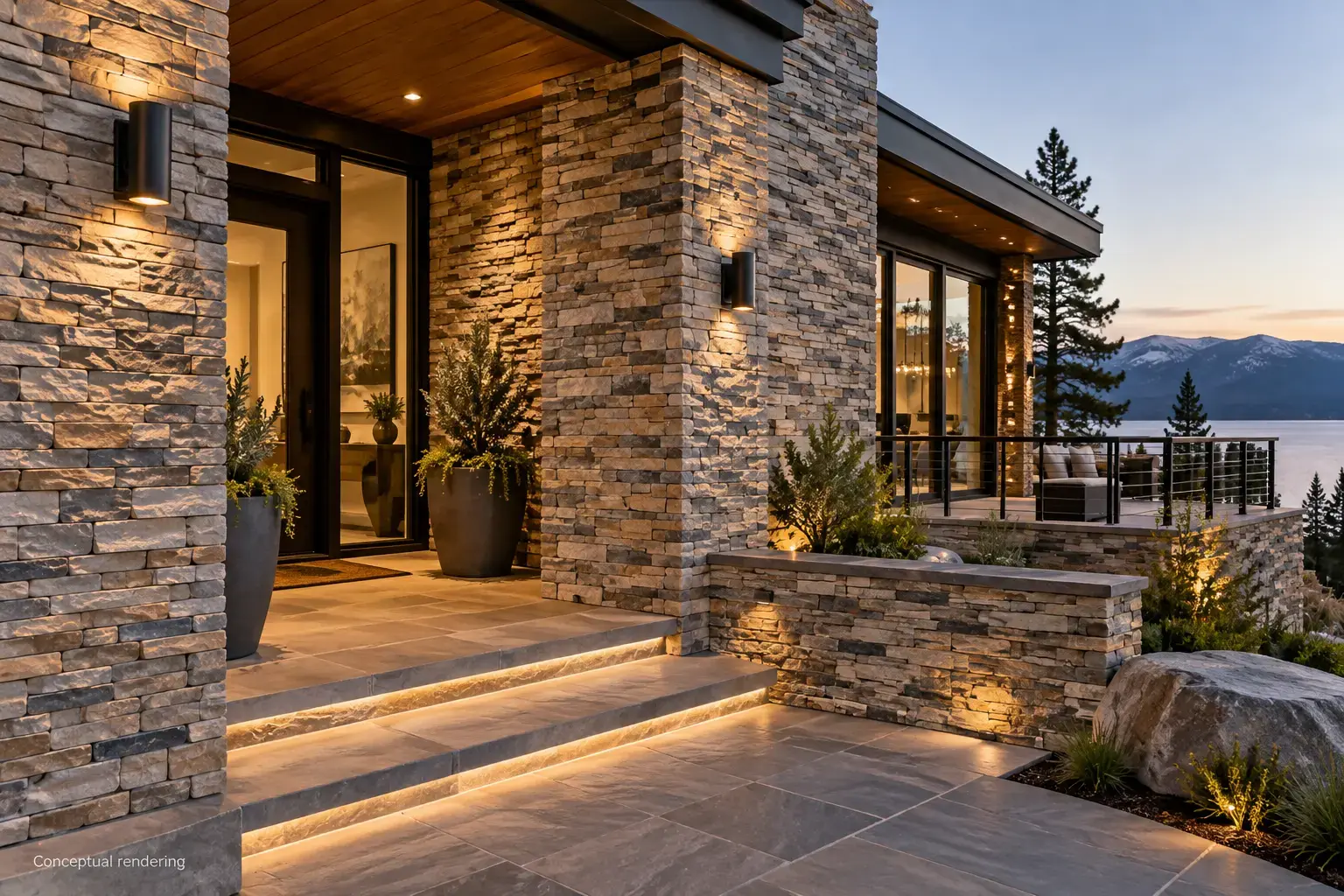
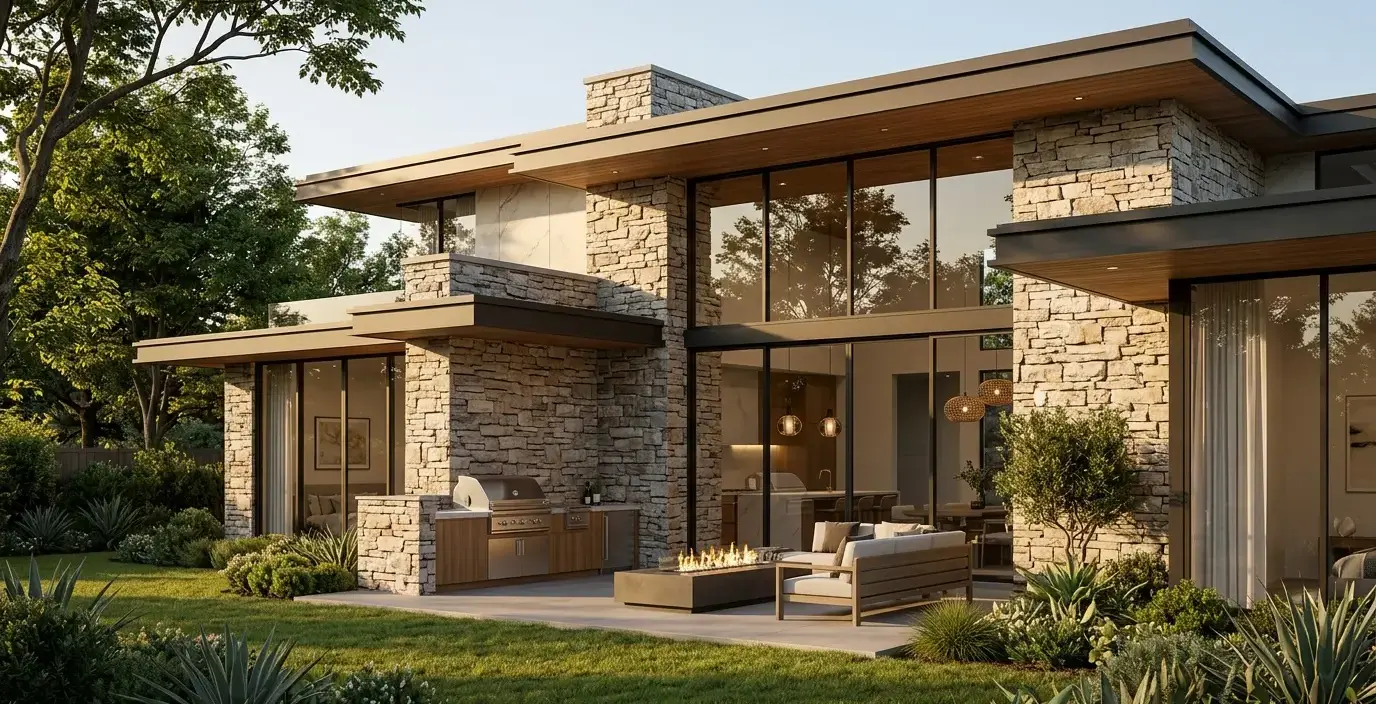
A stone facade exterior is an exterior wall surface clad in natural or engineered stone that can add texture, visual weight, and weather resistance to a home. According to the ASTM C1528 standard guide, the intended application should be weighed alongside aesthetic appeal during material selection. In freezing climates, water absorption is an important part of that evaluation. Water expands by about 9 percent as it freezes, and repeated freeze-thaw cycles can crack or spall porous, water-saturated material.
Selecting Materials for a Stone Facade Exterior
Results from the ASTM C97 absorption test provide a common basis for comparing materials, and the ASTM specifications and test methods that apply to dimension stone set separate requirements for granite, quartzite, travertine, and other natural types. Climate matters as well, since heavy snow and frequent rain can expose exterior walls to more moisture, and regular freeze-thaw cycles can add stress to porous materials.
Four materials in the Nova Tile and Stone offerings are rated for outdoor use on a stone facade exterior:
Granite:
A natural material known for its density, rated for UV exposure, and available in polished, leathered, and specialty finishes.
Quartzite:
A natural material also rated for UV exposure, offered in polished, honed, leathered, and specialty finishes.
Travertine:
A natural material that has a more porous structure and typically benefits from sealing and careful drainage in freeze-thaw conditions.
Porcelain:
An engineered material that the ANSI A137.1 standard defines as having water absorption of 0.5 percent or less, with many designs that replicate natural surfaces.
Marble is not listed for outdoor use in that lineup. Many quartzites have natural veining, which makes quartzite an option to consider for a veined look outside. Weight and anchoring needs also differ between materials and wall types, so it helps to review them with your architect, engineer, or contractor early in planning. Comparing available materials in person can also help with evaluating color, finish, and surface variation before making a selection, so shop local when narrowing down options for the facade.
Planning Stone Veneer Coverage
A stone facade exterior typically follows one of three coverage approaches:
- Full coverage: Every wall is clad, which can give the home a more solid, uniform look.
- Wainscot: Only the lower portion of the walls is clad, with siding or stucco above.
- Accent areas: Cladding is limited to the entry, chimney, or column bases to help create focal points.
For examples of each approach, see this guide to facade, entrance, and column applications.
With partial coverage on a stone facade exterior, ending the veneer at an inside corner, or wrapping it around an outside corner, helps keep its thin edge out of view so it reads more like solid masonry. A cap or trim piece can give the top edge a finished line.
• Ashlar: Squared, cut units laid either in level courses or in a random arrangement, typically with thin mortar joints. The pattern tends to read as clean and formal.
• Rubble: Irregular, minimally shaped pieces, usually with wider joints. The pattern generally has a more natural, rustic appearance.
• Ledgestone: Long, narrow strips stacked horizontally, often dry-stacked with little or no visible mortar. The pattern can suit both contemporary and rustic designs.
Surface finish also affects texture. Honed surfaces are generally smooth and matte, leathered surfaces are typically textured with a low sheen, and polished surfaces are glossy.
Once the pattern and finish are set, the cladding becomes a fixed element, so choosing it before paint can make the rest of the palette easier to build. Designers often pull exterior paint colors from undertones already present in the home's natural materials, which can help painted siding and trim coordinate with a stone facade exterior rather than compete with it.
Stone Patterns, Finishes, and Color
Three laying patterns are common on exterior walls:
Architectural Composition and Proportion
A stone facade exterior often looks more cohesive when it follows the architectural style of the home. Craftsman homes commonly place masonry on porch piers, foundations, and chimneys, typically beneath tapered columns. Contemporary mountain homes frequently pair a stone base or chimney with wood, steel, and glass.
Across styles, limiting exterior cladding to about three materials can help keep the facade unified. Placing heavier-looking materials, such as masonry, below lighter ones, such as siding, can help the home feel grounded.
Frequently Asked Questions
Ask for absorption test results and compare them with the ASTM specification for that material, such as ASTM C615 for granite or ASTM C616 for quartz-based stone, including quartzite. For porcelain, ANSI A137.1 also references a freeze-thaw test method, ASTM C1026.
Wainscot height varies from home to home. A common approach is to align the top of the wainscot with the bottom of the windows, which can create a clean, consistent line across the facade.
Paint colors can look lighter outdoors than indoors, especially in bright sun or at higher elevations. Test samples on several sides of the house and review them at different times of day.
It depends on the wall and the look you want. Thin veneer is cut to roughly ¾ to 1½ inches thick and adhered to a prepared wall surface, and its lighter weight makes it a common choice for renovations and additions. Full-depth cladding is thicker, set with mortar, and often needs added structural support, though it can show more depth at edges and corners.
Take-home samples are available for tile. Slab samples are not available to take home, so slab color and veining can be evaluated in person at the showroom.
Looking for immediate assistance?
Give us a call!
775-374-6682
(Available Mon-Fri 7:30am - 4:00pm PST)
Unlike most customer service lines, ours connects you with real people.
When you call, just press 1 for online shopping support, or 2 for local shopping support!
Note: Some images on this page may be conceptual renderings created to illustrate design possibilities and may not depict actual installations.