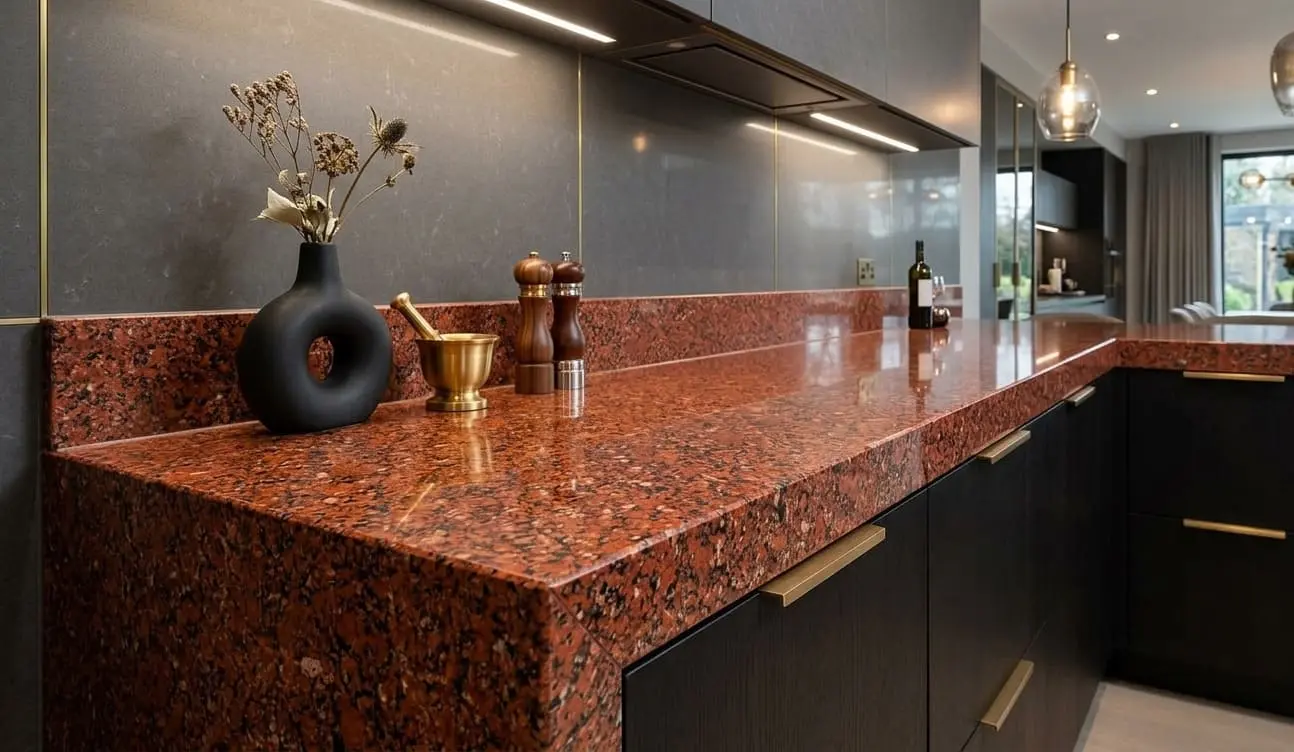
Imperial Red Granite
Bold Color and Enduring Performance
Imperial red granite is a natural igneous stone known for
its deep red background, black, white, and grey mineral speckles, and Mohs
hardness rating of 6 to 7. Available in slab form, it is quarried primarily
from Karnataka and Tamil Nadu in southern India and is composed of feldspar,
quartz, mica, and hornblende, with potassium feldspar associated with its
dominant red coloration.
Like all natural stone, it carries some degree of porosity, which means periodic sealing is part of routine care. Penetrating sealers can help reduce the risk of staining, though they may offer only limited protection against etching from acidic contact. Resealing is typically needed within a one-to-five-year range depending on slab density, finish type, and use level.
The Distinctive Visual Character of Imperial Red Granite
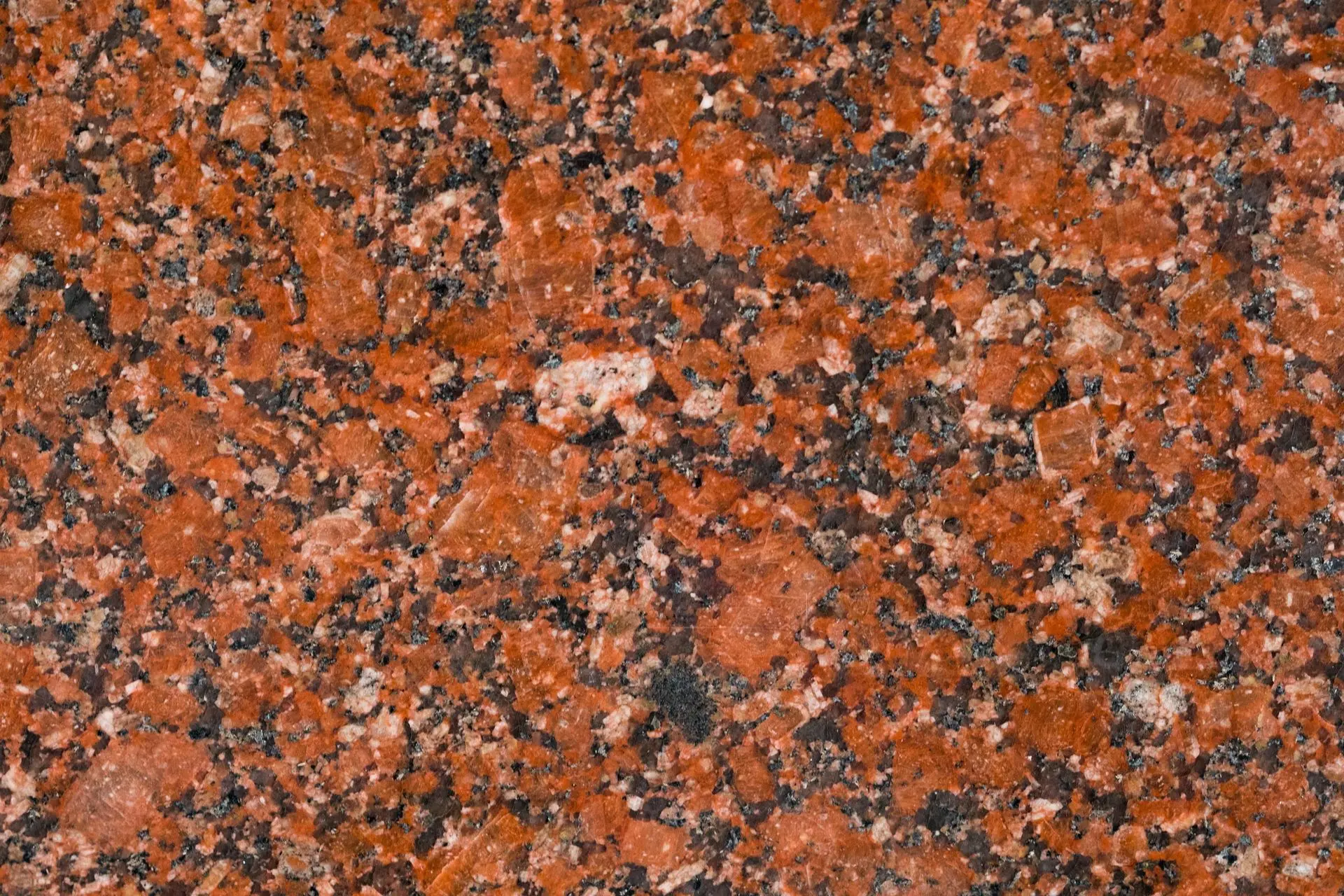
The stone's visual identity begins with its color. Its rich, saturated red base tends to shift slightly in tone across the slab as the mineral crystals interact with light. The black, white, and grey speckles embedded throughout create contrast and visual movement, giving the surface a layered depth that can read differently under artificial and natural lighting.
Because color and pattern are generally distributed evenly across the slab surface, each piece tends to carry subtle variation in mineral distribution while the overall pattern is typically cohesive within a project. The red tones tend to read as warm rather than cool, giving the surface a grounded character that holds its presence across a range of lighting conditions.
Finish Options for Red Granite Slabs
Beyond the stone itself, the choice of finish plays a significant role in how a red granite slab performs and presents in a given application.
- Polished finish can enhance the red tones by creating a reflective surface that may add color depth, making polished a common choice for countertop and wall applications where visual impact is a priority.
- Honed finish removes the high-gloss sheen and produces a flat, matte surface that still reveals the stone's color variation. Honed slabs tend to suit flooring where a non-reflective surface is preferable, though they generally require more frequent sealing than polished surfaces due to their more open surface texture.
- Leathered finish is achieved by passing diamond-tipped brushes across the surface, compressing the surface pores and producing a gentle, low-sheen texture that sits between the reflectivity of polished and the flatness of honed.
- Specialty finishes, including sandblasted and bush-hammered surfaces, are suited to exterior or accent applications where slip resistance or added surface texture takes priority over aesthetics.
Where Red Granite Slabs Fit in Residential and Commercial Design
With its range of finish options and strong performance profile, red granite translates well across both residential and commercial settings.
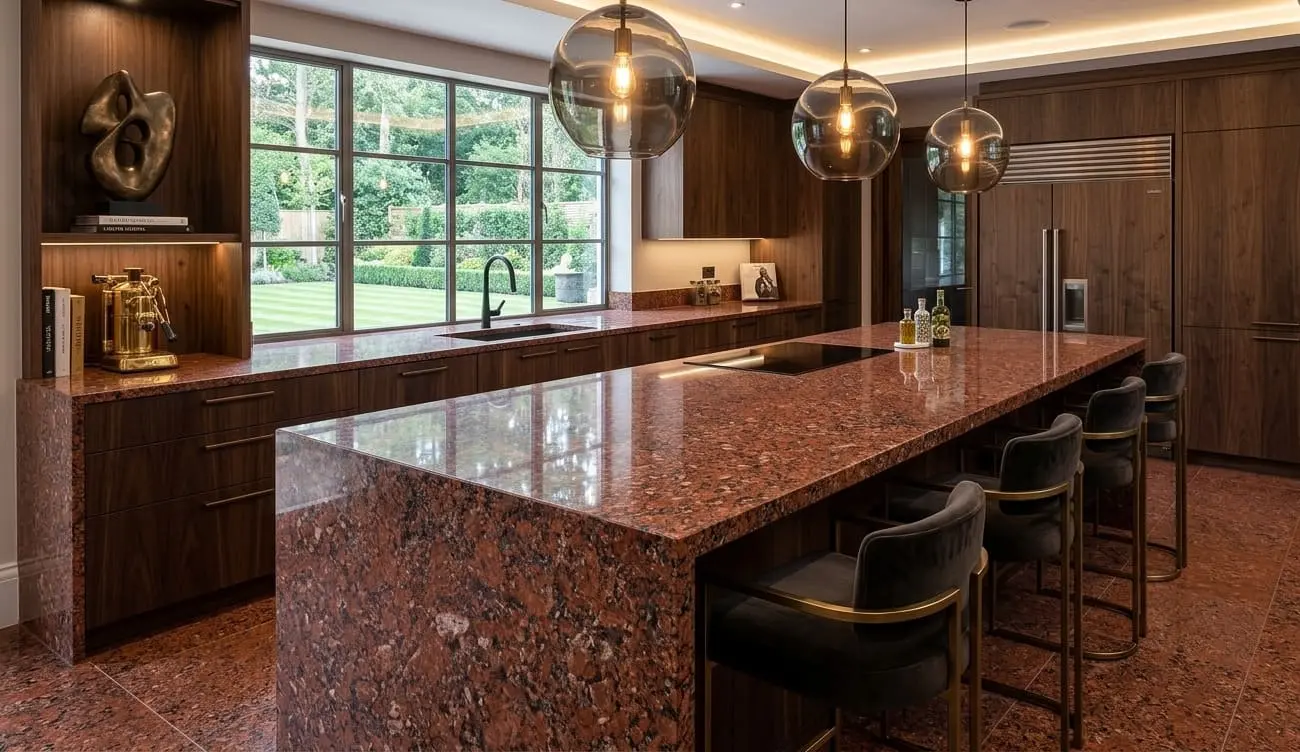
The warm, saturated tone of Imperial red granite tends to suit design contexts where a bolder material presence is desired. It can pair well alongside wood cabinetry, dark metal fixtures, and light stone surrounds. In many design contexts, it may help balance surrounding materials without visually competing with them. For projects calling for high contrast, it can also be used alongside darker stones such as Jet black granite, where the pairing of deep red and near-black tones tends to create a strong visual distinction.
In residential contexts, red granite slabs are commonly selected for kitchen countertops, bathroom vanity surfaces, fireplace surrounds, and feature wall cladding, where the stone's warm tone and natural variation contribute to a distinctive interior presence. In commercial and hospitality settings, the visual weight of this igneous stone can make it effective for reception desk surfaces, lobby flooring, and accent columns where a material that signals durability and distinction is needed. Outdoors, red granite is used for pool surrounds, exterior paving, and building facade panels, where its density and weather resistance make it a practical long-term choice.
Transform Your Space
Seeing the stone in person is the most reliable way to understand what it can bring to a project. A slab in a showroom can reveal qualities that photographs may not fully capture: the way this natural stone shifts under light, the depth of the mineral pattern, and the way the red tones can anchor a space. Nova Tile and Stone carries Imperial red granite slabs at four showroom locations in Reno, Sacramento, Minden, and Fernley. Visit any location to view current slab inventory and work with knowledgeable staff to find the right slab for your project.
Frequently Asked Questions
Imperial red granite is a natural igneous stone quarried primarily in Karnataka and Tamil Nadu, India. It is composed of feldspar, quartz, mica, and hornblende, with its deep red background color associated with a high concentration of potassium feldspar. Black, white, and grey mineral speckles are distributed throughout the surface.
Yes. Its dense mineral composition and Mohs hardness rating of 6 to 7 make it well-suited to exterior applications including paving, wall cladding, pool surrounds, and facade work. It is known to perform well under weather exposure and temperature variation with minimal surface deterioration under typical conditions.
Sealing frequency depends on slab density, finish type, and use level, typically falling within a one-to-five-year range. The water-drop test is the most reliable indicator: if water absorbs into the surface within a few minutes rather than beading, it may be time to reseal.
Imperial red granite slabs are available in polished, honed, leathered, and specialty finishes. Polished can enhance color and reflectivity. Honed produces a matte surface and generally requires more frequent sealing. Leathered creates a textured, low-sheen surface by compressing the stone's pores. Specialty finishes such as sandblasted or bush-hammered surfaces tend to suit exterior or high-traction applications.
Yes. Slight variation in red tone intensity and speckle distribution is common between slabs, reflecting differences in quarry depth and mineral concentration. Reviewing actual slabs before selection is recommended for projects where color consistency across multiple pieces matters.