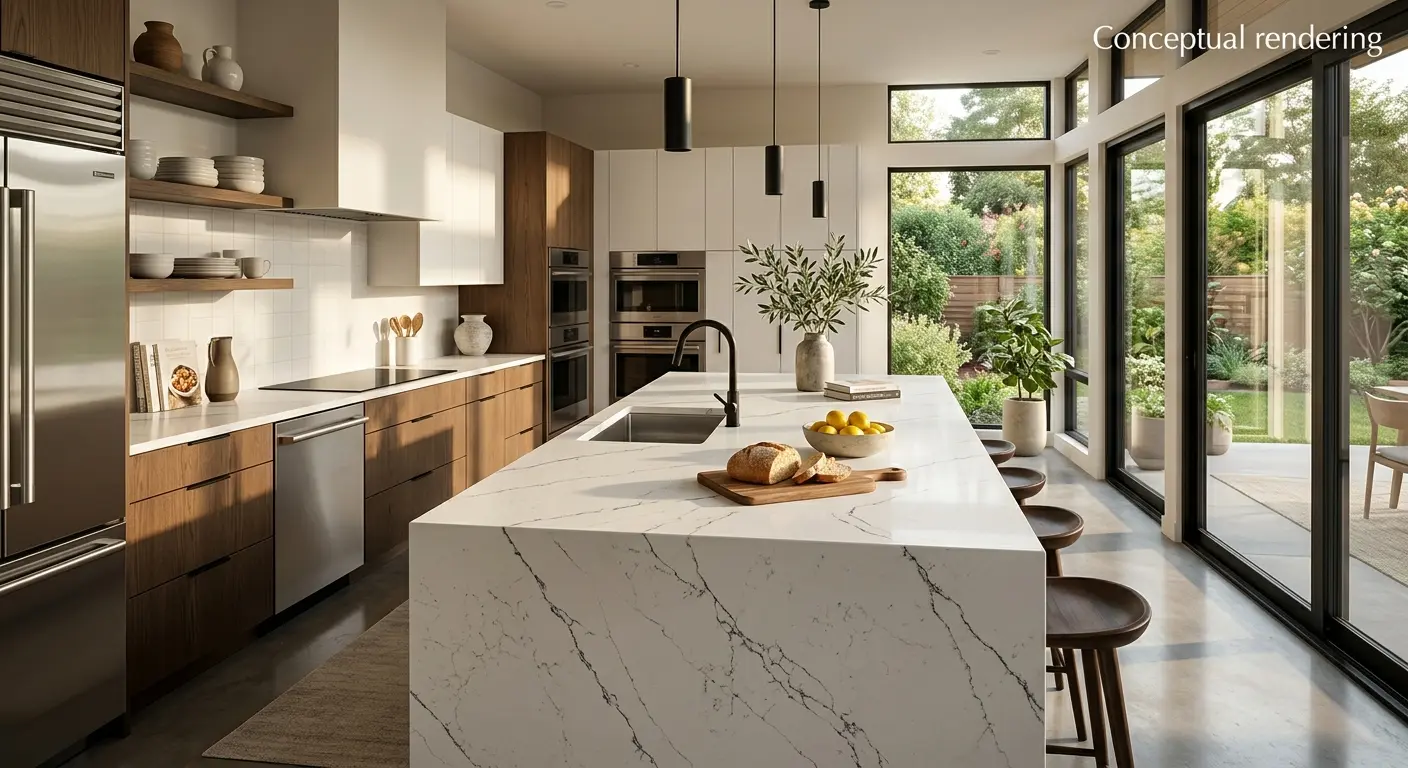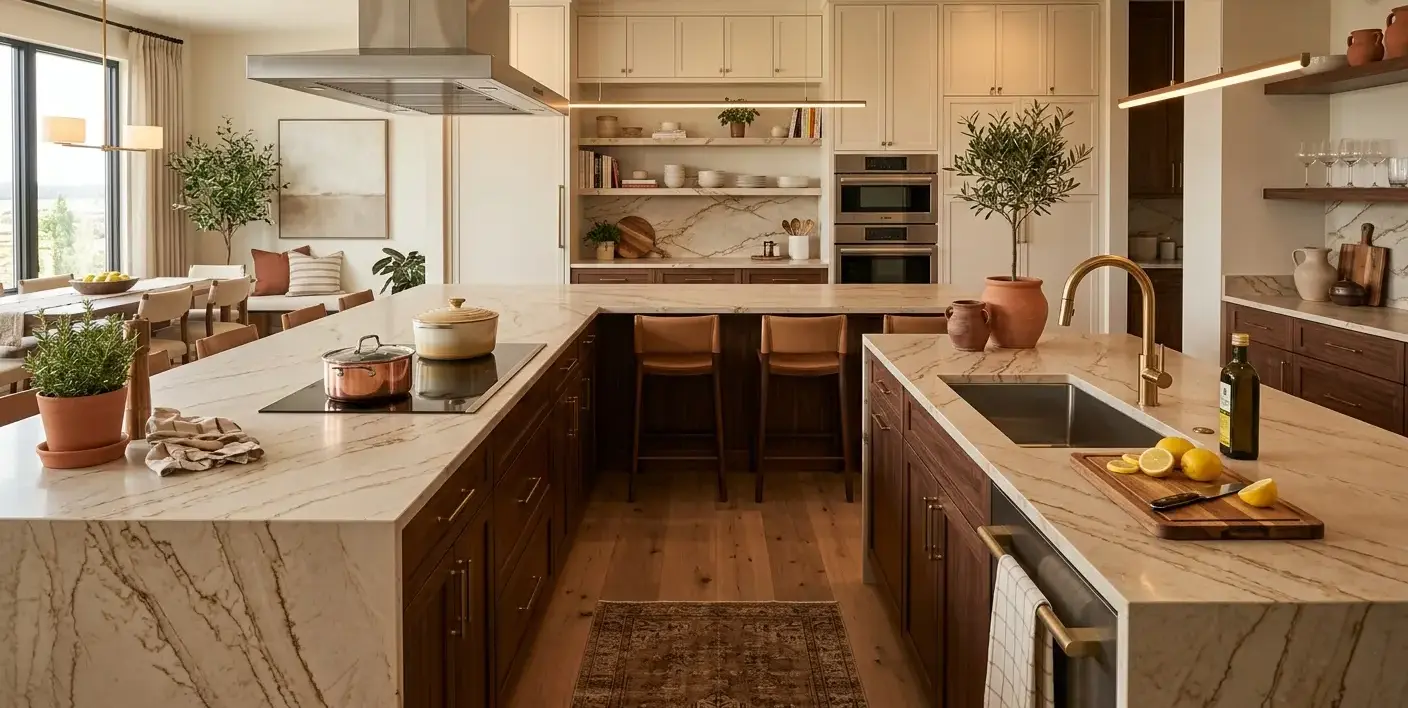
Honed quartz is an engineered stone composed of natural quartz bound with resin, delivering a smooth, matte surface that polished alternatives simply cannot match. Available in white, gray, beige, cream, and black backgrounds, many slabs showcase dark gray charcoal veins, brown and gold veins, and bold black veining patterns that bring visual depth to the material.
Honed quartz is a strong and practical choice for countertops, kitchen islands, bathroom vanities, and bar surfaces, combining natural quartz strength with the controlled beauty of a modern engineered material. Whether the aesthetic leans minimal, organic, or dramatic, honed quartz fits naturally into the design.
What Honed Quartz Is Made Of
Honed quartz slabs are engineered from approximately 90–93% ground quartz mineral bound with polymer resins and pigments. The honed finish is achieved by stopping the surfacing process before the final polish buffer, producing a silky, non-reflective surface with a tactile warmth that polished finishes lack.
Standard slab thickness runs at 2 cm and 3 cm, with 3 cm being the most widely specified for kitchen countertops and islands due to its visual weight and structural strength. Because quartz is an engineered material rather than quarried stone, the quartz mineral content is typically sourced from multiple regions including North America, Brazil, and parts of Europe before being processed under controlled manufacturing conditions.
On the Mohs hardness scale, quartz ranks at 7 - harder than marble, which scores 3 to 4, and on par with granite at 6 to 7. Water absorption is a standout advantage: quartz registers below 0.02%, compared to marble at 0.5–1.0% and granite at 0.1–0.4%. That extremely low absorption rate makes honed quartz far less vulnerable to etching, staining, and moisture damage than natural stone alternatives. Quartzite, while also hard, remains a porous natural stone that requires sealing, quartz does not.
Style Your Space with Honed Quartz for Countertops
The matte surface of a honed quartz commonly used for countertops integrates naturally across a wide range of interior styles. A full slab run horizontally across a kitchen island in white or gray with charcoal vein movement creates an uninterrupted, gallery-like visual that anchors the whole room. Vertical installation on bathroom vanity walls extends the surface height and introduces quiet drama without visual noise.
In bars and wet prep areas, the non-reflective finish controls glare while keeping the tone warm and deliberate. Beige and cream backgrounds with taupe undertones, brown/gold veining, or soft green hints pair well with natural oak and walnut cabinetry. Black-background slabs with bold veining create high-contrast statements against light walls or white shaker cabinetry. For spaces with colorful elements, our guide on choosing a backsplash that complements your countertop will help you balance both surfaces with confidence.
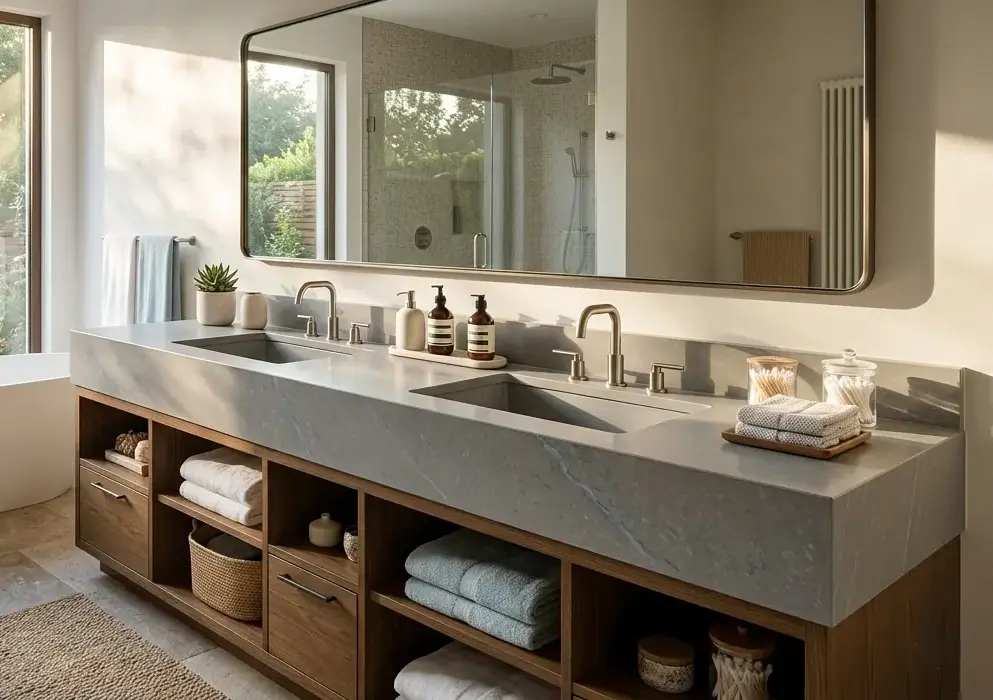 Conceptual rendering
Everyday Advantages Worth the Investment
- Zero sealing required: The non-porous surface blocks liquids, oils, bacteria, and food acids from penetrating the slab, keeping kitchens and bathrooms hygienic without any annual maintenance ritual.
- Scratch resistance: A Mohs hardness of 7 means quartz countertops handle daily meal prep, cutting boards, and heavy cookware without surface wear.
- Consistent veining and color: Unlike natural stone, engineered quartz delivers uniform pattern repetition across every slab; critical for large islands and multi-section layouts where continuity matters.
- Fingerprint and water spot tolerance: The honed finish diffuses light rather than concentrating it, which means smudges and minor moisture marks are far less visible than on polished quartz or marble.
- Low daily upkeep: Mild dish soap and a damp cloth handle routine cleaning. No specialty products needed.
The team at Nova Tile and Stone, your trusted stone supplier, brings client support to every project, helping you move from selection to final decision without guesswork. Book a free design consultation to review full-size slabs in person at any of the four showroom locations.
A Material That Holds Its Value for Decades
Honed quartz is not a trend-driven choice; it is a long-horizon investment. The engineered structure delivers slab-to-slab consistency across large kitchen remodels and multi-vanity bathroom projects, eliminating the variation risk that comes with natural stone. The matte finish wears more gracefully than polished surfaces because micro-scratches and dulling are far less apparent on a surface that does not rely on high reflectivity for its appeal.
Design professionals and real estate appraisers continue to recognize quality stone countertops as measurable value additions to a home. The neutral color palette of honed quartz, including white, gray, black, and beige, positions it to remain relevant through multiple design shifts without ever feeling dated.
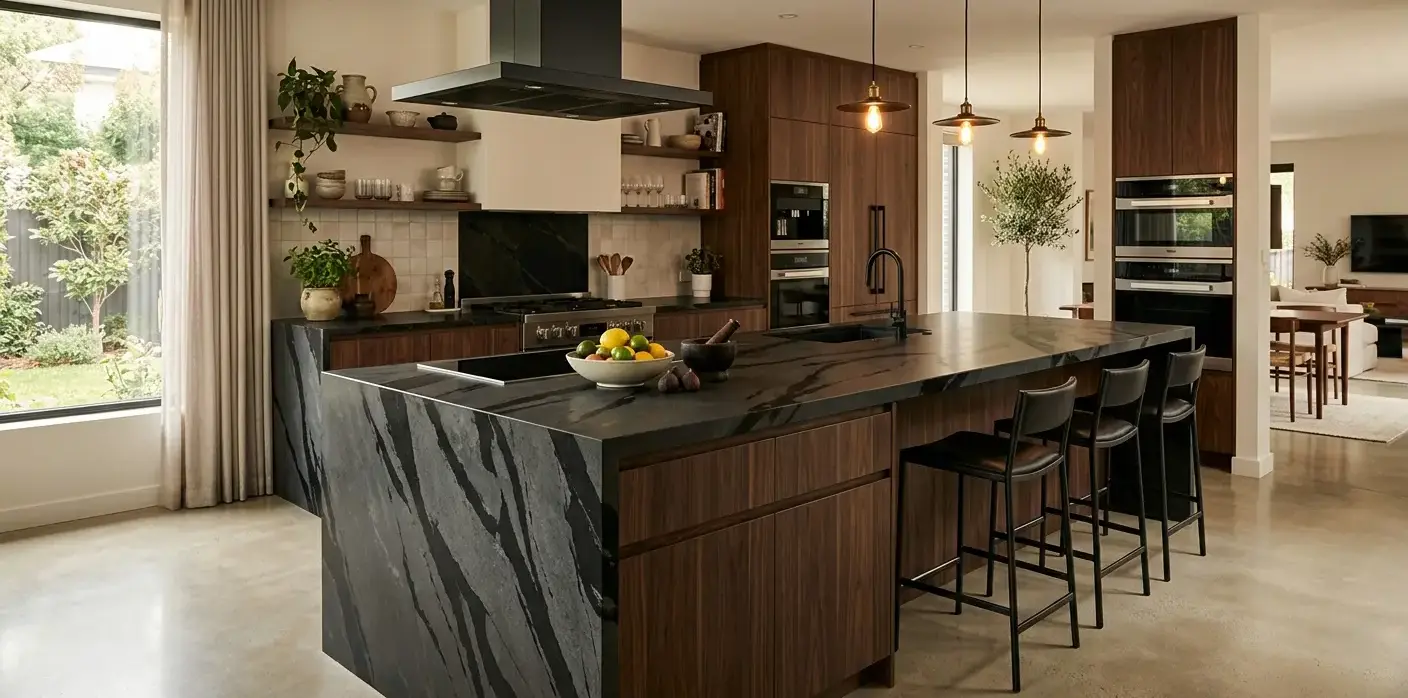 Conceptual rendering
Note: Some images on this page may be conceptual renderings created to illustrate design possibilities and may not depict actual installations.
Frequently Asked Questions
A honed finish means the surface has been ground smooth but not buffed to a high shine. The result is a flat, matte appearance with a soft texture that feels slightly warmer and less formal than polished quartz.
No. Both finishes are equally non-porous and easy to clean. The honed surface is actually more forgiving in practice because fingerprints, water spots, and minor smudges are far less visible on a matte finish than a reflective one.
Yes. Honed quartz countertops are an excellent choice for bathroom vanities. The low absorption rate protects against moisture, personal care products, and soap residue, and the matte finish suits the quieter design tone of most bathroom spaces.
The 3 cm thickness is the standard recommendation for kitchen countertops and islands. It provides the visual weight to look proportionate on cabinetry and the structural strength to span unsupported sections without additional substrate.
Neither. Both honed and polished quartz share the same engineered composition and Mohs hardness of 7. The finish affects appearance only, not scratch resistance or chemical resistance. Honed quartz is not more prone to etching than its polished counterpart.