Green Natural Stone Countertop
When it comes to countertop materials that truly make a space feel complete, few options rival the character of green natural stone. Quartzite, serpentine, and verde granite are among the most sought-after varieties, each carrying rich mineral tones that range from soft sage and olive to deep, saturated emerald.
What sets these surfaces apart is the combination of visual depth and structural strength they bring to any setting whether that is a kitchen island, a bathroom vanity, or a living space accent. Unlike manufactured alternatives, no two slabs are ever identical, which means the surface you choose becomes an entirely unique feature of your home. For those who value both beauty and longevity in equal measure, a green natural stone countertop is a choice that holds up as well as it stands out.
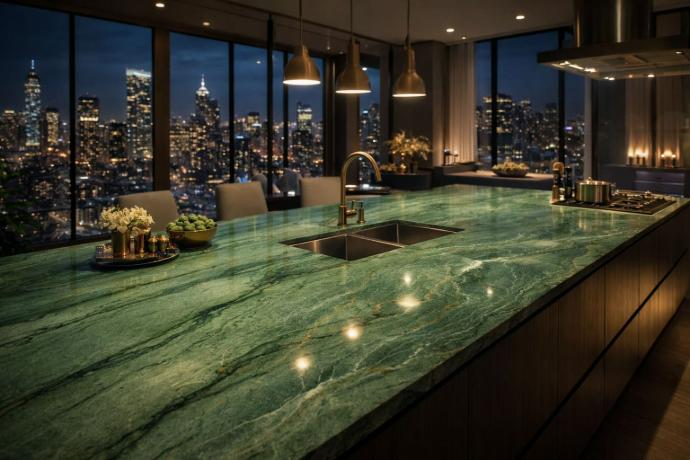
A Surface That Commands Attention in Any Room
Few materials stand out the way green stone does in an
interior space. The color itself is uncommon in the world of natural stone,
which means each slab carries a visual presence that feels both organic and
exclusive. The tonal range from muted celadon to deep forest hues adapts
naturally to a wide variety of design styles, including modern, rustic,
Mediterranean, and transitional interiors.
If you are drawn to the elegant
veining and cool sophistication that stone can offer, green marble
countertops are a popular choice worth exploring. Beyond aesthetics, these
surfaces develop a subtle depth and character over time that only natural stone
can offer, giving any room a timeless quality that engineered surfaces simply
cannot authentically replicate.
A Worthwhile Investment for Your Home's Value
Choosing this kind of surface is a decision that pays
dividends well beyond the initial purchase. Natural stone is widely recognized
in the real estate market as a premium feature and consistently contributes to
higher perceived home value. Because no two slabs are identical, the surface
you select is genuinely one of a kind a detail that appeals strongly to
discerning buyers and design enthusiasts alike.
With proper care, including
periodic resealing and routine cleaning with pH-neutral products, it can last
for decades without losing its character or structural integrity. If you are
ready to explore your options, book a free design
consultation to get personalized guidance on selecting the right stone for
your space. You can also browse the full range of available surfaces at this stone and tile resource to
find what suits your home best.
Durability That Matches Its Visual Appeal
Green stone, particularly quartzite and granite varieties,
ranks among the hardest and most resilient countertop materials available.
Quartzite, for example, rates between 7 and 8 on the Mohs hardness scale,
making it highly resistant to scratching and everyday wear. When properly
sealed, these surfaces also resist moisture and staining, which makes them
well-suited for kitchens and bathrooms where spills and humidity are common.
For something even more striking, green
semi-precious stone countertops offer an elevated option that combines
exceptional density with a luminous, jewel-like finish. The overall density of
natural stone means it holds up under heavy use without warping or degrading
the way some engineered materials can over time, making it a dependable
long-term choice for any household.
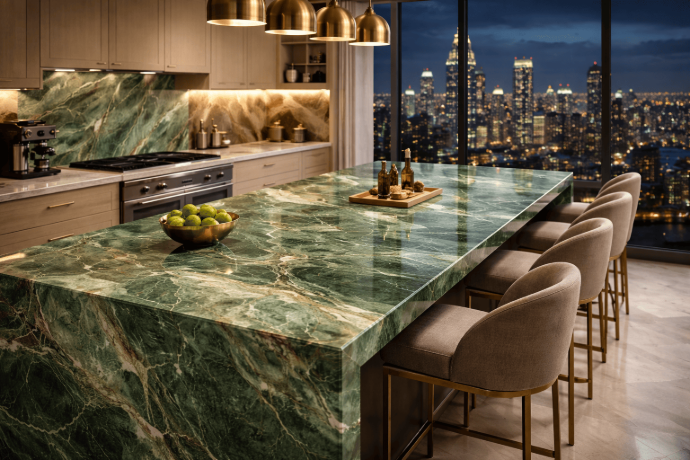
Explore Green Stone Countertop Ideas on Our Blog:
Frequently Asked Questions
Yes. Green quartzite is significantly harder and more scratch-resistant than marble, making it better suited for high-traffic kitchen surfaces where cutting, heat exposure, and moisture are regular factors.
Certain dense varieties, such as granite, perform well outdoors due to their resistance to temperature fluctuations and UV exposure. Softer stones like serpentine, however, are better reserved for interior applications.
Most slabs benefit from resealing once every one to two years, depending on use frequency and the porosity of the specific stone. A simple water bead test can indicate when resealing is needed.
Mild, pH-neutral cleaners are recommended to preserve the sealed surface. Acidic or abrasive products can break down the sealant and dull the finish, so avoiding vinegar, bleach, or harsh scrubbing pads is essential.
Yes. Because it is sourced directly from the earth, each slab varies in tone, veining, and mineral distribution. This natural variation is one of the defining characteristics that makes it a preferred choice for those seeking a surface that cannot be exactly duplicated.
Ready to transform your kitchen or bathroom with natural stone? Visit our 4 showrooms location now!