Design Versatility
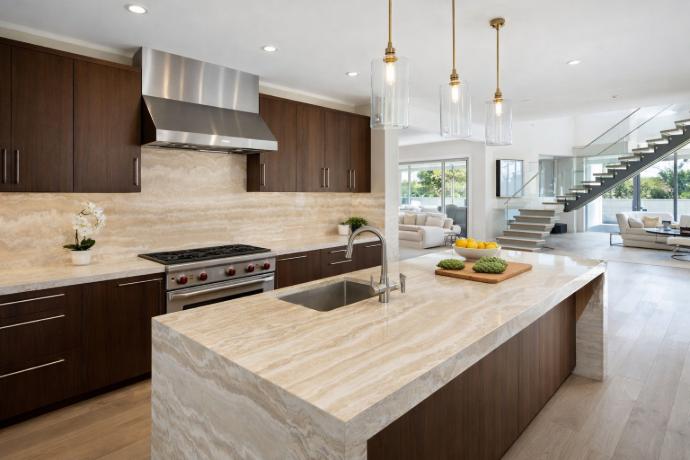
With its origin and finish options established, the next consideration is where this stone performs best, and the answer is nearly everywhere. The neutral, silver-toned palette of a gray travertine countertop pairs well with cabinetry in white, off-white, charcoal, navy, warm wood, and black finishes, making it a strong anchor for kitchen islands, perimeter countertops, and bathroom vanities.
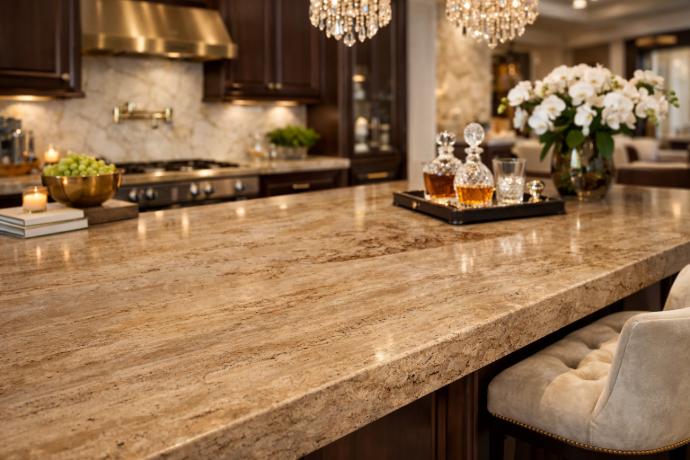
In modern kitchens, a polished slab creates a sleek contrast against flat-panel cabinetry and stainless steel fixtures. In transitional or traditional spaces, a honed or brushed finish softens the room and adds organic warmth. The stone's characteristic surface pitting adds tactile depth that sets it apart from uniform engineered surfaces, making each slab one of a kind. For an elevated layered look, gray travertine pairs beautifully with Taj Mahal quartzite, its soft cream and gold veining providing warm contrast to travertine's cooler silver tones.
Durability and Performance
Versatility in design comes with an equally important consideration: how the stone performs under daily use. Travertine's porous structure requires a protective sealant to perform well in high-use environments. Without it, the stone absorbs liquids and becomes vulnerable to staining. Sealing upon installation and resealing every one to two years provides reliable protection against moisture and everyday spills.
For daily cleaning, a pH-neutral cleaner and a soft cloth are sufficient. Acidic substances such as lemon juice, vinegar, wine, and coffee must be wiped up promptly, as they react chemically with the calcium carbonate in travertine and cause etching, dull, discolored spots on the surface. Understood and managed properly, these characteristics are straightforward and should not discourage anyone from choosing a material with this much to offer.