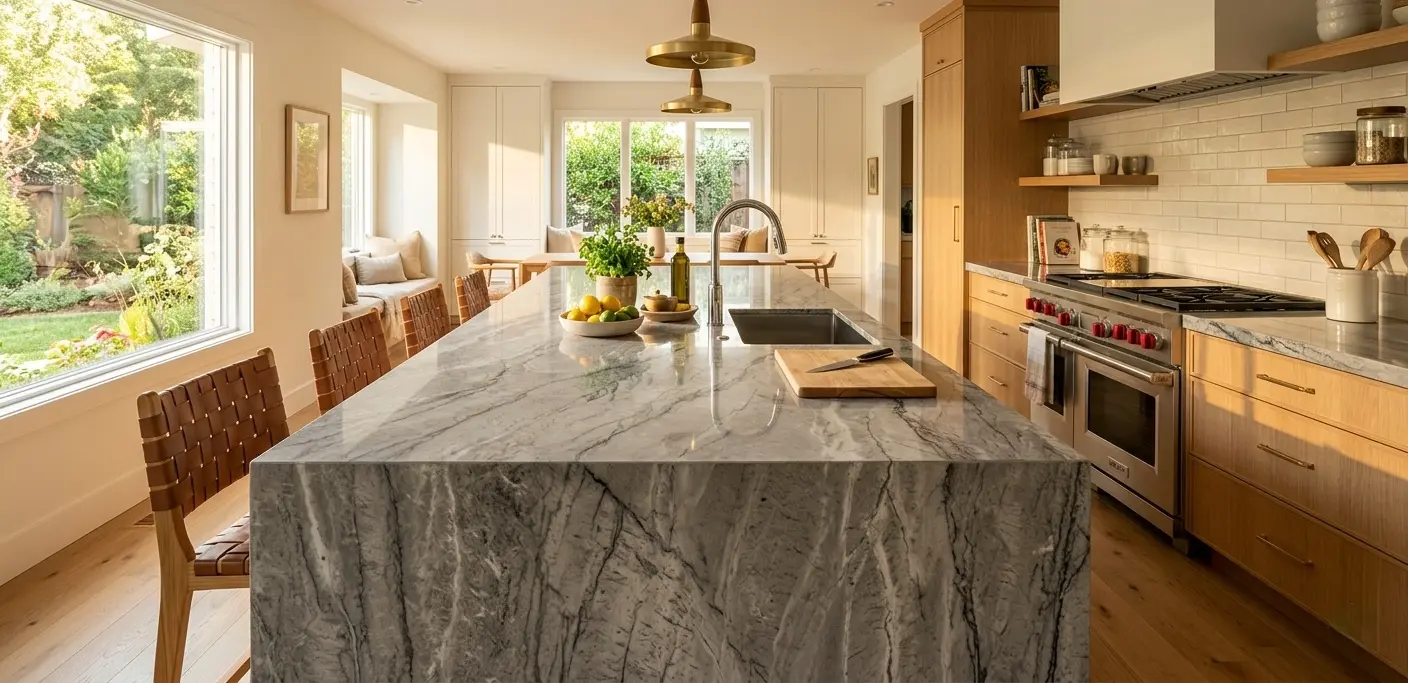
Gray Travertine Slab Specs, Hardness, and Material Comparison
Formed through rapid calcium carbonate precipitation around natural hot springs, gray travertine is a sedimentary limestone primarily quarried in Turkey's Denizli region and select areas of Iran. The gray color variation is produced by specific iron and mineral content in the geological environment, making it far less common than beige or ivory travertine varieties.
On the Mohs hardness scale, travertine registers between 3 and 4, similar to marble and softer than granite (6–7) or quartzite (7+). Standard slab thickness is 3/4" (2cm) for walls and lighter surface work, and 1 1/4" (3cm) for countertop and floor applications. Water absorption typically ranges from 1.0% to 2.5% per ASTM C97 standards, which is higher than dense granite, so sealing before use is recommended.
Compared to engineered quartz, gray travertine offers a more organic and unpredictable surface character that no factory process can replicate. Unlike porcelain slabs, it is warmer underfoot and develops a subtle patina over time that deepens its visual interest. If you appreciate travertine but prefer warmer hues, the Beige Travertine Countertop is a closely related variation worth exploring within the same material family.
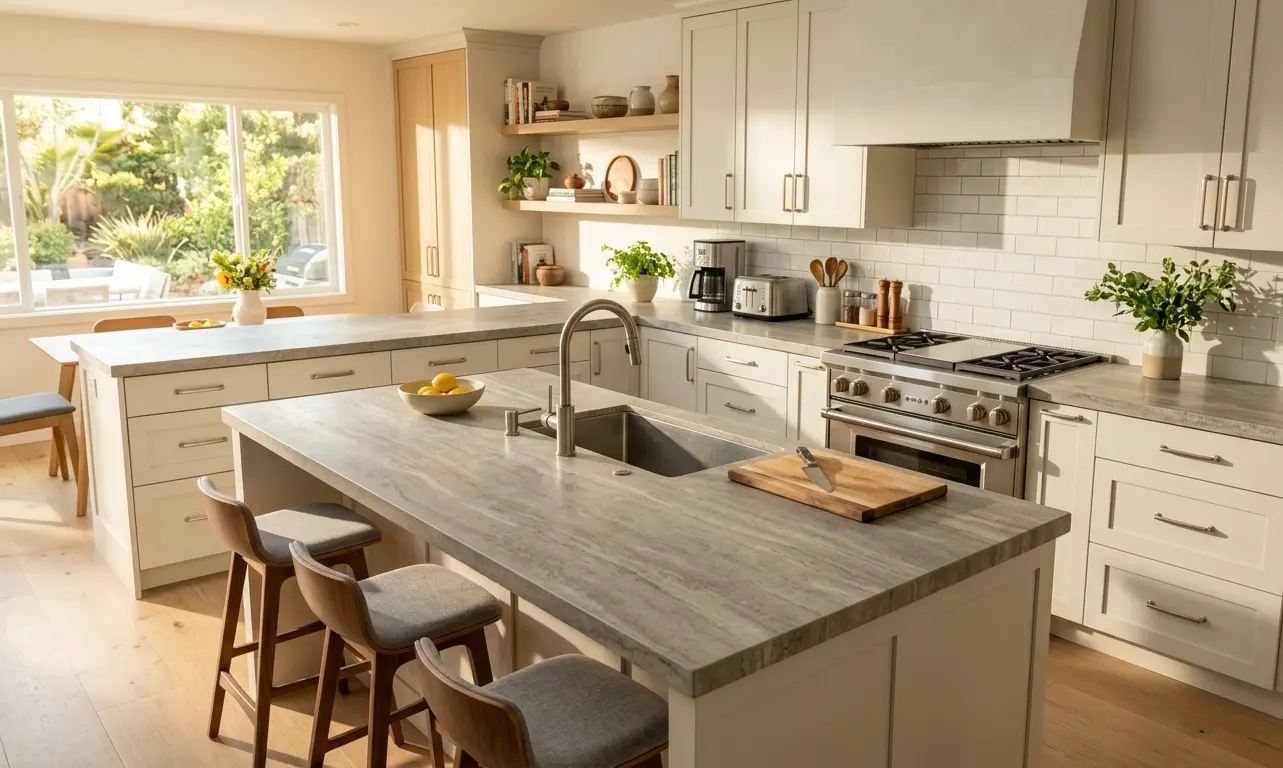
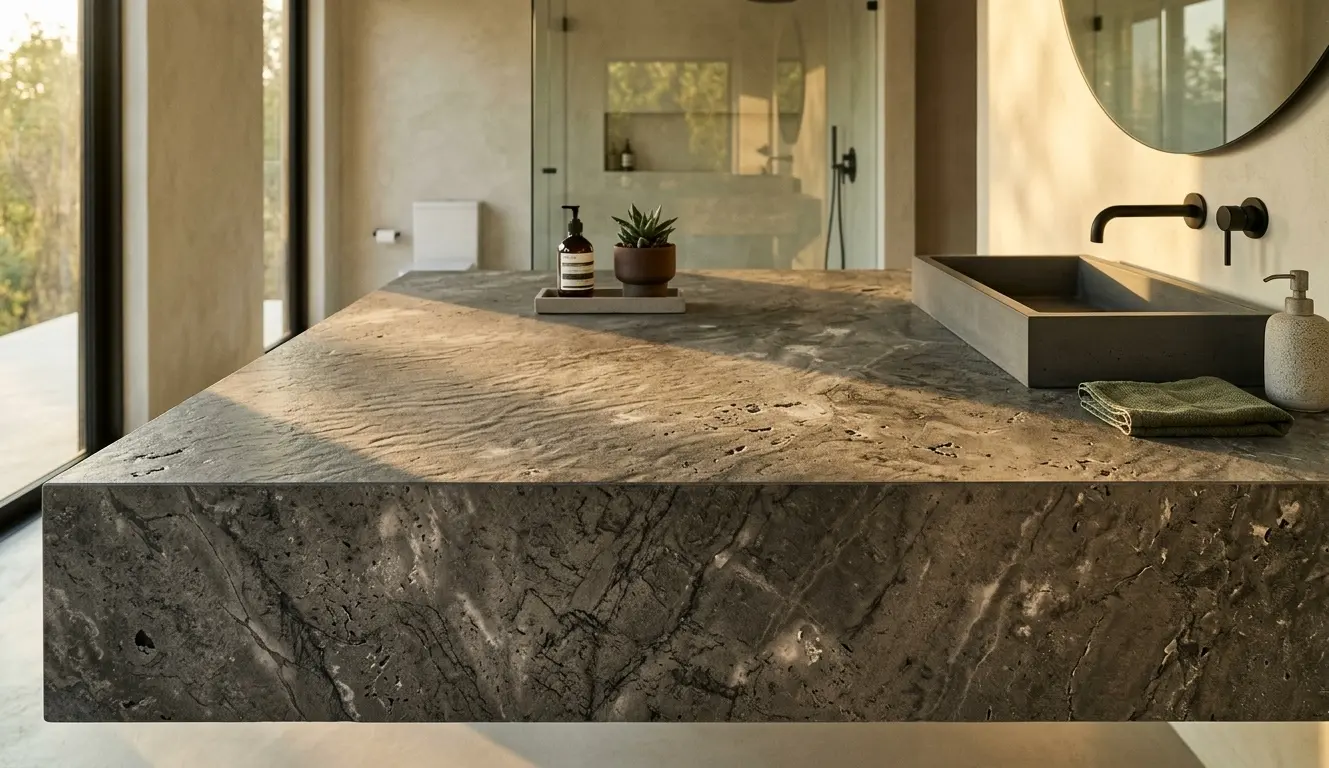
Versatile Layouts for Every Space
The large slab format of gray travertine gives designers and homeowners significant layout flexibility. On kitchen countertops, a horizontal application across an island creates a seamless, uninterrupted surface. On bathroom walls or shower surrounds, vertical stacking emphasizes height and brings a sculptural quality to the room. Book-matched pairs highlight the stone's rare veining in fireplace surrounds and feature accent wall installations.
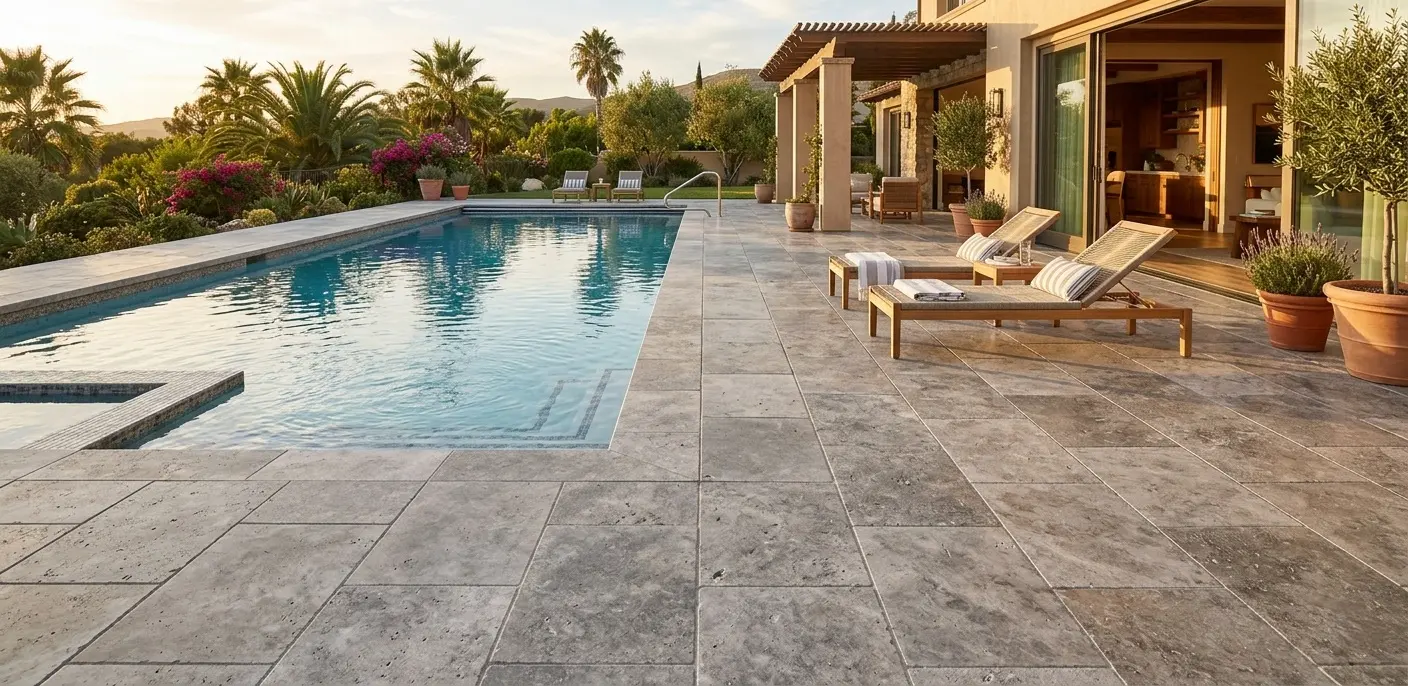
For flooring, straight-set and running bond layouts work naturally with the stone's directional movement. Herringbone and diagonal patterns are also achievable when cut tiles are derived from the full slab. On patio and pool deck surfaces, the cool gray palette ties together contemporary and transitional exterior schemes without competing with surrounding materials or landscaping.
Why Gray Travertine Is a Smart Surface Choice
Few natural stone slabs deliver the functional range of gray travertine across indoor and outdoor settings. Key practical advantages include:
- Rare patterning: Gray is among the least common travertine tones, producing a look that very few surfaces can replicate.
- Three finish options: Polished finishes reveal high-contrast gray depth; honed delivers a softer, matte texture; leathered adds tactile character with understated sheen.
- Heat tolerance: Natural stone handles ambient heat exposure better than engineered quartz, making it a practical kitchen countertop material.
- Outdoor durability: When properly sealed, gray travertine performs well on pool decks and patio surfaces across varied weather conditions.
- Design range: Neutral gray tones pair with white cabinetry, warm walnut wood, and brushed metal hardware with equal ease.
- Live inventory access: Nova Tile and Stone maintains a live slab inventory and home delivery options so you can view and purchase your slab without delay.
For more on how to maintain and extend the life of natural stone surfaces, the Natural Stone Slab Flooring: Your Complete Guide to Materials, Finishes and Care is a practical resource that covers routines applicable to travertine floors and wall surfaces.
A Rare Natural Stone That Pays Off Over Time
Gray Travertine is one of the more difficult travertine varieties to source, and that scarcity contributes directly to its long-term design appeal. Because no two slabs share the same patterning, every surface cut from this stone is inherently unique. That exclusivity holds genuine value over time, particularly as interior design continues to move toward materials with authentic texture, mineral depth, and natural imperfection.
Travertine has been used in high-end architecture and surface design for centuries, which speaks to its proven longevity across climates and use cases. With periodic resealing and standard stone care, a gray travertine countertop, floor, or wall surface can remain in excellent condition for decades. When measured against the replacement costs of lower-durability surfaces that chip, discolor, or fade within years, the long-term investment case is straightforward.
Frequently Asked Questions
Yes. Gray travertine slabs are available in polished, honed, and leathered finishes. Polished amplifies the stone's cool depth and reflectivity; honed gives a flat matte surface that conceals minor scratches; leathered adds a slightly textured, low-sheen surface that enhances the stone's natural character.
Absolutely. Gray travertine works well for kitchen countertops, particularly in the 1 1/4" (3cm) thickness. It tolerates heat better than engineered quartz but requires sealing before use due to its porosity. Avoid harsh acidic cleaners and reseal annually for best results.
Travertine scores 3 to 4 on the Mohs scale, while granite scores 6 to 7, making granite harder and more scratch-resistant. Travertine is also more porous, with a water absorption rate of 1.0 to 2.5% compared to granite's 0.1 to 0.4%. Both materials require sealing, but travertine benefits from more frequent maintenance.
Most gray-toned travertine is quarried in Turkey, specifically the Denizli region, as well as parts of Iran. The gray coloration comes from specific mineral and iron content in the formation, which is what makes this variation rarer than the more widely available beige and ivory types.
Yes, when properly sealed. Gray travertine has natural thermal properties that keep surfaces cooler underfoot compared to darker stones, making it a popular choice for pool decks. It also handles freeze-thaw cycles well with appropriate sealing. Regular resealing is recommended for all outdoor travertine applications.