Gray Stone Countertop
When it comes to surface materials, few options strike the right balance between beauty and durability quite like gray stone. Its neutral tone works well across kitchens, bathrooms, laundry rooms, and outdoor spaces, which makes it a versatile option for many types of projects. Crafted from natural materials such as granite or quartzite, a gray stone countertop brings both strength and sophistication to any setting, offering a surface that looks refined on day one and continues to perform for years to come.
Request a Quote for Gray Stone Slabs
A Smart Investment for Any Home
Few materials offer the balance of beauty and practicality
that gray stone provides. Quartzite is one of the hardest natural stones
available, scoring a 7 on the Mohs hardness scale, while granite is equally
impressive, ranging between 6 and 7 both
well above the threshold needed to resist everyday scratches and surface wear.
Beyond physical strength, the neutral gray tone offers a level of visual
flexibility that brighter surfaces simply cannot match it grounds a space
without overwhelming it.
The wide range of gray shades available, from soft
silver to deep charcoal, means there is an option to suit virtually every
design vision. For those planning any kind of remodel or renovation, selecting
this type of surface means choosing a material that
can maintain its appearance and performance for many years with proper selection, sealing, and care.
Neutral
Enduring
Sturdy
Sophisticated
The Aesthetic Advantage of Gray Stone
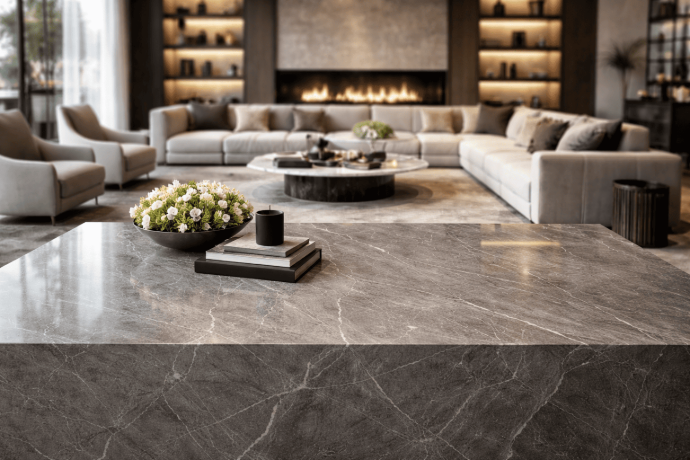
Gray is one of the most flexible tones in interior design, functioning as both a neutral and a statement.The natural veining and organic depth
found in gray
quartzite and the distinct mineral crystal formations in granite give a
gray stone countertop its character and visual interest without relying on bold
color.
This makes it an excellent backdrop for brass or matte black hardware,
open shelving, and colorful backsplash tiles. Its versatility also extends
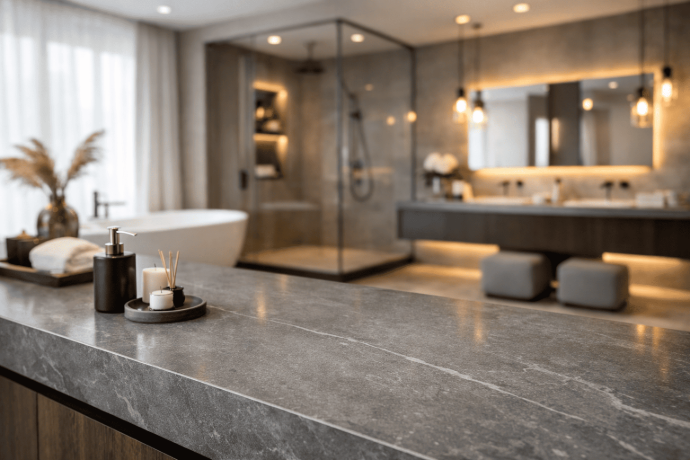
beyond the kitchen. In bathrooms, it brings a calm, spa-like quality, while in
outdoor spaces, it adds a grounded, natural elegance. The result is a cohesive,
sophisticated finish that feels intentionally designed, whether the overall
aesthetic leans contemporary, transitional, or traditional.
Built to Last: Durability Worth Considering
Long-term performance is one of the main reasons homeowners choose a stone countertop. Both granite and quartzite are highly
resistant to scratches, moisture, and heat when properly sealed. It is worth
noting that while the stone itself can withstand high temperatures, repeated
direct contact with hot cookware can degrade the sealant over time rather than
the stone. Using a trivet or heat pad is therefore a simple and effective way
to protect the surface and extend the life of the seal.
Granite generally
requires resealing every one to two years, while quartzite being more porous benefits
from annual resealing. Day-to-day cleaning requires nothing more than mild soap
and warm water, making upkeep simple and manageable for any household. With the
right care, natural stone surfaces
like gray stone maintain their appearance and performance for many years.
Frequently Asked Questions
Yes, granite is naturally heat resistant, with a dense mineral structure that can handle high temperatures. However, repeatedly placing hot cookware directly on the surface can damage the sealant over time, so using a trivet or heat pad is recommended as a precaution.
Quartzite is porous and should generally be resealed once a year to maintain its resistance to stains and moisture. Granite, being slightly less porous, typically requires resealing every one to two years depending on usage.
Absolutely. Gray stone is well-suited for bathrooms, laundry rooms, outdoor kitchens, and other areas. Its durability and resistance to moisture and daily wear make it a reliable choice across a variety of spaces.
Yes. Routine cleaning only requires mild soap and warm water. The key to long-term maintenance is ensuring the surface is properly sealed and resealed on schedule to protect it against stains and moisture absorption.
Yes, gray stone slabs are commonly available in polished, honed, and leathered finishes each offering a distinct look and texture suited to different design preferences and practical needs.