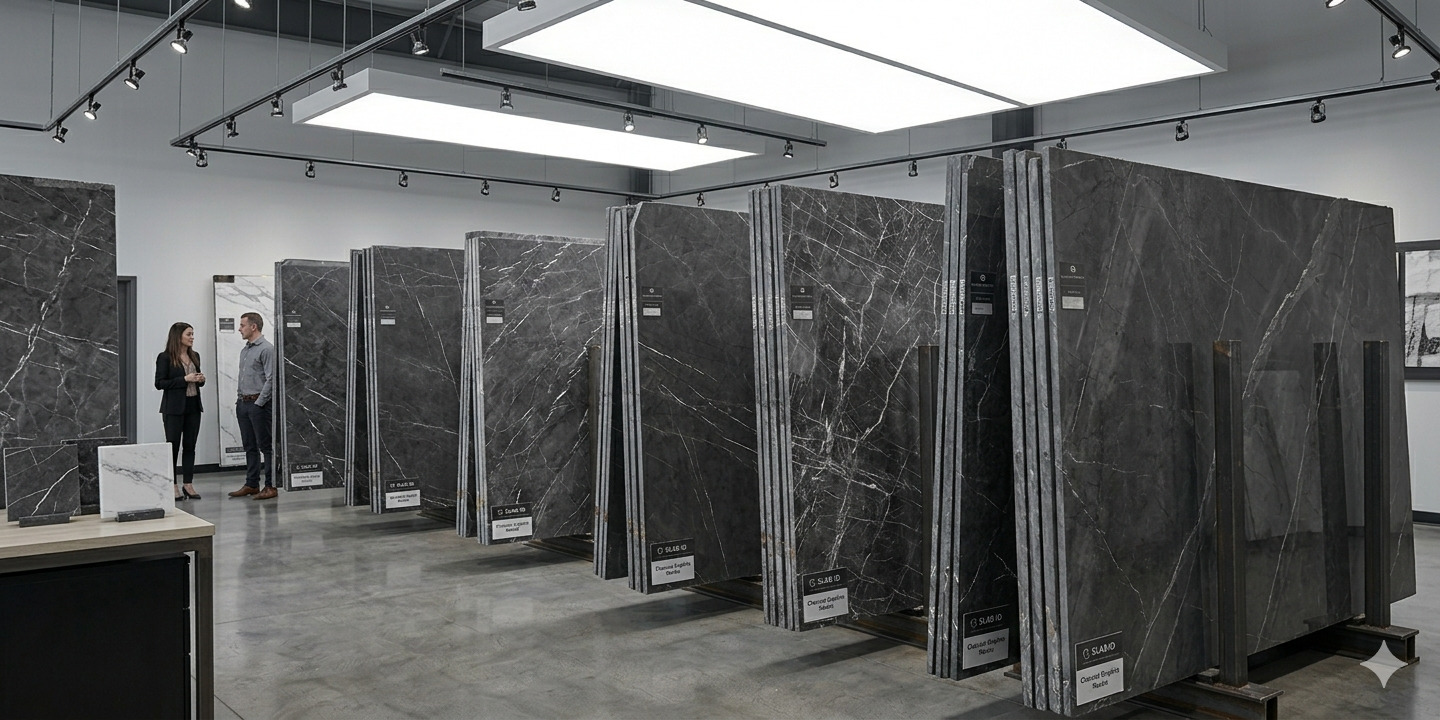
Graphite Marble Flooring
Graphite Marble Flooring Slabs That Set the Tone From the Ground Up
Graphite Marble Flooring is a natural metamorphic stone with a deep charcoal-grey base and organic graphite veining that creates an immediate architectural statement underfoot. It rates 3 to 5 on the Mohs hardness scale and is listed as suitable for floors, indoor and outdoor use, walls, and fireplace surrounds in our material checklist. As a marble floor material, it requires proper sealing before use and consistent resealing at regular intervals, and a honed or leathered finish is generally more practical than polished for floor surfaces where foot traffic, moisture, and slip resistance are real considerations. Whether the application is a dramatic entryway, a spa-inspired bathroom floor, a covered outdoor terrace, or a luxury living room feature floor, Graphite Marble Flooring delivers the kind of deep natural tone and geological character that manufactured flooring alternatives cannot replicate.
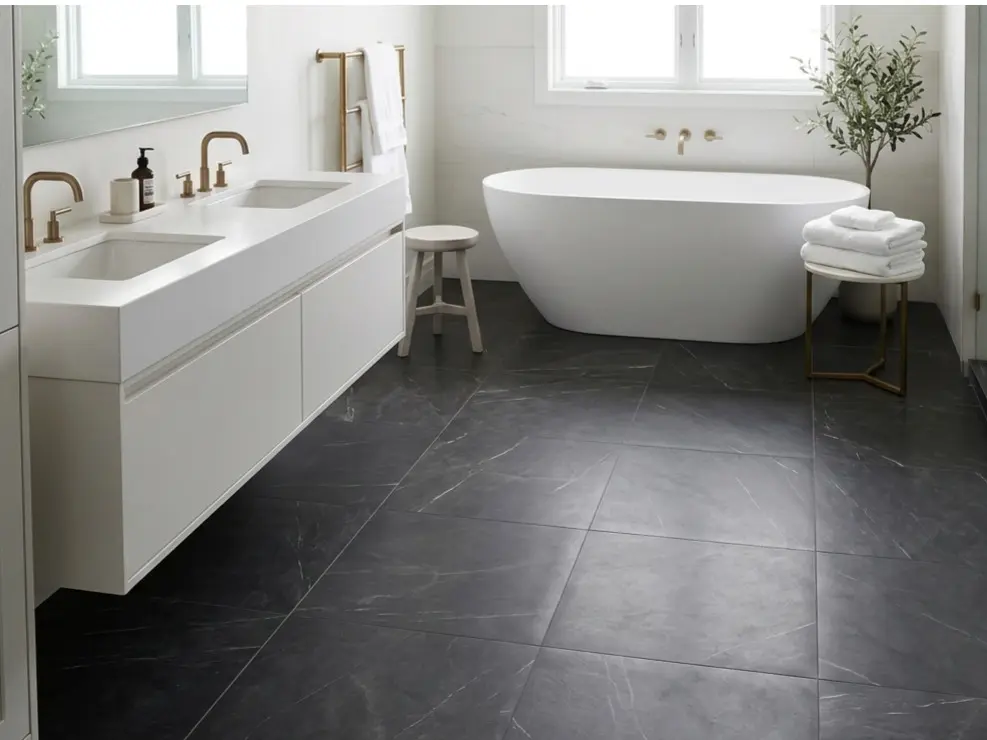
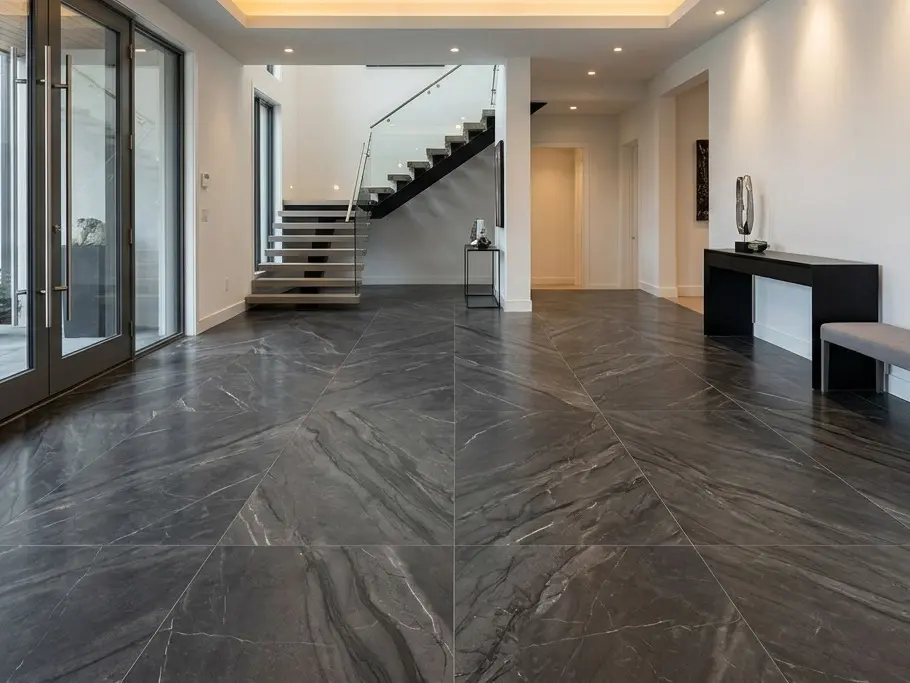
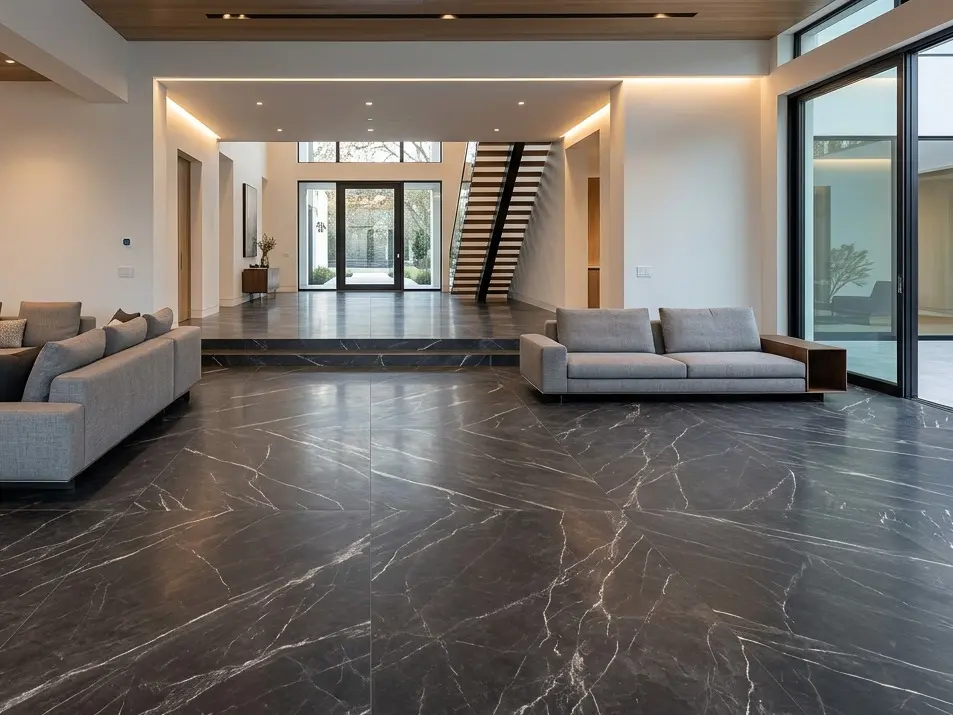
Why Graphite Marble Is a Strong Natural Stone Choice for Floors
Marble has been used as a luxury floor material for centuries, and the graphite-toned variety occupies a specific design position in that history. Its deep charcoal base absorbs ambient light rather than reflecting it, creating a grounded and sophisticated atmosphere that contrasts sharply with the cool brightness of white or light marble floors. The graphite veining running through each slab adds directional movement across the floor surface, which gives the space visual energy and natural character that uniform flooring materials simply do not have.
As a marble, it rates 3 to 5 on the Mohs scale, which means it is softer than granite or quartzite and more susceptible to etching from acidic contact and surface scratching than harder natural stones. For a floor application, this makes finish selection and sealing discipline more important than on a wall surface, because floor materials experience regular foot traffic, liquid contact, and the physical wear of everyday use. The Natural Stone Institute's care guide covers marble floor-specific sealing schedules and the pH-neutral cleaning approaches that protect the surface from etch damage over time.
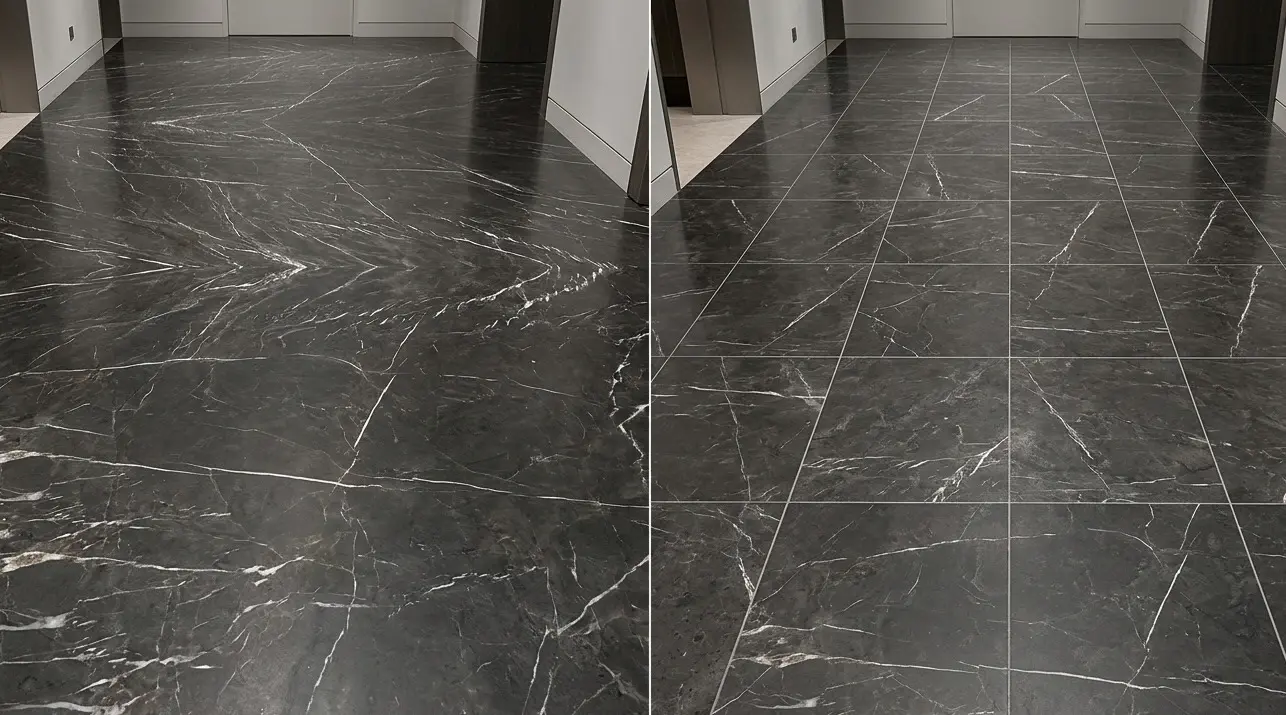
Compared to dark stone tile flooring layouts that divide the floor into individual units separated by grout lines, a full slab format of Graphite Marble Flooring eliminates those joints entirely. The graphite veining runs continuously across the full floor surface without interruption, which is where the dramatic natural character of this stone reads most powerfully at room scale. For a complete picture of the marble varieties and their typical room applications, the blog covering types of marble and their uses is a helpful starting point for buyers comparing graphite marble against lighter and more neutral marble tones.
Where Graphite Marble Flooring Performs and How to Lay It
Graphite marble is listed as suitable for floors in our material checklist, and that suitability spans a range of interior and covered outdoor floor applications where the material's visual weight and care requirements can be appropriately planned for. The deep tone and organic veining make it particularly well suited to spaces where the floor is intended to be the room's visual anchor rather than a background element. Understanding the layout options and room-specific considerations upfront makes for better project decisions.
Layout Patterns That Work for Graphite Marble Floors
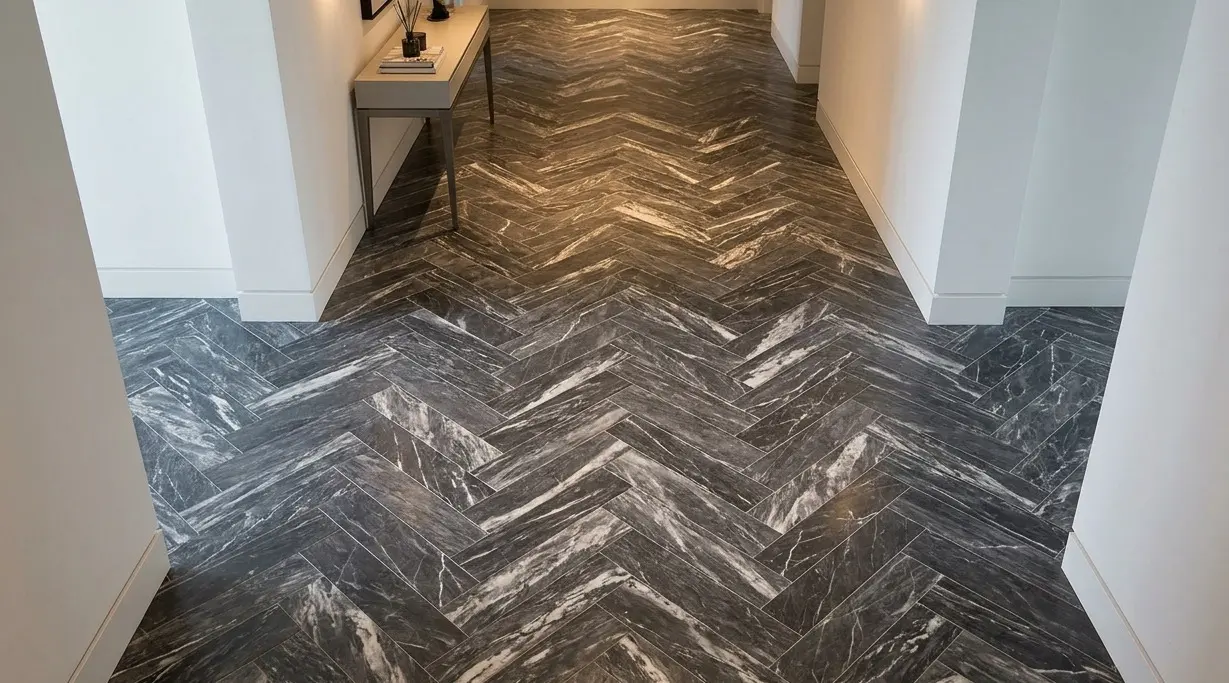
Large-format slab pieces laid in a clean offset or straight grid pattern are the most common approach for graphite marble floors, because they allow the natural veining to read at full scale without being divided into small tile proportions. A herringbone layout with rectangular slab pieces adds directional movement across the floor, which suits hallways and entryways where the eye naturally follows the lines of the space. For bathroom floors, a large-format honed finish in a straight grid is the most practical approach because it provides better slip resistance underfoot than polished and conceals everyday water marks and surface contact more effectively on a dark surface. Nova Tile and Stone, a trusted natural stone source for homeowners across Northern Nevada and California, carries marble slabs viewable at full scale at showrooms in Reno, Sacramento, Minden, and Fernley.
Room Applications and Material Crossover
Graphite marble floors read best in entryways, primary bathrooms, and formal living areas where foot traffic is intentional rather than constant and heavy. Pairing the graphite floor with adjacent marble surface applications such as a bathroom vanity, kitchen countertop, or wall panel creates design continuity across the full room. The marble kitchen countertop page covers how the same graphite marble material transitions to kitchen countertop applications for buyers planning a connected stone design across their home. For projects extending to outdoor covered terraces, the marble outdoor kitchen countertop page covers how marble performs on outdoor horizontal surfaces in covered settings. For buyers also exploring other dark natural stone slab options alongside graphite marble, onyx slabs represent a distinct dark natural stone alternative worth comparing at the showroom.
What to Expect From a Graphite Marble Floor
Floor applications place the most demanding physical conditions on a natural stone surface, and graphite marble's performance profile for floors needs to be understood clearly before committing to it. The notes below reflect the material checklist data and the specific considerations that apply to this material on a floor surface. Understanding them upfront is what separates buyers who are satisfied with their marble floor long-term from those who discover the material's requirements after the fact.
Performance and Visual Benefits
- Floor listed as suitable per master material checklist, but finish selection for the specific room and exposure level is essential
- Bold, dramatic natural stone aesthetic suited to entryways, bathrooms, and living room feature floors where visual impact is the design priority
- Each slab carries unique geological veining no two graphite marble floors will ever look identical
- Full slab format eliminates grout lines that interrupt the visual sweep of the graphite veining across the floor surface
- Mohs 3 to 5 means the surface etches from acidic contact and scratches more easily than granite or quartzite cutting boards, furniture pads, and prompt spill cleanup are all important
- Food contact suitable per checklist, but acidic liquids like wine, citrus, and vinegar must be wiped immediately from the floor surface at all times
Finish and Care for Graphite Marble Floors
- Honed finish is the most practical choice for bathroom floors and high-traffic floor surfaces because it provides better slip resistance underfoot, conceals water marks and daily surface contact more effectively, and reduces the glare that polished marble produces under overhead lighting
- Polished finish deepens the graphite tone and maximizes veining contrast, which suits low-traffic formal areas like entryways and dining rooms where the visual impact is the priority
- Leathered finish adds a tactile surface texture that suits covered outdoor floor applications and relaxed residential design contexts
- Seal before first use and reseal on an appropriate schedule; floor surfaces typically need resealing every six to twelve months depending on foot traffic and cleaning frequency
- For finish selection guidance specific to natural stone floor surfaces, Fine Homebuilding's natural stone guide covers how polished, honed, and leathered finishes behave differently in real-world residential applications
A Helpful Guide to Navigating the World of Stone Slabs
A Floor That Holds Its Character for Decades
Graphite Marble Flooring is a long-term investment for any space where the floor is intended to anchor the room's design rather than simply fill it. Its deep graphite tone and natural veining develop a patina over time that adds to the stone's character rather than diminishing it, and when properly maintained, a marble floor can hold its structural integrity and visual presence for decades. The material's lower Mohs rating compared to quartzite means it requires more deliberate care than harder stone floor alternatives, but buyers who plan for that commitment upfront find a floor that rewards the investment in ways manufactured alternatives never could. Because no two Graphite Marble Flooring slabs carry identical veining, the floor you choose today becomes permanently unique to your home.
Frequently Asked Question
Yes, with the right finish and consistent sealing. A honed finish is strongly recommended for bathroom floors because it provides better slip resistance than polished, particularly in wet conditions, and conceals water marks and everyday surface contact more effectively on a dark surface. Seal before first use and reseal every six to twelve months depending on usage.
Honed is the most practical choice for high-traffic and wet floor applications because it is slip-resistant, matte, and ages gracefully. Polished delivers the deepest graphite tone and strongest veining contrast, which suits low-traffic formal floors like entryways. Leathered adds tactile texture and suits covered outdoor floors and relaxed residential settings.
Marble rates 3 to 5 on the Mohs hardness scale, which makes it softer and more susceptible to scratching than granite or quartzite. Furniture should have protective pads, abrasive cleaning tools must be avoided, and regular foot traffic should involve appropriate floor protection in high-use zones. With correct care, the surface maintains its character well over time.
Most marble floors benefit from resealing every six to twelve months. High-traffic floors and bathroom floors closer to water contact may benefit from more frequent resealing. A water drop test confirms when the sealant needs refreshing if the water absorbs into the stone rather than beading, it is time to reseal.
Yes. An entryway is one of the best applications for graphite marble because foot traffic is directional and intentional rather than constant and heavy, and the visual impact of a full slab floor is at its most dramatic at the entry point of a home. A honed finish is recommended for all-season entryway floors where wet footwear is a regular factor.
Choose a Floor That Makes an Impression for Life
Visit any of our four showrooms in Reno, Sacramento, Minden, or Fernley to see Graphite Marble slabs at full scale, compare finish options in person, and speak with a design expert about how this stone fits your specific flooring project.