Granite Kitchen Island
Granite is a natural igneous stone formed through the slow cooling and crystallization of molten magma beneath the Earth's surface. It ranks 6 to 6.5 on the Mohs hardness scale, making it a durable choice for a kitchen island that handles daily prep work and heavy use. Browse granite options below, including standout looks for an island as well as full countertop layouts, and add styles you like to your wishlist to compare or share with your fabricator.
Nova Tile and Stone offers granite slab pickup at all four store locations. Arrive with a properly rated truck and A-frame suitable for transporting stone slabs, and our team will help load the slabs so you can secure them for the trip. Scheduling a pickup appointment in advance keeps your order ready when you arrive.
If delivery is a better fit, we ship granite slabs anywhere in the 48 contiguous U.S. states, strapped to an A-frame and loaded onto a large truck. Your fabricator will need a forklift and a slab boom or slab clamp on site for a safe unload. Contact us for a freight quote based on your location and order details.
Why Choose Granite for Your Kitchen Island?
This natural stone ranks 6 to 6.5 on the Mohs hardness scale, offering resistance to scratching, chipping, and daily wear that surpasses a marble kitchen island (ranking 3 to 4) while providing better value than a quartzite kitchen island (ranking 7).
Granite is heat resistant, but using a trivet is still recommended to protect the sealant from repeated thermal shock.
Sealing needs vary by slab, finish and use. Testing periodically for water absorption helps determine when resealing is needed.
Each slab shows unique mineral patterns and color variations that make your island a distinctive part of your kitchen rather than a generic addition.
What Affects the Cost of Granite for Your Kitchen Island
Granite is priced by the slab, so cost comes down to a few factors:
- Color and rarity. Common colors like black, brown, and tan cost less because they're widely quarried. Rarer colors, especially blues, cost more due to limited supply.
- Finish. Polished is the standard. Honed adds a modest premium, and leathered typically costs more than either due to extra processing.
- Thickness. Most islands use 2 cm or 3 cm slabs, with 3 cm costing more.
- Edge profile. Straight edges are the baseline. Bullnose and ogee edges add fabrication cost, handled separately by your fabricator.
Since Nova Tile and Stone sells and ships slabs rather than performing installation, these factors affect material cost, not a finished installed price. Our design consultants can walk you through pricing for the color and finish you're considering.
Design Versatility and Aesthetic Impact
This igneous stone transforms functional surfaces into stunning design statements:
Distinctive Visual Character
Natural patterns range from dramatic blacks and blues to warm golds and earthy browns with unique crystalline mineral compositions
Architectural Flexibility
Coordinates with contemporary stainless appliances, traditional wood cabinetry, or transitional mixed-material designs.
Surface Finish Variety
Choose between reflective polished, soft-touch honed, or textured leathered options based on lifestyle needs.
Popular Varieties
Absolute Black (sleek uniformity), Ubatuba (green and gold flecking), Santa Cecilia (golden tones), and Kashmir White (gray veining)
Edge Customization
Accommodates straight edges, bullnose profiles, or decorative ogee detailing to match architectural preferences
Installation Creativity
Supports waterfall edges, breakfast bar overhangs, a contrasting island color, an integrated sink, or built-in appliances like a cooktop or wine fridge.
Explore Our Granite Slabs
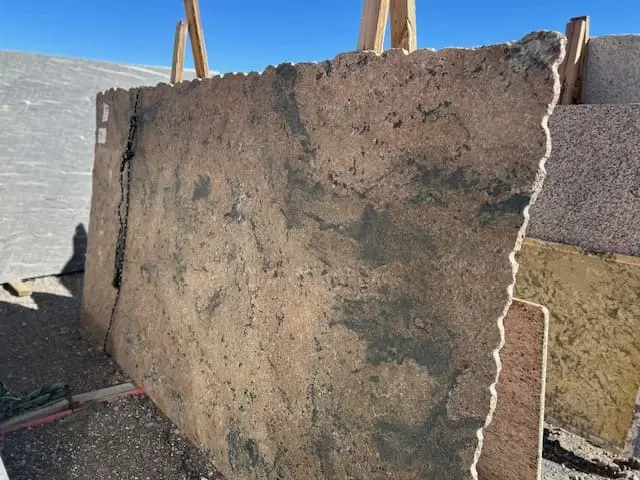
Autumn Dunes
Dimensions:131" × 78" (70.96 sq ft)
Thickness:2.0 cm
Finish: Polished
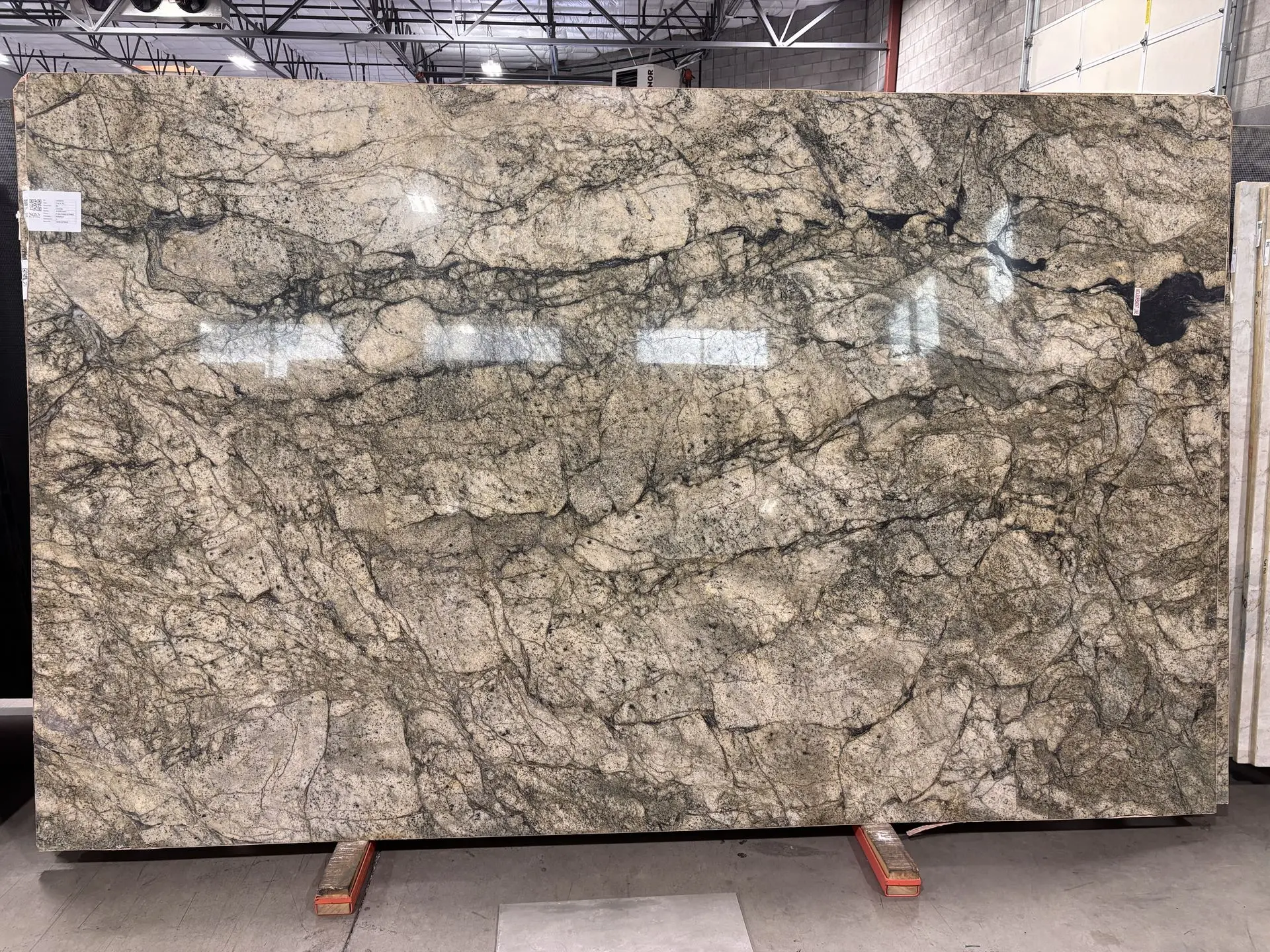
Azure Mist
Dimensions:118" × 78" (63.92 sq ft)
Thickness:2.0 cm
Finish: Polished
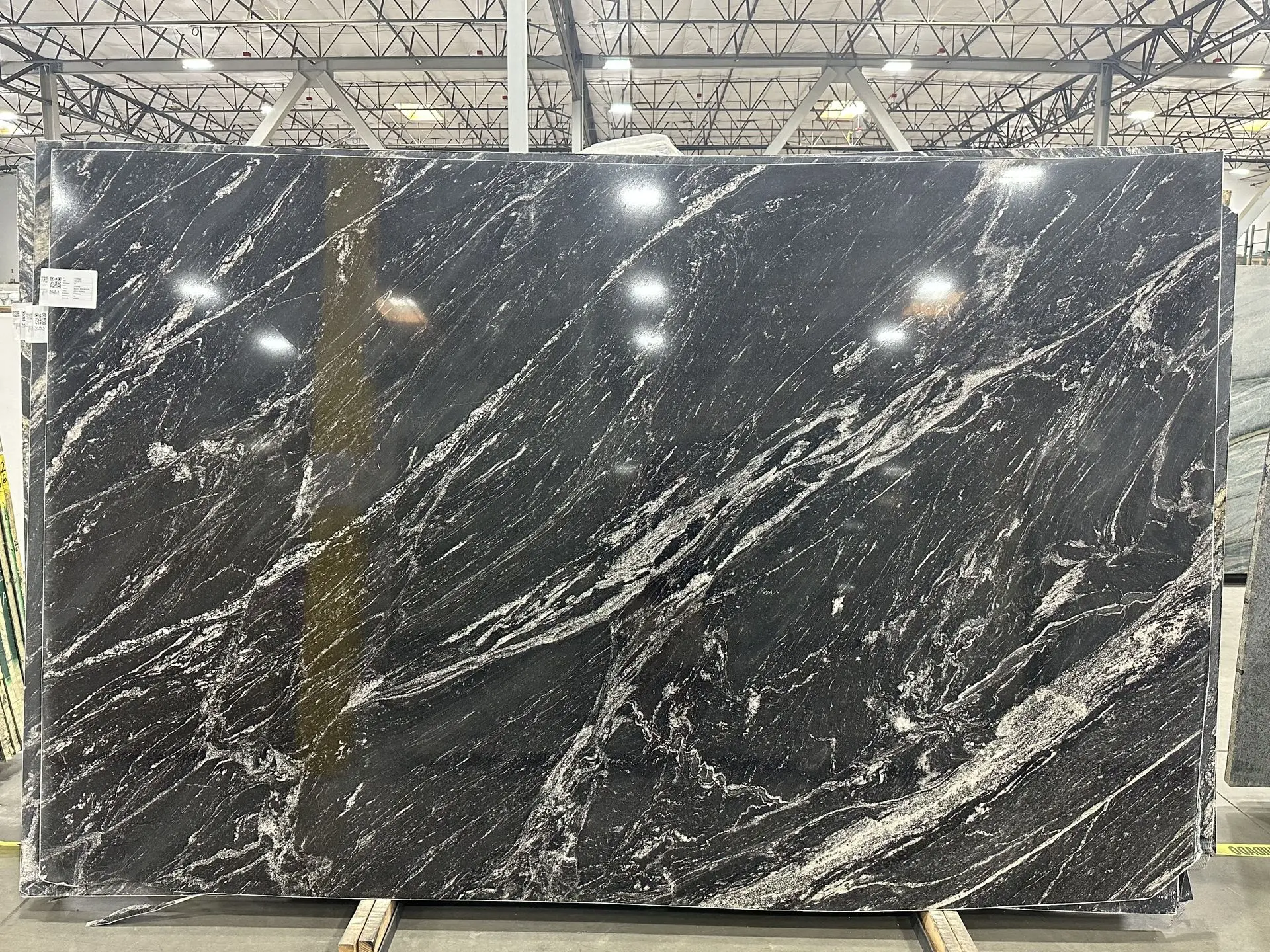
Black Mountain
Dimensions:121" × 75" (63.02 sq ft)
Thickness:2.0 cm
Finish: Polished
Maintenance and Longevity Considerations
Preserving your investment requires minimal but consistent effort. Daily cleaning involves only warm water with mild dish soap applied with a soft cloth, avoiding harsh chemical cleaners that might compromise the sealant. Using cutting boards protects both your knives and the surface finish, and trivets are recommended for hot cookware to help protect the sealant, since granite is heat resistant rather than heat proof.
Professional installation ensures proper substrate support for the substantial weight, preventing stress cracks or structural issues through strategic seam placement that minimizes visual interruption while maintaining structural integrity across large island surfaces.
Frequently Asked Questions about Granite
Granite sits at 6–6.5 on the Mohs hardness scale, which puts it above marble (3–4) and just below quartzite (7). In practical terms, that means granite resists everyday scratching and chipping better than marble, while still being workable enough to cut and finish into custom edge profiles. It's a solid middle ground for homeowners who want durability without the premium price of quartzite.
Granite is heat resistant because of the extreme heat it was formed under, but it's best to use a trivet for hot cookware rather than placing pans directly on the surface. Repeated thermal shock can stress the sealant over time, and protecting the finish helps extend the time between re-sealing applications.
Sealing needs vary by slab, finish, and sealer used. Lighter, more porous granites often need sealing more frequently, while denser, darker varieties like Absolute Black can typically go longer between applications. A simple water-absorption test can help confirm when resealing is due, and our design consultants can walk you through the maintenance expectations for your specific slab before you commit.
The water drop test is the easiest way to check: pour a small amount of water onto the surface and wait a few minutes. If it beads up, the seal is still doing its job. If it soaks in and darkens the stone, it's time to re-seal. Most homeowners do this check annually as part of their routine kitchen maintenance.
Minor chips and hairline cracks can usually be filled and re-polished by a professional stone restoration specialist. For more significant damage, a section replacement may be the better option. Granite's durability means serious damage is uncommon with normal use. Catching chips early gives you the most repair options.
Transform Your Space with a Granite Kitchen Island
Our design consultants can help you select the granite that complements your kitchen, from color and finish selection to edge detailing and installation considerations.
Schedule your free consultation to get started.