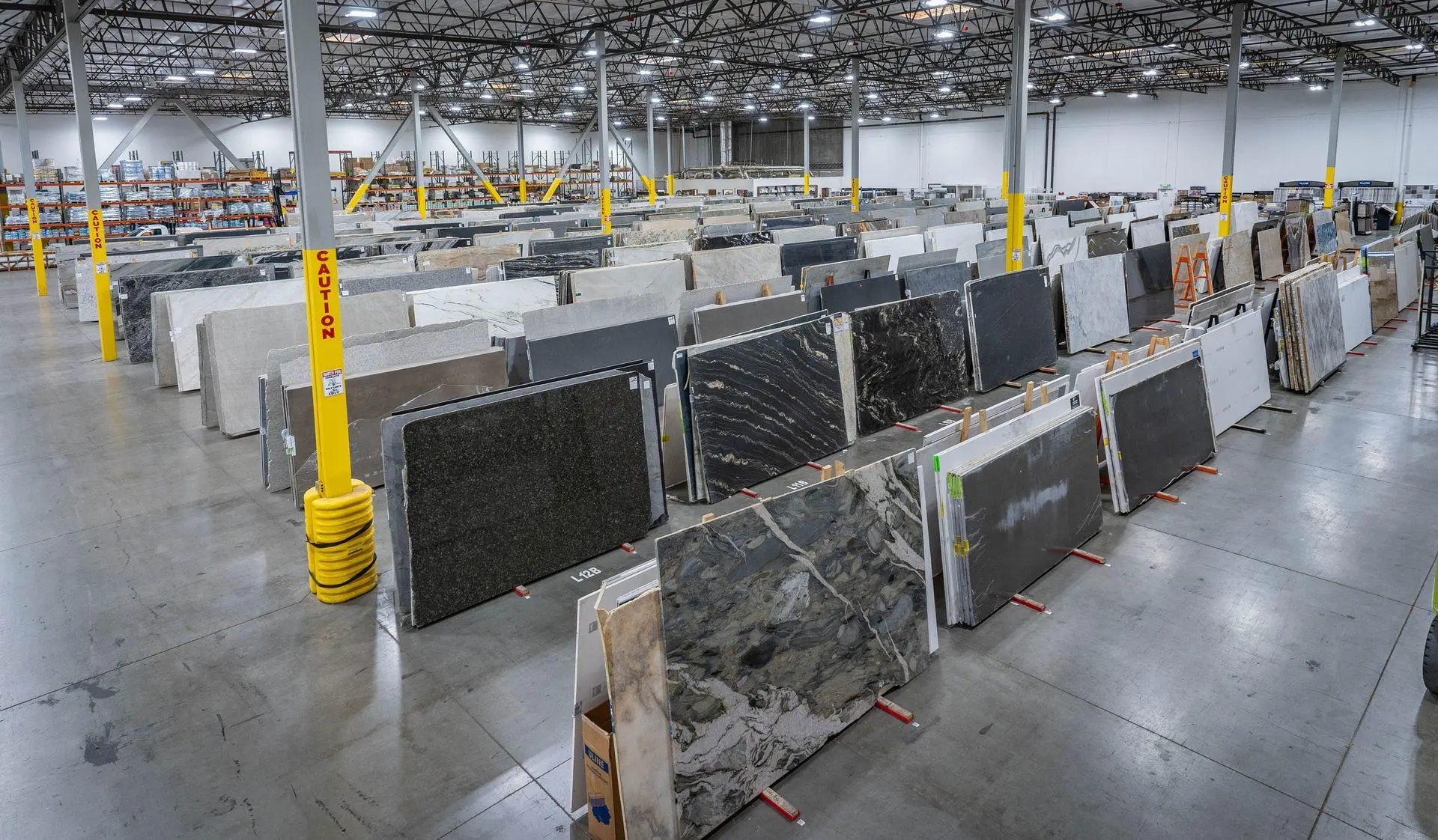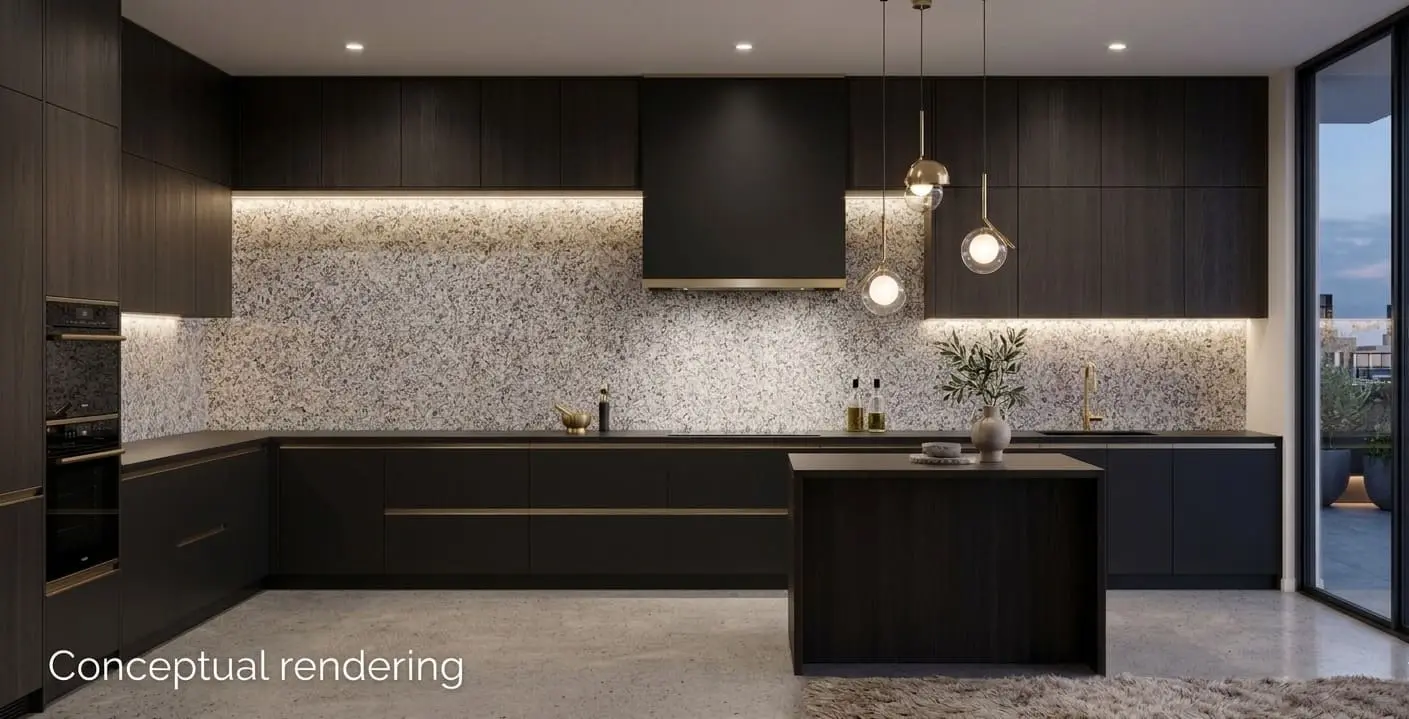
A Trusted Choice for Indoors and Outdoors
Granite is a widely used natural stone material for kitchen and bathroom backsplashes. It is hard, heat-resistant, and available in a range of natural colors and finishes including polished, honed, specialty, and leathered. Because it is a dense igneous rock formed from slowly cooled magma deep within the earth's crust, granite for backsplash use offers a surface known to resist scratching, moisture, and daily wear, making it durable and low-maintenance when properly sealed.
As a backsplash material, granite works well behind cooktops, along kitchen walls, and in bathroom vanity areas, pairing naturally with quartz island across a range of kitchen and bathroom design styles. Suitable for both indoor and outdoor applications, its mineral-based coloration gives it strong UV stability compared to most engineered surfaces, although prolonged direct sunlight over many years can cause gradual color shifts, particularly in varieties that have been resin-filled or color-treated during processing.
To explore premium backsplash materials and natural stone solutions, visit the official Nova Tile and Stone website for expertly curated granite and stone collections and learn more through the Natural Stone Institute’s guide to environmental and health product labels for natural stone.
Granite for Backsplash: Applications Across the Home and Outdoors
One of granite's greatest strengths is its versatility. The stone performs reliably across interior and exterior settings, and its natural mineral variation means each slab tends to have a distinct appearance.
Bathroom Backsplashes
In bathrooms, granite slab works well behind vanities and around soaking tubs. Since it resists moisture and humidity when properly sealed, it performs reliably in moisture-heavy environments. Honed or leathered finishes are particularly suited to bathroom interiors, giving the surface a softer, more understated look.
Accent Walls and Feature Areas
Beyond the kitchen, granite slabs are used to create accent walls in living rooms, dining areas, and entryways. A full-height backsplash running from countertop to cabinetry adds architectural depth and visual continuity, delivering a layered finish that is difficult to achieve with ceramic or porcelain alternatives.
Kitchen Backsplashes
The kitchen is where granite for backsplash installations sees the most demand. Behind a cooktop or range, the surface faces heat, steam, grease, and cooking splatter. Its low porosity limits liquid absorption, and the Natural Stone Institute indicates properly cleaned granite ranks among the more hygienic kitchen countertop surfaces in laboratory testing.
Outdoor Backsplashes and Exterior Walls
Granite for backsplash use outdoors is commonly installed behind outdoor grills, barbecue stations, and alfresco cooking areas. Its density and low water absorption resist freeze-thaw cycles, and its mineral-based coloration holds up well under sustained sun exposure. A UV-resistant sealer applied at installation and maintained annually helps preserve its appearance long term.
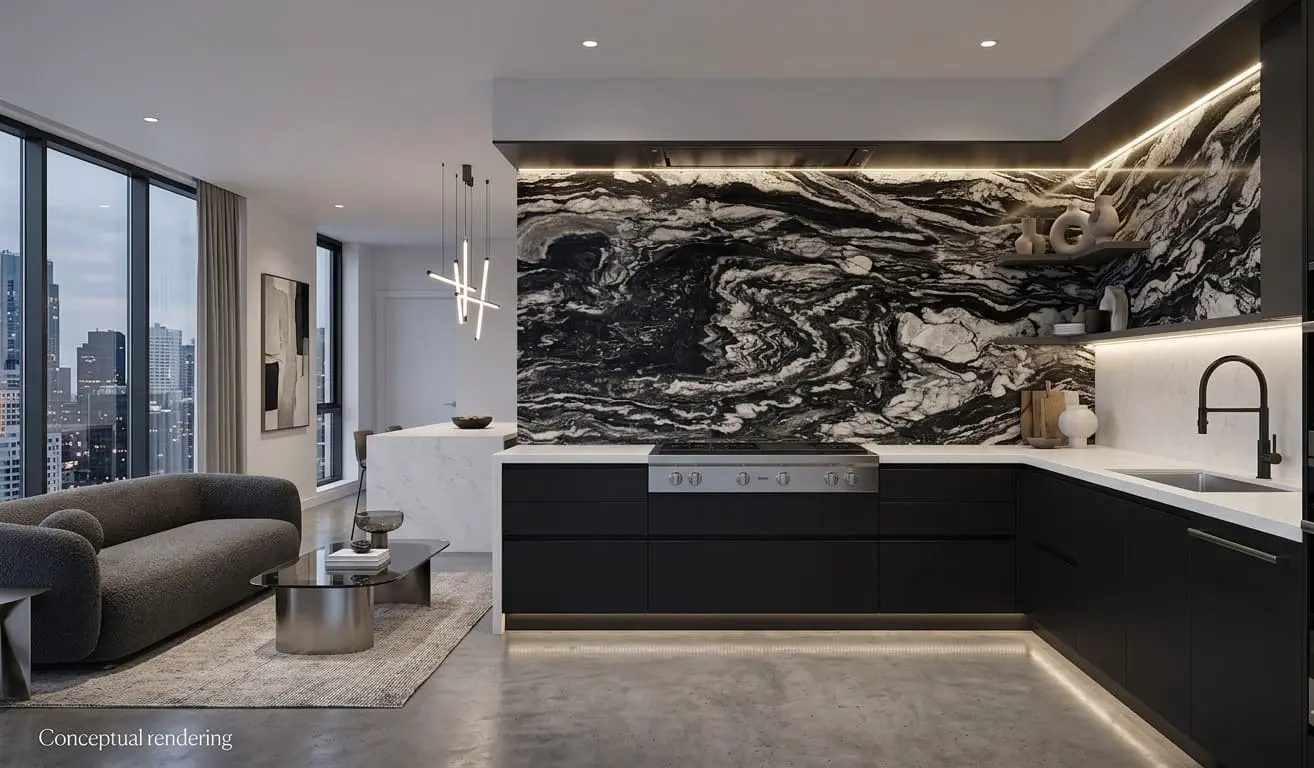
Where Every Kitchen Becomes a Masterpiece
Granite Performance Specifications
The following data is cross-referenced against ASTM C97 standards and information published by the Natural Stone Institute, Wikipedia, and Cosentino.
Hardness
Granite ranks between 6 and 7 on the Mohs hardness scale. Composed primarily of quartz (Mohs 7), feldspar (Mohs 6–6.5), and mica (Mohs 2–4), its overall hardness varies slightly by variety. It is harder than most ceramic slabs and resistant to scratching from everyday kitchen and outdoor use.
Heat Resistance
The stone has a melting point of approximately 1,215–1,260°C (2,219–2,300°F). In practical backsplash applications, however, the limiting factor is the penetrating sealer, as sealers typically begin to degrade at around 450–500°F (230–260°C). Placing concentrated heat sources directly against a sealed granite backsplash risks sealant damage and thermal shock and is not recommended.
Porosity and Water Absorption
Per ASTM C97, granite's water absorption rate ranges from 0.05% to 0.40% by weight, which is among the lower end for natural stone. This low absorption helps the stone resist staining and moisture damage more effectively than porous alternatives such as marble or limestone.
Density
Average density ranges from 2.65 to 2.75 g/cm³. Since granite is a heavy material, full-slab backsplash designs require adequate substrate and structural wall support during installation.
Freeze-Thaw Resistance
With water absorption below 0.5% per ASTM standards, granite meets the engineering threshold for freeze-thaw durability and is widely specified for exterior applications in cold climates.
Product Details
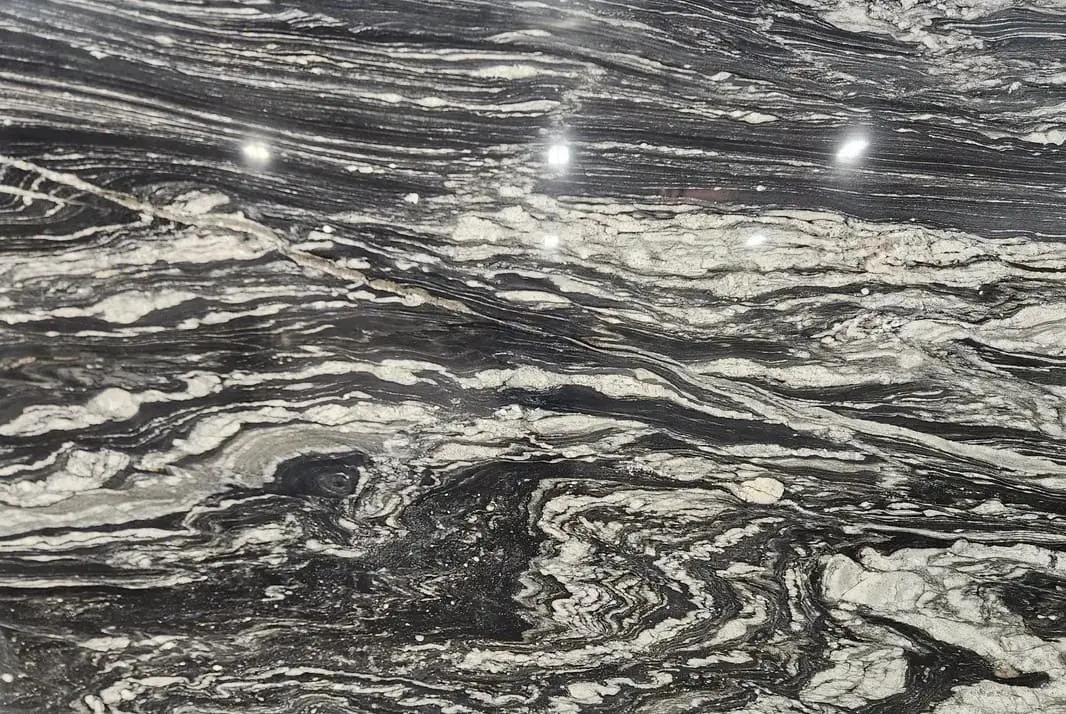
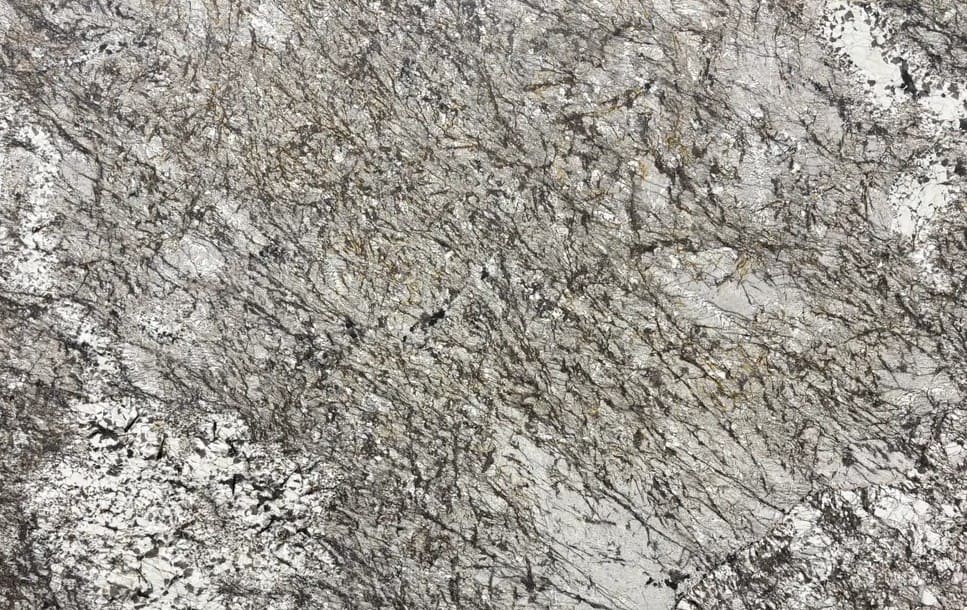
Explosion Black
( GRANITE )
Dimensions:121.5" × 80" (67.50 sq ft)
Finish: Polished
Care and Maintenance
Understanding how granite performs is only part of the picture. Knowing how to care for it ensures those qualities are maintained over the life of the installation.
Sealing
A penetrating stone sealer fills the microscopic pores, helping to prevent liquids, oils, and staining agents from being absorbed. Indoor backsplash areas benefit from resealing every 12 to 24 months depending on use, while outdoor installations require annual resealing due to greater environmental exposure. A UV-resistant sealer is recommended where the surface receives direct sunlight.
Daily Cleaning
A soft cloth or non-abrasive sponge with warm water and a pH-neutral stone cleaner is sufficient for routine cleaning. Dry the surface afterward to help prevent water spots. Avoid acidic products such as vinegar, lemon juice, or bleach, as these can etch the stone and degrade the sealer over time.
Stain and Spill Management
Blot spills promptly rather than wiping, which spreads the stain. For stubborn stains, a poultice of baking soda and water applied over the affected area and left to dry is a safe and widely recommended remedy.
Finish Considerations
Beyond cleaning and sealing routines, the finish selected at installation influences both appearance and day-to-day upkeep. Polished granite offers a high-gloss surface that wipes clean easily but shows fingerprints more readily. Honed granite is matte and smooth, with slightly higher stain sensitivity. Leathered granite conceals smudges well, making it practical for kitchens and outdoor installations alike. Brushed finishes suit natural or organic design styles and handle environmental exposure well.
Bring Granite Into Your Space, Indoors or Out
If you are ready to elevate your kitchen, bathroom, or outdoor living area with a material known for its durability, granite is a well-regarded choice. Its structural strength, design versatility, and suitability for both interior and exterior applications make it one of the more reliable backsplash materials available.
To explore your options, visit our showroom or speak with one of our stone specialists to find the right variety, finish, and format for your project.
Frequently Asked Questions
Yes. Granite is well-suited to kitchen environments because it is hard, easy to clean, and resists moisture and daily wear when properly sealed. The Natural Stone Institute indicates it ranked among the more hygienic kitchen countertop surfaces in laboratory testing, making it a practical option for most kitchen installations.
Yes. Despite its low absorption rate, microscopic pores can still take in liquids and cooking residue without a sealer in place. Indoor backsplashes typically need resealing every one to two years; outdoor installations annually. A water droplet test is a reliable indicator: if water absorbs rather than beads on the surface, it is time to reseal.
It depends on the space and maintenance preference. Polished suits modern kitchens and bathrooms where a reflective look is the priority. Honed works well where a matte appearance is preferred, though it requires slightly more attention to prevent staining. Leathered suits both indoor and outdoor installations because its texture resists smudging. Brushed finishes are well-suited to rustic or organic interior styles.
Yes. A full-height granite backsplash runs from the countertop up to the upper cabinets, creating an uninterrupted stone surface. This reduces exposed grout joints, simplifies cleaning, and delivers a more refined appearance, whether installed indoors or in covered outdoor cooking areas.
Use a soft cloth with warm water and a pH-neutral stone cleaner, then dry the surface to prevent water spots. Avoid acidic cleaners, including vinegar, citrus-based products, and bleach, as these can etch the stone and degrade the sealer. For stubborn residue, a stone-safe poultice applied directly to the stain is a widely recommended approach.
Looking for immediate assistance?
We'd love to hear from you! If you have any questions, feedback, or need assistance, please feel free to reach out to us using the contact details provided. Our team is here to help and will respond as soon as possible. Thank you for getting in touch!
(Available Mon-Fri 7:30am - 4:00pm PST)
Unlike most customer service lines, ours connects you with real people.
When you call, just press 1 for online shopping support, or 2 for local shopping support!