Skip to Content

Gold Quartzite

Gold quartzite is a natural metamorphic stone formed when quartz-rich sandstone recrystallizes under extreme geological heat and pressure, producing a surface composed of 90 to 99 percent silicon dioxide. It features a warm golden base with flowing veins in amber, cream, beige, and soft gray tones, coloration generally attributed to trace minerals including limonite, goethite, and mica present during formation.

Gold quartzite ranks between 7 and 8 on the Mohs hardness scale, placing it among the harder natural stones in residential and commercial use. Much of the world's supply originates from quarries in Brazil, particularly the Minas Gerais region.

What Is Gold Quartzite and Where Does It Come From?

The specific mineralogy of each gold quartzite slab is shaped by formation conditions deep within the Earth's crust, where quartz grains recrystallize under intense heat and pressure into a dense interlocking mosaic. The warm golden coloration is generally attributed to trace minerals present at the time of formation. Limonite and goethite can contribute yellow and amber tones, mica may introduce a subtle shimmer, and other mineral impurities can produce the soft gray, cream, and beige veining.

Iron oxide, by contrast, is primarily associated with the red and pink tones seen in other quartzite varieties. Because every slab forms under slightly different mineral and pressure conditions, slabs are unlikely to carry the same veining pattern or tonal distribution, which is why slab selection is generally best done in person.

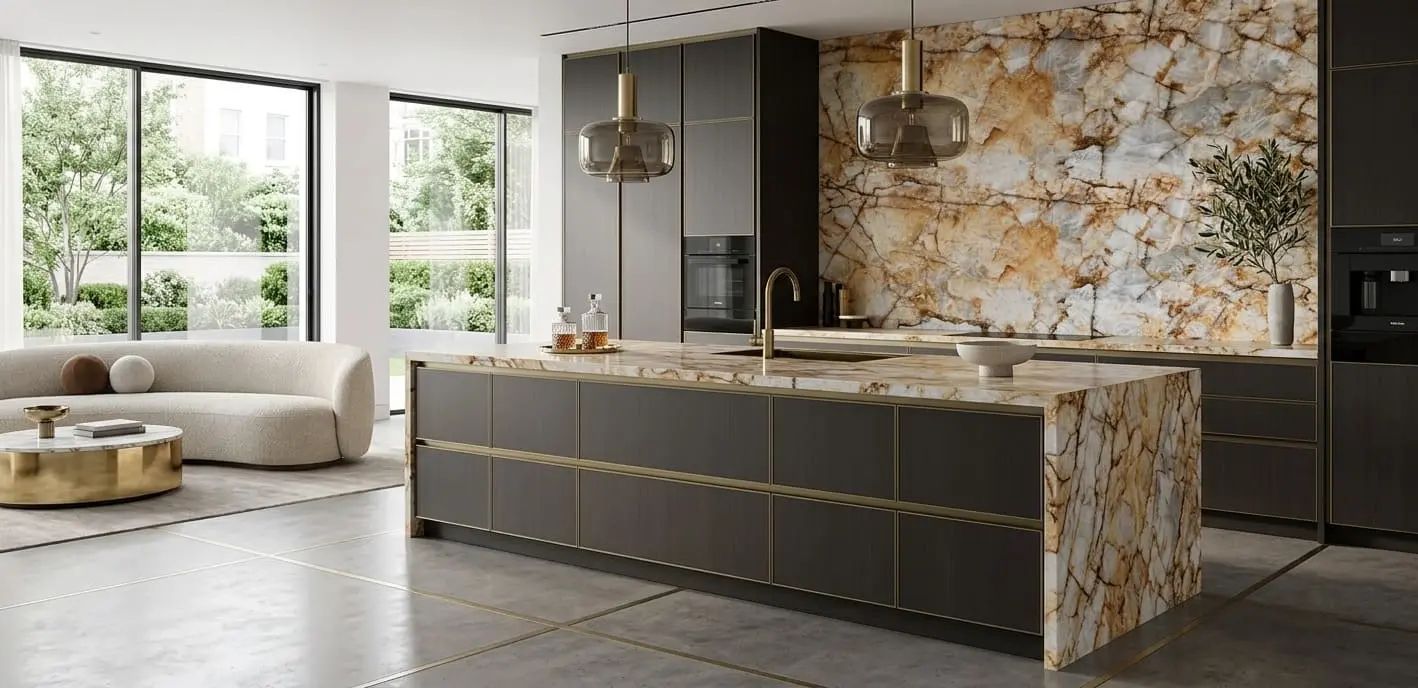
Modern kitchen with distinctive Gold quartzite island and backsplash
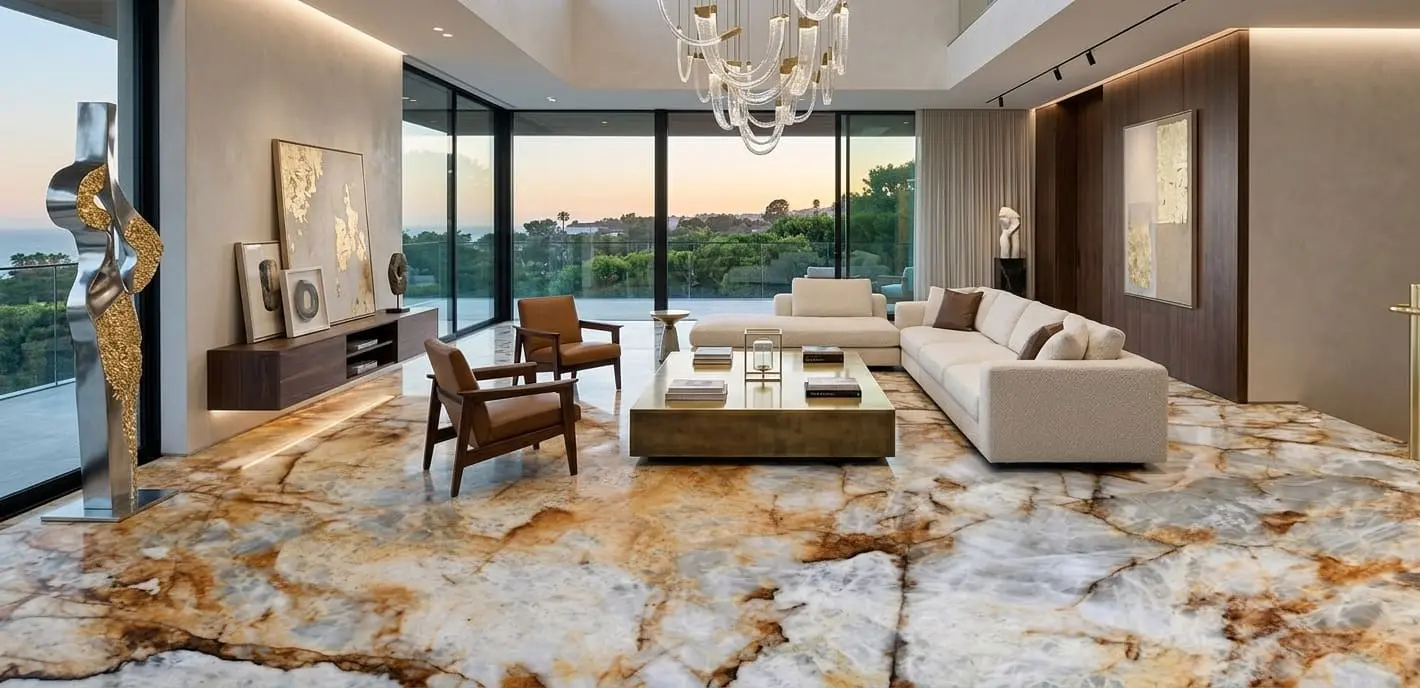
Minimalist living area with gold quartzite floor

Where Golden Stone Meets Every Surface

Browse Our Slab Inventory

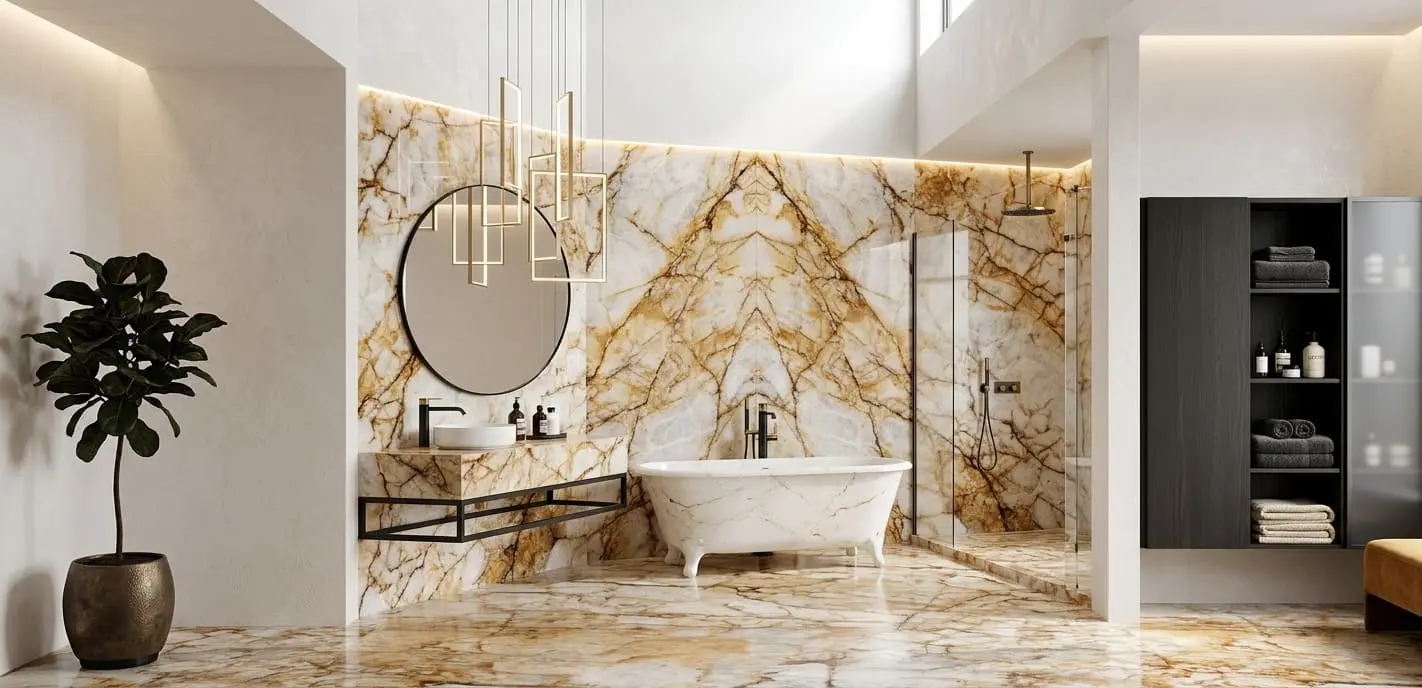
Minimalist bathroom featuring polished gold quartzite walls and floors

The Visual Character and Color Range of This Natural Stone


The color palette spans from soft straw yellow and warm champagne to deeper honey and amber tones, often punctuated by veining in cream, taupe, white, or muted gray. Some slabs display bold linear veining that sweeps across the surface in dramatic strokes, while others carry a more diffuse, cloud-like movement. The stone's crystalline mineral structure can produce a subtle sparkle when light catches the surface. 

Warm-toned interiors tend to benefit from the stone's natural amber and honey registers, whose tones can pair well with wood cabinetry, brass or bronze hardware, and earthy wall finishes. Cooler or more neutral settings may find the soft gray veining a useful counterbalance, introducing warmth that tends not to overpower the surrounding palette. For spaces that call for a cooler natural stone, green quartzite, colored by chlorite or other silicate minerals during formation, offers a distinct alternative within the same material family.

Durability and Surface Performance of Natural Quartzite


Its hardness range of 7 to 8 on the Mohs scale can help the surface resist scratching from routine use and daily handling. The stone's dense crystalline structure can help limit water absorption, reducing the risk of staining compared to softer stones such as marble, which falls between 3 and 4 on the Mohs scale. It is also generally known for strong heat tolerance and can perform well under the temperature fluctuations common in kitchen and fireplace environments. Surfaces that resist scratching, staining, and thermal stress may require less corrective maintenance over time and can help retain their appearance through years of regular use.

As with all natural stone, periodic sealing is recommended. A quality penetrating sealer applied at installation protects against liquid absorption and surface staining, though it does not prevent etching from prolonged contact with acidic substances. Sealing frequency typically ranges from once every one to two years, depending on use and porosity.
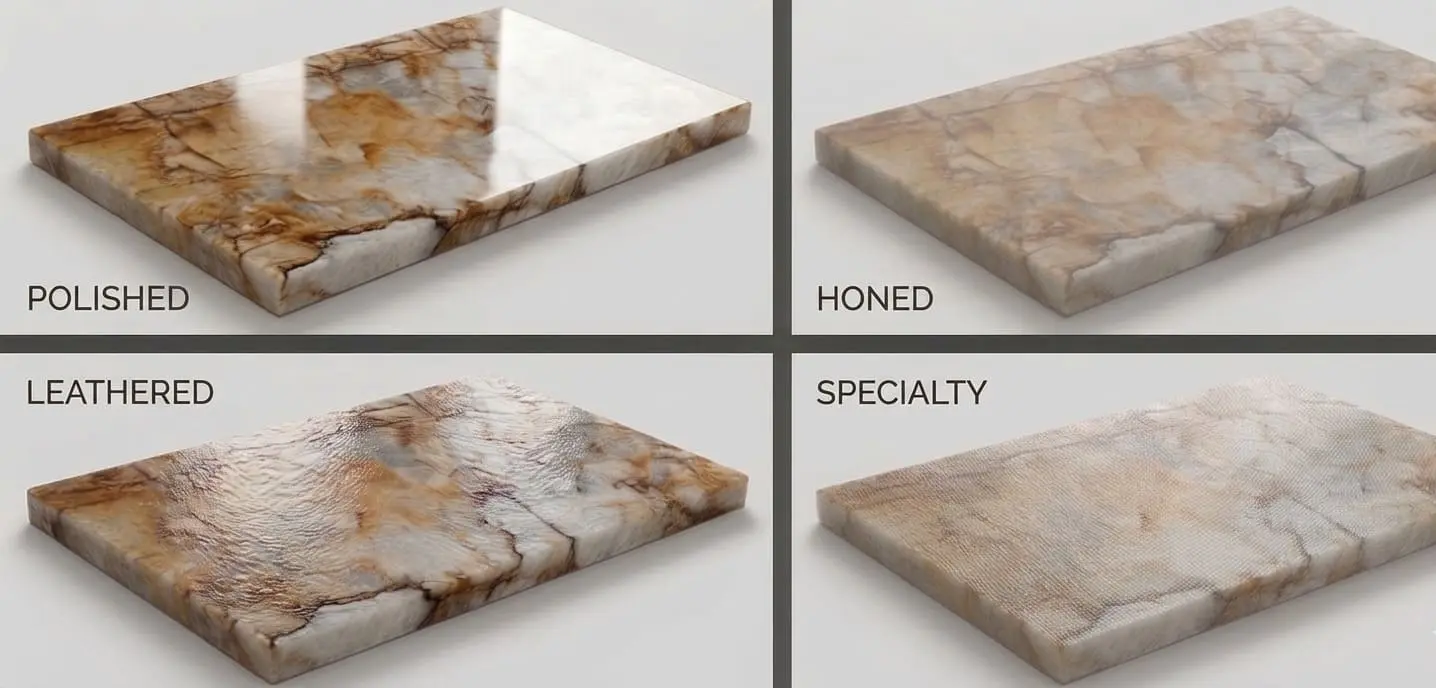


  • Polished finish is known to produce a high-gloss, reflective surface that can amplify the depth of the golden tones and help bring out the contrast of the veining, making it well suited to countertops, vanity tops, and feature walls where visual impact is the priority. 
  • Honed finish is known to create a smooth, matte surface that can soften tonal intensity and can work well in transitional and modern interiors where high-gloss reflectivity would compete with surrounding materials. 
  • Leathered finish is intended to add subtle surface texture through compression of the stone's natural pores, which can enhance tactile interest while helping reduce reflectivity and fingerprint visibility. It is commonly used on kitchen islands, bathroom vanities, and fireplace surrounds. 
  • Specialty finishes round out the range for applications that call for a more distinctive surface treatment.

The finish choice also shapes how the stone reads within a space. Polished surfaces tend to intensify color saturation and veining contrast, which can make the golden tones the dominant visual element. Honed surfaces can create a quieter presence that recedes into the design. Leathered surfaces introduce a layered, tactile quality that tends to suit warm, material-rich interiors.

Finish Options and Applications for Golden Quartzite Slabs

Natural quartzite in warm golden tones is available in four finish types, each associated with a different surface character suited to different applications and design contexts.

Gold quartzite slabs, displaying polished, honed, leathered, and specialty textured finishes

Frequently Asked Questions

Yes. Gold quartzite ranks between 7 and 8 on the Mohs hardness scale, giving it strong resistance to scratching, and its low porosity and heat tolerance make it well suited to food preparation surfaces. Applying a quality penetrating sealer at installation and periodically thereafter helps protect against staining. The warm golden tones can also complement a wide range of cabinetry and hardware finishes.

Gold quartzite is significantly harder and more scratch-resistant than marble, which falls between 3 and 4 on the Mohs scale. Marble is also more susceptible to etching from acidic substances such as citrus juice, vinegar, and cleaning products. Gold quartzite's denser crystalline structure resists both surface abrasion and liquid absorption more effectively, making it a stronger performer in high-use environments.

Both honed and leathered finishes are well suited to bathroom applications. A honed finish is known to produce a smooth, matte surface that can complement warm wood vanities and neutral tile surroundings. A leathered finish adds subtle tactile texture through compression of the stone's natural surface pores, reducing reflectivity while helping bring out the tonal depth of the golden base. For a more formal or high-contrast aesthetic, a polished finish can offer reflective depth and strong visual presence.

Yes. Like all natural quartzite, gold quartzite benefits from sealing to reduce the risk of liquid absorption and staining. A quality penetrating sealer applied at initial installation provides a protective barrier, and resealing generally ranges from once every one to two years depending on porosity and level of use. Standard penetrating sealers provide stain protection only and do not prevent etching from extended contact with acidic substances.

Yes. Gold quartzite's hardness and density make it a practical and versatile flooring material for both residential and commercial spaces. Its resistance to surface abrasion means it can hold up well under consistent foot traffic with a reduced risk of premature wear. As a feature wall material, the stone's natural veining and warm tonal range can create a visually engaging surface that helps anchor a room without additional ornamentation.

Transform Your Space

Nova Tile and Stone carries gold quartzite slabs in a range of finishes, sizes, and thicknesses at four showroom locations in Reno, Sacramento, Minden, and Fernley. Each location offers full slab viewing so designers, contractors, and homeowners can evaluate veining, tonal variation, and finish character in person before making a selection. Because no two slabs are identical, viewing inventory directly is one of the most reliable ways to find the right match for a specific project. Contact any Nova Tile and Stone location to check current inventory or request a slab quote.

Nova Tile and Stone's Offerings